










The AI workflow automation maturity model is a five-level framework for assessing where a business actually stands in its automation journey and building a clear upgrade path - think of it as an automation maturity model Gartner-style benchmark adapted for real operational use. Levels range from Manual Chaos, covering zero to five percent of processes, up to Autonomous Operations at eighty-five percent or more, helping businesses identify what to fix next.
Most businesses think they are more automated than they are. They have Zapier connected to a few apps, a Notion wiki that someone set up two years ago, and a handful of recurring reminders. They call it “automation.” It is not.
Genuine AI workflow automation is not a single tool or a one-time setup. It is a progression - a series of compounding investments, best approached through AI workflow automation maturity model agile iteration, that move a business from manual chaos toward autonomous operation. Following Microsoft Power Automate best practices is one concrete way to accelerate that progression. Most small businesses are at Level 1 or Level 2, though most think they are at Level 3 or 4.
The AI workflow automation maturity model is a framework for assessing where your business actually stands and building a clear upgrade path - available as an AI workflow automation maturity model PDF for easy team reference. The model has five levels, each representing a distinct capability threshold, and every AI workflow automation maturity model example shows that knowing your level tells you what to fix next instead of randomly adding tools and hoping for compound results.
The 5 Levels of the AI Workflow Automation Maturity Model
The AI workflow automation maturity model covers the strategies and tools that deliver real productivity gains in this space, from your first Zapier zap through fully autonomous AI agents. Most businesses think they are more automated than they are. This guide walks through the practical steps from setup through advanced optimization.
Here is the complete maturity model at a glance:
| Level | Name | Automation Coverage | Primary Tools |
|---|---|---|---|
| 1 | Manual Chaos | 0-5% | Email, spreadsheets |
| 2 | Basic Automation | 5-25% | Zapier free tier, simple apps |
| 3 | Connected Workflows | 25-60% | Zapier/Make paid, Notion |
| 4 | AI-Enhanced Operations | 60-85% | AI writing, smart routing, analysis |
| 5 | Autonomous Operations | 85%+ | AI agents, predictive systems |
The percentages refer to the proportion of repeatable business processes that run without manual intervention. A business at Level 3 handles 25-60% of its routine tasks automatically - the remaining 40-75% still requires human action every time.
Level 1: Manual Chaos
What It Looks Like
Everything important happens in someone’s head or inbox. Processes exist as habits, not documentation. When a task needs to happen, someone either remembers to do it or it falls through the cracks.
A Level 1 business is characterized by:
- No documented processes - How things get done depends on who is doing them
- Spreadsheet operations - Tracking leads, clients, tasks, and inventory in Google Sheets that only make sense to their creator
- Email as project management - Searching “RE: RE: RE: client proposal” to find the latest status
- Manual data entry everywhere - Copying information from one place to another by hand
- No integration between tools - Your CRM, invoicing, email, and calendar are completely siloed
- Bottlenecks on individuals - One person holds critical knowledge or must approve every action
Common Examples
- A consultant who tracks client projects in an email folder
- A small retailer who manually updates inventory in a spreadsheet after each sale
- A service business where all appointments are booked by phone and written in a paper calendar
- An agency that manually copies client feedback from emails into a project tracker
What Does Staying at Level 1 Cost Your Business?
The cost is not just time. Manual processes break unpredictably. Errors compound. Staff turnover causes disproportionate damage because there is nothing to hand off. The business’s capacity is rigidly capped by the number of hours humans can work.
The Upgrade Path to Level 2
The first step is not automation - it is documentation. You cannot automate a process that does not exist in written form.
- Document your top 5 most frequent repeatable tasks
- Pick one that happens at least 10 times per week
- Set up a simple automation for that single task using Zapier’s free tier - our Zapier vs Make comparison covers when to use each platform
- Repeat
Pro tip: Start with the task that causes the most context-switching, not the most time. Five 30-second interruptions per day cost more focus than a single 30-minute weekly task.
Level 2: Basic Automation
What It Looks Like
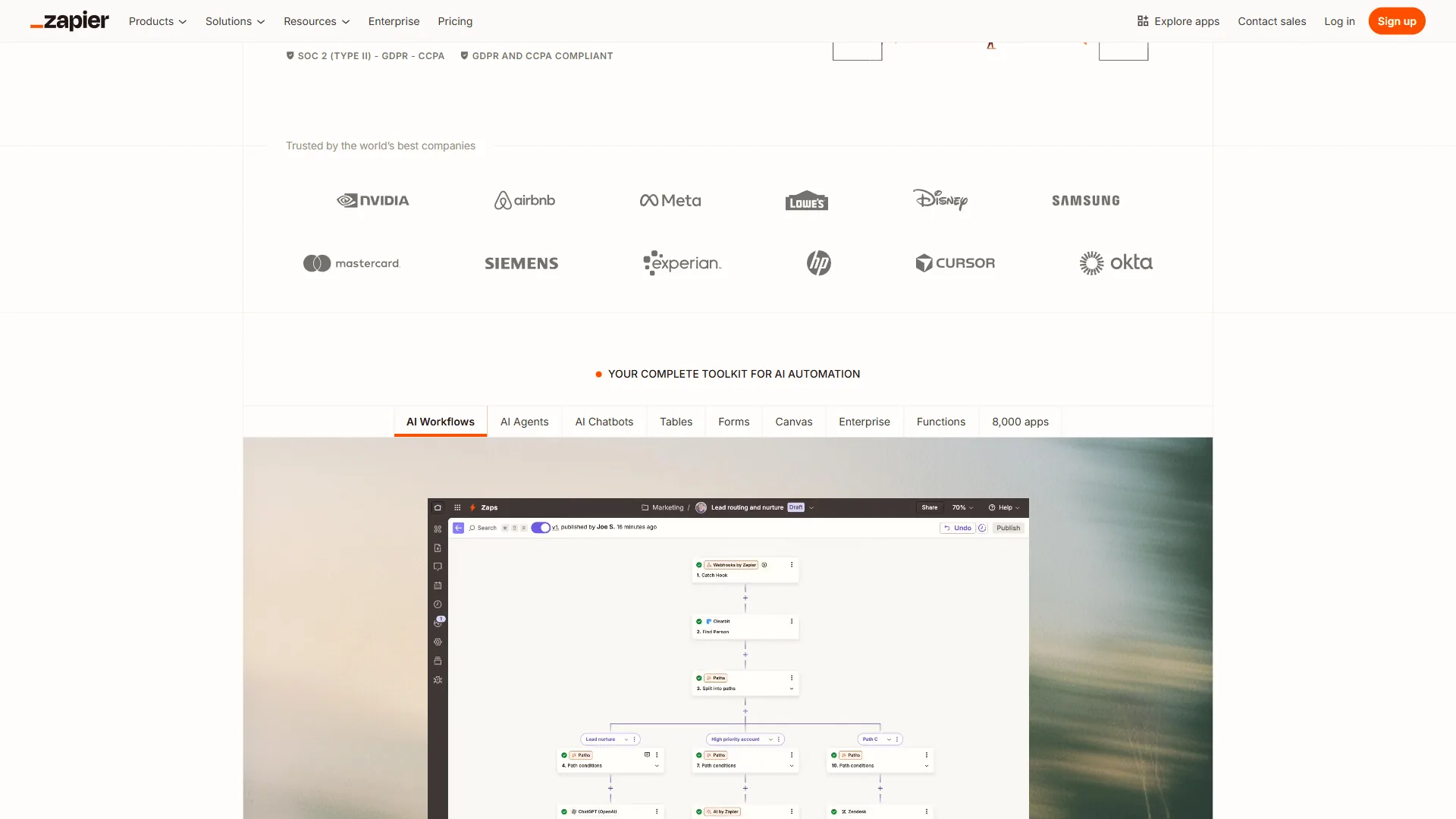
A Level 2 business has discovered automation tools and used them to solve specific pain points. Simple “if this, then that” rules handle individual tasks, but they are not connected into coherent workflows.
Typical Level 2 characteristics:
- Single-step automations - Form submission creates a CRM contact; email triggers a Slack notification
- Some tools connected, most still siloed - A few integrations exist, but most data still travels manually between systems
- Heavy reliance on Zapier free tier - 100 tasks per month, basic triggers and actions
- Calendar app doing scheduling - Google Calendar, maybe Calendly for individual booking
- Spreadsheets still central - Even with automation, critical data still lives in spreadsheets rather than databases
- Task apps in use but inconsistent - Asana, Trello, or Todoist present but not adopted by the whole team
Common Examples
- A solo freelancer who uses a Zapier zap to add Typeform responses to a Google Sheet
- A small e-commerce shop that sends an automated confirmation email after each order
- A startup that automatically posts to Slack when a new Jira ticket is created
- A coach who uses Calendly to let clients book sessions without phone calls
The Hidden Problem at Level 2
Level 2 feels like automation. The few zaps that run reliably create a sense of progress. But each automation is an island - there is no system, no orchestration, and no intelligence. When a new tool gets added, it sits alongside the existing islands rather than integrating with them.
Most businesses stall at Level 2 because fixing the next problem always seems to require building something more complex than the first few automations. The jump to Level 3 requires a different mindset: thinking in workflows rather than individual task automations.
Typical Tools at Level 2
- Zapier (free or starter tier)
- Calendly (free)
- Mailchimp or similar for basic email automation
- Google Workspace (Docs, Sheets, Forms)
- Slack with basic integrations
The Upgrade Path to Level 3
The Level 2 to Level 3 upgrade requires two shifts:
- Move from tools to a knowledge hub - Adopt Notion or equivalent as the central workspace where documentation, databases, and project management converge
- Move from single-step to multi-step automations - Upgrade to Zapier paid (or switch to Make) to build workflows with filters, delays, conditional logic, and multiple actions
Level 3: Connected Workflows
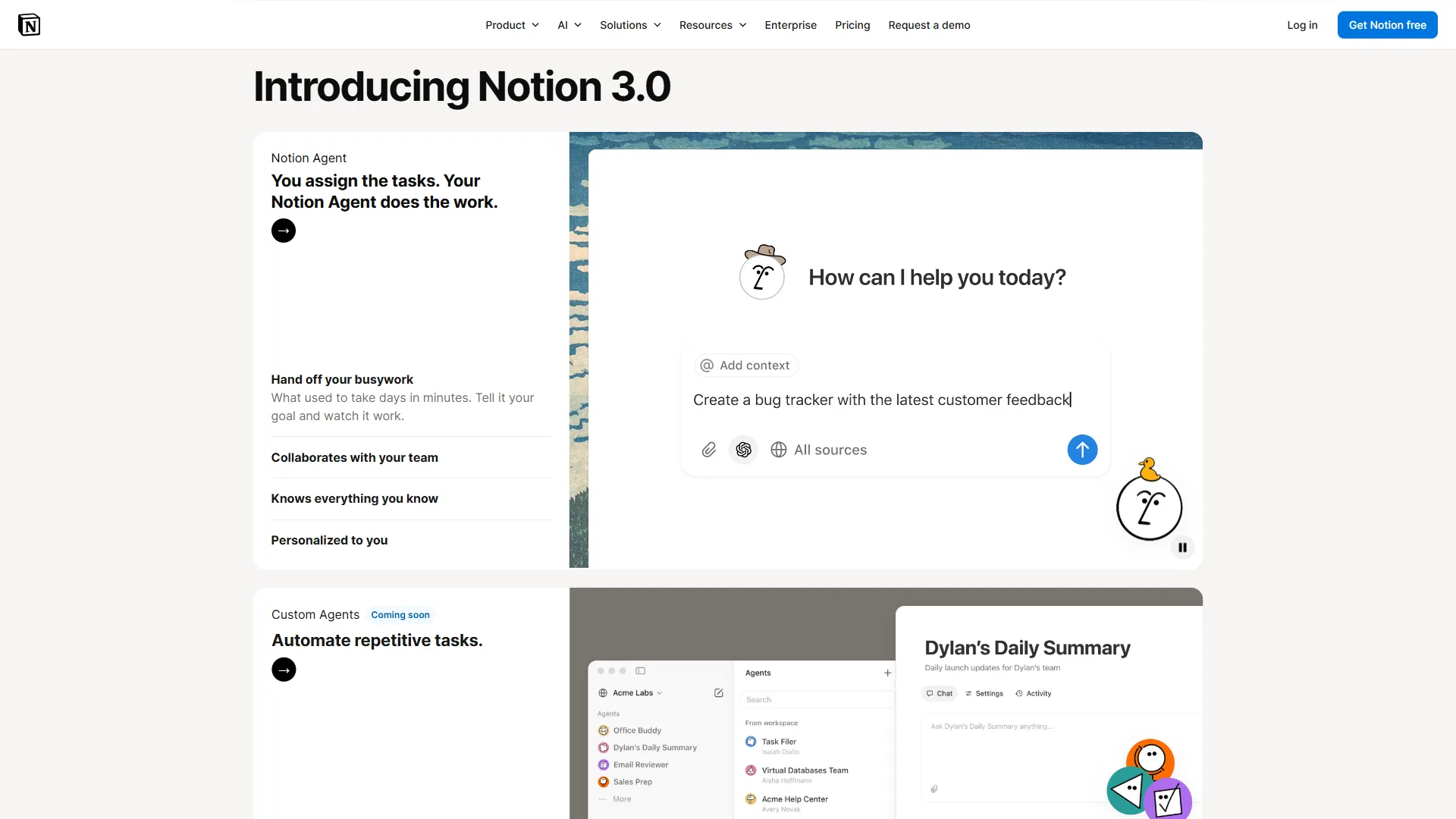
Level 3 is where automation starts compounding. Instead of isolated zaps, you have workflows - sequences of automated steps that move data, trigger actions, and update multiple systems in response to a single event.
What It Looks Like
Multi-step automations: When a new client signs a contract, the automation: (1) creates a project in Asana, (2) sends a welcome email, (3) creates a Notion client page, (4) adds a row to the billing spreadsheet, and (5) schedules the kickoff call via Calendly. For a worked example of this exact flow, see our client onboarding automation guide.
Notion as the knowledge hub: Documentation, processes, client databases, and project tracking all live in Notion. Staff reference Notion instead of emailing colleagues for answers. New hires onboard through Notion wikis.
Conditional logic: Automations branch based on conditions - if deal value is over $5,000, route to senior account manager; if under, route to standard onboarding. If customer is in a specific segment, send one email; if in another, send a different one.
Cross-tool data consistency: When a deal closes in the CRM, the invoicing tool, project management system, and calendar all update automatically. Data enters once and propagates everywhere.
Feedback loops: When a project task is completed, it triggers the next task. When an invoice is paid, it marks the project milestone complete and schedules a follow-up email.
Common Examples
- A marketing agency that uses Make to run a full client onboarding sequence: contract signed triggers project creation, team assignment, welcome email, and kickoff scheduling
- An e-commerce business where order fulfillment status in the warehouse automatically updates customer service records and triggers personalized shipping emails
- A SaaS startup where a new free signup triggers lead scoring, CRM record creation, onboarding email sequence, and Slack notification to the sales team
Tools That Define Level 3
Zapier (Professional) or Make (Core+)
The jump from free/basic Zapier to Zapier Professional (or switching to Make) unlocks multi-step workflows, conditional logic, and unlimited tasks. Make in particular is built for visual, complex workflow construction at a lower price point than Zapier. If you are weighing the two platforms, our Zapier vs Make comparison breaks down the differences in detail.
Notion (Plus or Business)
Notion becomes genuinely powerful at Level 3 when it serves as the connective tissue - databases that link to each other, wiki pages that reference live data, project views that reflect real-time status from multiple systems.
The automation cost at Level 3: A typical Level 3 stack costs $60-150/month. The ROI calculation is straightforward: if the connected workflows save 20 hours per month of manual work, and your time is worth $50/hour, that is $1,000/month in recovered capacity for a $150 investment.
The Upgrade Path to Level 4
Getting from Level 3 to Level 4 requires introducing AI into the automation layer. Not just connecting apps - but having AI make decisions, generate content, analyze data, and route work intelligently. The best AI automation tools cover the platforms that make this transition practical.
Level 4: AI-Enhanced Operations
Level 4 is where AI stops being a feature you occasionally use and becomes an active participant in workflow execution. Automations no longer just move data - they generate content, analyze inputs, make routing decisions, and adapt to context.

What It Looks Like
AI content generation in workflows: When a new lead fills out a form, the workflow uses ChatGPT or Claude to generate a personalized first-contact email based on their industry, company size, and stated pain points - then sends it automatically. The building AI first workflows guide walks through the architecture in depth.
AI-powered data extraction and classification: Invoices, contracts, and forms are processed by AI that extracts structured data, classifies documents, and routes them to the correct systems without human review.
Smart routing and prioritization: Customer support tickets are analyzed by AI that assesses urgency, topic, and sentiment - then routes high-value customers to senior agents, technical issues to engineers, and simple questions to knowledge base deflection.
Predictive scheduling and resource allocation: Patterns in historical data inform forward-looking decisions - which clients are at churn risk, which projects are trending over budget, which inventory items need reordering before stockouts.
AI-assisted research and analysis: Market research, competitor monitoring, report generation, and data analysis happen automatically as scheduled workflows rather than manual research tasks.
Common Examples
- A content agency that uses Make + Claude to automatically generate first drafts of blog posts from research briefs, which editors then refine rather than write from scratch
- A law firm where incoming client inquiry emails are analyzed by AI to classify matter type, assess complexity, assign to appropriate attorney, and draft an intake acknowledgment
- A real estate company where new property listings are automatically analyzed by AI to generate marketing copy, identify comparable properties, and schedule social media posts
- A SaaS company where usage data triggers AI-generated personal emails to churning customers with specific retention offers based on their usage patterns
Key Tools at Level 4
Make (Teams) or Zapier (Professional/Team) - Both platforms now have native AI actions that connect to OpenAI, Anthropic, and other AI providers within workflows.
OpenAI API or Claude API - Direct API access to frontier AI models like ChatGPT and Claude enables custom, high-quality content generation and analysis within automated workflows.
Notion AI - Notion’s built-in AI capabilities let your knowledge hub actively generate content, summarize information, and assist with writing as part of connected workflows. See Notion’s official AI documentation for the current feature list.
Vector databases and RAG - Advanced Level 4 implementations use retrieval-augmented generation to ground AI outputs in company-specific knowledge - generating responses that reflect your actual policies, products, and procedures.
What Level 4 Businesses Stop Doing Manually
At Level 4, the following tasks typically no longer require human initiation:
- First drafts of routine written communications
- Data extraction from incoming documents
- Lead scoring and routing
- Report generation and distribution
- Social media content scheduling
- Appointment reminders and follow-up sequences
- Basic customer support responses
- Invoice generation and payment follow-up
The Upgrade Path to Level 5
Level 5 requires a shift from automating defined tasks to deploying autonomous agents that can handle undefined situations. This involves agentic AI systems, feedback loops, self-monitoring, and the organizational maturity to trust AI with end-to-end process ownership.
Level 5: Autonomous Operations
Level 5 is where the automation system operates proactively - not just executing defined processes but identifying problems, adapting to new situations, and completing end-to-end tasks with minimal human involvement.
Most businesses reading this are not at Level 5 and should not try to reach it immediately. But understanding what Level 5 looks like clarifies the direction of travel.
What It Looks Like
AI agents that handle end-to-end tasks: An AI agent monitors your email inbox for specific types of requests, researches them using web search and internal knowledge, drafts responses, escalates edge cases, and logs outcomes - handling the entire request lifecycle without a human in the loop.
Self-correcting workflows: The automation system monitors its own performance. If conversion rates on automated emails drop below a threshold, the system generates new variants, A/B tests them, and adopts the winner - without anyone configuring the test.
Predictive automation: Rather than reacting to events, Level 5 systems anticipate them. Inventory reorders happen before stockouts based on predictive models. Churn prevention campaigns launch before usage metrics cross the danger threshold. Cash flow shortfalls are flagged before they occur.
Cross-system intelligence: AI synthesizes data from all connected systems to surface insights that no individual system could generate alone - identifying patterns across customer behavior, operational data, and external signals to drive proactive decisions.
Natural language process management: Non-technical team members update automation behavior through conversation. “Don’t send the follow-up email if the client has already booked a call” is translated into workflow logic automatically.
Current State of Level 5
Level 5 is partially achievable in 2026 using platforms like:
- Gumloop - AI-native workflow platform built for agentic automation
- Relevance AI - Autonomous agent builder for complex workflows
- n8n - Open-source platform enabling custom AI agent deployment - the n8n documentation covers self-hosting setup
- Make + Claude 3.5 - Make’s AI actions combined with Claude’s long-context reasoning enable sophisticated multi-step agentic workflows
The honest assessment: most businesses attempting Level 5 without a solid Level 3 and Level 4 foundation create expensive, unreliable systems that require more maintenance than they save. Get Level 3 and Level 4 right first.
How to Assess Your Current Level
Use this section of the AI workflow automation maturity model to identify where your business stands. Answer these questions honestly:
Level 1 indicators (any = likely Level 1):
- Your processes exist primarily in people’s heads or email threads
- Critical information lives in spreadsheets that only one person understands
- No-show and follow-up failures happen regularly because there is no system
- Staff spend significant time copying data between tools manually
Level 2 indicators:
- You have individual automations running but they are not connected to each other
- You use Zapier free tier or equivalent with fewer than 10 active zaps
- Some routine tasks are automated but most still require manual initiation
Level 3 indicators:
- Multi-step workflows connect 3+ tools in response to a single trigger
- Your team references a central knowledge hub (Notion or Confluence) for process answers
- Data entered in one tool automatically updates multiple downstream systems
Level 4 indicators:
- AI generates content, analyzes data, or makes routing decisions within your workflows
- Your automation stack costs $100+/month and demonstrably recovers that investment
- Your team has stopped doing specific manual tasks entirely because AI handles them
Level 5 indicators:
- AI agents handle entire task categories with minimal human oversight
- Your automation system self-monitors and flags its own performance issues
- Non-technical staff can modify automation behavior through natural language requests
Choosing the Right Automation Platform for Your Level
Zapier vs Make: Which Platform to Choose?
Both Zapier and Make are excellent Level 3 platforms. According to Zapier’s automation research, businesses that implement multi-step automation workflows save an average of 3.5 hours per week per employee. A 2024 McKinsey report on automation’s economic potential found that 60-70% of business activities could be automated using existing technology. Research from Harvard Business Review on workplace AI shows that businesses at higher automation maturity levels outperform peers by 2-3x on productivity metrics.
The choice between platforms depends on your priorities:
Choose Zapier if:
- You want maximum app integrations (6,000+ apps)
- Your team is non-technical and wants a simple UI
- You need reliable customer support
- Your workflows are primarily linear (one trigger, several actions)
Choose Make if:
- You want to build visually complex workflows with branching logic
- You are cost-sensitive (Make’s free tier is more generous, paid tiers cheaper)
- You need more granular control over data transformation
- You want native HTTP modules for custom API connections
For most small businesses at Level 2 moving to Level 3, Make’s free tier (1,000 operations/month) provides enough headroom to build genuinely useful multi-step workflows before committing to a paid plan.
Notion: The Universal Level 3-4 Foundation
Notion works at every level from 3 upward because it grows with the team. Start with a basic wiki and task database. Add databases for clients, projects, and inventory. Connect to Zapier or Make so external events automatically create and update Notion records. Layer in Notion AI for content generation and research assistance.
The key insight about Notion at higher levels: it is not just a documentation tool. As a database platform, it becomes the central data store that automation platforms read from and write to - creating a knowledge hub that is both human-readable and machine-accessible.
What Is the ROI of Moving Between Maturity Levels?
The business case for advancing through the AI workflow automation maturity model is clear across every level transition:
| Transition | Typical Time Investment | Monthly Tool Cost | Time Recovered |
|---|---|---|---|
| Level 1 → 2 | 5-10 hours | $0-20/mo | 5-10 hrs/mo |
| Level 2 → 3 | 20-40 hours | $50-100/mo | 20-40 hrs/mo |
| Level 3 → 4 | 40-80 hours | $100-300/mo | 40-100 hrs/mo |
| Level 4 → 5 | 100+ hours | $300-1,000+/mo | 100-200+ hrs/mo |
Each level transition requires a one-time setup investment and produces a recurring return. A business that moves from Level 2 to Level 3 typically spends 30 hours building connected workflows and recovers 30 hours per month indefinitely thereafter - a payback period measured in weeks.
The Bottom Line
The AI workflow automation maturity model gives you a clear framework for assessing where your business stands and building a directed upgrade path. Most businesses are at Level 1 or Level 2 - and most would benefit more from solidifying Level 3 than chasing the AI agent promises of Level 5.
The practical path:
- Level 1 businesses: Document your top 5 processes. Start with one Zapier automation.
- Level 2 businesses: Adopt Notion as your knowledge hub. Upgrade to Make or Zapier paid for multi-step workflows.
- Level 3 businesses: Introduce AI into your existing workflows via Make + ChatGPT/Claude actions. Let AI generate content and make routing decisions within automated sequences.
- Level 4 businesses: Evaluate agentic platforms (Gumloop, n8n) for the highest-value end-to-end task categories.
The businesses winning in 2026 are not those with the most automation tools - they are those who have advanced systematically through the maturity levels, building a compounding foundation rather than a collection of disconnected zaps. For a broader look at platforms across all levels, see our best workflow automation tools roundup.
Frequently Asked Questions
What are the 5 levels of the AI workflow automation maturity model?
The five levels are: Level 1 - Manual Chaos (0-5% automation), Level 2 - Basic Automation (5-25%), Level 3 - Connected Workflows (25-60%), Level 4 - AI-Enhanced Operations (60-85%), and Level 5 - Autonomous Operations (85%+). Each level represents a distinct capability threshold, with the percentages reflecting how many repeatable business processes run without manual intervention. Most small businesses overestimate where they sit.
What level are most small businesses actually at?
Most small businesses are at Level 1 or Level 2, though most believe they are at Level 3 or 4. Having a few Zapier connections and a Notion wiki does not constitute genuine automation - it is a common overestimation that the maturity model is designed to correct. Genuine Level 3 maturity requires connected multi-step workflows, not isolated zaps.
What is the difference between Level 2 and Level 3 automation?
Level 2 consists of isolated, single-task automations that are not connected to each other. Level 3 introduces multi-step workflows where a single trigger - such as a client signing a contract - automatically creates projects, sends emails, updates databases, and schedules calls across 3 or more tools. The shift requires thinking in workflows rather than individual task automations, and usually involves moving from free Zapier to a paid plan or switching to Make.
How much does a Level 3 automation stack typically cost?
A typical Level 3 stack costs $60-150 per month. The ROI is straightforward - if connected workflows recover 20 hours of manual work per month and your time is worth $50 per hour, that is $1,000 per month in recovered capacity for a $150 investment. Payback periods of two to four weeks are common for service businesses.
Should most businesses try to reach Level 5 automation?
Most businesses should not pursue Level 5 immediately. Attempting it without a solid Level 3 and Level 4 foundation tends to produce expensive, unreliable systems that require more maintenance than they save. The recommendation is to get Level 3 and Level 4 right first before moving toward autonomous agent-based operations with platforms like Gumloop.
How long does it take to move up one maturity level?
A motivated solo operator or small team can move from Level 1 to Level 2 in a single weekend, Level 2 to Level 3 in two to four weeks of part-time work, and Level 3 to Level 4 in one to three months. The Level 4 to Level 5 jump is qualitatively different - it requires either a dedicated automation engineer or an outside specialist, and most businesses should pause at Level 4 unless their volume justifies further investment.
Related Guides
- Building AI First Workflows - Strategic framework for designing processes around AI from the start
- Client Onboarding Automation - Apply the maturity model to a high-impact onboarding workflow
- How to Automate Invoicing with AI - Move billing from Level 1 manual to Level 4 AI-enhanced
- Automate Approval Process No-Code - Build Level 3 approval workflows without writing code
Want to learn more about Zapier?
Related Reading
- Client Onboarding Automation - Apply the maturity model to your client onboarding workflow
- How to Automate Invoicing with AI - Move billing from Level 1 to Level 4
- ClickUp vs Asana - Compare project management tools for Level 3 workflow management
- Zapier - The leading automation platform for Level 2 and Level 3 businesses
- Notion - The knowledge hub and database platform that anchors Level 3 operations
- Make - Visual workflow automation platform for building complex multi-step workflows
External Resources
- Zapier - The Complete Guide to Workflow Automation - Comprehensive resource for building multi-step automations
- Make - What is Workflow Automation - Make’s guide to visual workflow construction
- McKinsey - The State of AI - Research on AI adoption and automation maturity across industries
Related Guides
- 15 Calendly Tips and Tricks to Save 4+ Hours Weekly
- Activecampaign AI Content Generation: Complete 2026 Guide
- ActiveCampaign AI Features: Active Intelligence Guide
- ActiveCampaign CRM Setup: How to Set Up ActiveCampaign CRM
- ActiveCampaign Email Automation: 10 Workflows That Work
- ActiveCampaign Shopify Integration: Complete Setup
- ActiveCampaign WordPress: Forms, Tracking & Automation
- ActiveCampaign Zapier: 10 Automations to Build Today
- AI Agent Orchestration: Patterns That Scale in 2026
- AI Chatbots Customer Service Setup: Complete 2026 Guide