


Notion AI workflows are repeatable systems that use Notion’s AI features - writing assistance, AI Agents, auto-fill database properties, and meeting notes integration - to automate the repetitive tasks that occupy knowledge workers. Rather than treating AI as a text tool, these workflows run with minimal input and produce consistent output across writing, project management, and team collaboration.
Most teams using Notion treat its AI features like a glorified text expander - highlight a paragraph, click “Improve writing,” and move on. That approach captures maybe 10% of what Notion AI can actually do. The real productivity gains come from building repeatable notion ai workflows where AI handles the tedious work before you even ask. This guide serves as a practical notion ai workflows tutorial grounded in real-world notion ai workflows examples - not hypotheticals.
Based on research across content teams, product orgs, and solo operations, 15 automations stand out for consistently saving time. These are not theoretical possibilities. They are specific, step-by-step workflows you can set up today and start using tomorrow. Each one includes what it does, how to build it, and roughly how much time it saves per week. If you are still evaluating Notion versus alternatives, our Notion AI vs Coda AI breakdown is the best starting point.
Why Notion AI Workflows Matter in 2026
Notion AI Workflows covers the strategies and tools that deliver real productivity gains in this space. Most teams using Notion treat its AI features like a glorified text expander - highlight a. This guide walks through the practical steps from setup through advanced optimization.
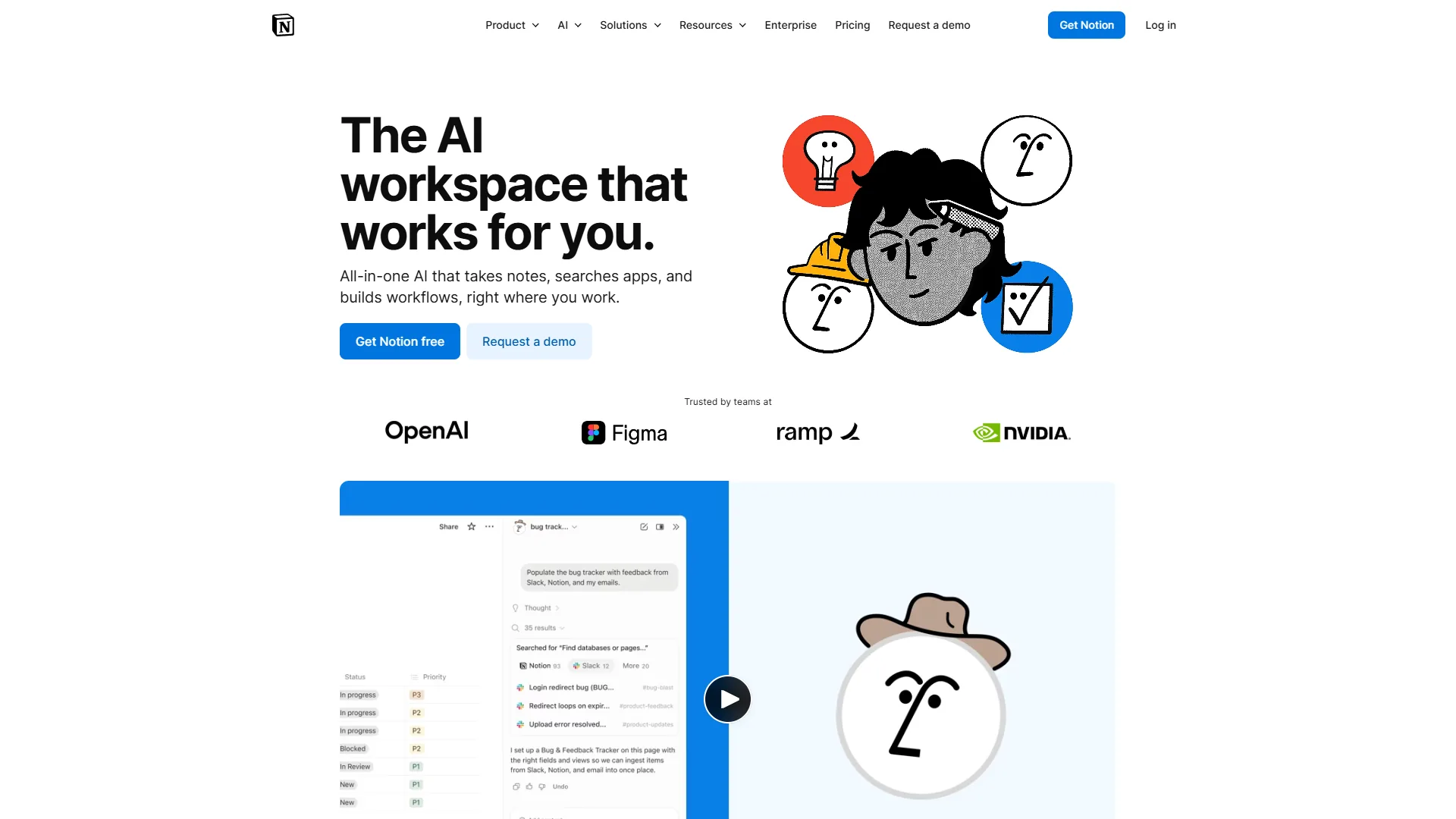
Notion’s AI capabilities have expanded significantly, as detailed on their AI product page. The platform now offers AI writing assistance, autonomous AI Agents, AI Q&A across your entire workspace, auto-fill database properties, custom AI blocks, and meeting notes integration. But features are not the same as workflows. A feature is a button. A workflow is a system that runs with minimal input and produces consistent output.
The difference matters because the average knowledge worker spends 3.6 hours per day on repetitive tasks - searching for information, formatting documents, writing status updates, and summarizing meetings, according to McKinsey research on generative AI. Notion ai workflows target exactly these pain points - and since Notion AI pricing starts at the Business plan, understanding Notion AI free tier limits upfront helps you decide whether the investment makes sense before committing.
Current Pricing (February 2026):
| Plan | Price | AI Access |
|---|---|---|
| Free | $0/month | No AI features |
| Plus | $12/month per seat ($10 on annual billing) | No AI (legacy add-on subscribers only) |
| Business | $18/month per seat ($15 on annual billing) | Full AI with multi-model access, AI Agents |
| Enterprise | Starts at $20/seat/month (annual, negotiable) | Full AI with advanced security and compliance |
The key detail most articles miss: Notion AI is no longer offered as a standalone add-on for Free or Plus users. If you want these workflows, you need the Business plan at minimum. That is $15 per seat on annual billing, which puts it at a competitive price point for an all-in-one workspace with AI built in.
What Are the Best Notion AI Writing and Content Workflows?
1. Auto-Draft Meeting Notes from Transcripts
What it does: Takes raw meeting transcripts (from Zoom, Google Meet, or Notion’s own meeting integration) and generates structured meeting notes with action items, decisions, and owners. If you are evaluating other approaches, our guide on how to summarize meetings with AI covers the broader landscape.
How to build it:
- Create a “Meetings” database with properties for Date, Attendees, Type (standup, planning, 1:1), and Status
- Add a full-page template with sections: Summary, Key Decisions, Action Items, Open Questions
- After each meeting, paste the transcript into the page body
- Use Notion AI’s “Summarize” action on the transcript, then ask it to “Extract action items with owners and deadlines”
- Move the generated content into the corresponding template sections
Time saved: Around 15-20 minutes per meeting. For a team with 5 weekly meetings, that is over an hour back every week.
Pro tip: If your team uses Notion’s native meeting notes integration, transcripts are captured automatically. The summarization step becomes a one-click action.
2. Blog Post First Draft Pipeline
What it does: Generates a structured first draft from a brief, complete with outline, headings, and placeholder content that a writer can refine.
How to build it:
- Create a “Content Pipeline” database with properties for Topic, Target Keyword, Word Count, Status, and Writer
- Build a page template with: Brief (filled manually), Outline (AI-generated), Draft (AI-generated), and Editor Notes
- In the Brief section, write 3-4 sentences about the topic, audience, and angle
- Use Notion AI to “Generate an outline with H2 and H3 headings” based on the brief
- Then prompt AI to “Write a first draft following this outline, targeting [word count] words”
- The writer starts editing from a structured draft instead of a blank page
Time saved: Around 30-45 minutes per article. The draft is never publish-ready, but it eliminates the blank-page problem and gives writers a scaffold to work from. For a deeper look at structuring these pipelines, see our guide on building an AI content writing workflow and our roundup of the best AI writing tools.
3. Auto-Summarize Long Documents
What it does: Creates executive summaries for research documents, project briefs, and reference materials so team members can quickly decide if they need to read the full document.
How to build it:
- In any document or wiki page, add a callout block at the top labeled “TL;DR”
- After writing or pasting the full document, select all content below the callout
- Use Notion AI to “Summarize this in 3-4 bullet points for a busy executive”
- Paste the summary into the TL;DR callout
Time saved: Around 5 minutes per document, but the compound effect is significant. When every long document in your workspace has a summary, team members stop asking “Can you give me the short version?” in Slack. For background on knowledge worker context-switching costs, see Gloria Mark’s research at UC Irvine.
4. Translate and Localize Content
What it does: Takes existing content and translates it into other languages while maintaining tone and context - not just word-for-word translation.
How to build it:
- Create a “Localization” database with properties for Source Page (relation), Language, Status, and Reviewer
- Duplicate the source page into a new entry for each target language
- Select the full page content and use Notion AI: “Translate this to [language], keeping a professional but approachable tone. Adapt idioms and cultural references for a [region] audience.”
- Assign a native speaker to review
Time saved: Around 45-60 minutes per translation. Machine translation gets you 80% there. A human reviewer polishes the last 20%, but the heavy lifting is done. If your localization needs outgrow Notion’s built-in capabilities, check out our roundup of AI translation tools for dedicated alternatives, plus the CSA Research reports on machine translation quality.
5. Rewrite for Different Audiences
What it does: Takes a single piece of content and adapts it for different stakeholders - turning a technical spec into an executive brief, or a product update into a customer-facing announcement.
How to build it:
- Write the source document in its most detailed form (usually the technical version)
- Create linked pages for each audience version
- Copy the source content into each audience page
- Use Notion AI with specific prompts: “Rewrite this technical specification as a one-page executive summary. Remove implementation details. Focus on business impact, timeline, and resource requirements.”
- Repeat with different audience prompts for customer-facing, sales team, or board versions
Time saved: Around 20 minutes per audience version. Instead of writing three versions of the same announcement, you write one and let AI adapt the rest. For more rewriting patterns, see our AI writing tools coverage.
Project Management Workflows (6-9)
6. Auto-Fill Task Properties from Descriptions
What it does: Reads a task description and automatically fills in database properties like Priority, Estimated Hours, Category, and Tags.
How to build it:
- In your project database, enable “Auto-fill” on properties you want AI to populate
- For the Priority property, set the AI prompt to: “Based on this task description, assign priority: High (blocks other work or has a deadline within 3 days), Medium (important but not urgent), Low (nice-to-have or maintenance)”
- For Estimated Hours, prompt: “Estimate the number of hours this task will take based on the description. Be conservative.”
- For Category, prompt: “Classify this task as one of: Bug Fix, Feature, Documentation, Maintenance, Research”
Time saved: Around 2-3 minutes per task. With teams creating 20-30 tasks per week, that is an hour of triage time eliminated. More importantly, it creates consistency - AI applies the same criteria every time, unlike humans who tend to mark everything as “High” priority. For a broader look at how AI is reshaping task management, see our best AI tools for project managers and the Notion database automations docs.
7. Sprint Retrospective Generator
What it does: Compiles sprint data and generates a structured retrospective document that teams can discuss instead of building from scratch.
How to build it:
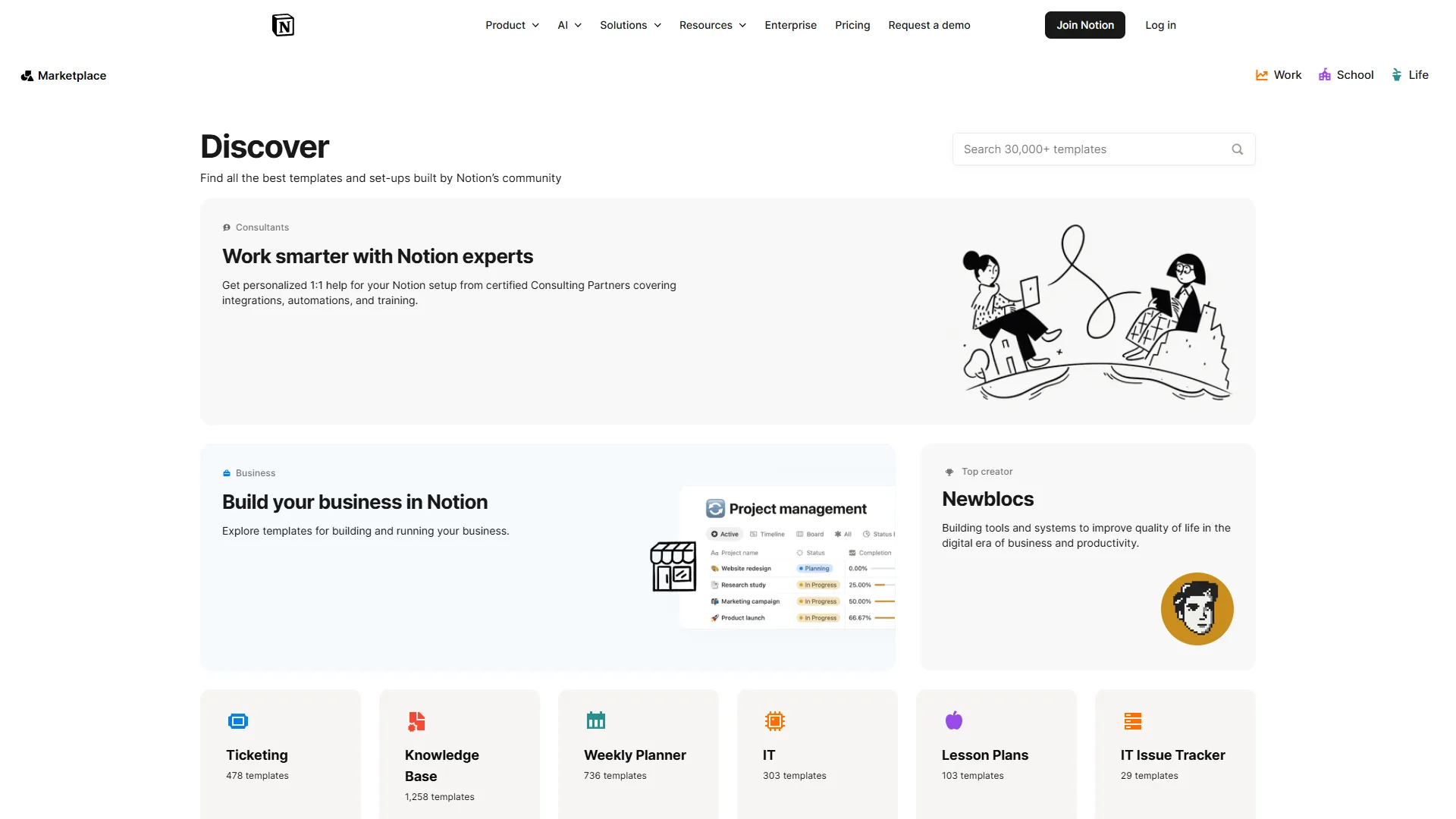
- Create a “Sprints” database linked to your Tasks database via a relation
- Build a retrospective template with sections: What Went Well, What Needs Improvement, Action Items for Next Sprint
- At sprint end, use Notion AI on the sprint page: “Based on the tasks in this sprint, analyze completion rates, identify what was delivered on time versus delayed, and suggest 3 things that went well and 3 areas for improvement”
- The team reviews and edits the AI draft during the retro meeting instead of spending 30 minutes brainstorming from scratch
Time saved: Around 25 minutes per sprint. The retro meeting becomes more focused because the team starts with concrete observations rather than blank sticky notes. Compare with how Jira handles the same workflow if you split planning across tools.
8. Weekly Status Report Automation
What it does: Pulls together accomplishments, blockers, and plans from your task database and generates a polished status update for stakeholders.
How to build it:
- Create a “Status Reports” database with a Date property and a relation to your Tasks database
- Filter the related tasks by: completed this week, in progress, and blocked
- Use Notion AI: “Write a professional weekly status report based on these tasks. Group into: Completed This Week, In Progress, Blocked/Needs Help, and Planned for Next Week. Keep it concise - one line per item.”
- Review, adjust any nuances AI missed, and share with stakeholders
Time saved: Around 20 minutes per week. Status reports are necessary but soul-crushing. Let AI do the compilation while you add the context only you know. Pair this with the knowledge sharing best practices guide for a complete reporting cadence.
9. Project Risk Register with AI Assessment
What it does: Maintains a living risk register where AI helps assess new risks and suggest mitigations based on project context.
How to build it:
- Create a “Risks” database with properties for Description, Likelihood (High/Medium/Low), Impact (High/Medium/Low), Mitigation Plan, Owner, and Status
- When adding a new risk, write the description and use AI auto-fill for Likelihood and Impact
- For the Mitigation Plan property, use AI: “Suggest 2-3 practical mitigation strategies for this risk, considering it is a [project type] project with [team size] people”
- Review AI suggestions and keep the ones that actually apply to your situation
Time saved: Around 10 minutes per risk assessment. The bigger value is that risks actually get documented instead of living in someone’s head because “writing up the mitigation plan” felt like too much work. The PMI risk register guidance is a useful reference for picking the right register fields.
Knowledge Management Workflows (10-12)
10. AI Q&A Knowledge Base
What it does: Turns your entire Notion workspace into a searchable knowledge base where team members can ask questions in natural language and get answers sourced from your own documentation.
How to build it:
- Organize your wiki pages with clear titles and structured content (headings, not walls of text)
- Use Notion AI’s Q&A feature (available on Business and Enterprise plans)
- Team members type questions like “What is our refund policy?” or “How do I set up the staging environment?” and AI searches across all workspace pages to find and synthesize the answer
- The AI cites its sources, so users can verify and read the full document if needed
Time saved: According to Notion’s published case studies, Remote.com saves around 10 minutes per search across 300 daily queries. Even at smaller scale, this eliminates the “Hey, where is the doc for X?” question that interrupts deep work.
When this does not work well: AI Q&A struggles with outdated or contradictory documentation. If your wiki has three different versions of the onboarding process and none are marked as current, AI will happily synthesize all three into a confusing answer. Clean your wiki first. Our knowledge sharing best practices guide covers how to structure documentation so AI search actually returns useful answers.
11. Auto-Tag and Categorize Research
What it does: Takes research notes, articles, and reference materials and automatically categorizes them with consistent tags and summaries.
How to build it:
- Create a “Research” database with properties for Source URL, Topic Tags (multi-select), Key Takeaways (AI-generated), and Relevance Score
- When adding a new research item, paste the content or link
- Set up auto-fill for Topic Tags: “Categorize this research into 2-3 topics from: [your tag list]. Only use existing tags.”
- Set up auto-fill for Key Takeaways: “List the 3 most important findings or arguments from this content in one sentence each”
Time saved: Around 5 minutes per research item. The real payoff comes later - when you can filter your entire research database by topic and find exactly what you need in seconds instead of scrolling through untagged notes. The Notion databases documentation covers tagging best practices.
12. Onboarding Documentation Generator
What it does: Creates personalized onboarding checklists and documentation based on a new hire’s role, department, and start date.
How to build it:
- Create a “Team Members” database with Role, Department, Start Date, and Manager properties
- Build an onboarding template with standard sections: Week 1, Week 2, First Month, First Quarter
- When a new person joins, create their onboarding page from the template
- Use Notion AI: “Customize this onboarding checklist for a [role] joining the [department] team. Add role-specific tasks like tools to set up, people to meet, and documentation to read. Remove items that do not apply to this role.”
- The manager reviews and adjusts the personalized checklist
Time saved: Around 30 minutes per new hire. More importantly, new hires get a consistent, thorough onboarding experience instead of whatever their manager remembers to tell them. For broader patterns, our best AI knowledge management tools coverage looks at platforms purpose-built for onboarding libraries.
Team Collaboration Workflows (13-15)
13. Decision Log with AI Context
What it does: Maintains a searchable log of all team decisions with context, alternatives considered, and reasoning - so nobody asks “Why did we decide that?” six months later.
How to build it:
- Create a “Decisions” database with properties for Decision, Date, Decision Maker, Context, Alternatives Considered, and Outcome
- When logging a decision, write a brief description of the situation and the choice made
- Use Notion AI: “Based on this decision and context, write a brief summary of likely alternatives that were considered and why this option was chosen. Format as a concise decision record.”
- The decision maker reviews, corrects any assumptions AI made, and adds any context AI missed
Time saved: Around 10 minutes per decision logged. But the real value is downstream - six months later, when someone asks “Why did we choose Postgres over MongoDB?”, the answer exists in a searchable database instead of buried in a Slack thread nobody can find.
14. RFP and Proposal Draft Assembly
What it does: Assembles proposal drafts by pulling from your existing content library, case studies, and company boilerplate - then customizes for each prospect.
How to build it:
- Create a “Content Library” database with reusable blocks: company overview, team bios, case studies, methodology descriptions, and pricing templates
- Create a “Proposals” database with properties for Client, Industry, Budget Range, and Due Date
- For each new proposal, start from a template and use Notion AI: “Draft an introduction for a proposal to [client name] in the [industry] industry. They need [service]. Reference our experience with similar clients and emphasize [key differentiator].”
- Pull relevant case studies from the Content Library using relations
- Use AI to tailor generic content blocks to the specific prospect’s language and pain points
Time saved: Around 1-2 hours per proposal. Proposals are one of the highest-value documents teams produce, and most of the time is spent on copy-paste-customize cycles that AI handles well. For freelancers and agencies, our how to write proposals with AI guide goes deeper into the end-to-end process, and the AI tools for project managers roundup covers RFP-adjacent tooling.
15. Standup Notes with AI Action Extraction
What it does: Team members write quick standup updates in natural language, and AI extracts blockers, commitments, and cross-team dependencies into structured data.
How to build it:
- Create a “Standups” database with properties for Date, Person, and a relation to your Tasks database
- Each team member writes a quick paragraph: “Yesterday I finished the API integration. Today I am working on the dashboard charts but I am blocked on the design mockups from Sarah. I also need to sync with the backend team about the new auth flow.”
- Set up auto-fill properties for: Blockers (extracted from update), Today’s Focus (extracted), and Dependencies (extracted cross-team mentions)
- A manager view filters all standups for the day, showing blockers and dependencies at a glance without reading every individual update
Time saved: Around 15 minutes per day for managers who currently read through individual standup messages. For teams of 8+, this surfaces blockers in seconds instead of minutes. Compare with how dedicated tools like Linear and Jira automate the same loop.
How Do You Set Up Your First Notion AI Workflow?
If you are new to notion ai workflows, do not try to implement all 15 at once. Here is a recommended order:
Week 1 - Quick Wins:
- Start with Workflow 3 (Auto-Summarize) - it is the simplest and delivers immediate value
- Set up Workflow 6 (Auto-Fill Task Properties) if you have an existing project database
Week 2 - Writing Workflows:
- Implement Workflow 1 (Meeting Notes) if your team has regular meetings
- Try Workflow 8 (Weekly Status Reports) to eliminate your most dreaded weekly task
Week 3 - Knowledge Management:
- Set up Workflow 10 (AI Q&A) if you have a substantial wiki
- Build Workflow 11 (Auto-Tag Research) for your research or reference database
Month 2 - Advanced Workflows:
- Roll out the remaining workflows based on which pain points are loudest on your team
When NOT to Use Notion AI Workflows
Honest assessment: notion ai workflows are not the right solution for everything.
Skip Notion AI when:
- You need real-time data processing. Notion AI works on static content. If you need live dashboard calculations or real-time alerts, use dedicated tools.
- Accuracy is non-negotiable. AI-generated summaries and categorizations are good but not perfect. For legal documents, financial reports, or compliance materials, always have a human verify the output.
- Your workspace is a mess. AI Q&A and auto-tagging amplify whatever is in your workspace. If your docs are outdated, contradictory, or poorly organized, AI will surface bad information confidently. Clean up first.
- The task requires deep domain expertise. AI can draft a project risk assessment, but it cannot replace a senior engineer’s judgment about technical debt. Use AI output as a starting point, not a final answer.
The Bottom Line
These 15 notion ai workflows address the specific tasks that eat into productive hours - writing meeting notes, triaging tasks, compiling reports, and searching for information buried across your workspace. The workflows that save the most time are the ones you will actually use consistently, so start with the two or three that match your biggest pain points.
The key insight is that these automations are not about replacing human judgment. They are about eliminating the mechanical parts of knowledge work so you can focus on the parts that actually require thinking. Set up one workflow this week, refine it, and expand from there.
Explore Notion to see if the Business plan fits your team’s needs, and check the latest pricing before purchasing seats.
Frequently Asked Questions
Is Notion AI free or does it require a paid plan?
Notion AI is not available on the Free or Plus plans. You need the Business plan at minimum, which costs $15 per seat on annual billing. The platform no longer offers AI as a standalone add-on for lower-tier subscribers, so teams wanting these workflows must budget for the Business plan or above. Compare alternatives in our best AI knowledge management tools roundup before committing.
What is the best Notion AI workflow for beginners to start with?
For those new to notion ai workflows, the recommended starting point is the Auto-Summarize workflow - it is the simplest to set up and delivers immediate value. Following that, the Auto-Fill Task Properties workflow works well for teams that already have an existing project database in place. Both can be configured in under 30 minutes by an admin who already understands Notion’s database model.
How much time can Notion AI workflows realistically save each week?
Time savings vary by workflow. Auto-drafting meeting notes saves 15-20 minutes per meeting, weekly status reports save around 20 minutes, and auto-filling task properties eliminates roughly an hour of triage for teams creating 20-30 tasks weekly. Across multiple workflows, total savings can reach several hours per week. The compound effect is higher for teams that adopt at least three workflows and stick with them past the first month.
When should teams avoid using Notion AI workflows?
Notion AI workflows are not suitable for every situation. Skip them when you need real-time data processing, when accuracy is non-negotiable such as for legal or financial documents, when your workspace documentation is outdated or disorganized, or when the task demands deep domain expertise rather than mechanical drafting. In those cases, dedicated tools or human review remain the safer route.
What Notion AI features power these automation workflows?
Notion AI’s workflow automation draws on several built-in capabilities: AI writing assistance, autonomous AI Agents, AI Q&A across the entire workspace, auto-fill database properties, custom AI blocks, and meeting notes integration. These features work together as systems that run with minimal input and produce consistent output rather than one-off buttons. Detail on each capability lives in the official Notion AI help center.
Want to learn more about Notion?
Related Guides
- Notion Database Templates Guide - Advanced database patterns
- How to Summarize Meetings with AI - Pair with Workflow #1
- AI Content Writing Workflow - Extends Workflow #2
- Knowledge Sharing Best Practices - Prep your wiki for Workflow #10
Related Reading
- Notion Review - Full review of the AI-powered workspace with databases and agents
- Notion Database Templates: Complete Guide for Power Users - Advanced database patterns for CRM, project tracking, and content calendars
- Notion AI vs Coda AI: Which Workspace Wins in 2026? - Feature-by-feature comparison of AI workspace capabilities
- Obsidian vs Notion - Choosing the right knowledge management approach
- Best AI Knowledge Management Tools - Complete roundup of AI-powered knowledge platforms
External Resources
- Notion Help Center - Official Guides for AI Features and Workspace Setup
- Notion Template Gallery - Official and Community Templates
Related Guides
- 15 Calendly Tips and Tricks to Save 4+ Hours Weekly
- ActiveCampaign AI Features: Active Intelligence Guide
- ActiveCampaign Zapier: 10 Automations to Build Today
- AI Workflow Automation Maturity Model: 5 Levels
- Atlassian Intelligence Review: 2026 Pricing & Features
- Atlassian Tools for Developers: Jira, Confluence & Bitbucket
- Building AI First Workflows: A Practitioner's 2026 Guide
- Client Onboarding Automation: Automate Client Onboarding
- Craft Tips and Tricks: 12 Expert Hacks for Faster Docs
- ElevenLabs Team Workspace Collaboration: Setup Guide