


The strongest Zoho CRM alternatives in 2026 are Salesforce for enterprise teams, HubSpot for marketing-led organizations, and Pipedrive for sales-focused SMBs. Zoho CRM itself has a compelling pitch: enterprise-level features at prices that will not make your finance team flinch. With a genuine free tier for up to three users, AI-powered automation through its Zia assistant, and deep integration across the broader Zoho ecosystem, it is easy to see why hundreds of thousands of businesses use it.
Our analysis draws on current vendor documentation, published pricing pages, and independent research rather than sponsored placement, and AI Productivity may earn a commission from links on this page - our rankings are editorially independent. CRM software is now near-universal: 91% of companies with 10 or more employees use a CRM platform, according to Nucleus Research, and the global CRM market is on track to reach $145.79 billion by 2029, according to Fortune Business Insights.
But Zoho is not the right answer for everyone. Some teams find the interface cluttered and dated compared to newer CRMs. Others outgrow Zoho’s support tiers, hit friction with the learning curve on advanced features, or simply need something more tailored to marketing-led growth or enterprise-scale operations. If you’re in that camp, the good news is that Zoho CRM alternatives - including strong Zoho crm alternatives free options and Zoho alternatives open source platforms - have never been stronger.
This guide covers the three most important Zoho CRM alternatives - Salesforce, Pipedrive, and HubSpot - with honest pricing data, a clear breakdown of who each tool suits best, and a decision framework to help you choose without second-guessing yourself.
Comparison Table: Zoho CRM Alternatives at a Glance
The four leading Zoho CRM alternatives are Salesforce, HubSpot, Pipedrive, and ActiveCampaign, each offering comparable CRM features with distinct strengths in price, marketing depth, pipeline simplicity, or email automation. The table below compares all four against Zoho CRM on pricing, AI features, and ease of setup.
| Zoho CRM | Salesforce | HubSpot | Pipedrive | |
|---|---|---|---|---|
| Starting price | Free (up to 3 users) | $25/user/mo | Free tier available | $24/user/mo |
| AI features | Zia assistant (Enterprise+) | Agentforce + Einstein AI | Breeze AI Suite | AI Sales Assistant (Premium+) |
| Best for | Budget-conscious SMBs | Enterprise teams | Marketing-led orgs | Sales-focused SMBs |
| Free tier | Yes (3 users) | No (30-day trial) | Yes (2 users) | No (14-day trial) |
| Ease of setup | Moderate | Complex | Easy | Very easy |
| 4.0 | 4.4 | 4.4 | 4.3 |
Zoho CRM Overview
Zoho CRM is a value-focused CRM platform that starts at around $14 per user per month (billed annually) and includes a genuine free tier for up to three users, AI automation via the Zia assistant, and deep integration across the Zoho ecosystem. Even the free tier includes unlimited contacts, deal management, and mobile app access - not the stripped-down demo version you get with many competitors.
The standout feature is the Zia AI assistant, available from the Enterprise plan (around $40 per user per month annually). Zia handles churn prediction, deal closure probability scoring, sentiment analysis of customer communications, and anomaly detection in sales metrics.
Blueprint automation - available from the Professional tier at around $23 per user per month annually - lets you build visual sales process maps that enforce mandatory steps, approval checkpoints, and required actions before reps can advance deals.
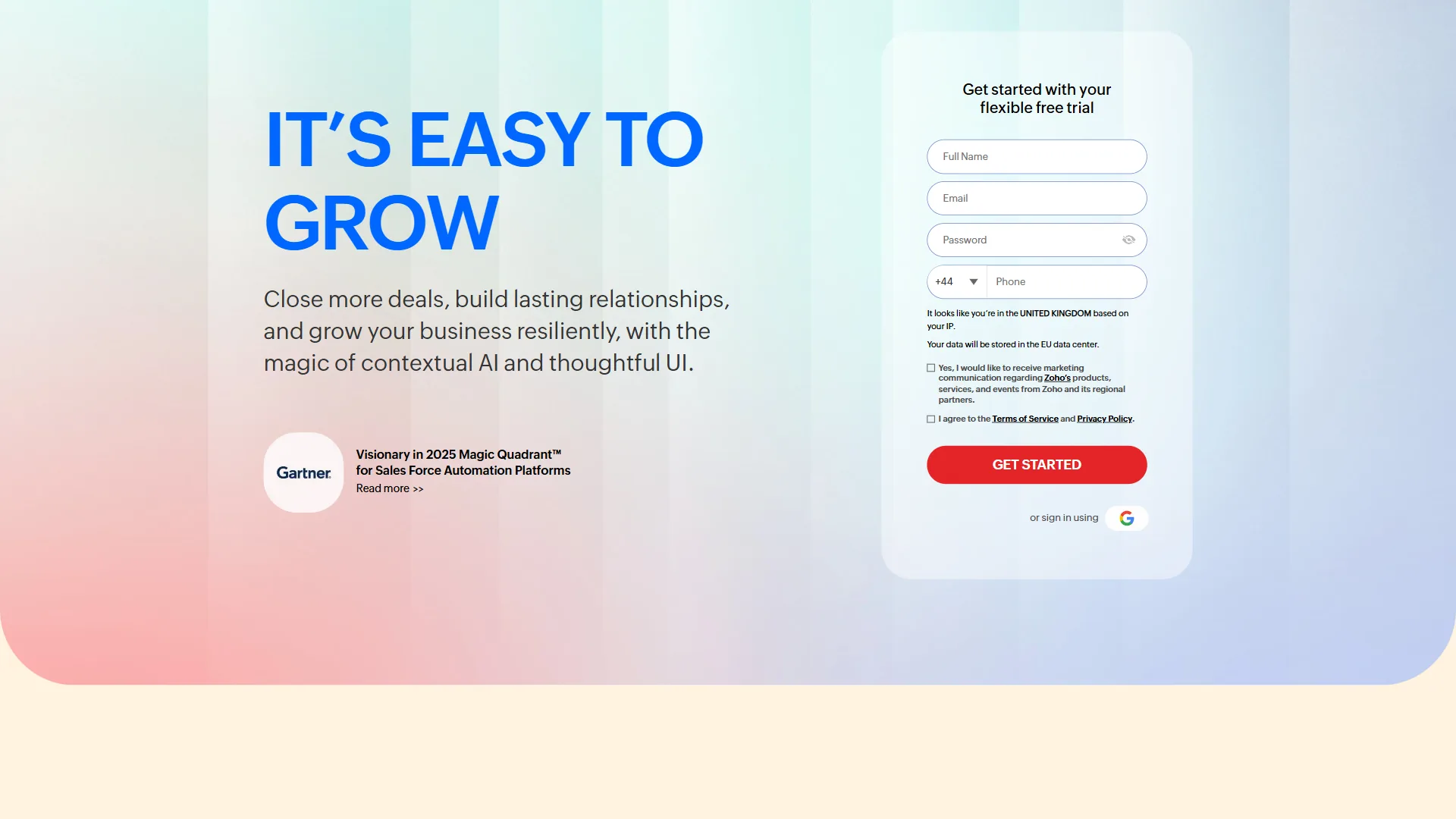
Pricing summary:
- Free: Up to 3 users, unlimited contacts, basic features
- Standard: around $20 per month (or $14 annually) - sales forecasting, custom modules
- Professional: around $35 per month (or $23 annually) - Blueprint automation, Canvas design studio
- Enterprise: around $50 per month (or $40 annually) - full Zia AI suite
- Ultimate: around $65 per month (or $52 annually) - Zia Agent Studio, QuickML, premium support
Who should stay with Zoho CRM: Teams already embedded in the Zoho ecosystem (Books, Projects, Desk), budget-conscious SMBs who want AI features without enterprise pricing, and companies with complex sales processes that benefit from Blueprint workflow enforcement.
Why people look elsewhere: The UI feels dated next to newer platforms, premium support is gated behind the Ultimate tier, and the breadth of features creates a steeper learning curve than pipeline-focused alternatives like Pipedrive. Our best CRM software 2026 roundup covers the full market for buyers exploring further.
Salesforce - For Enterprise Teams That Need Maximum Power
Salesforce is the world’s most widely used CRM, with an ecosystem of 9,000+ AppExchange integrations that plugs into virtually any tech stack. If Zoho CRM is the value leader, Salesforce is the power leader.
The most significant development is Agentforce 2.0, Salesforce’s autonomous AI agent platform on the Einstein 1 Sales tier (around $500 per user per month), which handles lead qualification, routine follow-ups, and data entry autonomously. Combined with Einstein Copilot, the AI capabilities are ahead of the market - for teams that can afford them.
The honest trade-off: Salesforce is expensive and complex. The Starter Suite at around $25 per user per month is too limited for real sales work; you need the Pro Suite (around $80 per user per month) at minimum for automation and API access. Implementation typically takes 90 days, and most teams need a dedicated administrator - which adds $60,000-$90,000 annually in personnel costs.
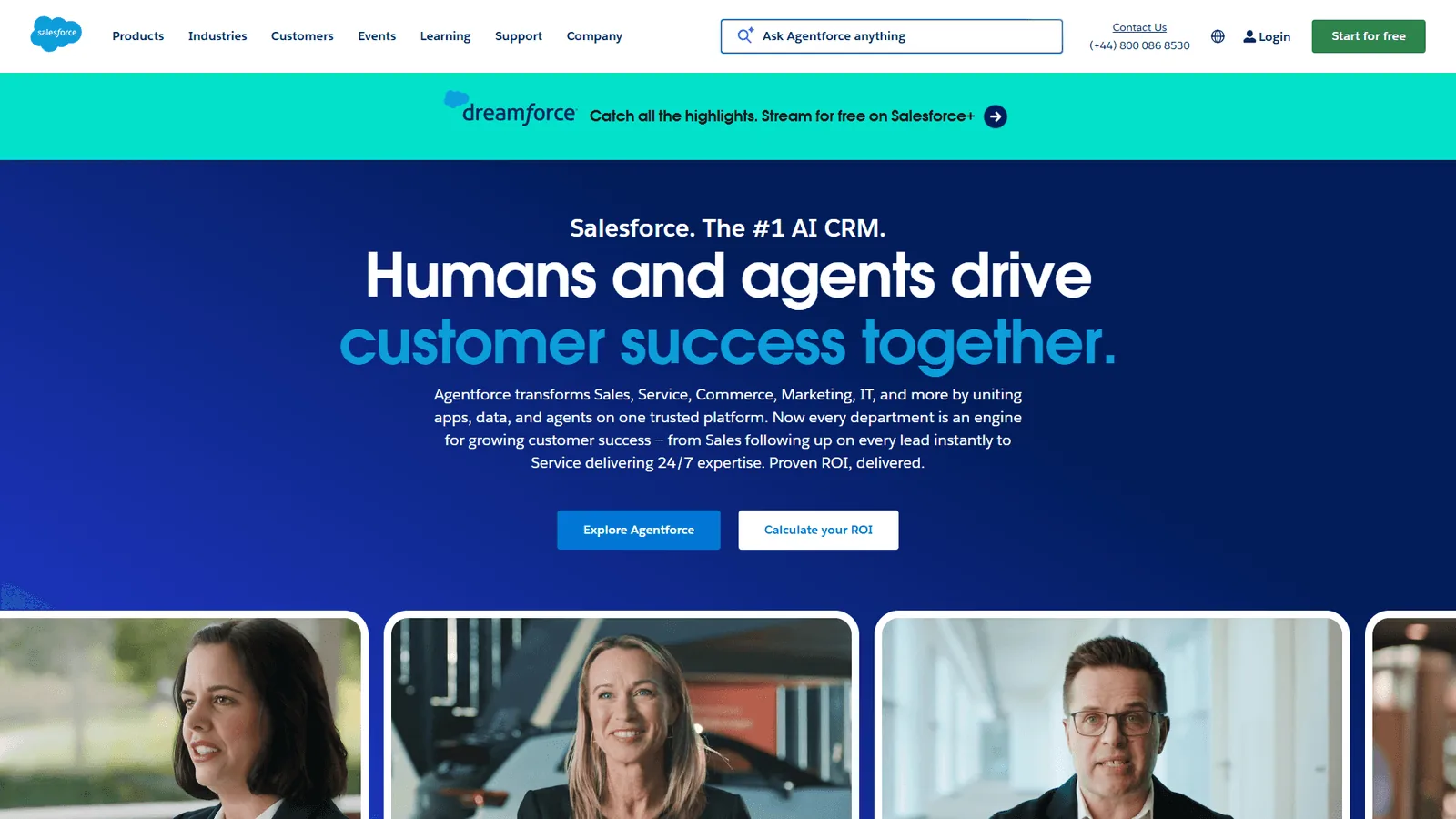
Pricing summary:
- Starter Suite: around $25 per user per month - basic CRM, up to 325 users
- Pro Suite: around $80 per user per month - automation, API access, lead scoring
- Enterprise: around $165 per user per month - advanced customization, territory management
- Unlimited: around $330 per user per month - 24/7 support, full Einstein AI
- Einstein 1 Sales (Agentforce): around $500 per user per month - autonomous AI agents
Compared to Zoho CRM: Salesforce costs 3-8x more at comparable feature levels - where Zoho delivers enterprise-grade automation at $23-40 per user per month, equivalent Salesforce functionality starts at $80-165 per user per month. The trade-off is deeper customization, a larger integration ecosystem, and more sophisticated AI.
Best for: Enterprise sales teams with 200+ reps, long complex sales cycles (6-18 months), multi-department implementations, and regulated industries needing compliance certifications (HIPAA, SOC 2, ISO 27001).
Not ideal for: Startups and small businesses where the cost and complexity create more friction than value. If your sales cycle is under 60 days and your team is under 50 people, the alternatives below serve you better. Our Salesforce alternatives breakdown is a good next stop for smaller teams.
Pipedrive - For Sales Teams That Want Simplicity and Speed
Pipedrive is built around one idea: the visual sales pipeline should be so intuitive that reps actually use it. Where Zoho CRM can feel overwhelming with its feature depth, Pipedrive strips things back to what matters for closing deals - managing activity, tracking deals through stages, and acting on AI predictions. New reps go from zero to productive within hours, not the weeks Salesforce or even Zoho can require.
AI features arrive at the Premium tier (around $79 per month, or $49 per month annually). The AI Sales Assistant provides win probability predictions, lead scoring, and AI-generated emails, while Smart Contact Data enriches records with job titles, company information, and LinkedIn profiles. The agentic AI experience is available in beta on the Ultimate tier (around $99 per month, or $79 per month annually).
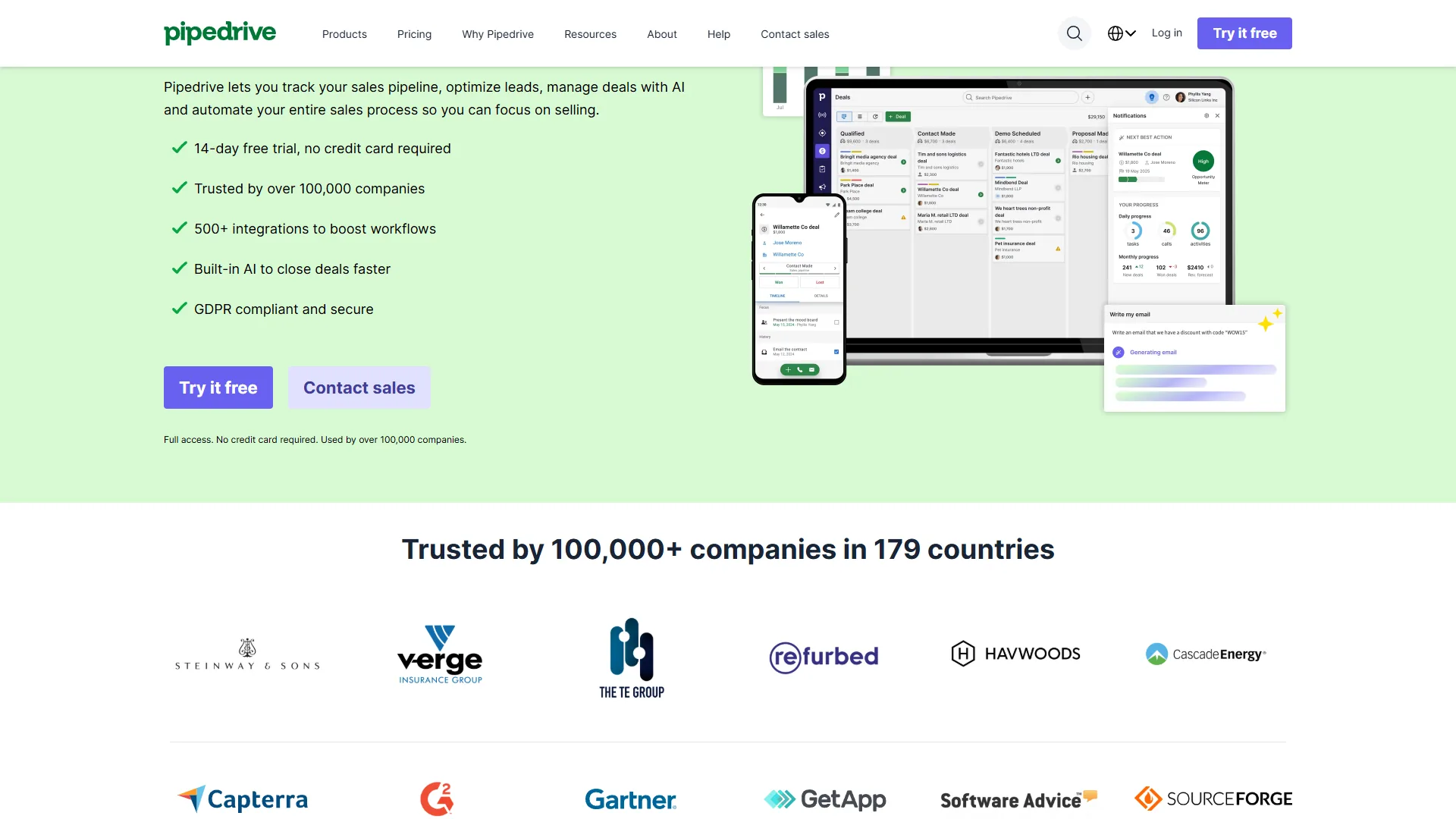
Pricing summary:
- Lite: around $24 per month (or $14 annually) - core pipeline management, no AI
- Growth: around $49 per month (or $39 annually) - automation, email sync, basic AI marketplace search
- Premium: around $79 per month (or $49 annually) - full AI Sales Assistant, win probability, email AI
- Ultimate: around $99 per month (or $79 annually) - agentic AI (beta), sandbox, priority support
Compared to Zoho CRM: Pipedrive wins decisively on ease of use and pipeline UI, while Zoho offers broader feature depth - Blueprint automation, Canvas design studio, omnichannel communication. Pricing is comparable at the entry level, but Zoho’s free tier gives it an edge for teams that need more than pipeline management.
Best for: SMB sales teams (2-50 reps) who want to spend time selling rather than configuring software, mobile-first teams that value the offline mode, and organizations prioritizing quick implementation over feature depth.
Not ideal for: Marketing-heavy organizations - Pipedrive’s email campaign features are basic compared to HubSpot’s - and large enterprises needing complex role hierarchies. Buyers can compare current tiers on the Pipedrive pricing page.
HubSpot CRM - For Marketing-Led Organizations
HubSpot CRM is an all-in-one platform built around inbound marketing, making it the strongest Zoho CRM alternative for organizations where marketing - not sales - drives the pipeline. Where Zoho, Salesforce, and Pipedrive are primarily sales-focused platforms with marketing features added on, HubSpot grew out of inbound marketing and built its CRM around that foundation.
The Breeze AI Suite - launched at INBOUND 2026 - includes the AI Assistant with memory across conversations, the Customer Agent (which autonomously resolves 50%+ of support tickets), the Prospecting Agent (an AI BDR for outbound), and Breeze Studio for building custom AI agents.
The free CRM is a genuine differentiator. Unlike Zoho’s free tier (limited to 3 users) or Pipedrive’s 14-day trial, HubSpot’s free tier is permanently free for up to 2 users and includes contact management, email tracking, meeting scheduling, and basic automation - genuinely usable for small teams, not just a demo.
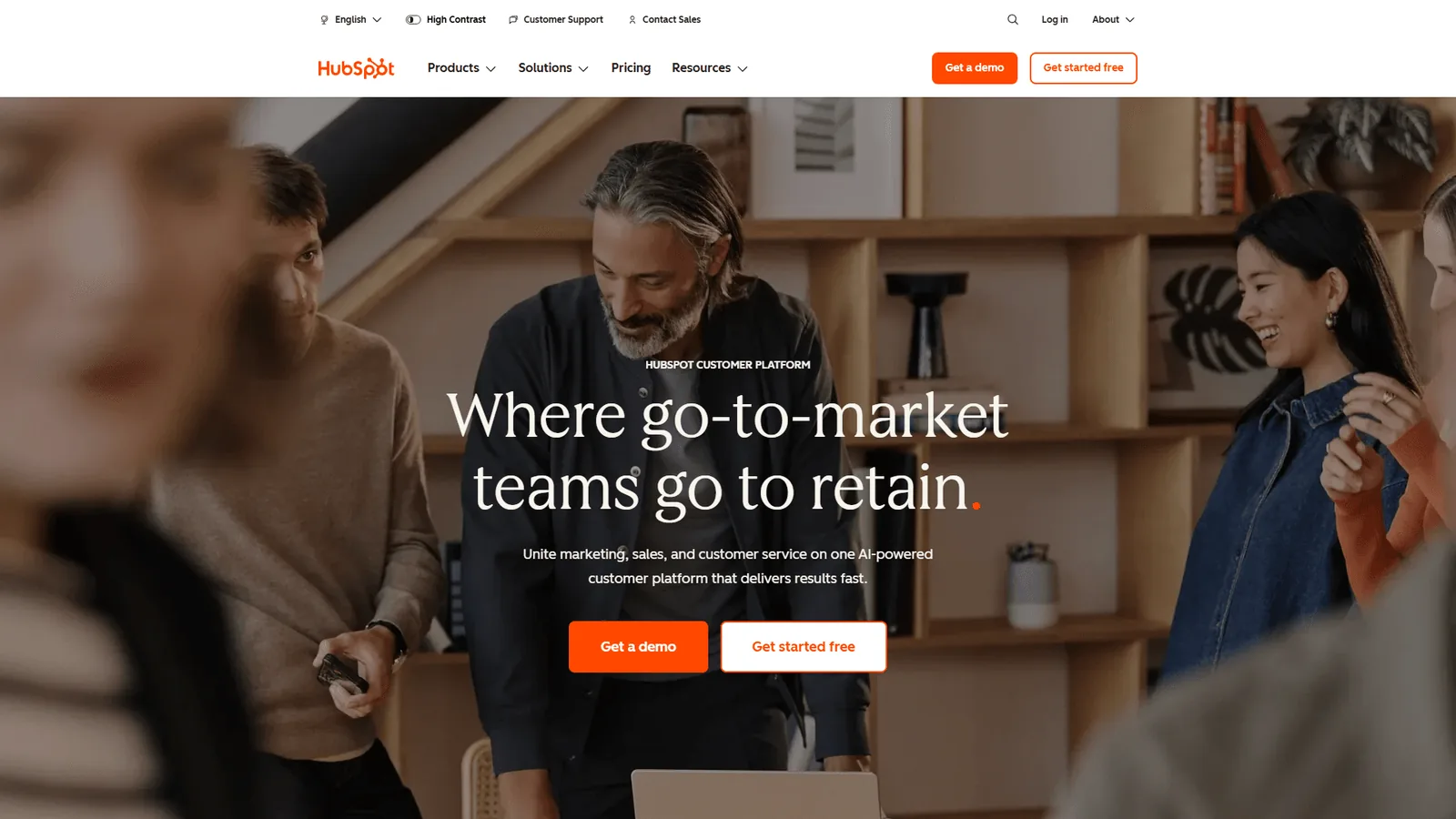
Pricing summary:
- Free Tools: Permanently free, up to 2 users, basic CRM
- Starter Customer Platform: around $15 per month (or $9 annually) - all five hubs, basic automation
- Professional (Marketing Hub): around $890 per month (or $801 annually) - full automation, A/B testing, Breeze AI - plus $3,000 onboarding fee
- Enterprise (Marketing Hub): around $3,600 per month (or $3,240 annually) - full Breeze AI Suite, custom objects - plus $7,000 onboarding fee
Compared to Zoho CRM: HubSpot’s free tier and Starter plan are more accessible entry points, but HubSpot gets expensive fast - the jump from Starter (around $15 per month) to Professional (around $890 per month) is significant, and mandatory onboarding fees add thousands upfront. Zoho delivers comparable automation at a fraction of the cost; HubSpot wins on UI polish and marketing automation sophistication.
Best for: Marketing-led organizations where content, email campaigns, and inbound lead generation drive the pipeline, and teams that want a unified platform for marketing, sales, and service with no data sync overhead.
Not ideal for: Budget-conscious teams - the Professional tier’s onboarding fees and contact-based pricing scale costs fast - and teams that only need CRM without marketing automation. The HubSpot vs Salesforce head-to-head goes deeper on customization.
Final Verdict: Which Zoho CRM Alternative Fits
The best Zoho CRM alternative for your team is Salesforce for enterprises with 200-plus reps, Pipedrive for sales-focused SMBs, HubSpot for marketing-led organizations, and ActiveCampaign for teams where email automation drives deals. Fit matters more than feature count when switching CRMs - “the best CRM is the one your reps will actually use every day,” as Pipedrive co-founder Timo Rein has stated about pipeline adoption. Here is how to think through the main options:
Choose Salesforce if: your team has 200+ sales reps with complex territory management, you need multi-department unification, you operate in a regulated industry requiring compliance certifications, and you have budget for a dedicated administrator and a 90-day implementation. The best AI CRM tools 2026 roundup highlights other AI-forward enterprise stacks.
Choose Pipedrive if: your team is 2-50 reps focused on closing deals rather than marketing campaigns, you need new reps productive within days, you want predictable per-user pricing without contact-based scaling costs, and your field team needs a strong mobile app with offline mode.
Choose HubSpot if: marketing drives most of your pipeline, you want a single platform for marketing, sales, and service with no integration headaches, your free tier needs are real, and you can absorb the cost step-ups when scaling past Starter. The Pipedrive vs HubSpot head-to-head helps if you are torn between the two.
Choose ActiveCampaign if: email automation is central to your sales process, you run multi-step nurture sequences tied to deal stages, you need strong deliverability and active-contacts-only billing, and your team is under 50 people needing CRM plus email without Salesforce complexity or HubSpot’s pricing cliff.
ActiveCampaign’s Plus plan (around $49 per month) includes a built-in Sales CRM with deal pipelines, win probability scoring, and the most capable email automation builder in this price range. Our getting started guide covers setup.
Stay with Zoho CRM if: you are already using Zoho Books, Projects, or Desk, you need Blueprint-style workflow enforcement at SMB-friendly pricing, you want Zia AI features without enterprise CRM prices, and your team can navigate the learning curve in exchange for exceptional value. The best CRM for small business 2026 roundup helps if Zoho still feels like the right tier.
The Bottom Line
No single Zoho CRM alternative is best for every team - the right pick depends on team size, budget, and whether sales or marketing drives your pipeline.
Salesforce is the right choice when you need enterprise-grade power and have the budget to match ($80-500 per user per month). For teams below 100 employees, it is usually overkill.
Pipedrive wins for pure sales focus, delivering the best visual pipeline and AI Sales Assistant experience at the $14-79 per user per month price point.
HubSpot is the strongest choice for marketing-led organizations wanting CRM, marketing automation, and service unified in one platform - though costs scale as your contact database grows.
Zoho CRM itself remains compelling for budget-conscious SMBs who want enterprise features at accessible prices. If you are considering switching, make sure the alternative genuinely offers something Zoho does not.
FAQ
Is Zoho CRM really free?
Yes, Zoho CRM’s free tier supports up to 3 users with unlimited contacts, deal management, and mobile app access. It is more functional than most free CRM plans, though it lacks automation, AI features, and advanced reporting. For teams that outgrow the free tier, paid plans start at around $14 per user per month.
What is the easiest CRM to switch to from Zoho?
Pipedrive is the simplest transition for sales-focused teams - the visual pipeline is intuitive and most reps are productive within hours. HubSpot is the easiest for teams that want marketing and sales in one tool, especially since the free tier lets you test before committing. Contact data exports from Zoho via CSV and imports cleanly into both platforms.
Which Zoho CRM alternative is best for email marketing?
ActiveCampaign is the strongest option if email automation is a priority. Its automation builder handles branching logic, conditional waits, and cross-channel triggers that dedicated CRMs like Pipedrive or Salesforce require separate tools to match. The Plus plan includes CRM with deal pipelines, making it a true all-in-one for teams where email drives the sales process.
How does Zoho CRM compare to Salesforce on price?
Zoho CRM costs roughly one-third to one-fifth of equivalent Salesforce functionality. Zoho’s Enterprise plan with full Zia AI is around $40 per user per month, while comparable Salesforce features require the Enterprise tier at around $165 per user per month. The trade-off is that Salesforce offers deeper customization, a larger integration ecosystem, and more sophisticated AI - but only if your team has the budget and technical resources to use it.
What do users on Zoho CRM alternatives Reddit threads recommend?
Discussions on Zoho CRM alternatives Reddit threads most often point to Pipedrive for sales simplicity and HubSpot for marketing-led teams, with Zoho vs Odoo coming up frequently for businesses wanting an open-source, all-in-one suite. Odoo CRM appeals to technical teams comfortable self-hosting, while Pipedrive and HubSpot suit teams that prioritize a polished hosted experience over open-source flexibility.
Can I use HubSpot CRM without paying?
Yes. HubSpot’s free CRM is permanently free for up to 2 users and includes contact management, deal tracking, email integration, and basic reporting. It is the most generous free CRM tier available. The limitation is that marketing automation, advanced reporting, and sequences require paid plans starting at around $15 per month.
Related Reading
These guides go deeper on the CRM platforms and comparisons referenced in this breakdown.
- Best CRM Software in 2026 - The full CRM market beyond this comparison
- HubSpot vs Salesforce - Head-to-head of the two enterprise-tier platforms
- Pipedrive vs HubSpot - Sales-focused CRM versus all-in-one platform
- Salesforce Alternatives - Best CRM tools when Salesforce is overkill
- Best CRM for Small Business in 2026 - Top picks for small teams and startups
- Zoho CRM - Full feature breakdown and pricing tiers
- Salesforce - Enterprise CRM review and Agentforce AI details
- Pipedrive - Visual pipeline CRM pricing and AI features
- HubSpot - Free CRM, Breeze AI suite, and Marketing Hub overview
- ActiveCampaign Review - CRM + email automation for B2B teams
- ActiveCampaign CRM Setup Guide - Pipeline configuration walkthrough
- ActiveCampaign Getting Started Guide - Account setup in 20 minutes
External Resources
These official vendor pricing pages let you verify every tier and AI feature cited in this comparison against current rates.
- Zoho CRM Pricing Page - Official pricing for all Zoho CRM tiers
- Salesforce Pricing - Official Salesforce Sales Cloud pricing and feature comparison
- Pipedrive Pricing - Official Pipedrive tier breakdown with AI feature availability by plan
- HubSpot Pricing - Full HubSpot pricing including Hub-specific plans and onboarding fees