




The best AI tools for dentists in 2026 are Calendly for online scheduling, Grammarly for patient communications, and Notion for SOPs and knowledge management, with combined plans starting at roughly $36 per month. AI Productivity may earn a commission from links on this page; our rankings are editorially independent and based on vendor documentation, the American Dental Association’s technology guidance, and independent research rather than sponsored placement.
Dentistry demands clinical precision at the chairside - but back-office chaos quietly erodes that standard every day. Front desk staff juggle appointment gaps and no-shows while you are mid-procedure. Patient follow-up emails pile up unanswered. Staff onboarding protocols exist only inside one person’s head. And none of this is why you went to dental school.
The good news is that AI tools for dentists have matured to the point where a small practice can automate the most tedious administrative work for under $50 per month. You do not need a practice management consultant or a dedicated IT team - just the right combination of tools configured for the specific realities of dental care.
This guide covers the AI dental software options that deliver the most immediate ROI for dental practices: tools that handle scheduling, a Dental AI chatbot for patient communications, practice documentation, and AI dental x ray software for clinical analysis. Whether you run a solo practice, a small group, or a DSO location, these tools are available today and deployable this week.
TL;DR: The Best AI Tools for Dentists in 2026
The top AI tools for dentists in 2026 are Calendly for patient self-scheduling, Grammarly for patient communications, and Notion for practice SOPs - a stack that runs about $36 per user per month and pays back inside the first month for most practices.
AI Tools for Dentists are software platforms that automate repetitive tasks specific to dentists workflows. Unlike a dedicated AI dental app or the larger dental AI companies that target only clinical workflows, the top picks in 2026 - Calendly, Grammarly, Notion - each target different parts of the daily workload, from client communication to document processing and analysis.
| Tool | Best For | Monthly Cost | Free Tier |
|---|---|---|---|
| Calendly | Online booking, automated reminders | $12/user | Yes (1 event type) |
| Grammarly | Patient emails, marketing, social posts | $12/user | Yes |
| Notion | Staff SOPs, patient databases, knowledge base | $12/user | Yes |
| Pearl AI | X-ray pathology detection | Custom | No |
| Overjet | AI-powered radiograph analysis | Custom | No |
Best starting point: Calendly delivers the fastest return on investment - most practices recover the subscription cost in the first week through reduced no-shows and eliminated phone tag.
Selection Criteria: Why AI Matters for Dental Practices in 2026
AI matters for dental practices in 2026 because administrative overhead now consumes 30-40% of clinical time, and the tools selected here directly target the four highest-cost categories - scheduling, communication, documentation, and clinical imaging. The American Dental Association reports that administrative overhead now accounts for 30-40% of dentist time in a typical practice day. Research from the Journal of Dental Research on digital health adoption found that practices using automated scheduling tools reduce no-show rates by 30-50%. A HHS HIPAA compliance review confirms that AI tools used alongside (not replacing) clinical systems can improve both compliance and patient communication quality when properly configured. Front desk inefficiencies, documentation burden, and patient communication gaps translate directly into lost revenue and practitioner burnout.
The administrative challenges dentists face are predictable and solvable:
- Appointment gaps and no-shows - The average dental practice loses $50,000+ per year to unfilled chair time
- Recall failure - Patients due for hygiene appointments who were never followed up with
- Documentation time - Treatment notes, referral letters, and insurance pre-authorizations
- Staff turnover - Knowledge walking out the door when trained staff leave
- Patient communication quality - Inconsistent emails, unclear post-op instructions, unprofessional social media
Generic productivity articles suggest tools built for tech companies. This guide focuses on what works in an actual clinical environment - tools that integrate with your existing workflow without requiring a complete system overhaul.
1. Calendly: Eliminate Scheduling Chaos and No-Shows
Calendly eliminates dental scheduling chaos by giving patients 24/7 self-booking with automated SMS and email reminders that cut no-shows by 30-50% in published studies. One of the most common complaints from dental practice managers is the time lost to phone tag - calling patients to book, reschedule, or confirm appointments. The average dental front desk team spends 2-3 hours per day on scheduling calls that could be eliminated entirely.
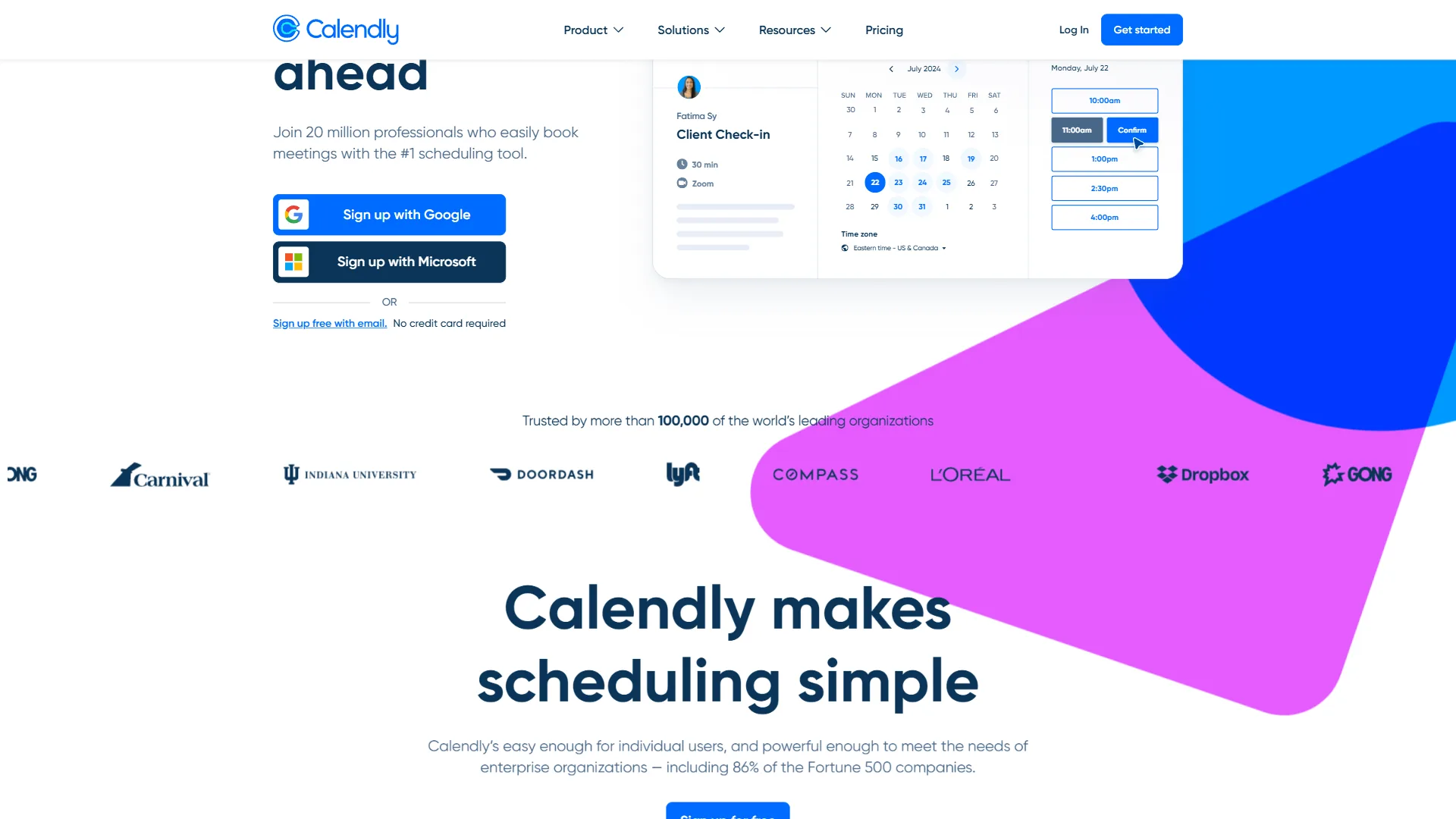
Calendly is an online scheduling platform that lets patients book, reschedule, and cancel appointments directly - without calling the office. While it is widely used in sales and consulting, its features map cleanly to dental practice workflows.
Why Calendly Works for Dental Practices
24/7 patient self-service - Patients can book after-hours when the office is closed. New patient inquiries that arrive on Saturday evening get captured instead of lost.
Automated confirmation and reminder sequences - Calendly sends automatic email and SMS reminders at customizable intervals (48 hours out, 24 hours out, 2 hours out). Studies consistently show that automated reminders reduce dental no-shows by 30-50%.
Intake form collection - Collect insurance information, reason for visit, and patient history before the appointment, so the front desk arrives prepared rather than scrambling during check-in.
Multiple appointment types - Create separate booking flows for new patient exams, hygiene appointments, emergency consultations, and Invisalign consultations, each with the correct duration, buffer time, and intake questions.
CRM and practice management integration - Calendly connects with many CRMs and can push appointment data to practice management systems through Zapier or direct integrations.
Practical Dental Use Cases
New patient acquisition: Add your Calendly link to Google Business Profile, your website, and Facebook. Patients searching for a new dentist can book instantly rather than calling and potentially hitting voicemail.
Recall campaigns: Send a Calendly link in your hygiene recall emails instead of asking patients to call. The conversion rate difference is substantial - most patients will book if given a one-click option.
Post-treatment follow-ups: Create a “Quick Check-In Call” appointment type for post-procedure calls. Instead of your front desk cold-calling, patients who want a follow-up call can self-schedule it.
Emergency slots: Reserve 1-2 slots per day as emergency appointments. Use Calendly to manage these so patients can claim them without clogging the phone lines.
Calendly Pricing for Dental Practices
| Plan | Monthly Cost | Best For |
|---|---|---|
| Free | $0 | Solo trial (1 event type) |
| Standard | $12/user/month | Individual practitioners |
| Teams | $20/user/month | Multi-provider practices |
| Enterprise | Custom | DSO / multi-location |
Recommendation: For a solo practice, the Standard plan at $12 per month pays for itself if it prevents even one no-show per month. Multi-provider practices should consider the Teams plan for round-robin booking and collective scheduling pages. For competing booking platforms, see our Calendly alternatives roundup.
Limitations and who it’s not for: Calendly is not a full practice management system. It does not handle clinical charting, insurance billing, or HIPAA-grade patient record storage, so practices that need a single integrated EHR-and-scheduling platform will outgrow it. The biggest drawback for dental teams is that the free tier limits you to one event type, which makes it impractical for offices that need separate booking flows for hygiene, new-patient exams, and emergencies. Skip Calendly if your practice management software (Dentrix, Eaglesoft, Open Dental) already handles online scheduling and you do not want a second source of truth for appointments.
2. Grammarly: Professional Patient Communications at Scale
Patient trust is built or eroded in the small moments - the tone of a recall email, the clarity of post-op instructions, the professionalism of a review response. In most dental practices, patient communications are written quickly, inconsistently, and without a second pair of eyes.
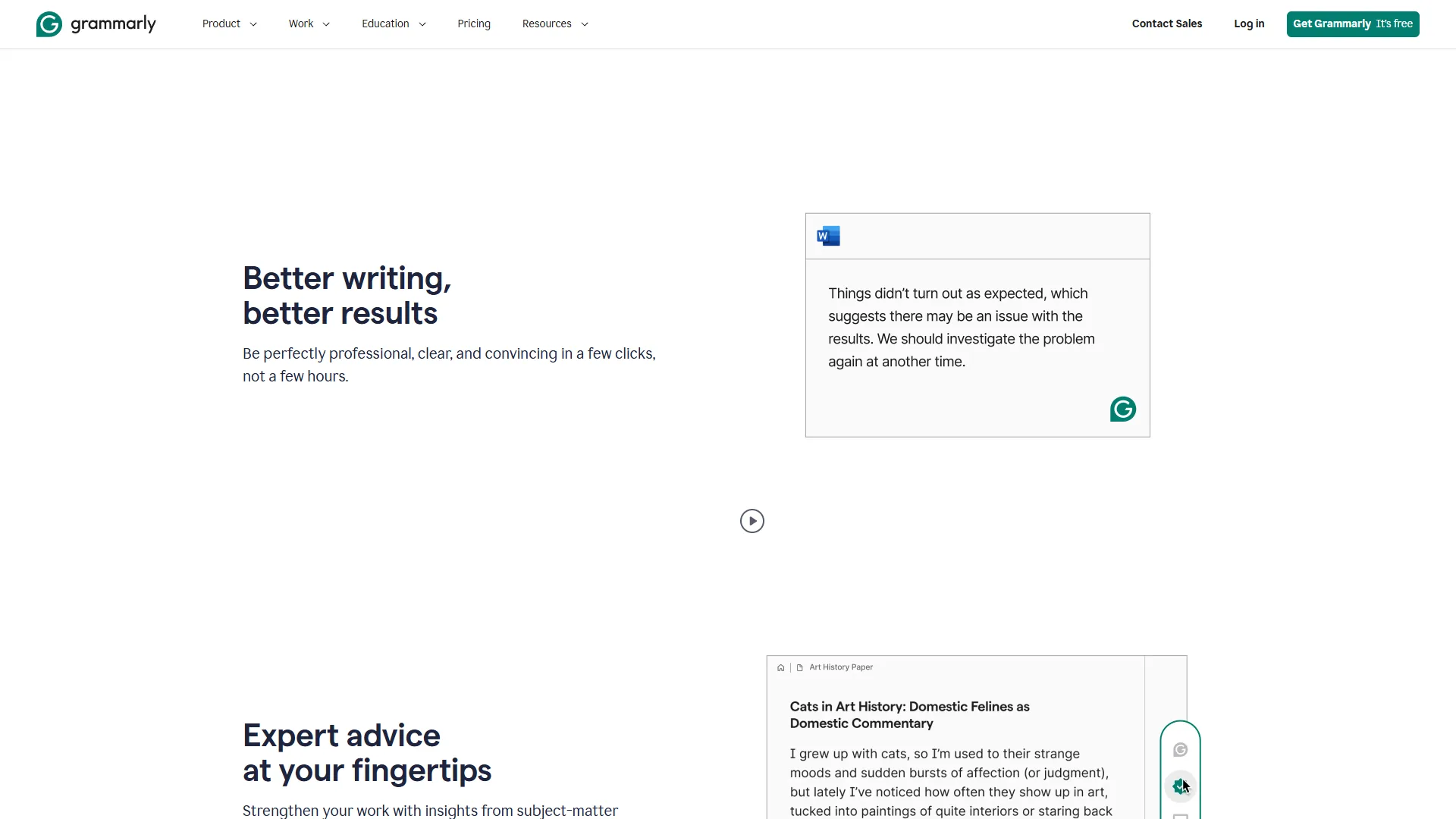
Grammarly is an AI writing assistant that checks grammar, improves clarity, adjusts tone, and now generates full drafts from prompts. It runs as a browser extension and desktop app, so it works inside Gmail, your practice management software’s email module, Google Docs, and anywhere else your team writes.
Why Grammarly Works for Dental Practices
Consistent tone across all staff - Grammarly Business lets you set organizational tone guidelines. Whether it’s your front desk coordinator, your hygienist, or you writing the email, the tone stays professional and consistent.
Real-time error correction - Staff who are rushing between patients catch typos and grammar errors before hitting send. Small errors in patient communications erode trust more than most practices realize - the ADA’s patient communication guidance highlights how written tone affects retention.
AI drafting for common templates - Use Grammarly’s AI to generate first drafts for:
- New patient welcome emails
- Post-extraction care instructions
- Insurance pre-authorization letters
- Recall reminder sequences
- Google review response templates
- Patient referral letters to specialists
Marketing content quality - If your practice produces a newsletter, blog, or social media posts, Grammarly ensures everything reads professionally. Dental practices with active online presence attract significantly more new patients.
Tone adjustment - Grammarly can shift the same content from clinical to empathetic. Post-op instructions can sound caring rather than bureaucratic. Rejection of insurance claims can be explained with clarity rather than frustration.
Practical Dental Writing Use Cases
Patient recall campaigns: Use Grammarly’s AI to write five versions of a hygiene recall email. A/B test which performs better on open and booking rates. Most practices recycle the same recall copy for years without testing.
Review responses: When a patient leaves a negative Google review, Grammarly helps you craft a measured, professional response that demonstrates your commitment to patient experience - without escalating the situation.
New patient onboarding sequences: Draft a 3-email welcome series for new patients: welcome message, pre-appointment preparation tips, and post-appointment follow-up. Consistent sequences dramatically improve new patient retention.
HIPAA-safe communications: Grammarly helps ensure patient communications are clear and professional without inadvertently including protected health information in subject lines or preview text.
Grammarly Pricing
| Plan | Monthly Cost | Best For |
|---|---|---|
| Free | $0 | Basic grammar checking |
| Pro | $12/month | Individual practitioner (billed annually) |
| Business | $15/user/month | Team use with brand guidelines |
Recommendation: The Free plan covers basic corrections. For a practice serious about patient communication quality, the Business plan lets you set brand voice guidelines and monitor team communication across all staff. Weighing other writing assistants? See our Grammarly alternatives breakdown.
Limitations and who it’s not for: Grammarly’s biggest tradeoff for dental practices is that it is not HIPAA-aligned by default - the free and Pro tiers send text to Grammarly’s cloud for analysis, which is a hard no for messages containing protected health information. Even Grammarly Business does not sign a Business Associate Agreement, so any patient identifying details must be stripped before drafting. The drawbacks compound for clinical writing: Grammarly is tuned for general business prose, not dental terminology, so it sometimes flags correct clinical terms as errors. Skip Grammarly if your team writes mostly inside HIPAA-bound systems where outbound cloud editors are not allowed.
3. Notion: Your Dental Practice Command Center
The institutional knowledge problem is real in dental practices. When a long-tenured front desk coordinator leaves, they take years of unwritten procedures, vendor contacts, insurance negotiation notes, and patient handling protocols with them. New hires spend months rebuilding knowledge that should have been documented.
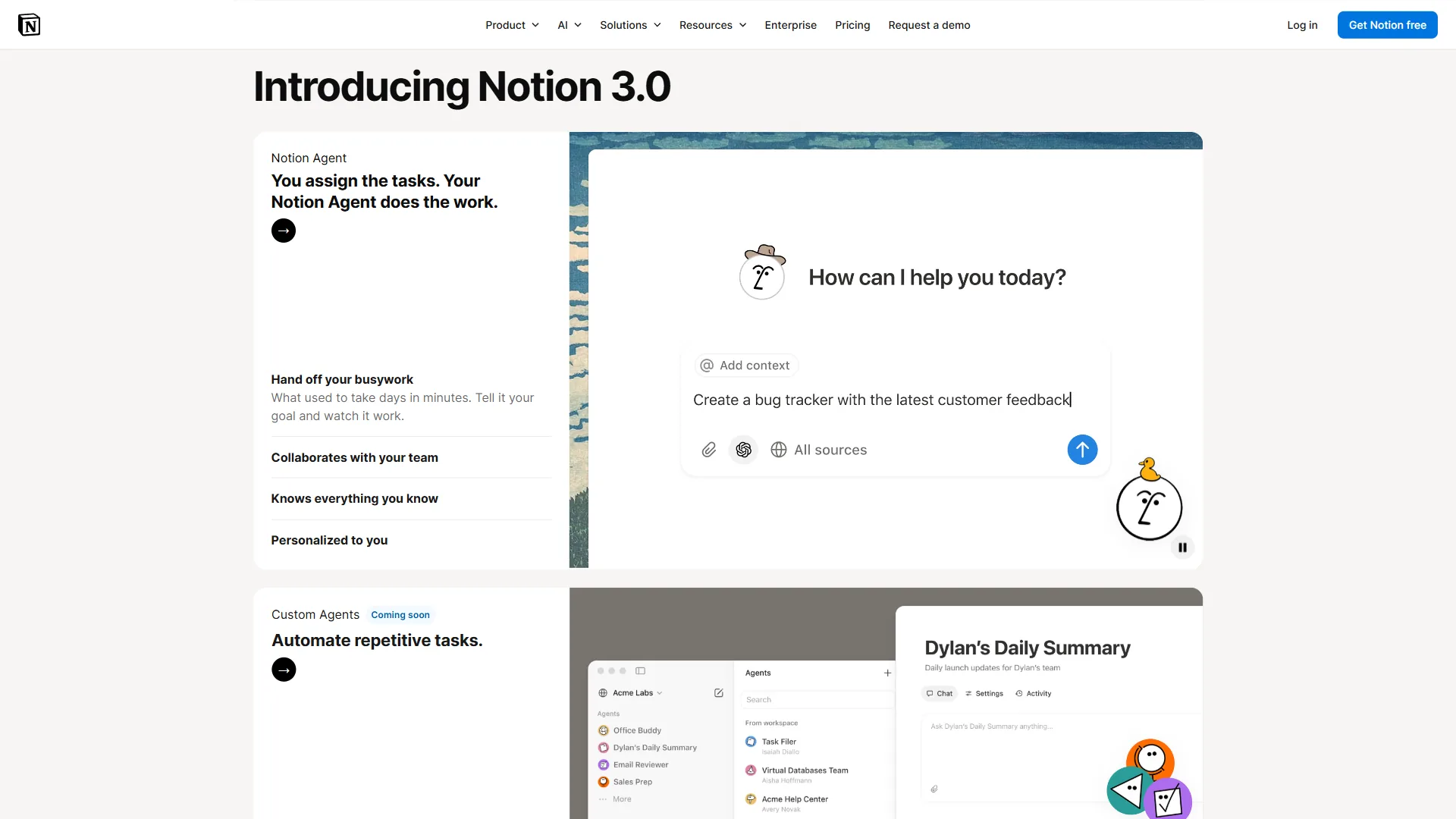
Notion is an all-in-one workspace that combines notes, databases, wikis, and project management. For dental practices, it serves as the central knowledge repository - the place where every procedure, protocol, and policy lives in searchable, updateable form.
Why Notion Works for Dental Practices
Living SOP documentation - Unlike static Word documents or binders, Notion pages are searchable, cross-linked, and version-controlled. When OSHA requirements change, you update one page instead of reprinting manuals.
AI-powered writing and organization - Notion AI can draft new SOPs from bullet points, summarize long documents, and generate meeting agendas. Front desk staff can use it to quickly look up answers to patient questions.
Staff onboarding acceleration - Build an onboarding wiki that new hires can self-navigate. Cover everything from opening and closing procedures to insurance verification steps to how to handle specific patient scenarios.
Patient database management - For practices not fully covered by their practice management software, Notion can track follow-up tasks, referral status, treatment plan progress, and patient communication history.
Vendor and contract tracking - Maintain a database of equipment vendors, software subscriptions, supply contracts, and service agreements. Set reminder dates for contract renewals and equipment maintenance.
Meeting notes and action items - Use Notion for weekly staff huddles and monthly team meetings. Notion AI transcribes key points and generates action item lists automatically.
Practical Dental Use Cases
Infection control manual: Build your OSHA compliance documentation in Notion with sections for sterilization protocols, PPE requirements, exposure management procedures, and annual training records. Staff can acknowledge procedures with a digital sign-off.
New patient workflow: Document the exact steps from new patient phone call to completed first appointment - including scripts, verification steps, insurance questions, and intake form procedures. Onboard new front desk staff in days instead of weeks.
Treatment coordinator knowledge base: Capture common treatment plan questions and objections with scripted responses. New treatment coordinators use the same effective responses as veterans from day one.
Lab case tracking database: Create a Notion database for outstanding lab cases - tracking impressions sent, expected return dates, patient appointment scheduled, and case status. Reduce missed case returns with automated reminders.
Equipment maintenance log: Track dental chair servicing, autoclave spore testing, radiograph unit calibration, and compressor maintenance with due dates and vendor contacts.
Notion Pricing for Dental Practices
| Plan | Monthly Cost | Best For |
|---|---|---|
| Free | $0 | 1-2 users, basic pages |
| Plus | $12/user/month | Small teams, unlimited pages |
| Business | $18/user/month | Larger teams with advanced features |
| Enterprise | Custom | Multi-location / DSO |
Recommendation: The Plus plan at $12 per user per month is the sweet spot for most practices. Start by documenting your top 5 most frequently asked staff questions, then expand from there.
Limitations and who it’s not for: Notion has a real learning curve, and that is the biggest drawback for dental teams - front desk and clinical staff who just need a checklist often find the database, page, and template model overwhelming for the first few weeks. Like Grammarly, Notion is not HIPAA-aligned by default and should not be used to store patient PHI. Other tradeoffs: search across large workspaces can be slow, the mobile app is weaker for clinical reference, and offline editing is limited. Skip Notion if your team needs a simple, dentistry-specific SOP tool with built-in compliance templates rather than a flexible blank canvas.
Dental-Specific AI Tools Worth Knowing
Dental-specific AI tools worth knowing in 2026 are Pearl AI and Overjet for radiograph analysis, Weave for patient communication, and Dentsply Sirona CEREC AI for same-day restoration design - each FDA-cleared or vendor-validated for clinical use. Beyond general-purpose productivity tools, several specialized AI platforms are designed specifically for dental clinical workflows.
Pearl AI - Radiograph Detection
Pearl AI applies machine learning to dental radiographs, detecting pathologies including caries, bone loss, calculus, and other conditions that human eyes can miss under time pressure. In a busy practice seeing 15-20 patients per day, having an AI second opinion on X-rays reduces diagnostic errors and provides documented clinical reasoning for treatment recommendations.
Pearl’s “Second Opinion” feature works in real time inside your existing imaging software (Dexis, Eaglesoft, Dentrix, and others). It flags potential findings and confidence scores, giving practitioners a documented rationale for treatment discussions.
Overjet - AI X-Ray Analysis for Dental Insurance
Overjet focuses specifically on the intersection of clinical AI and dental insurance adjudication. Their platform uses AI to annotate radiographs with measurable data points that insurance companies accept - reducing claim denials and speeding up pre-authorization approvals.
For practices with high insurance volume or significant claim denial rates, Overjet’s annotation of radiographic findings with millimeter-level measurements creates a more defensible record for appeals.
Weave - Dental Patient Communication Platform
Weave is a practice communication platform built specifically for dental and medical offices. It integrates with most practice management systems to pull patient data and power two-way texting, appointment reminders, missed call texts, online reviews requests, and payment processing.
Where Calendly handles the booking side of scheduling, Weave handles the confirmation, reminder, and relationship-maintenance side - covering all channels (phone, text, email) from a single interface.
Dentsply Sirona CEREC AI
For practices using CEREC same-day dentistry workflows, Dentsply Sirona has embedded AI features into their scanning and design software. The AI assists with crown margin detection, restoration design suggestions, and quality verification - reducing chairside design time on single-unit restorations.
Limitations and who these tools are not for: Every dental-specific AI platform in this section shares the same drawbacks - high pricing (most are quote-only and run several hundred dollars per provider per month), workflow lock-in to a specific imaging or practice management vendor, and a steep onboarding curve that pulls clinical staff away from chairside work. Pearl AI and Overjet are not standalone diagnostic tools and should not replace a clinician’s judgment. Weave overlaps heavily with Calendly, Mailchimp, and your PMS, so the tradeoff is paying once for an integrated suite versus stitching cheaper tools together. Skip these clinical-AI platforms if you are a solo or low-volume practice - the per-provider pricing rarely pencils out below 25-30 patients per day.
Pro Tips: Building Your AI-Enhanced Dental Workflow
Here is how the three primary tools work together across a typical practice day:
Morning Huddle (10 minutes)
- Notion: Pull up today’s huddle template - review new patient notes, outstanding lab cases, and staff action items from the week
- Calendly: Review today’s booked appointments and identify any same-day openings to fill
- Grammarly: Review any patient communications drafted by staff before they go out
During Patient Care
- Calendly: Front desk handles incoming new patient inquiries with a booking link rather than scheduling calls
- Grammarly: Treatment coordinator drafts treatment plan follow-up emails with AI assistance while patients are in chair
- Notion: Staff reference SOPs for clinical procedures, sterilization protocols, and patient-specific notes
End of Day
- Notion: Update lab case database and any outstanding action items from today
- Calendly: Review tomorrow’s schedule for gaps that need filling
- Grammarly: Batch-review any patient communications queued for next-day sending
Methodology: 30-Day Implementation Roadmap
A 30-day implementation roadmap rolls out the dental AI stack one tool per week - Calendly first, Grammarly second, Notion third, integrations fourth - so each layer is in production before the next starts.
Week 1: Scheduling Foundation
- Sign up for Calendly Standard ($12 per month)
- Create three event types: New Patient Exam, Hygiene Appointment, Emergency Consult
- Add intake questions to each event type (insurance provider, date of last visit, chief complaint)
- Add Calendly link to Google Business Profile, website, and email signatures
- Set up automated reminders (48hr, 24hr, 2hr before appointment)
Week 2: Communication Quality
- Install Grammarly browser extension for all staff computers
- Create a Brand Voice profile matching your practice communication style
- Draft three recall email templates using Grammarly AI
- Set up Google review response templates
- Brief staff on using Grammarly for all patient-facing writing
Week 3: Knowledge Documentation
- Create a Notion workspace for the practice
- Document the top 5 staff questions as the first wiki pages
- Build a new patient onboarding page covering the intake-to-appointment workflow
- Set up a lab case tracking database
- Add vendor contacts and contract renewal dates
Week 4: Integration and Optimization
- Connect Calendly to your CRM or practice management system via Zapier
- Evaluate Pearl AI or Overjet if diagnostic efficiency is a priority
- Measure no-show rate change since Calendly implementation
- Add Notion pages based on staff feedback about recurring questions
Frequently Asked Questions
Are these tools HIPAA compliant?
Calendly and Notion both offer Business Associate Agreements (BAAs) for healthcare practices. Grammarly Business does not process PHI - it only sees the text you type, so avoid typing patient-identifying information into Grammarly drafts. For Calendly, use intake forms that collect insurance class and date of birth rather than full SSN or diagnosis codes.
What about dental-specific practice management software?
Tools like Dentrix, Eaglesoft, Curve, and Open Dental handle clinical records, billing, and insurance. Calendly, Grammarly, and Notion work alongside these systems rather than replacing them - they handle the communication, documentation, and knowledge management layers that practice management software typically does not.
Can solo practices afford these tools?
At roughly $36 per month for all three tools on individual plans, the math works for any practice that can prevent one no-show per month with better reminders, or bill one additional hour per month from improved scheduling efficiency.
How long does implementation take?
Calendly can be live within two hours of sign-up. Grammarly browser extensions install in minutes. Notion takes longer because it only becomes valuable as content is added - plan for three to four weeks before you see full productivity returns.
The Bottom Line
The best AI tools for dentists are not dental-specific platforms with complex onboarding and enterprise pricing - they are general-purpose productivity tools configured intelligently for clinical practice needs. Calendly eliminates the scheduling overhead that drains front desk time. Grammarly elevates patient communications from inconsistent to professional. Notion converts institutional knowledge from a single person’s memory into a searchable practice asset.
For under $40 per month, a dental practice can automate meaningful administrative work, reduce no-shows by 30-50%, and dramatically improve the quality and consistency of patient communications. The dental-specific AI tools (Pearl, Overjet, Weave, CEREC AI) layer on top of this foundation for practices ready to invest in clinical efficiency.
Start with Calendly. It delivers the fastest measurable return. Then add Grammarly and Notion as your team builds confidence with AI-assisted workflows.
Related Reading
Related reading on this site covers adjacent AI workflows for other clinical practices and the underlying tools featured above.
- Best AI Tools for Chiropractors - Similar guide for chiropractic practice management
- Best AI Tools for Pharmacists - AI tools for pharmacy workflow efficiency
- Best AI Tools for Therapists 2026 - AI tools for mental health and therapy practices
- Client Onboarding Automation - Automate your new patient intake process
- Calendly - Online scheduling platform for patient self-booking and automated reminders
- Grammarly - AI writing assistant for professional patient communications
- Notion - Knowledge management platform for dental practice SOPs and staff training
External Resources
External resources below are the primary regulatory, professional, and vendor sources cited throughout this guide.
- American Dental Association - Technology Resources - ADA guidance on practice technology and digital dentistry
- Pearl AI Resources - Research and case studies on AI-assisted dental radiograph analysis
- HHS HIPAA for Covered Entities - Official HIPAA compliance guidance for dental practices