




The best grammarly alternatives in 2026 are ProWritingAid for long-form writers, Hemingway Editor for readability, QuillBot for paraphrasing, LanguageTool for multilingual grammar, DeepL Write for European languages, Wordtune for AI rewriting, and Writesonic for content creation. Grammarly remains the default writing assistant for hundreds of millions of users, but “default” does not always mean “best fit” - long-form writers need deeper structural analysis, multilingual professionals need coverage beyond English, and writers with a developed voice often find Grammarly rewrites flatten their phrasing.
This guide evaluates eight grammarly alternatives across real writing workflows - blog posts, emails, academic papers, and long-form fiction - to identify where each AI writing tool genuinely outperforms Grammarly. Our analysis draws on current vendor documentation, public pricing pages, and independent research rather than sponsored placement. AI Productivity may earn a commission from links on this page; rankings are editorially independent.
Selection Criteria: Why Look for a Grammarly Alternative
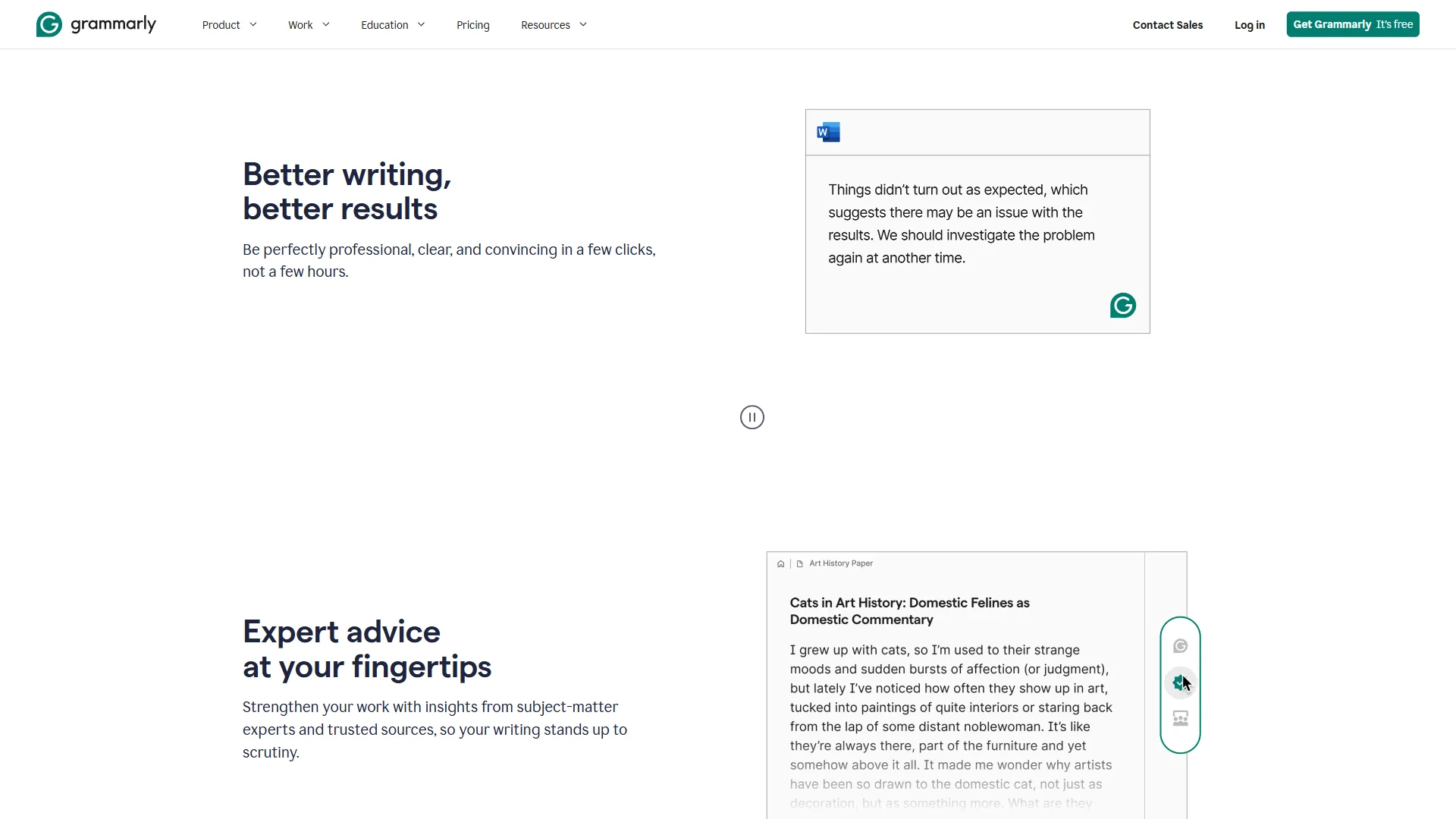
Grammarly has earned its position, but it is not a perfect fit for every writer:
- Voice flattening - Grammarly’s rewrites sand down distinctive phrasing, an issue classic style guides warn against. The result is technically correct but generic.
- Premium pricing adds up - At $12 per month annually, Premium is reasonable for daily use but expensive for occasional needs.
- Shallow structural analysis - Grammarly excels at sentence-level corrections but offers limited insight into argument flow or document-level structure.
- Limited language support - Grammarly supports only English; multilingual writers need a different tool.
- Paraphrasing is not its strength - Dedicated paraphrasing tools like QuillBot outperform Grammarly’s rewrite suggestions.
- No offline mode - Everything runs through Grammarly’s servers, raising concerns for sensitive documents.
Comparison Table: Grammarly Alternatives at a Glance
The eight grammarly alternatives below range from $5.42 per month (LanguageTool) to a $189 lifetime payment (ProWritingAid), with every tool offering a free tier covering core grammar checks. “Over 50% of content marketers now use AI writing tools in their workflow,” according to the Content Marketing Institute - a shift that pushed every vendor below to add tone, paraphrasing, or rewrite features alongside basic correction.
| Tool | Starting Price | Best For | Free Tier |
|---|---|---|---|
| Grammarly | $12/mo (annual) | All-around grammar + tone | Yes |
| ProWritingAid | $10/mo | Deep writing analysis, books | Yes (limited) |
| Hemingway Editor | $19.99 one-time | Readability + clarity | Yes (web) |
| QuillBot | $8.33/mo (annual) | Paraphrasing + grammar | Yes |
| LanguageTool | $5.42/mo | Multilingual grammar | Yes |
| DeepL Write | Free / $8.74/mo | European language polish | Yes |
| Wordtune | $9.99/mo | AI sentence rewriting | Yes (10/day) |
| Writesonic | $16/mo | Content creation + grammar | Yes |
1. ProWritingAid - Best for Long-Form Writers and Authors
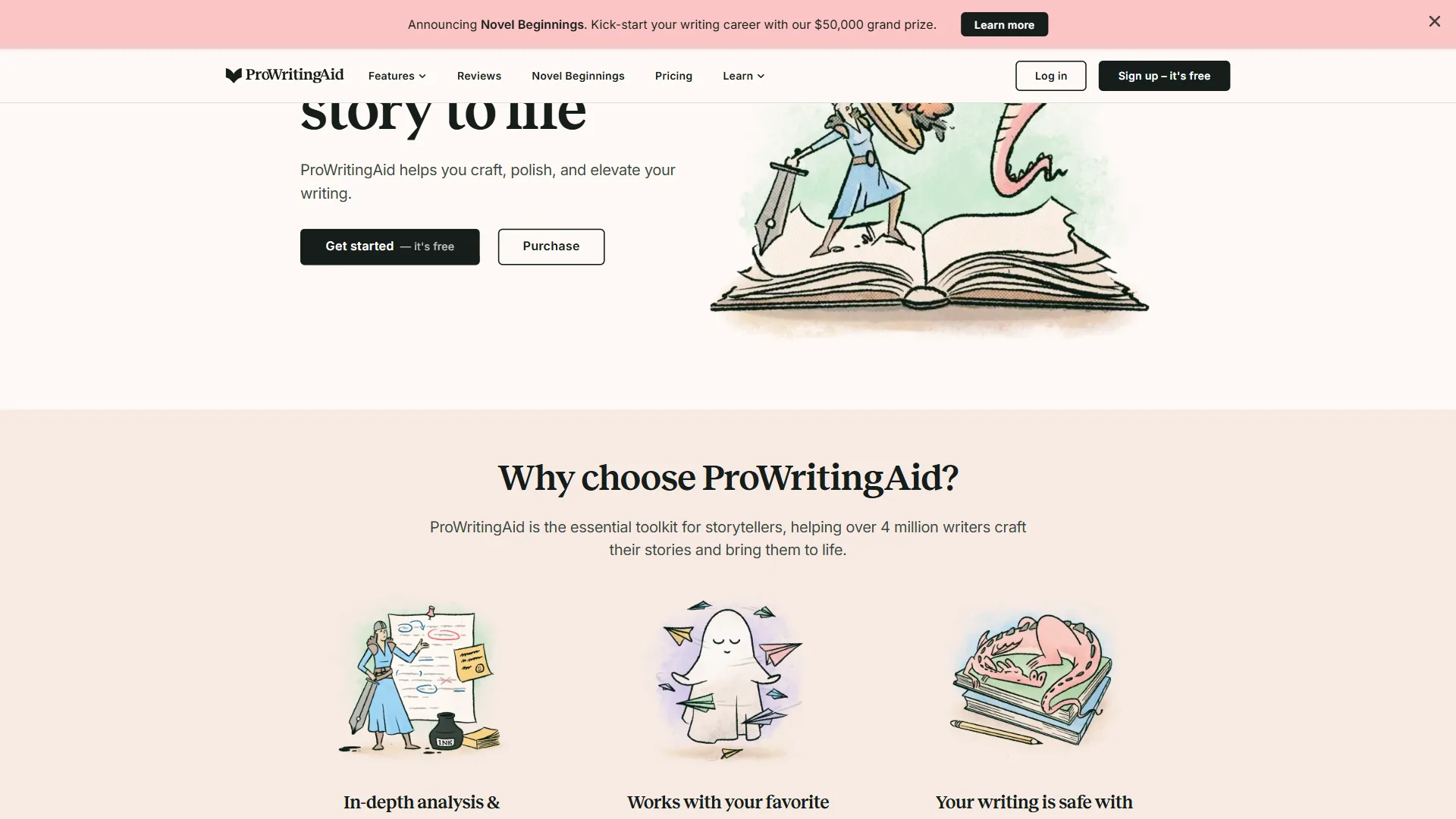
Pricing: Free (500 words at a time) / $10 per month (Premium) / $189 lifetime Free tier: Full feature access on documents up to 500 words
ProWritingAid is what Grammarly would be if built specifically for serious writers rather than general users. The depth of analysis goes far beyond grammar into structural issues that matter for book-length work.
The Writing Reports are the standout feature, documented in the ProWritingAid reports overview. Each report gives 25 distinct analyses - Overused Words, Sentence Variation, Readability, Cliches, Pacing, Dialogue Tags, Repeated Phrases - covering patterns across your entire document, not just the current paragraph.
Key Strengths: 25 writing reports across style, structure, and readability; direct Scrivener integration; Word and Google Docs add-ins; thesaurus integration; academic citation-style guidance; one-time lifetime plan ($189).
Where It Falls Short: Cluttered interface compared to Grammarly; reports can overwhelm casual writers; slower real-time suggestions; free tier capped at 500-word chunks.
Best For: Novelists, bloggers, and anyone writing more than 5,000 words per week. Whether evaluating AI tools for freelance writers or the wider content-creator AI stack, ProWritingAid is the better long-form tool. For occasional emails, Grammarly’s simpler interface serves better.
2. Hemingway Editor - Best for Readability and Clarity
Pricing: Free (web app) / $19.99 one-time (desktop app) Free tier: Full web editor at no cost, desktop app is a one-time purchase
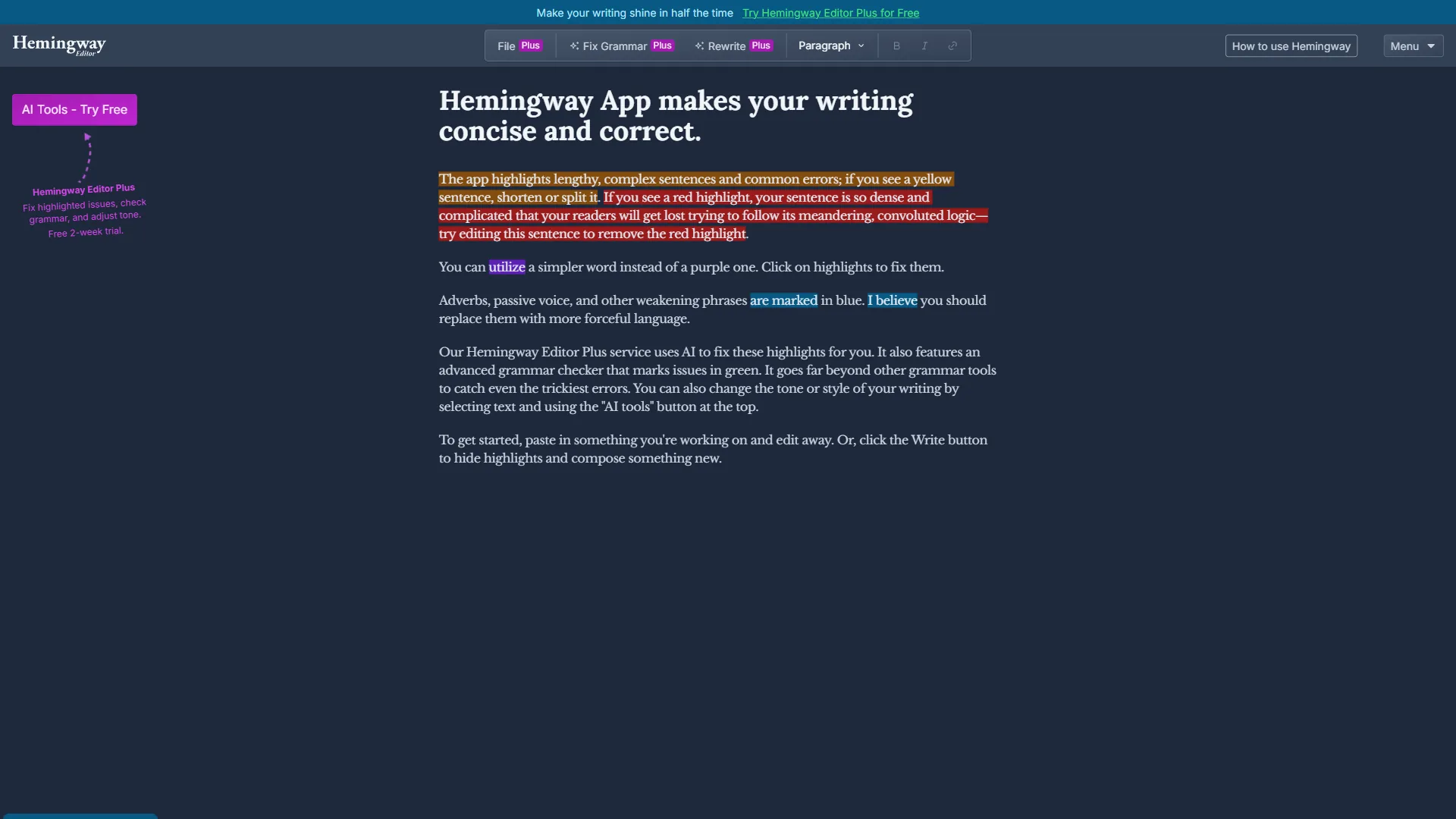
Hemingway Editor is the best grammarly alternative for readability, scoring prose against a target reading grade and color-coding complex sentences, passive voice, and adverbs in a free web app. Rather than correcting your grammar, the editor helps you write more clearly: it highlights complex sentences in yellow, very complex sentences in red, passive voice in green, adverbs in blue, and phrases with simpler alternatives in purple. The goal is to produce direct, readable prose at a grade 9 level or lower.
Named after Ernest Hemingway’s iceberg theory of writing, the editor forces writers to confront every needless word and convoluted construction. The result feels brutal for academic or technical content, but for marketing copy, journalism, or reader-facing content, the clarity gains are real.
Key Strengths: Color-coded highlights reveal problem areas at a glance; grade-level readability score; fully offline desktop app; one-time $19.99 purchase; distraction-free editor; no account required for web.
Where It Falls Short: No grammar or spell-checking; aggressive simplification strips nuance from technical writing; no browser extension; no multilingual support.
Best For: Bloggers, content marketers, and journalists who want to cut complexity. Use Hemingway alongside a basic spell checker, not instead of one.
3. QuillBot - Best for Paraphrasing and Rewriting
Pricing: Free (limited paraphrasing) / $8.33 per month Premium (annual) Free tier: 125 words per paraphrase, limited paraphrase modes
QuillBot is the best grammarly alternative for paraphrasing and rewriting, offering seven distinct rewrite modes plus a grammar checker for $8.33 per month on the annual plan. QuillBot built its reputation on paraphrasing before it became an AI writing assistant. The core tool lets you paste text and rewrite it across seven modes: Standard, Fluency, Formal, Academic, Simple, Creative, and Expand or Shorten. Each mode shifts the output in a distinct direction, giving genuine control over tone and complexity.
The Grammar Checker included in QuillBot Premium covers the basics well, but the paraphrasing capability detailed in the QuillBot help center is where it outperforms Grammarly. For reworking existing sentences, rephrasing briefs, or producing multiple marketing-copy versions, QuillBot’s output quality beats Grammarly’s rewrite suggestions.
Key Strengths: Seven paraphrase modes; inline synonym suggestions; summarizer for long documents; grammar checker on par with Grammarly free; citation generator; Word and Google Docs extensions.
Where It Falls Short: Grammar checking less thorough than Grammarly Premium; paraphrasing occasionally shifts meaning - always review output; free tier capped on paraphrase length; tone detection less developed.
Best For: Students, researchers, content creators who rework existing text, and second-language writers. For pure grammar correction, Grammarly Premium is more thorough; for paraphrasing, QuillBot wins.
4. LanguageTool - Best Multilingual Grammar Checker
Pricing: Free (up to 20,000 characters) / $5.42 per month Premium (annual) Free tier: Grammar checking up to 20,000 characters per text field
LanguageTool directly addresses Grammarly’s biggest limitation - English-only support - with grammar, spelling, and style checks in over 25 languages including German, French, Spanish, Portuguese, Dutch, Polish, and Russian.
Grammar detection is solid, not quite as deep as Grammarly Premium for English but strong enough to catch the errors that matter. Premium adds phrasing suggestions, style improvements, and an AI rewriter for English and German. The open-source foundation at the LanguageTool open-source repository means self-hosting is possible for complete privacy - something no other tool in this list offers.
Key Strengths: 25+ language support; open-source core with self-hosted option; full browser extension coverage; Word and Google Docs add-ins; cheaper than Grammarly at $5.42/mo; AI rewriter for English and German on Premium.
Where It Falls Short: English suggestions less nuanced than Grammarly Premium; utilitarian interface; AI features limited outside English/German; fewer integrations than Grammarly.
Best For: Multilingual professionals and international teams. For English-only work, Grammarly or ProWritingAid offers richer suggestions, but LanguageTool is the clear choice the moment a second language enters the workflow.
5. DeepL Write - Best for European Language Polishing
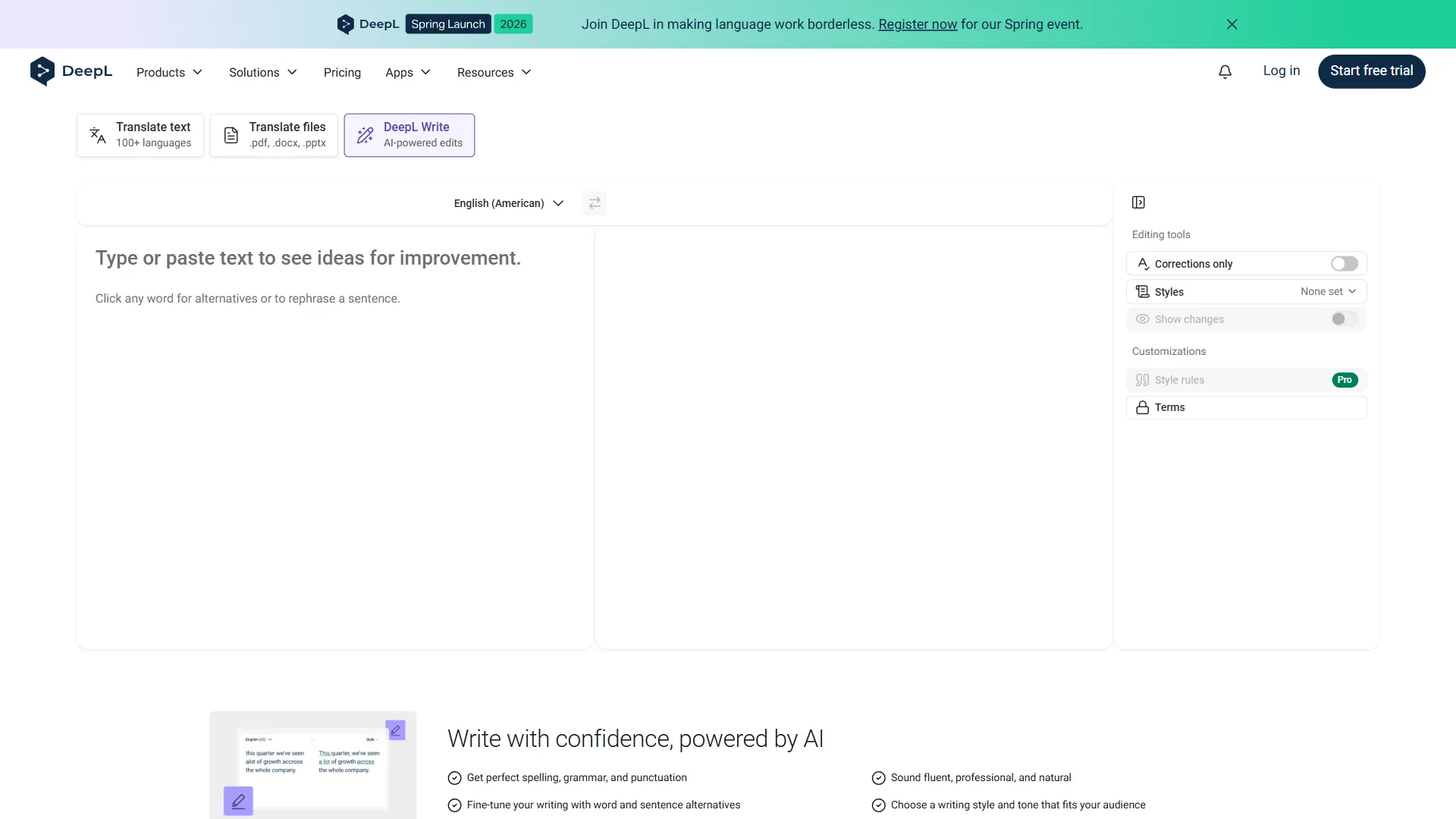
Pricing: Free (limited requests) / $8.74 per month (annual, includes DeepL Pro) Free tier: Available with usage limits
DeepL Write is the best grammarly alternative for European language polishing, generating native-grade sentence rewrites in German, French, Spanish, Italian, Portuguese, Dutch, and Polish from a free or $8.74-per-month plan. DeepL built its reputation on superior translation quality before launching DeepL Write as a writing assistant. The result is a tool that feels unusually natural across supported European languages, and native speakers consistently rate DeepL’s rephrasing suggestions as more idiomatic than competing tools.
DeepL Write works differently from grammar checkers as outlined on the DeepL Write launch announcement: rather than flagging errors, it suggests complete sentence rewrites. Writers see an alternative phrasing and accept it with one click or cycle through additional options. For anyone polishing text in a second language, this approach produces more natural results than correction-based tools.
Key Strengths: Superior quality for European languages, especially German and French; sentence-level rephrasing; integration with DeepL translation; clean, minimal interface; strong for business and formal writing.
Where It Falls Short: Limited to European languages (no Asian support); primarily web-based; weak fit for English-only writing; free-tier usage limits.
Best For: Professionals working in German, French, Spanish, or other supported European languages. Pairs well with DeepL’s translation features; see our AI translation tools comparison for the broader category.
6. Wordtune - Best AI Rewriting Tool
Pricing: Free (10 rewrites/day) / $9.99 per month Advanced (annual $6.99 per month) Free tier: 10 rewrites per day, basic spellcheck
Wordtune is the best AI rewriting tool among grammarly alternatives, offering casual, formal, shorter, and longer sentence-level rewrites from a $9.99-per-month sidebar that works inside Google Docs and Gmail. Wordtune focuses on helping writers say what they mean more effectively rather than just checking what they wrote. The core feature is a sidebar that offers rewrite suggestions for any selected text - alternative phrasings that preserve meaning with different word choices.
The AI-powered rewrites capture nuance better than Grammarly’s suggestions because they treat the sentence as a unit of meaning rather than a collection of grammatical units. Select a paragraph, hit Rewrite, and Wordtune generates several alternatives to cherry-pick phrases from.
Key Strengths: Casual and formal tone modes; Expand/Shorten controls; Spices feature adds facts and examples; Chrome extension inside Google Docs and Gmail; more voice-preserving rewrites than Grammarly; daily research summarizer.
Where It Falls Short: Grammar checking basic compared to Grammarly; free tier capped at 10 rewrites/day; Spices output requires fact-checking; integration limited outside Chrome.
Best For: Content writers and marketers who want engaging rewrites rather than error fixes. Wordtune is the better choice when the problem is “accurate but bland” rather than “grammatically wrong.”
Bonus Tips: Adjacent Tools That Replace Grammarly for Some Workflows
Claude, ChatGPT, and Writesonic replace Grammarly for writers whose needs extend into full draft generation, structural editing, or content production. These options sit outside the dedicated-writing-assistant lane but solve real Grammarly use cases - one as a general-purpose AI, the other as a content-creation platform with grammar features bolted on.
7. Claude and ChatGPT - Best for Full AI Writing Assistance
Claude and ChatGPT can check grammar, improve clarity, rephrase sentences, restructure arguments, and generate new drafts from prompts. The capability ceiling is much higher than any dedicated writing assistant.
Where they work well: Long-form editing where pasting a full draft yields substantive feedback, structural suggestions no grammar checker provides, and rewriting in a specific tone on demand.
Where dedicated tools still win: Real-time in-context suggestions as you type, browser-extension grammar checking, and lightweight corrections without opening a separate app.
Best For: Writers who already use Claude or ChatGPT and want to consolidate tools.
8. Writesonic - Best for Content Creation
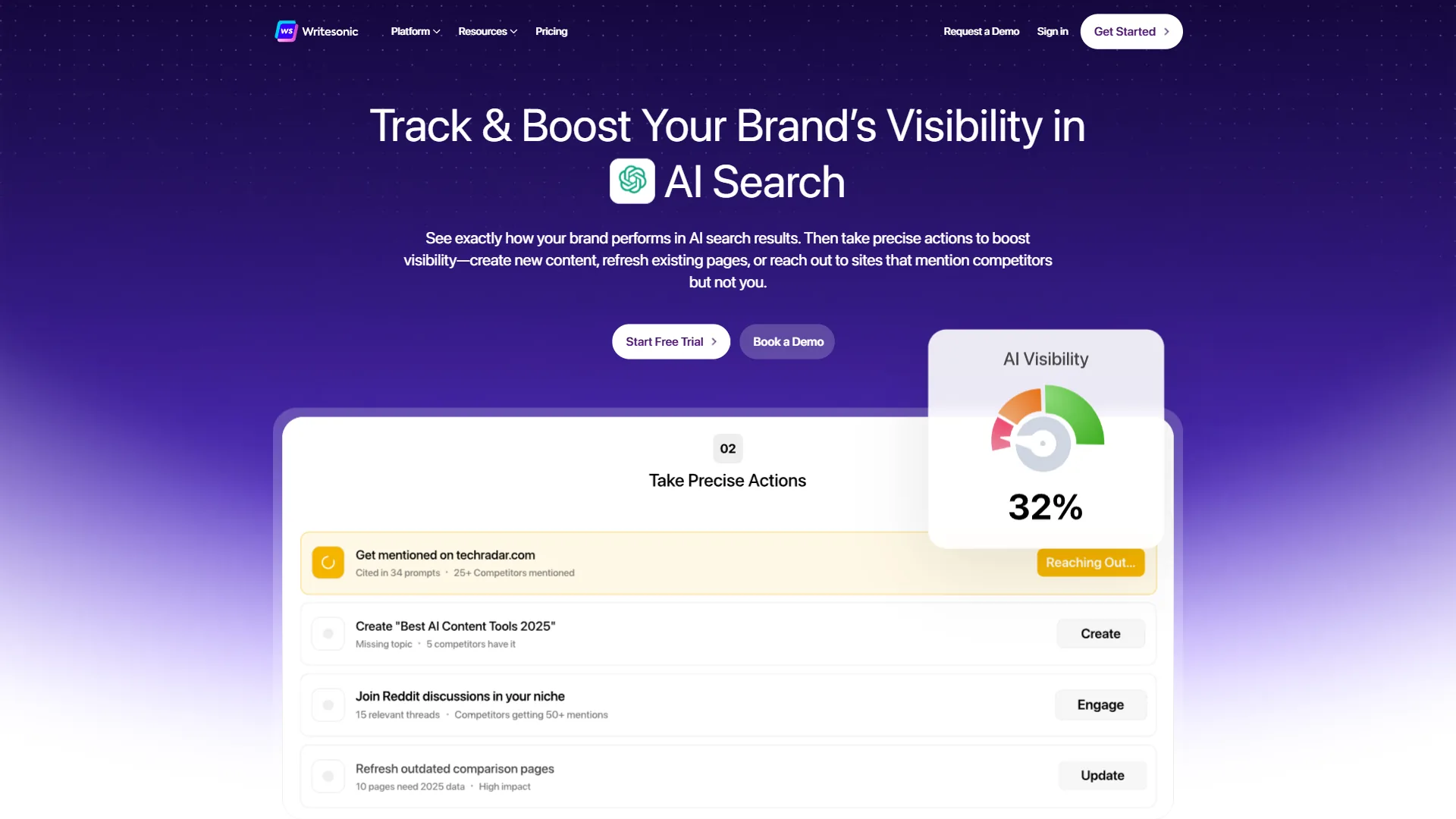
Pricing: Free (limited credits) / $16 per month Freelancer (annual) Free tier: Limited word credits per month Writesonic is primarily a content creation platform - blog posts, ad copy, product descriptions, social media content - with grammar and writing improvement layered on top. The Chatsonic feature provides a ChatGPT-like interface with real-time web access. The Article Writer produces long-form articles from a brief. Grammar and rewriting tools are capable but less thorough than Grammarly for pure correction.
Best For: Content marketers and bloggers who need AI content generation plus writing polish in one tool.
Which Alternative Fits: Grammarly Decision Framework
The right grammarly alternative depends on the primary writing task: choose ProWritingAid for long-form work, Hemingway for clarity, QuillBot for paraphrasing, LanguageTool for multilingual coverage, DeepL Write for European languages, Wordtune for engaging rewrites, or Writesonic for content creation. The breakdown below maps each scenario to its strongest match.
- Long-form content, books, blog posts: ProWritingAid ($10/mo or $189 lifetime) - 25 writing reports plus unique Scrivener integration.
- Shorter, clearer sentences: Hemingway Editor (free web / $19.99 desktop) - strip complexity after writing.
- Paraphrasing existing text: QuillBot ($8.33/mo) - seven paraphrase modes handle rewrites best.
- Multiple languages: LanguageTool ($5.42/mo) - unmatched multilingual grammar at this price.
- German, French, European languages: DeepL Write (free or $8.74/mo) - native-grade sentence rephrasing.
- Engaging rewrites: Wordtune ($9.99/mo) - voice-preserving rewrites for dull writing.
- Content creation plus polish: Writesonic ($16/mo) - editing built into generation, compared in our Writesonic vs Jasper breakdown.
- Best all-around English grammar and tone: Grammarly - browser extension coverage and tone detection remain best-in-class.
The Bottom Line
Grammarly remains the strongest all-around AI writing tool for English grammar and tone, but ProWritingAid, Hemingway, QuillBot, LanguageTool, DeepL Write, and Wordtune each beat it in a specific context worth switching for. Voice flattening, English-only support, and limited structural analysis are real Grammarly limitations.
The smartest approach often combines one alternative with a basic spell checker rather than replacing Grammarly entirely. Start with Grammarly’s free tier to identify the gaps, then evaluate ProWritingAid or QuillBot to fill them.
FAQ
Q: Is there a better alternative than Grammarly?
There is a better alternative than Grammarly depending on the task: ProWritingAid wins for long-form writing, QuillBot for paraphrasing, LanguageTool for multilingual grammar, and DeepL Write for European languages. For all-around English grammar and tone, Grammarly itself remains the strongest option.
Q: Will I get flagged for AI if I use Grammarly?
Grammarly’s grammar suggestions and tone fixes generally do not trigger AI-detection tools, but its generative rewrite and “Generate” features produce text that AI detectors flag at higher rates. According to OpenAI’s own research, current AI-text classifiers are unreliable, so reliance on any detector for grading or hiring decisions carries real risk.
Q: What is the best Grammarly alternative for academic writing?
QuillBot is the strongest choice for academic writing, with a citation generator, seven paraphrase modes including Academic, and grammar checking on par with Grammarly’s free tier. ProWritingAid is worth considering for long research documents thanks to its citation-style guidance.
Q: Which Grammarly alternative works for multiple languages?
LanguageTool is the only Grammarly alternative with genuine multilingual depth, supporting grammar and spelling checks in over 25 languages. DeepL Write is a strong complement for European language polishing.
Q: Is there a free Grammarly alternative as a Chrome extension?
Yes. LanguageTool offers a free browser extension covering all major browsers and grammar checking for up to 20,000 characters per text field at no cost. QuillBot also integrates with Google Docs and Microsoft Word via extension.
Related Reading
Related Grammarly comparisons and writing tool guides extend this analysis. Tools covered:
- Grammarly - The AI writing assistant this guide compares alternatives against
- DeepL - AI-powered translation and writing assistant
- Claude - Anthropic’s AI assistant for writing and analysis
- ChatGPT - OpenAI’s AI assistant for content generation and editing
- Writesonic - AI writing and content creation platform
More writing guides:
- QuillBot vs Grammarly - Side-by-side feature and pricing breakdown
- QuillBot Alternatives - Best paraphrasing and writing tools compared
- AI Tools for Copywriters - AI writing assistants built for marketing and copy
- AI Tools for Pharmacists - Writing and documentation tools for healthcare professionals
External Resources
External documentation from each vendor deepens the comparison.