





AI tools for copywriters are software platforms - ChatGPT, Claude, Jasper, Copy.ai, Grammarly, and QuillBot - that solve specific problems like brief-following at volume, voice matching across clients, editing before delivery, and variant generation for A/B testing. They help produce email sequences, ad copy, landing pages, product descriptions, and long-form brand content.
AI has not replaced copywriters. What it has done is raise the floor on what a copywriter with the right tools can produce in a day. AI copywriting jobs and premium rates in 2026 go to writers who do not work without AI - they are the ones who know exactly when to use it, which free copywriting tools or paid options to reach for, and how to stay in creative control.
The best ai tools for copywriters solve specific problems: brief-following at volume, voice matching across clients, editing before delivery, and variant generation for A/B testing. Ai tools for copywriters free of a real workflow fit create risk - picking the wrong stack wastes time. An AI that generates generic marketing language in bulk actively damages your reputation, and chasing the best copywriting AI free tier without a plan slows you down rather than accelerating you. The six tools in this guide were chosen because AI copywriting free of generic output requires tools that solve real copywriting problems - not ones with impressive demo videos.
Each tool was evaluated across the formats copywriters actually get paid for: email sequences, ad copy, landing pages, product descriptions, and long-form brand content. Our analysis draws on current vendor pricing pages, official product documentation, and independent research rather than sponsored placement, with rankings refreshed as of May 2026. AI Productivity may earn a commission from links on this page; our rankings are editorially independent.
How Do the Best AI Tools for Copywriters Compare?
The six leading AI tools for copywriters in 2026 are ChatGPT, Claude, Jasper, Copy.ai, Grammarly, and QuillBot, with starting prices from free to $49 per month. The table below ranks each on rating, entry price, and primary use case so copywriters can match a tool to a specific workflow gap.
| Tool | Rating | Starting Price | Best For |
|---|---|---|---|
| ChatGPT | Free | Email sequences, ad copy, briefs | |
| Claude | Free | Brand storytelling, long-form copy | |
| Jasper | $49/mo | High-volume marketing copy teams | |
| Copy.ai | Free | GTM workflows, automated pipelines | |
| Grammarly | Free | Editing, tone detection, polish | |
| QuillBot | Free | Rewriting, paraphrasing, variety |
1. ChatGPT - Best General-Purpose Copywriting AI
ChatGPT is where most copywriters start, and for high-volume brief-following tasks it remains the strongest general-purpose option among ai tools for copywriters. Feed it a detailed brief - target audience, tone, product positioning, desired CTA - and it executes reliably. The model follows structured instructions better than most competitors, which matters when your client hands you a 1,200-word creative brief.
What makes it strong for copywriters:
The Custom Instructions feature is a copywriter’s best friend. Set your client’s brand voice, target persona, and formatting preferences once, and every session opens with that context loaded. Switching between a casual DTC skincare brand and a formal B2B SaaS client becomes a matter of swapping instruction sets rather than rewriting every prompt from scratch.
ChatGPT also excels at constraint-based copy - the work where word counts, character limits, and platform specs make output hard to get right. A/B test variants for Facebook ads (125 characters headline, 40-character description), subject line batches for email campaigns, and Google Ads copy fit neatly into structured prompts where ChatGPT’s instruction-following shines.
Copywriter-specific prompts that work:
For email sequences:
“Write a 5-email welcome sequence for [brand], targeting [persona]. Emails should be [tone]. Each email should have a single CTA. Subject line under 50 characters, body under 150 words. Here’s the brand voice guide: [paste].”
For ad copy variants:
“Generate 10 Facebook ad headline variants for [product]. Each under 40 characters. Audience: [describe]. Angle 1: fear of missing out. Angle 2: social proof. Angle 3: curiosity gap.”
Pricing:
- Free: GPT-4o access (limited), basic features
- Plus: $20 per month - higher usage limits, faster responses, DALL-E image generation, advanced data analysis
- Team: $30 per user/mo - shared workspace, higher limits, admin controls
Best for: Email sequences, ad copy variants, landing page frameworks, creative brief interpretation. Any copy task that benefits from following a detailed brief precisely.
Limitations: The free tier throttles you on heavy use days. Without strong system prompts, output can drift toward generic marketing language. Hallucinated statistics in persuasion copy are a real risk - always verify any data it cites.
2. Claude - Best for Brand Voice and Long-Form Copy
Claude is the tool copywriters reach for when the assignment requires genuine voice matching. Where other AI tools produce copy that technically follows a brief but reads as AI-generated, Claude’s outputs tend to hold tone across longer pieces without the mid-document drift that plagues most language models. For a deeper look at how Claude stacks up against OpenAI’s models, see our Claude vs GPT comparison. For brand storytelling, thought leadership ghostwriting, and any copy where a distinctive voice is the whole point, Claude outperforms the field.
What makes it strong for copywriters:
Claude handles large context windows better than competing models, which matters practically when you are pasting in 3,000 words of existing brand copy and asking it to write in that style. It reads and absorbs the sample, then produces content that actually sounds like the brand rather than like AI with a brand veneer applied.
The model is also more cautious about claiming things it cannot verify, which is an underrated feature for copywriters. Getting caught publishing AI-hallucinated statistics in a client’s thought leadership piece is a career problem. Claude is more likely to flag uncertainty than to confidently generate false specifics.
Copywriter-specific prompts that work:
For brand voice matching:
“Here are five pieces of content written by [brand]. Analyze the voice: sentence length patterns, vocabulary level, use of humor, formality. Then write a 600-word LinkedIn article on [topic] that matches this voice exactly.”
For thought leadership drafts:
“I’m ghostwriting for a [role] at a [industry] company. Their core argument is [thesis]. Write a 800-word thought leadership piece that sounds like a practitioner, not a marketer. No buzzwords. No passive voice. First-person throughout.”
Pricing:
- Free: Claude 3.5 Haiku access with usage limits
- Pro: $20 per month - Claude 3.5 Sonnet and Opus access, 5x more usage, Projects feature for persistent brand context
Best for: Brand storytelling, thought leadership ghostwriting, long-form sales pages, content strategy documents, any project where a consistent, nuanced voice is the deliverable.
Limitations: Not purpose-built for copywriting templates or marketing workflows. You build your own structure rather than using pre-made ad or email frameworks. Better as a senior writer than a template machine.
3. Jasper - Best for Marketing Teams with High Copy Volume
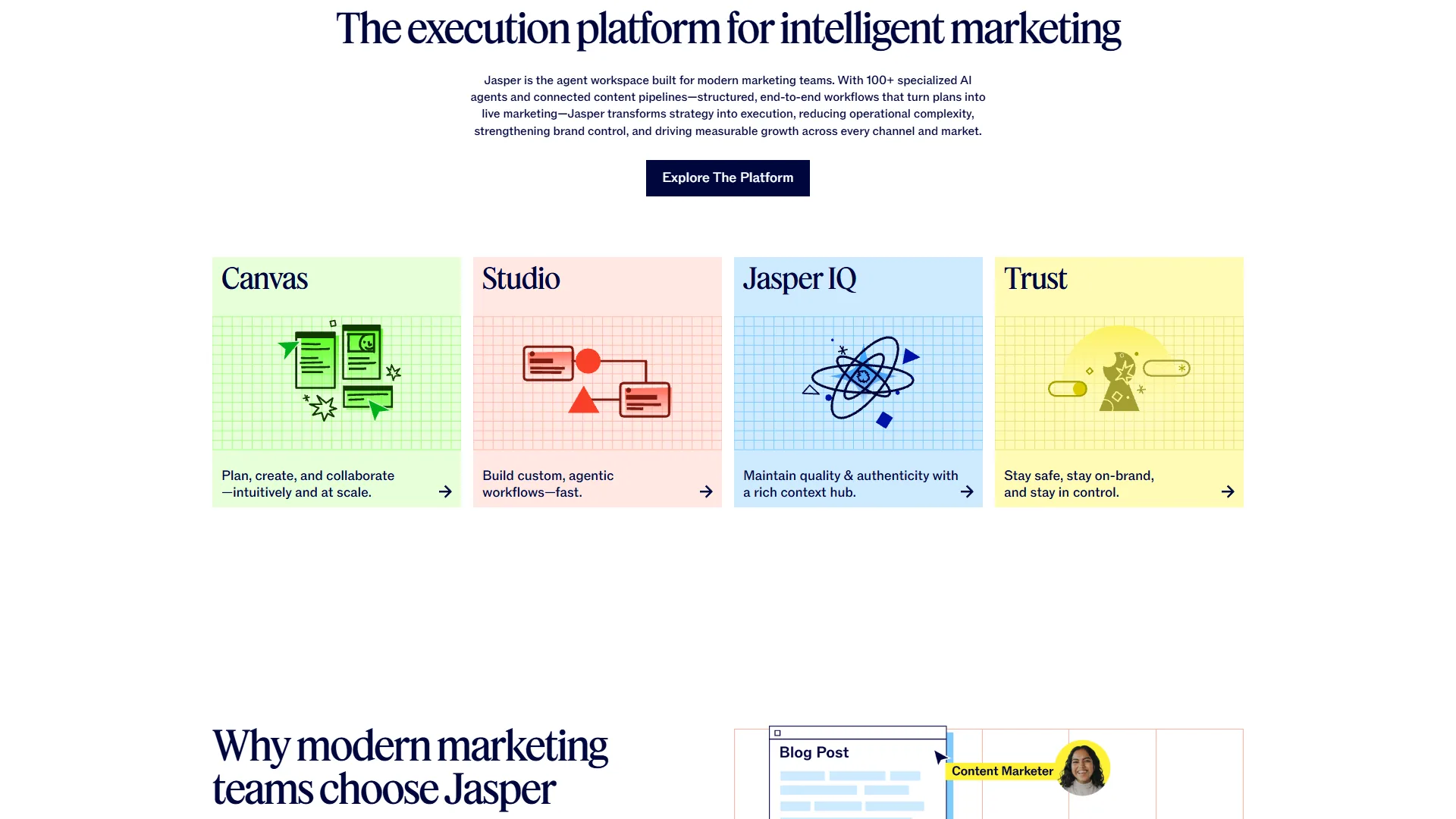
Jasper was built specifically for marketing copy, and it shows in the feature set. While ChatGPT and Claude are general-purpose models you configure for copywriting, Jasper ships with 50+ templates pre-configured for the exact outputs marketing teams need: Facebook ad copy, email subject lines, product descriptions, landing page hero sections, and more. If you are writing the same types of copy repeatedly for multiple clients, the template library pays for itself in setup time alone.
What makes it strong for copywriters:
Brand Voice training is Jasper’s headline feature for copywriters managing multiple clients. You upload existing copy, Jasper analyzes it, and stores a voice profile you can activate for any new project. Running between three client brands in a morning session no longer requires manually reloading context in every prompt.
The Campaigns feature generates an entire content set from a single brief: a blog post, three social variants, two email subject lines, and a short ad copy set. For copywriters who also manage content calendars, this workflow collapses a morning of work into 20 minutes of iteration.
Jasper also integrates with Surfer SEO for on-page optimization, which matters when your copy needs to rank as well as convert.
Copywriter-specific prompts and templates:
- AIDA Framework: Input product and audience, get a structured Attention-Interest-Desire-Action copy block
- PAS Template: Problem-Agitate-Solution format for sales emails and ad copy
- Product Description: Input features and target customer, output conversion-optimized descriptions across length variants
Pricing:
- Creator: $49 per month (1 user, unlimited words, 1 seat, core templates)
- Pro: $69 per month (up to 5 users, Brand Voice, collaboration, Campaigns feature, SEO mode)
- Business: Custom - API access, SSO, dedicated support
Best for: Marketing agencies and in-house copy teams producing 20+ pieces per month across consistent format types. Solo copywriters specializing in marketing copy who want template speed over blank-page flexibility.
Limitations: The $49 per month entry price is hard to justify if you write fewer than 10 marketing pieces a month. Output quality is good but not exceptional - expect 30-40% editing. Brand Voice requires setup time upfront before it delivers value.
4. Copy.ai - Best for Automating Copy Workflows
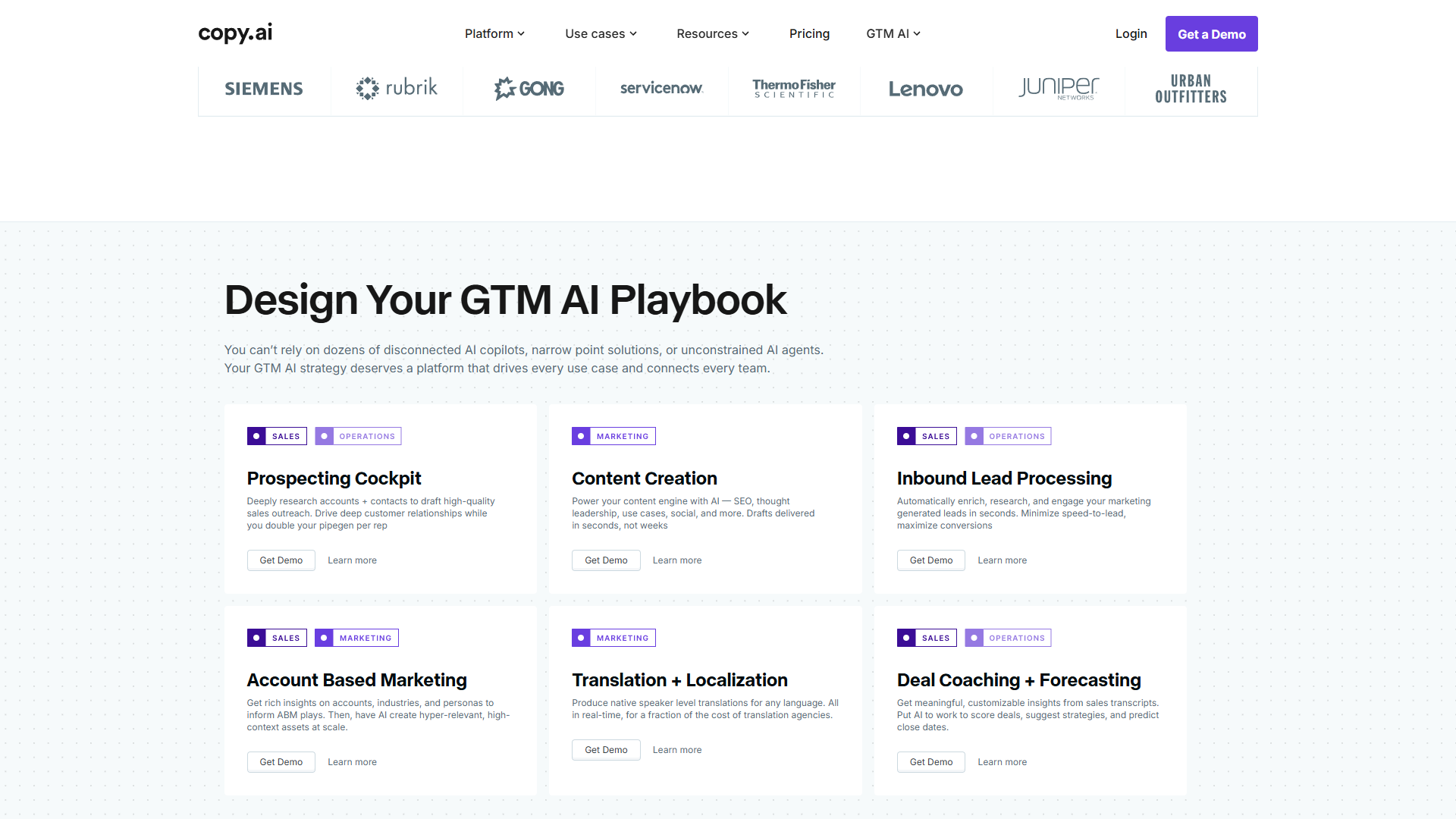
Copy.ai has repositioned from a simple AI copywriting tool into a go-to-market workflow platform. The difference in practice: where other tools help you write copy faster, Copy.ai helps you build repeatable pipelines that produce copy at scale without you in the loop for every step. For copywriters who have moved into content operations or growth roles, this is a significant shift.
What makes it strong for copywriters:
The GTM Workflows feature is the core of what makes Copy.ai different in 2026. You can build multi-step sequences where one step’s output feeds the next: scrape a competitor’s product page, analyze the key claims, generate counter-positioning copy, and format it into an outreach email. Sequences that used to require manual effort at each stage run automatically once configured.
For copywriters handling product launch sequences, Copy.ai reduces setup work dramatically. Build the workflow once for a product launch - announcement post, feature breakdown emails, sales page sections, ad variants - then reuse it for every subsequent launch with new product inputs.
The free tier is unusually generous compared to Jasper, which makes it a lower-risk entry point for testing whether workflow automation fits your practice.
Copywriter-specific use cases:
- Sales enablement copy: Automate persona-specific one-pagers from a product brief input
- Email nurture sequences: Build a template workflow that generates a full sequence from a single ICP description
- Competitive positioning: Input competitor claims, output differentiated counter-messaging automatically
Pricing:
- Free: Limited workflows, 2,000 words/month
- Starter: $49 per month - unlimited copy tools, 1 seat, basic workflows
- Advanced: $249 per month - full workflow automation, unlimited seats, API access, priority support
Best for: Growth-focused copywriters, content operations leads, and agencies running high-volume standardized copy programs. The workflow automation is overkill for a solo copywriter writing 5 custom pieces a month.
Limitations: The Advanced tier at $249 per month is expensive for individuals. The workflow builder has a learning curve - budget an afternoon to set up your first non-trivial pipeline. The basic Starter plan offers less differentiation from ChatGPT than the price suggests.
5. Grammarly - Best for Editing and Copy Polish
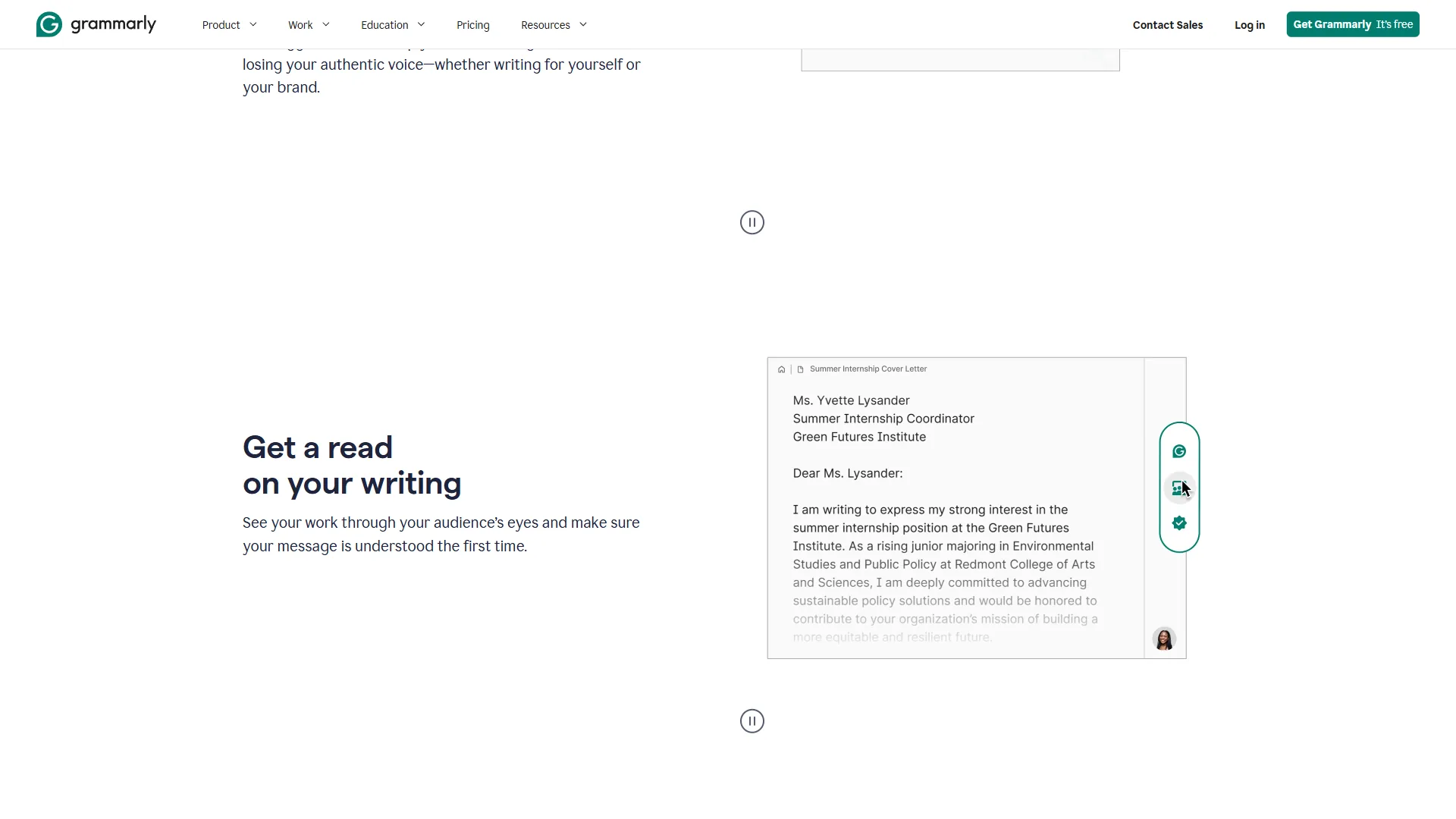
Grammarly is the best AI tool for editing and polishing copywriter drafts, with free grammar checking and a $12 per month Pro tier that adds tone detection and clarity suggestions. Grammarly occupies a different position in the copywriter’s toolkit than the generation tools above - you do not use it to produce copy, you use it to catch everything that makes your copy look careless before a client or prospect sees it. When working with AI-generated drafts, the editing pass is where Grammarly earns its keep.
What makes it strong for copywriters:
Tone detection is the feature that pays for the Pro subscription. Grammarly reads your copy and identifies whether the tone is confident, friendly, formal, direct, or off-target. For copywriters working with multiple clients who have strict brand voice guidelines, this acts as a sanity check before every send. A word choice that reads as casual in one context reads as unprofessional in another - Grammarly flags the ambiguity.
Clarity suggestions catch the AI-generated prose patterns that make copy sound inhuman: excessive passive voice, overly long sentences, vague noun phrases, weak hedging language. After drafting with ChatGPT or Claude, running Grammarly’s clarity pass removes the layer of polish that distinguishes professional copy from AI output.
The browser extension works across every surface where copywriters write: Google Docs, email clients, CMS platforms, social media composers. It is the one tool in this guide that integrates invisibly into your existing workflow rather than requiring a dedicated session.
Copywriter workflow integration:
- Draft with ChatGPT or Claude
- Paste into your delivery document
- Grammarly’s extension runs passively and flags issues as you edit
- Address tone flags and clarity suggestions before final delivery
Pricing:
- Free: Grammar and spelling, basic tone hints, 100 AI prompts/month
- Pro: $12 per month (annual) or $30 per month (monthly) - tone detection, clarity suggestions, plagiarism checker, 1,000 AI prompts/month
- Business: $15 per user/mo (annual, 3+ seats) - style guides, brand tone settings, analytics
Best for: Every copywriter, without exception. Start with the free tier if you are budget-constrained. Upgrade to Pro when you are billing $2,000+/month - the tone detection and plagiarism checker alone are worth the cost at that revenue level.
Limitations: Not a content generation tool. Will not help you write copy from scratch. Free tier lacks tone detection, which is the feature that matters most for client work. Plagiarism checker only available on paid tiers.
6. QuillBot - Best for Rewriting and Copy Variation
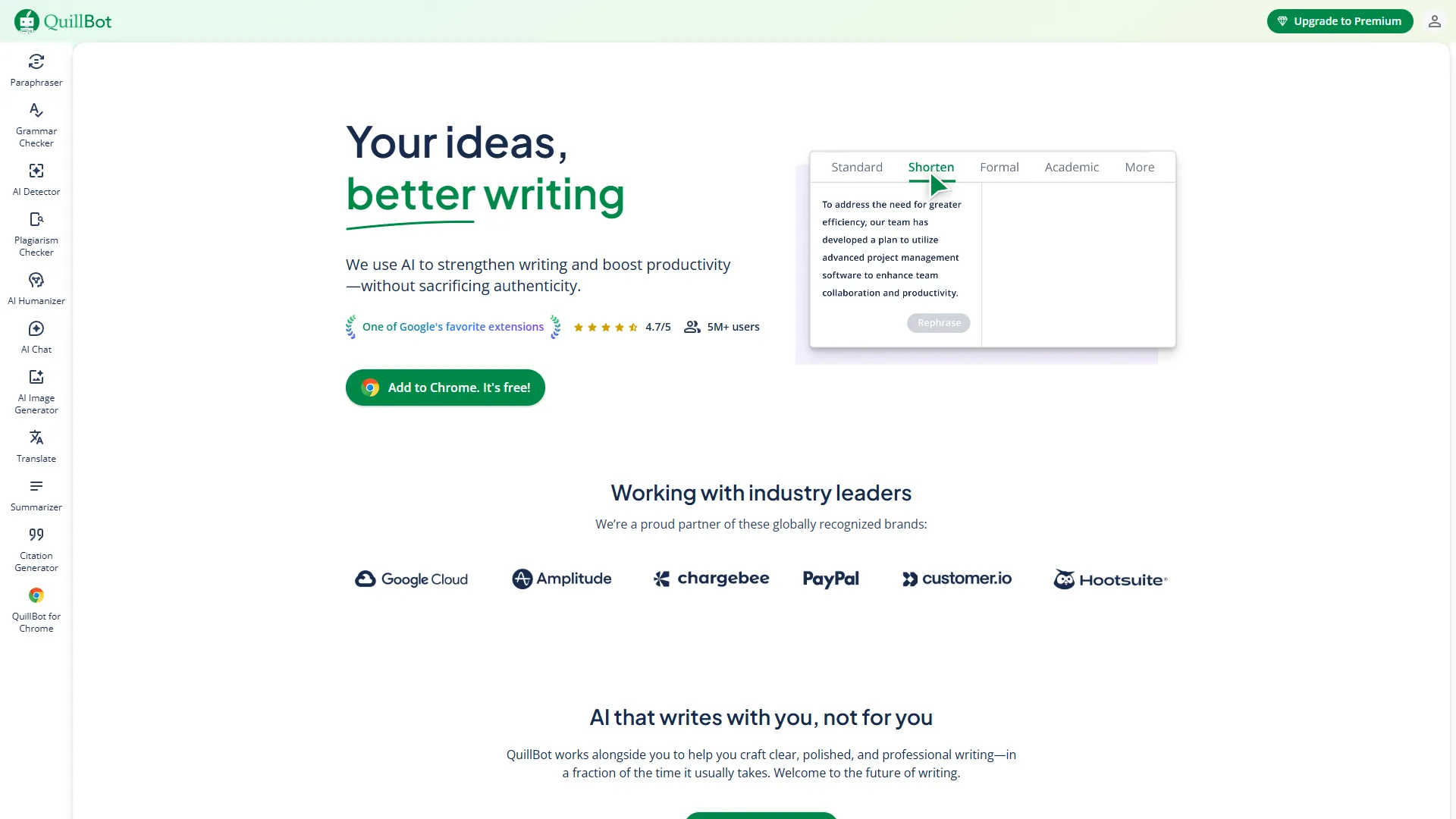
QuillBot is the best AI tool for rewriting and producing copy variations, with seven paraphrase modes and a Premium tier at $8.33 per month (annual) that unlocks unlimited words and every rewriting style. QuillBot solves a specific problem that comes up constantly in copywriting: you have working copy but you need a meaningfully different version of it. For A/B test variants, localized versions of the same message, platform-adapted copy from a single source, or client-requested rewrites that maintain meaning but change phrasing, QuillBot’s paraphraser produces variations faster than rewriting manually.
What makes it strong for copywriters:
The seven paraphrase modes - Standard, Fluency, Formal, Simple, Creative, Expand, and Shorten - give practical control over the output’s register and length. Switching a landing page hero from the Formal mode to Creative produces a meaningfully different version of the same message, not just synonym swaps. For A/B testing, this generates credible test variants rather than cosmetically different copy.
Summarizer is useful when a client brief runs long. Paste in a 2,000-word product spec and extract the four key selling points that should drive the copy angle. The summarizer does not replace reading the brief, but it accelerates the information extraction step.
The Grammar Checker works alongside Grammarly as a second-pass option, though Grammarly’s tone detection makes it the stronger primary editing tool. Use QuillBot as a backup pass on longer documents.
Copywriter-specific use cases:
- Ad copy variants: Take a high-performing control ad and generate 5 variants for testing without losing the core message
- Platform adaptation: Rewrite a long-form website section as a shorter, punchy social caption using the Shorten mode
- Localization prep: Run copy through Formal mode before sending to legal or compliance for review
- Repetition removal: Run copy with repeated phrases through the paraphraser to diversify language patterns
Pricing:
- Free: 125 words/paraphrase, limited modes, basic grammar check
- Premium: $19.95 per month (monthly) or $8.33 per month (annual) - unlimited words, all paraphrase modes, advanced grammar check, summarizer
Best for: Copywriters who produce A/B test variants regularly, those adapting copy across platforms or formality levels, and anyone who needs to quickly rewrite existing copy without starting from scratch.
Limitations: Not a content generation tool - you need source copy to work with. The free tier’s 125-word limit makes it impractical for anything beyond short-form work. Output still requires editing; it is a starting point for variants, not a finished product.
Which AI Copywriting Stack Fits Your Use Case?
The right AI copywriting stack pairs one generation tool with Grammarly and costs between $20 and $249 per month, depending on whether the writer needs solo brand-voice work, agency volume, or full GTM workflow automation. You do not need all six tools. These ai tools for copywriters work best when combined to match your specific workflow - the right combination depends on what you write most and where your process loses time.
Stack 1 - The Solo Copywriter ($20-32/mo)
ChatGPT Plus ($20 per month) + Grammarly Pro ($12 per month)
This combination handles 80% of what most freelance copywriters need. ChatGPT generates drafts following your briefs; Grammarly polishes output and catches tone drift before delivery. Total monthly cost: $32.
Best for: Solo copywriters writing a mix of ad copy, emails, and landing pages across several clients. Reliable, affordable, and covers both the generation and editing stages without overlap.
Stack 2 - The Brand Voice Specialist ($39-69/mo)
Claude Pro ($20 per month) + Grammarly Pro ($12 per month) + QuillBot Premium ($8 per month)
Claude handles long-form copy where voice consistency matters; QuillBot generates the variants and rewrites; Grammarly polishes everything before it leaves your screen. Total: $40 per month.
Best for: Copywriters specializing in brand storytelling, thought leadership ghostwriting, and content strategy. The Claude + QuillBot combination produces both the original copy and the adapted variants without a quality drop.
Stack 3 - The Marketing Copy Agency ($69-81/mo)
Jasper Pro ($69 per month) + Grammarly Pro ($12 per month)
Jasper’s Brand Voice library and template suite handle the volume; Grammarly’s Business features (available when scaling to team use) enforce quality standards across multiple writers. Total for one user: $81 per month.
Best for: Marketing agencies or in-house content teams producing 20+ standardized copy deliverables per month. The template library and brand voice storage eliminate per-project setup time at scale.
Stack 4 - The Content Ops Lead ($49-249/mo)
Copy.ai Advanced ($249 per month) + Grammarly Business ($15 per user/mo)
For copywriters who have moved into content operations, Copy.ai’s workflow automation replaces manual production of recurring copy types. The ROI calculation changes from “time saved per piece” to “pipeline value generated.”
Best for: Content operations teams, growth marketers running programmatic copy programs, and agencies where the same copy format is produced weekly at volume.
The Bottom Line
The best AI tools for copywriters in 2026 are ChatGPT for general brief-following, Claude for brand voice, Jasper for high-volume marketing teams, Copy.ai for workflow automation, Grammarly for editing, and QuillBot for rewriting - paired in stacks costing $32 to $249 per month. As Ann Handley, Chief Content Officer at MarketingProfs, has long argued in Everybody Writes, “Good writing is good thinking” - the role of these tools is to clear mechanical work so the thinking gets more time, not to replace it. The copywriters who benefit most from ai tools for copywriters in 2026 are not using them as a crutch - they are using them to remove the mechanical parts of the job so more time goes toward the work clients actually pay a premium for: strategic angle selection, genuine voice matching, and the kind of insights that make copy convert rather than just communicate.
ChatGPT is the strongest starting point for general brief-following and ad copy volume. Claude is the better tool when the assignment requires genuine voice precision. Jasper makes sense when you are running a high-volume marketing copy operation and need templates and brand voice storage to keep pace. Copy.ai is worth exploring once you are producing the same copy format repeatedly and want to automate the pipeline. Grammarly is non-negotiable for every copywriter regardless of what else is in the stack. QuillBot earns its place whenever A/B testing, platform adaptation, or rewriting are a regular part of your work.
Start with one generation tool and Grammarly. Master the system prompting. Then add tools only when a specific bottleneck in your workflow - brand voice drift, variant generation, workflow automation - justifies the additional cost. If you are also exploring broader AI writing tools beyond copywriting-specific options, that guide covers the full landscape.
FAQ
The four most common questions about AI tools for copywriters cover the best overall pick, free options, the cheapest viable stack, and whether AI replaces copywriters - direct answers to each follow below.
Q: What is the best AI tool for copywriters?
Among the six ai tools for copywriters in this guide, ChatGPT is the strongest general-purpose option for high-volume brief-following tasks like email sequences, ad copy, and landing page frameworks. Claude is the better choice when the assignment requires genuine voice matching or long-form brand storytelling. You do not need all six tools.
Q: Are there free AI tools for copywriters?
Yes. ChatGPT offers free GPT-4o access with limits, Claude provides free Claude 3.5 Haiku access, Copy.ai includes a free tier with 2,000 words per month, Grammarly’s free tier covers grammar and spelling, and QuillBot offers 125 words per paraphrase for free. Free tiers work for testing, but serious client work usually justifies a paid upgrade.
Q: What is the cheapest AI copywriting stack?
The cheapest effective stack is ChatGPT Plus at $20 per month plus Grammarly Pro at $12 per month, totaling $32 monthly. This Solo Copywriter combination handles roughly 80% of what most freelance copywriters need - ChatGPT generates drafts following your briefs while Grammarly polishes output and catches tone drift before delivery across several clients.
Q: Can AI replace copywriters?
No. AI has not replaced copywriters - it has raised the floor on what a copywriter with the right tools can produce in a day. The writers charging premium rates in 2026 are the ones who know exactly when to use AI, which tool to reach for, and how to stay in creative control over strategic angles and voice.
Related Reading
Related guides cover head-to-head editing tool comparisons, alternatives to QuillBot and Grammarly, and full reviews of every tool ranked above.
- QuillBot vs Grammarly - Which Editing Tool Wins?
- Best Grammarly Alternatives 2026
- Best QuillBot Alternatives 2026
- ChatGPT - Full review with pricing and alternatives
- Claude - Full review with pricing and alternatives
- Jasper - Full review with pricing and alternatives
- Copy.ai - Full review with pricing and alternatives
- Grammarly - Full review with pricing and alternatives
- QuillBot - Full review with pricing and alternatives
External Resources
External resources for copywriters working with AI include Copyblogger for technique, Kopywriting Kourse for practical workflows, and the official Jasper and Grammarly blogs for brand-voice and clarity guidance.
- Copyblogger - Copywriting technique guides and content marketing strategy
- Kopywriting Kourse Blog - Practical copywriting skills and AI workflow guides
- Jasper Blog - Marketing AI and brand voice strategy
- Grammarly Writing Tips - Grammar, clarity, and tone guides for professional writers