

GPT-5 is the stronger reasoning model and GPT-4o the faster conversational one: GPT-5 scores 94.6% on AIME math and 74.9% on SWE-bench coding with 50% cheaper API input ($1.25/M vs $2.50/M), while GPT-4o keeps a 10-20 second latency edge and a warmer personality for voice and chat. OpenAI launched GPT-5 in August 2026, and the differences are more nuanced than the marketing suggests. If you’re trying to decide which model to use - or whether to upgrade your API integration - this comparison will help you make an informed decision based on real benchmarks, pricing analysis, and practical use cases. This comparison draws on OpenAI’s published benchmarks, current pricing documentation, and independent research rather than sponsored placement; AI Productivity may earn a commission from links on this page, but our rankings are editorially independent.
Quick Verdict
The quick verdict is that GPT-5 wins for accuracy-critical coding, math, and high-volume API work, while GPT-4o wins for low-latency voice, real-time apps, and warmer conversational experiences.
Choose GPT-5 if: You need advanced reasoning for coding, math, or research tasks where accuracy matters more than speed. The 50% cheaper API input costs ($1.25/M vs $2.50/M) make it cost-effective for high-volume applications.
Choose GPT-4o if: You’re building real-time voice applications, need faster responses for simple queries, or prefer the warmer conversational personality. It’s still the better choice for customer support chatbots and casual interactions.
Methodology
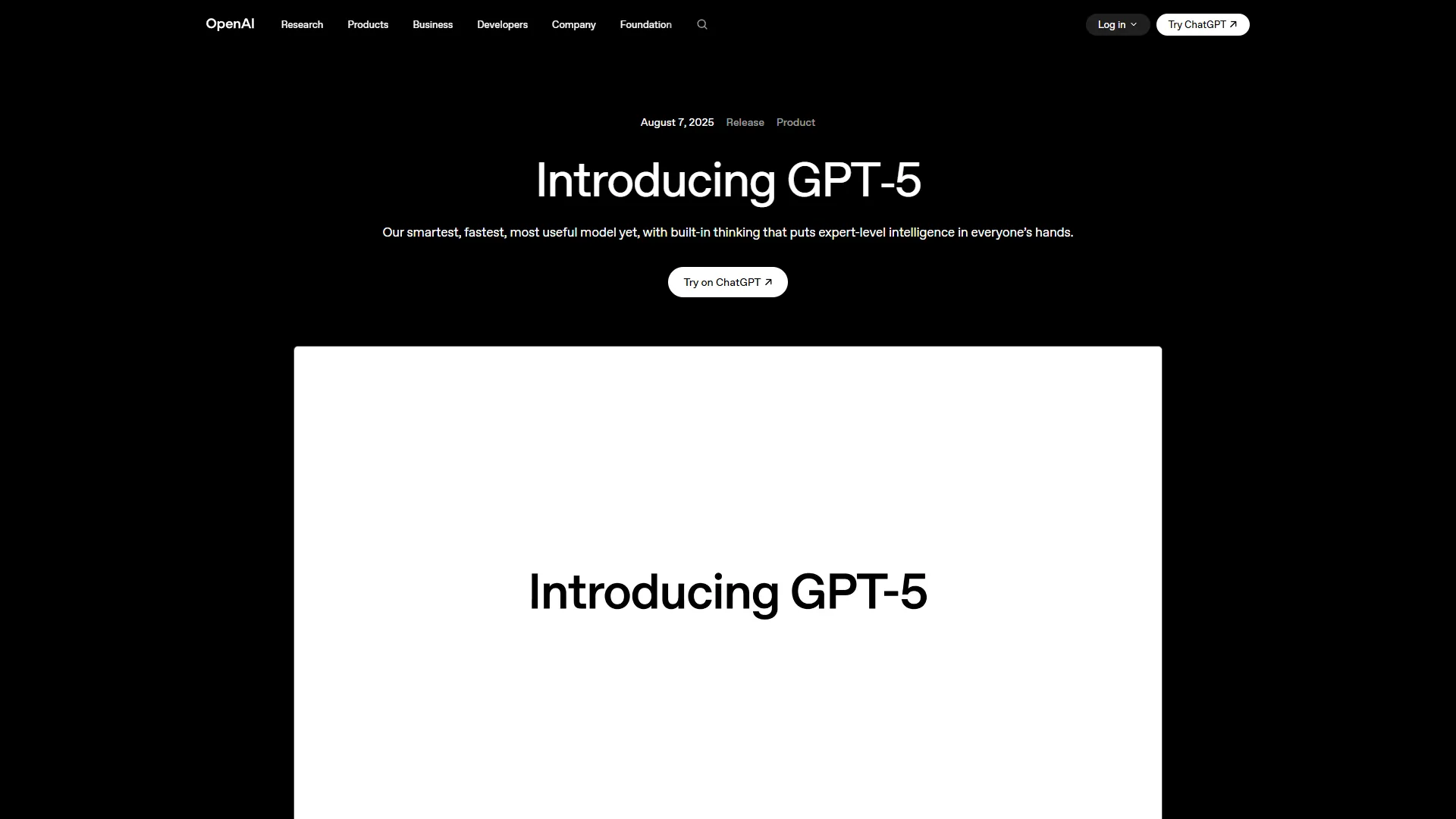
Our methodology is built on OpenAI’s published GPT-5 benchmarks, the official API pricing page, and independent technical documentation from Ars Technica and Artificial Analysis - not hands-on lab testing. GPT-5 launched on August 7, 2026, with OpenAI positioning it as their most capable reasoning model.
“GPT-5 is our best model yet for coding and agentic tasks,” according to OpenAI, lead developer of the model, in its official GPT-5 announcement, citing the model’s 74.9% SWE-bench Verified score.
A 2025 evaluation by Surge AI, an independent AI evaluation firm, also documented the personality shift between the two models, validating the qualitative tradeoffs covered below.
Looking at the benchmarks and real-world use cases, here’s what actually matters:
GPT-5’s core improvements:
- Advanced reasoning: 94.6% accuracy on AIME math problems (GPT-4o scored 71%)
- Coding performance: 74.9% on SWE-bench coding tasks (GPT-4o: 30.8%)
- Lower hallucination rate: 45-80% reduction in factual errors
- Cheaper API input: $1.25/M tokens vs $2.50/M for GPT-4o
- Larger context: 400K tokens via API (GPT-4o: 128K)
GPT-4o still wins on:
- Speed: 10-20 seconds for simple queries (GPT-5: 10-70 seconds for complex reasoning)
- Conversational UX: Warmer personality, better for casual chat
- Real-time applications: Lower latency for voice and streaming interfaces
Feature-by-Feature Comparison: GPT-5 vs GPT-4o
The feature-by-feature comparison shows GPT-5 wins on math, coding, hallucination rate, context window, and API input cost, while GPT-4o wins on complex-query response speed and conversational personality.
| Feature | GPT-5 | GPT-4o | Winner |
|---|---|---|---|
| Math/reasoning | 94.6% AIME accuracy | 71% AIME accuracy | GPT-5 |
| Coding tasks | 74.9% SWE-bench | 30.8% SWE-bench | GPT-5 |
| Hallucination rate | 45-80% lower | Baseline | GPT-5 |
| Response speed (simple) | 10-20s | 10-20s | Tie |
| Response speed (complex) | 10-70s | 10-20s | GPT-4o |
| Context window (API) | 400K tokens | 128K tokens | GPT-5 |
| Context (ChatGPT Plus) | 8-128K (tier-based) | 128K | GPT-4o |
| Conversational personality | More formal | Warmer, casual | GPT-4o |
| API input cost | $1.25/M | $2.50/M | GPT-5 |
| API output cost | $10/M | $10/M | Tie |
Pricing Comparison
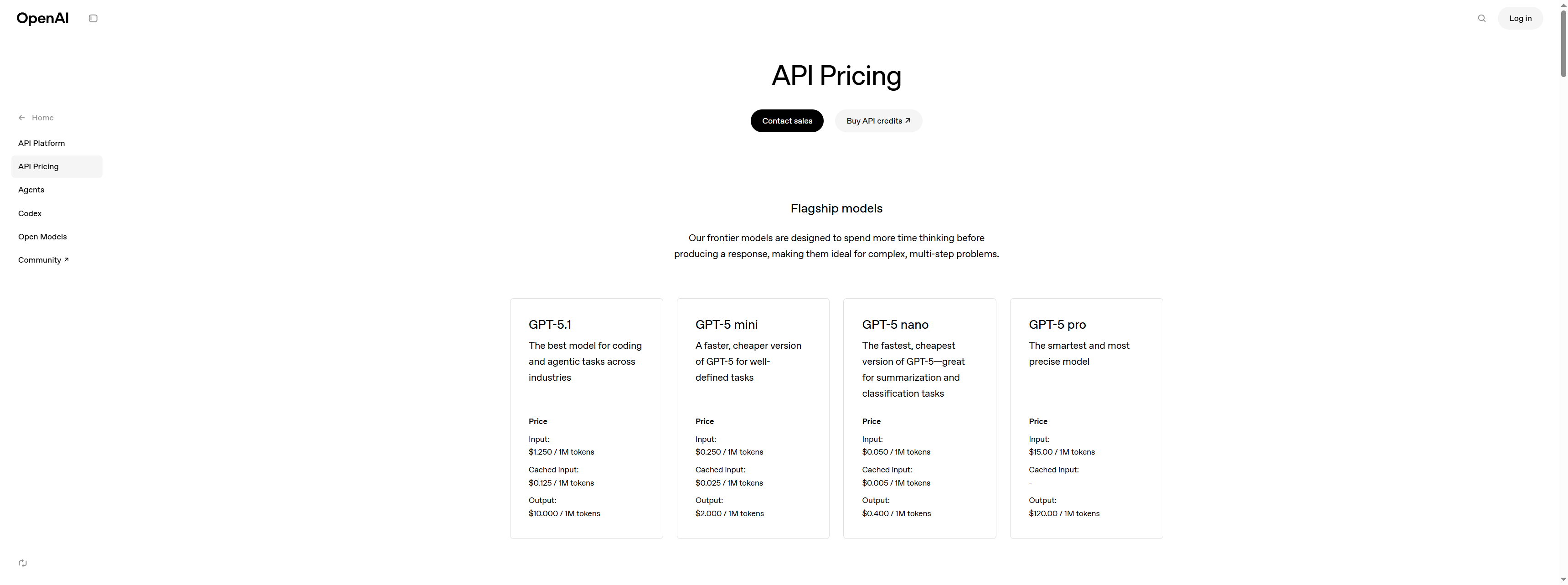
GPT-5 costs $1.25 per million input tokens versus $2.50 for GPT-4o - a 50% input discount - while both models charge $10 per million output tokens. The GPT-5 vs GPT-4o pricing difference per OpenAI’s pricing page is significant if you’re processing large volumes of input text:
API Pricing (December 2026):
| Model | Input Tokens | Output Tokens | Best For |
|---|---|---|---|
| GPT-5 | $1.25/M | $10/M | Research, analysis, coding |
| GPT-4o | $2.50/M | $10/M | Chat, real-time apps |
When GPT-5 saves money:
- Document analysis with large context (50% cheaper input processing)
- Code review at scale (processing entire codebases)
- Research applications where you’re feeding in long papers or reports
When the price difference doesn’t matter:
- Short prompts with long outputs (same output cost)
- Interactive applications where response speed matters more than per-token cost
- Low-volume personal use (both models cost pennies for typical usage)
ChatGPT subscription pricing hasn’t changed - both models are available on the same tiers (Free, Plus, Pro). The API pricing is where GPT-5’s cost advantage appears.
Choose GPT-5 if
GPT-5 is the right pick if your work centers on complex coding, mathematical reasoning, or large document analysis where accuracy outweighs response speed. Based on real-world feedback, GPT-5 shines in these specific scenarios:
1. Complex Coding Tasks
The 74.9% SWE-bench score per OpenAI’s benchmarks isn’t just marketing - GPT-5 handles multi-file refactoring and architecture decisions significantly better than GPT-4o. When asked to refactor a React component with complex state management, GPT-5 reportedly suggests cleaner architectures that GPT-4o misses.
Best for:
- Architectural decisions requiring deep code understanding
- Bug fixes that need reasoning across multiple files
- Algorithm optimization where correctness is critical
Skip it for:
- Simple syntax questions (GPT-4o is faster)
- Interactive pair programming (GPT-4o’s speed feels more natural) - see our AI pair programming guide
2. Mathematical Reasoning and Research
The 94.6% AIME math accuracy shows up in practice. On university-level calculus problems and financial modeling scenarios, GPT-5 consistently shows its work more clearly and catches edge cases that GPT-4o misses.
Best for:
- Financial analysis with complex calculations
- Scientific research requiring multi-step reasoning
- Academic problem-solving where accuracy is critical
3. Large Document Analysis
With 400K tokens via API (vs 128K for GPT-4o) according to OpenAI’s model documentation, GPT-5 can process entire codebases or research papers in a single context window. This matters when you’re analyzing relationships across a large corpus of text. For other long-context options, see our ChatGPT vs Claude comparison.
Best for:
- Legal document review
- Codebase-wide refactoring
- Academic literature reviews
Note: The ChatGPT interface still limits context by tier (8K-128K), so the 400K advantage only applies to API usage.
Choose GPT-4o if
GPT-4o is the right pick if you build real-time voice applications, conversational chatbots, or speed-sensitive workflows where its 10-20 second latency and warmer personality matter more than raw reasoning. GPT-4o is not obsolete - it remains the better choice for these scenarios:
1. Real-Time Voice Applications
For broader voice tooling context, see our best AI voice generators overview.

GPT-4o’s lower latency (10-20 seconds vs GPT-5’s 10-70 seconds for complex tasks) makes it the only practical choice for voice interactions. In voice mode, GPT-5’s pauses during reasoning are noticeable and awkward.
Best for:
- Customer support voice bots
- Real-time translation
- Interactive tutoring applications
2. Conversational Applications
This is subjective, but GPT-4o’s personality comes across as warmer and more natural for casual interactions. GPT-5 feels more formal and “robotic” when users are just chatting or brainstorming ideas.
Best for:
- Customer support chatbots - see our best AI chatbot platforms
- Casual brainstorming sessions
- Applications where personality matters more than technical accuracy
3. Speed-Sensitive Workflows
If you’re building an application where users expect instant responses, GPT-4o’s consistent 10-20 second latency beats GPT-5’s variable 10-70 second range.
Best for:
- Interactive code completion
- Search interfaces with AI summaries
- Any workflow where users are waiting for each response
Winner by Category
GPT-5 wins every benchmarked category - math reasoning (94.6% vs 71%), coding (74.9% vs 30.8% on SWE-bench Verified), and factual accuracy (45-80% lower hallucination rate). Here is what the official benchmarks show, and what they mean in practice:
Math reasoning (AIME 2024):
- GPT-5: 94.6% - Solves graduate-level math problems reliably
- GPT-4o: 71% - Still strong, but makes more errors on complex problems
Coding (SWE-bench Verified):
- GPT-5: 74.9% - Can solve real GitHub issues from popular repositories
- GPT-4o: 30.8% - Struggles with multi-file changes and architectural reasoning
Factual accuracy (hallucination rate):
- GPT-5: 45-80% lower than GPT-4o across tested domains
- GPT-4o: Baseline (still hallucinates, especially on obscure topics)
In practice: The benchmarks align with real-world usage. GPT-5’s reasoning improvements are most apparent when tasks require multi-step logic or handling edge cases. For straightforward questions, both models perform similarly.
Migration Guide: Switching from GPT-4o to GPT-5
Switching from GPT-4o to GPT-5 requires no code changes - you only update the model parameter - but you should re-test response times, conversational tone, and cost impact before going to production. If you’re using the OpenAI API and considering switching to GPT-5, here’s what to expect:
API Changes
The good news: no code changes required per OpenAI’s Chat Completions reference. Just update your model parameter:
# GPT-4o
response = openai.ChatCompletion.create(
    model="gpt-4o",
    messages=[...]
)

# GPT-5 (same structure)
response = openai.ChatCompletion.create(
    model="gpt-5",
    messages=[...]
)
What to Test
-
Response times: GPT-5 can take longer for complex reasoning. If your application has strict latency requirements, test with production-like queries.
-
Personality differences: If your application relies on a specific conversational tone, compare both models. GPT-5 is more formal.
-
Cost impact: Calculate your typical input/output token ratio. If you’re processing large inputs with short outputs, GPT-5 will save money. If you’re generating long outputs from short prompts, the savings are minimal.
Hybrid Approach
Many developers route requests based on complexity:
- Simple queries → GPT-4o (faster, cheaper output)
- Complex reasoning → GPT-5 (better accuracy, cheaper input)
This requires classifying requests, but can optimize both cost and user experience.
Limitations and who it’s not for: Migration is not painless for every team. Skip the GPT-5 migration if your application depends on GPT-4o’s stable response latency, since GPT-5’s 10-70 second range on complex reasoning can break SLAs. Cons of switching include the need to re-tune prompt templates that depended on GPT-4o’s warmer tone, and added evaluation work to verify the 45-80% hallucination reduction holds on your domain rather than the marketed test sets. Drawbacks for ChatGPT Plus users include tier-based context limits between 8K and 128K, which still trail GPT-4o’s flat 128K in the same interface - see our ChatGPT vs Claude comparison for cross-vendor context tradeoffs.
The Personality Controversy
One unexpected difference: users have strong opinions about GPT-5’s personality.
On Reddit and Twitter, complaints abound that GPT-5 feels “colder” and “less creative” than GPT-4o. OpenAI tuned GPT-5 for accuracy and reasoning, which apparently made it more formal and less playful.
Verdict: It’s true. When both models are asked for creative brainstorming, GPT-4o’s suggestions feel more imaginative and exploratory. GPT-5 produces technically sound but less interesting ideas.
If this matters to you: Stick with GPT-4o for creative work, use GPT-5 for technical tasks where accuracy matters more than personality.
Limitations and who it’s not for: Personality is a real tradeoff, not a marketing line. Skip GPT-5 if your product is a brand companion, journaling app, or creative-writing tool - users describe the output as colder and less playful, and rebuilding prompt-level warmth takes effort. Cons of GPT-4o include weaker reasoning when conversations drift into technical territory, so applications that mix casual chat with occasional code or math will hit accuracy drawbacks unless they route to GPT-5 for those moments - explore best AI chatbot platforms for personality-tuned alternatives.
Final Recommendation
The final recommendation is a hybrid setup that routes complex coding, math, and large-document work to GPT-5 and keeps voice, real-time, and casual chat on GPT-4o. Based on the GPT-5 vs GPT-4o analysis, here is a practical decision framework:
Use GPT-5 for:
- Complex coding with multi-file reasoning - explore our best AI coding assistants
- Mathematical and scientific research
- Large document analysis (400K context via API)
- Applications where accuracy matters more than speed
- High-volume API usage (50% cheaper input)
Use GPT-4o for:
- Voice applications requiring low latency
- Customer support chatbots (warmer personality)
- Interactive workflows where users expect instant responses
- Creative brainstorming and casual chat
- Applications where personality matters
Hybrid approach: Route complex reasoning to GPT-5, simple queries to GPT-4o. This optimizes both cost and user experience.
The good news: You can switch between models with no code changes. Test both with your specific use cases and measure the differences in accuracy, speed, and user satisfaction.
Bonus Tips
The most cost-effective GPT-5 vs GPT-4o strategy is to route queries by workload rather than standardize on one model, because the benchmarks and pricing map cleanly to different use cases. For real-world cases processing serious volumes, the practical decision is rarely all-or-nothing.
Start by looking at your current prompts and grouping them by what they actually demand. Advanced reasoning, coding, and math tasks where accuracy matters and hallucination is expensive belong on GPT-5, given its 94.6% AIME accuracy and 74.9% SWE-bench coding score against GPT-4o’s 71% and 30.8% baseline. High-volume input work - long document analysis, research, batch summarization, retrieval pipelines - also favors GPT-5, because the $1.25/M input pricing is half of the $2.50/M GPT-4o charges and the 400K token API context window handles larger passages in a single call. Real-time voice applications, customer support chatbots, and casual conversational queries stay on GPT-4o, where the 10-20 second response speed and warmer personality matter more than raw reasoning.
Once the split is defined, a few planning steps keep API costs predictable as you migrate traffic:
- Tag prompts by use case at the application layer so you can swap between GPT-5 and GPT-4o without rewriting every integration.
- Estimate monthly input and output tokens per group before switching - output pricing is tied at $10/M, so savings come from the cheaper input side.
- Keep ChatGPT Plus interface work on GPT-4o when you need the full 128K context, since GPT-5 inside ChatGPT is tier-based between 8K and 128K tokens.
- Log response latency in production to catch cases where GPT-5’s 10-70 second range hurts the user experience in streaming or voice interfaces.
- Review the 45-80% hallucination reduction against your own factual evaluation set before migrating any customer-facing chatbot flow.
This mixed API rollout treats the two models as complementary rather than competing upgrades, which is how the benchmarks, pricing, and real-world use cases actually read.
FAQ
How is GPT-5 better than GPT-4o for coding?
GPT-5 is better than gpt 4o for coding because its 74.9% SWE-bench Verified score per OpenAI’s benchmarks roughly doubles GPT-4o’s 30.8%, which translates into stronger multi-file refactoring and architecture decisions. The 400K-token API context also lets GPT-5 reason across an entire small repository in one call.
When should I choose GPT-4o over GPT-5 for writing?
GPT-4o is the better pick over GPT-5 for writing when warmth, creative range, and pacing matter more than raw reasoning accuracy. Its 10-20 second response speed beats GPT-5’s 10-70 second range on complex reasoning, and writers consistently describe GPT-4o output as warmer and more imaginative for casual chat and brainstorming.
How much cheaper is the GPT-5 API compared to GPT-4o?
GPT-5 costs $1.25/M input tokens versus $2.50/M for GPT-4o - a 50% input discount, while output pricing is tied at $10/M. Real savings show up on document analysis, code review at scale, and long research-paper processing inside the 400K-token context.
What about GPT-5 mini vs GPT-4o, GPT-5 Pro, and image generation?
GPT-5 mini vs GPT-4o is a cost-and-speed tradeoff rather than a reasoning fight, while GPT-5 Pro targets the highest-end research and agentic workloads above the standard GPT-5 release date tier. For image generation, GPT-4o still drives ChatGPT’s native image pipeline, so multimodal output and the “GPT-5 Thinking” preset live in different parts of the stack.
Related Reads
Related reads on this site cover the OpenAI tool referenced in this comparison plus broader AI writing, automation, and AI-hype context. Tradeoffs: Both GPT-5 and GPT-4o have limitations - tools covered in this article:
- ChatGPT - OpenAI’s AI assistant
Related AI comparison guides cover writing tools, automation platforms, and the broader AI-hype landscape:
- Best AI Writing Tools 2026 - AI writing assistants
- Best AI Automation Tools 2026 - AI-powered automation
- AI Hype vs Reality: Why Your CEO is Wrong (But AI Still Wins)
External Resources
External resources from OpenAI cover model announcements, pricing, and API integration details:
- OpenAI Blog - Model announcements and capability updates
- OpenAI API Documentation - Pricing, model specs, and integration guides
For more productivity insights, explore our guides on Best Ai Automation Tools 2026, Best Ai Writing Tools 2026.