








AI productivity is real when AI augments skilled workers and fails when AI replaces them, with measured gains of 26 to 66 percent for augmentation and a public trail of replacement reversals at Klarna, Salesforce, IBM, and Chegg. That is the AI productivity hype vs reality split in one line - the rest of this analysis shows the evidence behind it, including the MIT study AI productivity finding on GitHub Copilot, the Forrester data on AI work slop, and the Hype and Reality patterns that distinguish working deployments from expensive failures.
This analysis draws on company disclosures, peer-reviewed studies (MIT/NBER, Nielsen Norman Group), and vendor productivity research (Microsoft Work Trend Index, GitHub Research, Forrester) rather than sponsored placement or hands-on benchmarking. Some links on this page are affiliate links; our analysis and recommendations remain independent.
Why People Get AI Productivity Hype vs Reality Wrong
The AI productivity hype vs reality gap is one distinction: AI used to replace workers consistently fails, while AI used to augment skilled workers delivers measurable productivity gains of 26 to 66 percent. Companies that bet on replacement - Klarna, Salesforce, IBM, Chegg - are quietly backtracking, while companies that bet on augmentation are reclaiming tens of thousands of work hours. The ones actually winning use AI to make their teams superhuman, not obsolete.
The Great AI Replacement Fantasy
The AI replacement fantasy is the belief that AI can fully substitute for human employees in roles like customer service, coding, and decision-making - a premise real-world deployments have repeatedly disproven. Algorithms do not understand context, empathy, or “let me escalate this to my manager.” The replacement narrative ignores real limitations: AI struggles with context-dependent decisions, edge cases, and the relational work that makes most jobs sticky.
When AI Replacement Goes Catastrophically Wrong
AI replacement failures share a pattern: companies cut staff aggressively, watched service quality collapse, and rehired at higher cost. Five public AI productivity hype vs reality examples illustrate the failure mode.
Klarna: The $100 Million Mistake
Swedish fintech Klarna cut 40% of staff - 700 employees - betting on AI customer service. The result: a service disaster that forced Klarna to rehire support agents months later. Complex issues - disputed charges, fraud investigations, account problems - left customers frustrated. CEO Siemiatkowski admitted “the AI was not ready.”
Salesforce: When the CRM Giant Failed at CRM
Salesforce stumbled badly when replacing 4,000+ customer support roles with AI. Service quality plummeted, response times increased, and satisfaction scores dropped. The irony: a CRM company failed to maintain customer relationships with its own AI.
Amazon’s “Just Walk Out” Illusion
Amazon’s cashierless stores were supposed to showcase AI magic. Reality revealed in 2024: 1,000 workers in India were manually reviewing transactions the AI was supposed to handle. “AI-powered” checkout was actually “people watching security footage” powered.
IBM’s HR Overreach
IBM planned to replace 8,000 HR roles with AI for payroll, benefits, and onboarding. The company scaled back after discovering AI failed to handle nuanced conflicts, performance discussions, or sensitive personal situations.
Chegg’s Existential Crisis
Chegg laid off 22% of staff betting on AI tutoring. Its stock crashed from $20 to under $1 as students abandoned the platform.
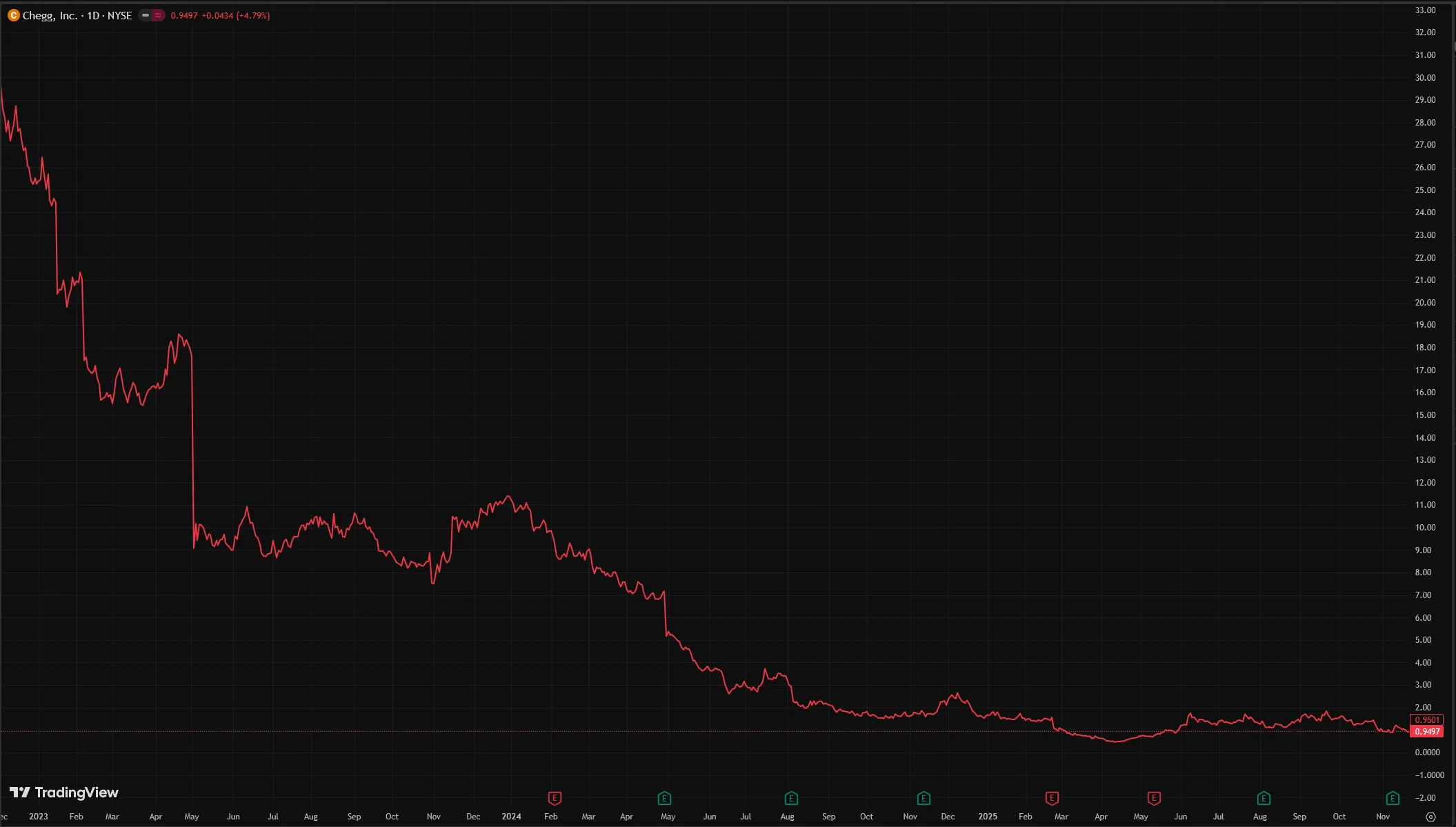
AI tutors failed to adapt explanations to learning styles, recognize confusion, or build relationships. Within months, Chegg pivoted back to human tutors.
The Forrester Wake-Up Call
Forrester’s 2024 survey delivered the knockout punch: 55% of employers regret AI-driven layoffs. A large share rehired at significantly higher costs. Companies rushed to replace humans, discovered AI’s limitations, and paid premium prices to undo the mistakes.
What Actually Works: AI as Productivity Multiplier
AI works as a productivity multiplier when it handles defined, repetitive tasks while skilled humans keep control of strategy, judgment, and quality - the model behind every successful deployment in this analysis.
EchoStar Hughes: 35,000 Hours Reclaimed
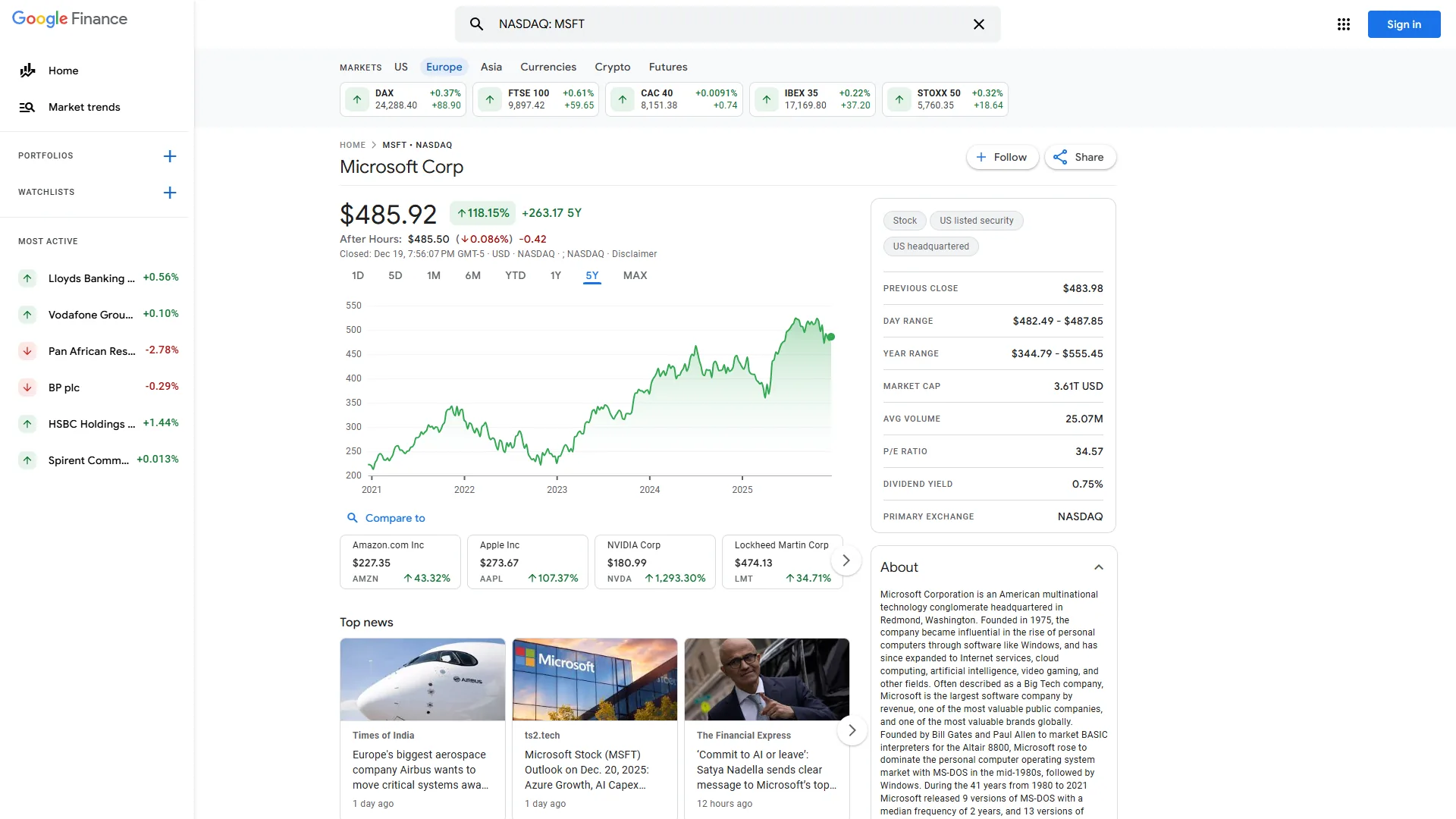
EchoStar Hughes deployed Microsoft 365 Copilot as a productivity enhancer, not a replacement: 35,000 work hours saved, employees retained and upskilled, meeting summaries and document drafting automated.
Toyota’s Administrative Revolution
Toyota reclaimed 10,000+ man-hours in administrative tasks using AI for document processing - with human oversight at every stage. AI handled data entry and report generation; humans handled quality verification, exceptions, and strategic decisions.
Uber: Algorithms with Humans in the Loop
Uber uses AI for surge pricing and route optimization without replacing drivers. AI predicts demand and calculates dynamic pricing; human drivers make the final calls about when and where to work.
IBM’s Redemption Arc
The same IBM that stumbled in HR projected $4.5 billion in savings using AI to augment employees: AI-assisted code reviews with developers deciding, automated testing with engineers designing strategy.
The MIT Study: GitHub Copilot Reality Check
MIT/NBER researchers found developers using GitHub Copilot had 26% higher output with no reduction in code quality. The best code came from experienced developers wielding Copilot like a power tool, not from AI autonomy - the MIT study AI productivity finding most cited by hiring managers.
Nielsen Norman Group: The 66% Productivity Leap
Nielsen Norman Group studied knowledge workers using AI assistants and found a 66% productivity improvement on writing tasks. Gains came from AI handling drafts, research compilation, and editing suggestions - while humans controlled strategy, tone, and final decisions. Honest tradeoffs: augmentation requires training time, prompt-engineering effort, and disciplined human review.
The Tools That Get It Right
Six AI tools are built for human-AI collaboration - ChatGPT, Perplexity, Notion, Zapier, Grammarly, and ClickUp - and each handles research, drafting, and routine tasks while leaving judgment and strategy to the user. None are autonomous replacements, and the cons matter as much as the upside.
ChatGPT: Your Tireless Research Assistant
ChatGPT exemplifies AI augmentation done right. It drafts initial versions of emails, reports, and content; explains complex concepts; brainstorms options; and handles research compilation. It does not make strategic decisions, understand company politics, or substitute for domain expertise. Raw output should never ship without human editing.
Perplexity: Research Acceleration, Not Replacement
Perplexity transformed how research gets done. It does not replace analytical skills - it removes the drudgery of information gathering.

Perplexity aggregates information from multiple sources, provides citations, and offers different angles. The human evaluates source credibility, synthesizes insights, and applies findings to context. A competitive analysis that took 4-6 hours now takes 45 minutes - strategic thinking still requires a human.
Notion: Your Second Brain, Not Your Only Brain
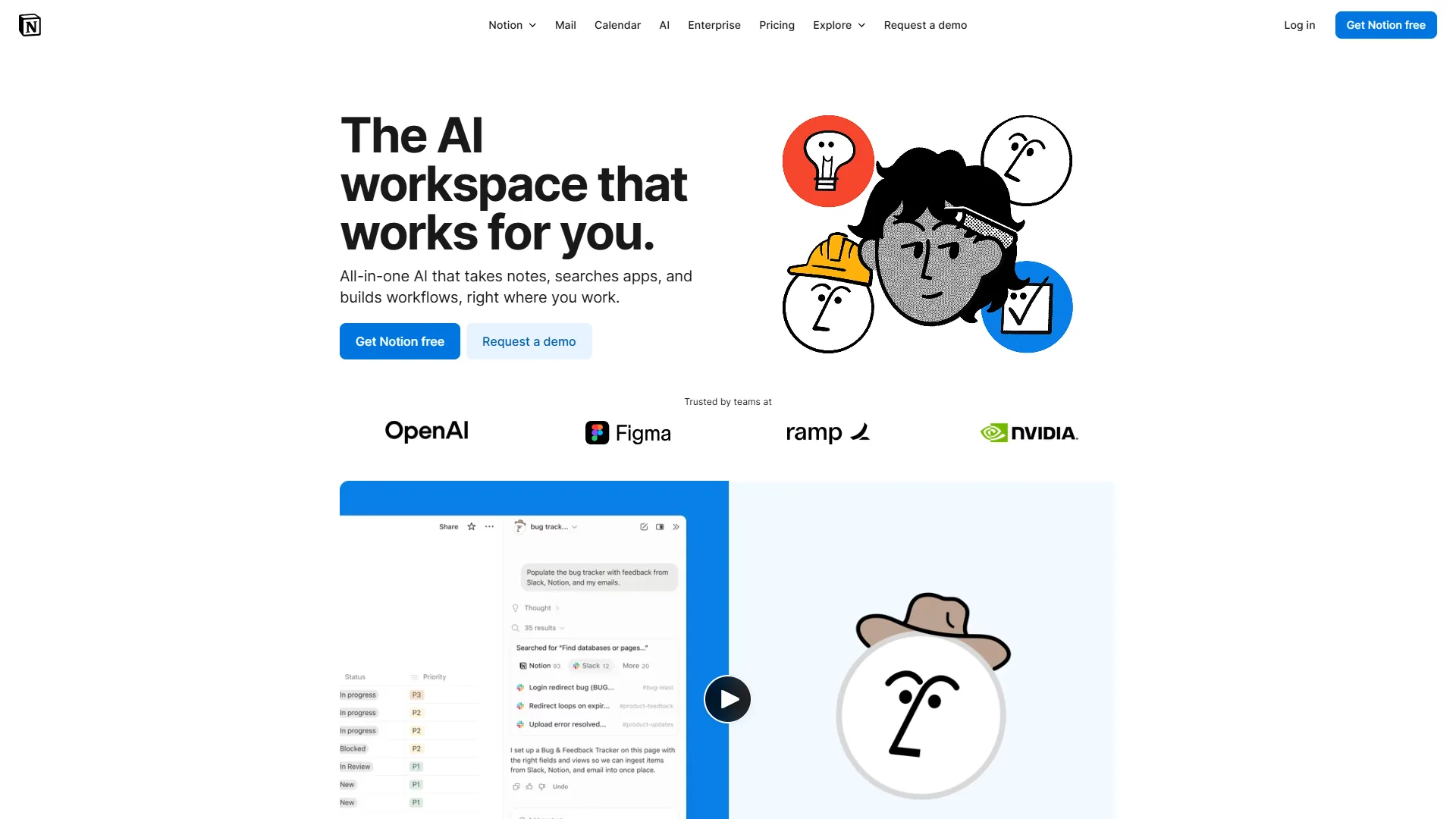
Notion with AI summarizes long documents, generates drafts from bullet points, organizes information, and answers questions about stored knowledge. The user decides what information matters and determines workflows.
Zapier: Automation with Human Judgment Points
Zapier’s AI handles data transfer between applications, trigger detection, format conversion, and routine task execution. Humans control workflow design, exception handling, and strategy changes. Zapier executes strategy at machine speed - it does not create strategy.

Grammarly: Editor, Not Author
Grammarly makes good writers better, not obsolete. AI provides grammar and spelling correction, tone detection, clarity improvements, and consistency checks. The writer retains voice, content strategy, and creative decisions about language and impact.
ClickUp: Project Management Enhanced
ClickUp’s AI delivers task summarization, smart deadline suggestions, status update generation, and workload balancing. Humans handle priority decisions, resource allocation, stakeholder communication, and risk assessment.
The Real Productivity Multiplier Effect
The real AI productivity multiplier effect is measurable: deployments show 26 to 66 percent productivity gains when AI handles defined tasks and humans keep strategic control. Adoption is already mainstream - 75% of knowledge workers now use AI tools in some capacity, according to Microsoft’s Work Trend Index, and Forrester reports businesses see an average ROI of 250% on workflow automation investments. AI efficiency and productivity gains scale with how well teams pair AI output with human review.
The Math That Actually Works
The table below summarizes measured productivity gains from three independently reported deployments:
| AI deployment | Speed gain | Felt more productive | Quality signal | Source |
|---|---|---|---|---|
| Microsoft 365 Copilot | 29% faster on search, writing, summarizing | 70% of users | 68% said work quality improved | Microsoft Work Trend Index |
| GitHub Copilot (developers) | 55% faster on coding tasks | 88% of developers | 74% focused on satisfying work | GitHub research |
| Jasper AI (content creators) | 5x faster first-draft creation | - | 80% reported higher draft quality | Jasper AI |
“Copilot users said they were more productive, more creative, and that they spent less time searching for information,” according to Microsoft, publisher of the Work Trend Index analysis of its earliest Copilot users. None of these studies show 100% automation - humans become dramatically more effective when AI handles specific, well-defined tasks.
The Hybrid Human-AI Workflow
Successful implementations follow a four-step pattern: (1) AI handles heavy lifting - data collection, first drafts, pattern detection, routine execution; (2) humans provide judgment - verify outputs, add context, handle edge cases; (3) AI accelerates iteration - generates alternatives, tests approaches; (4) humans maintain quality control - final review, brand consistency, strategic alignment. The honest tradeoff: this workflow requires disciplined hand-offs, training time, and managers who verify outputs instead of rubber-stamping them.
Why CEOs Get It Wrong
There are three reasons CEOs get AI adoption wrong: Wall Street rewards headcount-cutting headlines, executives underestimate how much job complexity hides in edge cases, and technology optimism leads them to treat judgment as automatable.
Wall Street pressure. “Cutting headcount 30% with AI” makes a better headline than “investing in AI tools over three years.” The first sounds like immediate savings; the second sounds expensive with uncertain returns.
Complexity underestimation. Jobs look simpler from the C-suite than they are. Customer service looks like “just answering knowledge base questions” - until executives realize 80% of tickets fit patterns but the crucial 20% requiring judgment generates 80% of satisfaction impact.
Technology optimism bias. AI is not just automating processes - it is attempting to replace judgment, and judgment is much harder to automate than workflows.
The Augmentation Mindset for Your Career
The augmentation mindset for your career means using AI to handle research, drafts, and analysis while you focus on the judgment, strategy, and relationship work AI cannot replicate. Your job will not be fully automated - your job will be done by someone better at using AI than you are.
For leaders: start with augmentation, not automation. Identify tasks that drain energy without requiring strategic thinking, deploy AI to handle them, measure gains in output quality, and resist the urge to cut headcount. Build AI literacy across teams. Double down on skills AI cannot replicate. See our AI impact on software engineering teams analysis for a deeper view.
For individual contributors: develop prompt engineering, output evaluation, strategic tool selection, and human-AI workflow design. AI-fluent team members complete twice the work at higher quality - they get promoted.
Career-proof skills: strategic thinking, relationship building, creative problem-solving, emotional intelligence, and ethical judgment - combined with AI fluency.
Final Verdict
The final verdict is clear: AI as replacement is an expensive failure companies are quietly abandoning, while AI as augmentation is a productivity multiplier that delivers real ROI of 250% on workflow automation investments. Hype and Reality split along that single axis.
The winners treat AI as a power tool for talented people, not a replacement for talent. Start with ChatGPT for daily research and drafting. Focus on uniquely human skills - strategy, creativity, empathy, judgment - and design workflows around collaboration. Augmentation beats automation every time.
FAQ
Q: What happened when Klarna replaced customer service staff with AI?
Klarna cut 700 employees - 40% of staff - betting on AI customer service. Complex issues like disputed charges, fraud, and account problems left customers frustrated. CEO Siemiatkowski admitted the AI was not ready, and Klarna quietly rehired support agents months later at higher rates.
Q: Did Salesforce successfully replace support roles with AI?
No. Salesforce stumbled badly when replacing 4,000+ customer support roles with AI. Service quality plummeted, response times increased, and satisfaction scores dropped. A CRM company did not maintain customer relationships with its own AI replacement.
Q: Was Amazon’s Just Walk Out technology actually powered by AI?
Not entirely. Reality revealed in 2024 that roughly 1,000 workers in India were manually reviewing transactions the AI was supposed to handle automatically.
Q: Does AI improve productivity for knowledge workers?
Yes - when used for augmentation. Measured deployments show 26 to 66% productivity gains with no loss of quality. MIT/NBER found GitHub Copilot delivered 26% higher developer output; Nielsen Norman Group found 66% improvement on writing tasks; Microsoft 365 Copilot users reported 29% faster search, writing, and summarization. AI as replacement, by contrast, is an expensive failure - 55% of employers regret AI-driven layoffs per Forrester.
Q: Is AI a waste of time at work?
AI is a waste of time when teams use it as a drop-in replacement for human judgment. AI delivers measurable ROI when it handles defined tasks - research compilation, first drafts, formatting, data entry - while humans keep strategic control. The difference between productivity and AI work slop is whether a skilled human reviews and refines output before it ships.
Related Reads
The AI augmentation tools covered above each have clear limitations - none are autonomous replacements. Quick notes on each, followed by related AI productivity guides:
- ChatGPT - AI assistant for research, drafting, and brainstorming
- Perplexity - AI-powered research tool with source citations
- Notion - AI-powered workspace for knowledge management
- Zapier - Workflow automation with AI capabilities
- Grammarly - AI writing assistant for editing and clarity
- ClickUp - AI-enhanced project management platform
- GitHub Copilot - AI pair programming assistant for developers
More AI productivity guides:
- AI Tools for Solopreneurs - Complete stack for solo business owners
- AI Assistant Tips & Tricks - Prompting techniques and workflows
- Best AI Research Tools 2026 - Top AI research platforms compared
- Best AI Tools for Bookkeepers: Streamline Your Practice in 2026
- Best AI Tools for Data Analysts in 2026
- 5 Best AI Tools for Developers in 2026
External Resources
External resources for this article are the primary sources cited above, covering official research and documentation on AI productivity and enterprise AI adoption.
- Microsoft Work Lab - Copilot productivity research and workplace AI trends
- McKinsey AI Insights - Enterprise AI adoption studies and ROI analysis
- MIT/NBER GitHub Copilot study - 26% developer output gain, peer-reviewed
- Nielsen Norman Group - 66% productivity improvement on writing tasks
- Forrester Research - 55% of employers regret AI-driven layoffs (2024 survey)