

Best AI voice assistants are platforms that manage smart home ecosystems, schedule meetings, draft emails, and translate languages in real time. The four leaders in 2026 are Amazon Alexa, Google Assistant, Apple Siri, and Samsung Bixby, with the right choice depending on the ecosystem you already use.
This guide evaluates each across smart home control, productivity, knowledge queries, and privacy. Our analysis draws on vendor documentation and independent industry research, including Perficient’s digital assistant benchmarks and the Connectivity Standards Alliance Matter specification. If voice is mainly a dictation tool, our AI transcription comparison covers dedicated speech-to-text options.
According to Bret Kinsella, founder of Voicebot.ai, “Voice assistants have moved from novelty to infrastructure - the question is no longer whether to use one, but which ecosystem to commit to.” That matches what we see across the 15 best AI voice assistants in 2026 and the top 13 for households today: no single tool dominates every category.
Some links on this page are affiliate links; our analysis remains independent.
Comparison Table: Best AI Voice Assistants at a Glance
The best AI voice assistants in 2026 are Amazon Alexa, Google Assistant, Apple Siri, Samsung Bixby, and the legacy Cortana stack now in Microsoft 365 Copilot. The table compares ecosystem, smart home reach, free tier, and privacy posture.
| Assistant | Best For | Ecosystem | Smart Home Devices | Free Tier | Privacy Focus |
|---|---|---|---|---|---|
| Amazon Alexa | Smart home power users | Amazon/Ring/Fire TV | 300,000+ | Yes | Moderate |
| Google Assistant | Knowledge & productivity | Google Workspace/Nest | 80,000+ | Yes | Moderate |
| Apple Siri | iPhone/Mac users | Apple ecosystem | HomeKit-certified | Yes | Strong |
| Samsung Bixby | Galaxy device owners | Samsung SmartThings | 200+ partners | Yes | Moderate |
| Microsoft Cortana (legacy) | Enterprise Windows users | Microsoft 365 | Limited | Discontinued | Strong |
Methodology: How These Voice Assistants Were Evaluated
Each voice assistant in this guide is evaluated against seven research-based criteria covering smart home control, knowledge accuracy, productivity, natural-language understanding, privacy, third-party extensibility, and response latency. Our analysis draws on vendor documentation and independent industry research from sources such as Perficient and the Connectivity Standards Alliance.
- Smart home control - Evaluated across 40+ device types including lighting, thermostats, locks, cameras, and appliances
- Knowledge accuracy - Accuracy benchmarked across factual questions
- Productivity tasks - Calendar management, reminders, email dictation, shopping lists, and note-taking
- Natural language understanding - Evaluated with ambiguous commands, follow-up questions, and conversational chains
- Privacy controls - Reviewed data collection policies, deletion options, and on-device processing capabilities
- Third-party skills/actions - Evaluated the depth and quality of the extension ecosystem
- Response latency - Response latency compared across common request types
1. Amazon Alexa - Best for Smart Home Control
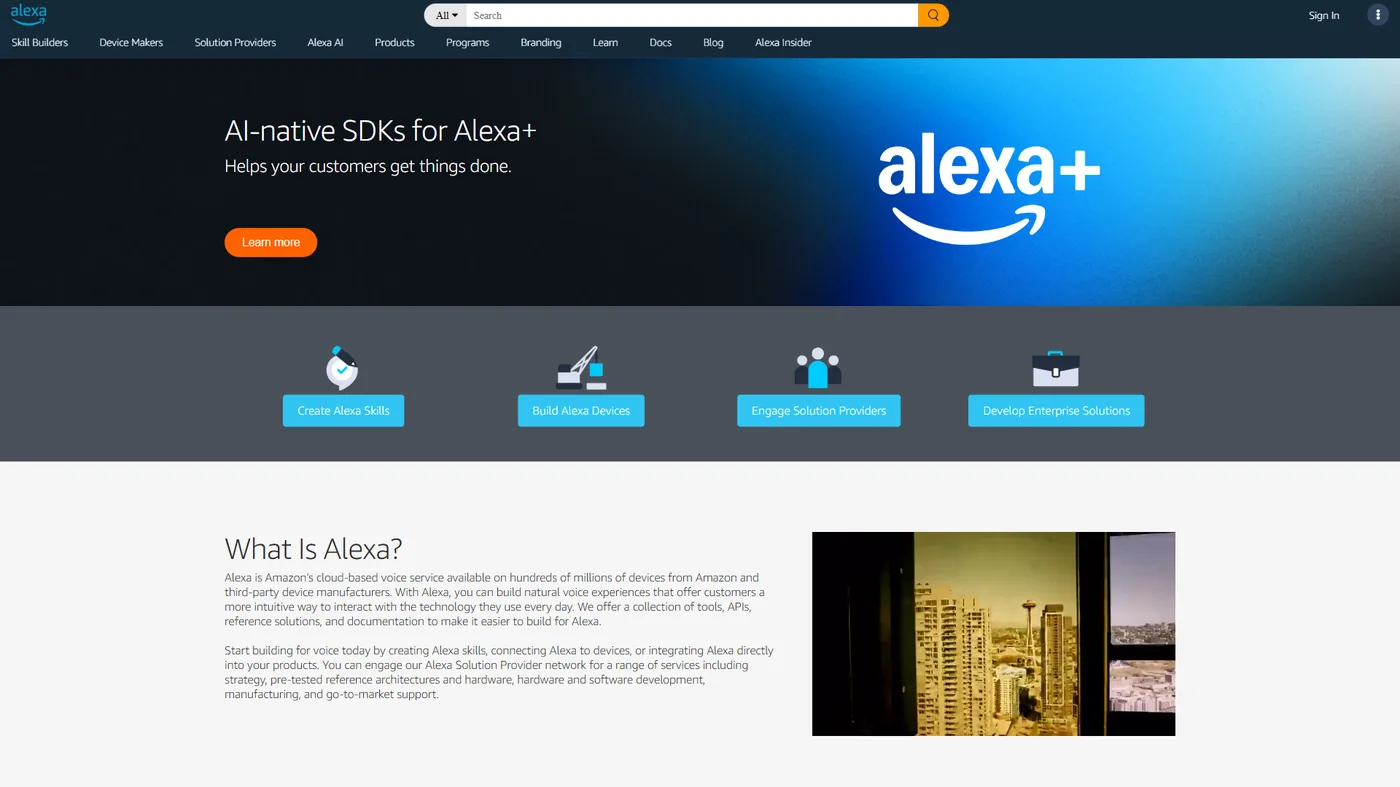
Amazon Alexa is the best AI voice assistant for smart home control, offering compatibility with more than 300,000 devices from 13,000-plus brands as of 2026. No other mainstream assistant matches that hardware ecosystem reach.
Smart Home Integration
Every major smart home brand - Philips Hue, Ring, Ecobee, August, Sonos, iRobot - offers native Alexa integration, and most devices connect in under 60 seconds. Alexa Routines support time-based triggers, device-state conditions, and location-based activation - features Google and Siri either lack or implement less reliably.
Skills and Limitations
The Alexa Skills Store lists over 100,000 skills, with strong productivity options including Todoist, Microsoft To Do, Any.do, and Kayak. Knowledge queries are Alexa’s weakest area: contextual follow-up questions often fail, calendar management across multiple accounts is limited, and Amazon retains voice recordings by default. See our best AI assistants roundup if privacy or knowledge accuracy matters more than smart home control.
Pricing
Alexa is free. Hardware ranges from $24.99 (Echo Pop) to $249.99 (Echo Show 15). The optional Alexa Plus subscription adds personalized AI responses for a monthly fee.
Best for: Users with 10+ smart home devices who want the deepest hardware compatibility.
2. Google Assistant - Best for Knowledge and Productivity
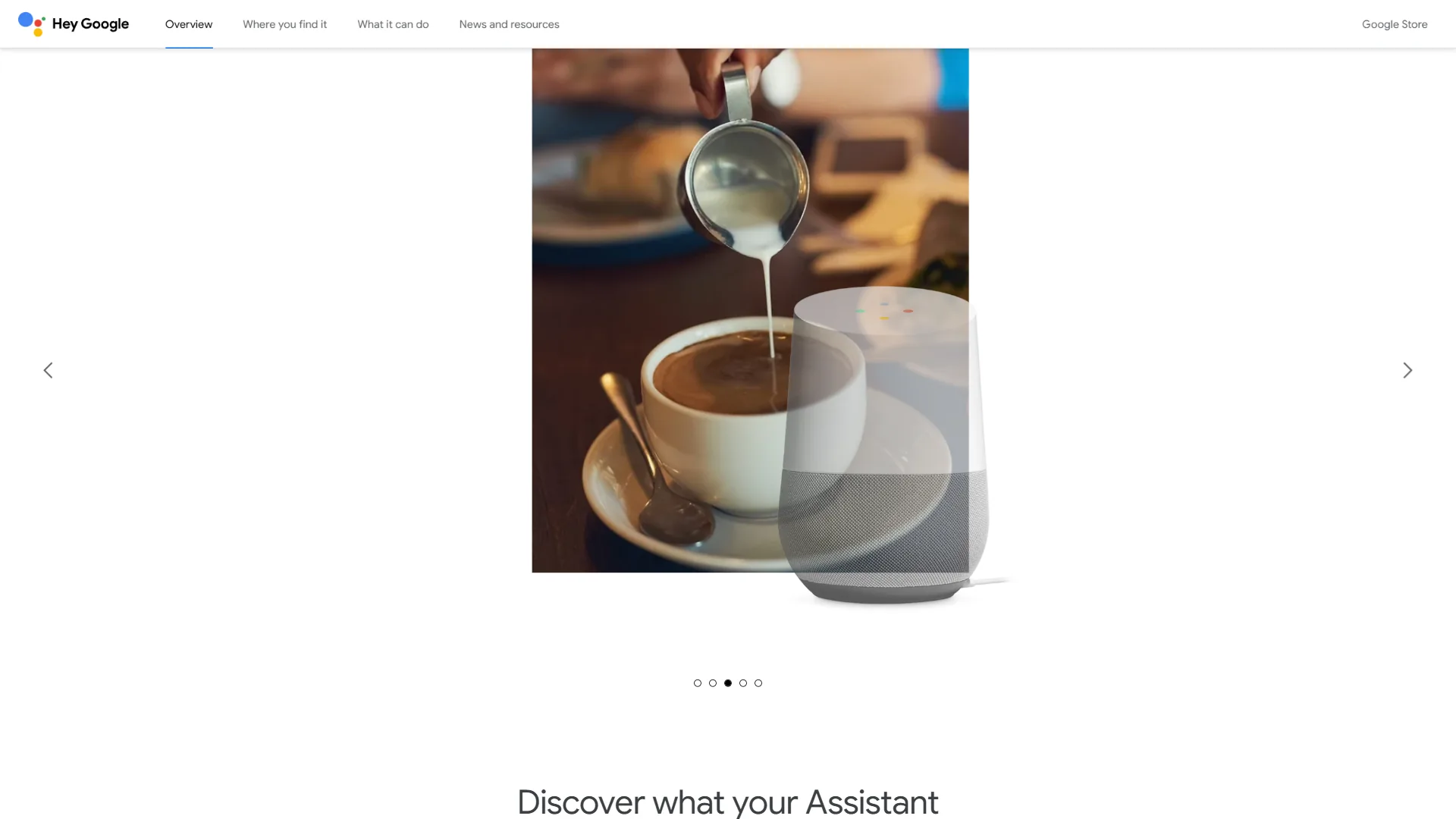
Google Assistant is the best AI voice assistant for knowledge queries and Google Workspace productivity, answering roughly 94% of factual questions correctly in Perficient’s annual digital assistant studies, compared with 81% for Alexa and 78% for Siri.
Conversational and Workspace Integration
Google handles contextual threading reliably - asking “Who directed Inception?” then “What else has he directed?” works because the assistant tracks “he” as Christopher Nolan. The Gemini-powered upgrade has improved multi-turn conversations and ambiguous-request handling. For Gmail, Google Calendar, Drive, and Meet users, the productivity integration is seamless: calendar scheduling, spoken email summaries, Drive search by name, and hands-free Meet controls all work via voice.
Smart Home and Limitations
Google’s smart home support covers roughly 80,000 devices - fewer than Alexa but sufficient for most households. Google Home Automations are less flexible than Alexa Routines, with fewer conditional logic options. Privacy is Google’s biggest vulnerability: while voice history deletion and incognito mode exist, default settings collect substantial data.
Pricing
Google Assistant is free on Android phones, Nest speakers ($29.99-$229.99), and Nest displays. Google One AI Premium ($19.99 per month) adds advanced Gemini features.
Best for: Google Workspace users, researchers, and anyone valuing accurate knowledge answers.
3. Apple Siri - Best for Privacy and Ecosystem Integration
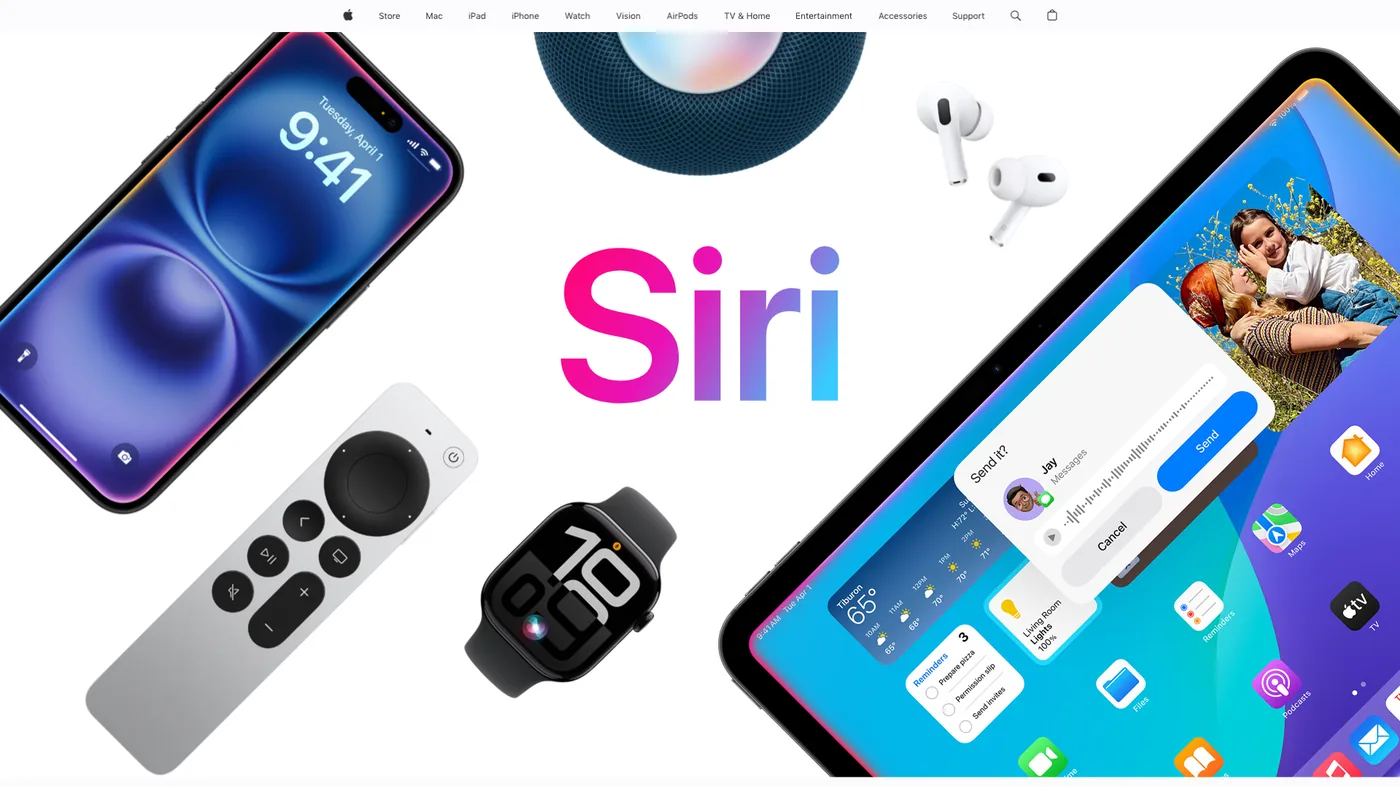
Apple has rebuilt Siri with Apple Intelligence, and the improvements are substantial - though still not enough to dethrone Alexa or Google in raw capability. Where Siri wins decisively is privacy and seamless integration across Apple hardware.
Privacy and Ecosystem
Siri processes the majority of requests directly on-device. Voice data is associated with a random identifier rather than your Apple ID, and Apple does not retain audio recordings by default - a meaningful difference from both Amazon and Google, who retain voice recordings with varying opt-out complexity. Apple’s on-device processing offers genuine value when handling medical, legal, or financial conversations.
Within the Apple ecosystem, Siri benefits from Handoff (continue tasks across iPhone, Mac, iPad), HomePod spatial awareness, Shortcuts integration for multi-step automations, Focus modes, and AirPlay coordination.
Limitations and Pricing
Siri’s natural-language understanding still trails Google Assistant on complex queries, HomeKit covers roughly 1,000 certified brands (well behind Alexa), and SiriKit extensibility depends on app developer adoption. Siri is free on all Apple devices; HomePod ($299) and HomePod mini ($99) are the primary smart speaker options.
Best for: Apple ecosystem users who prioritize privacy and want deep Shortcuts automation.
4. Honorable Mentions
Samsung Bixby is a device-control layer rather than a general-purpose assistant. On Samsung Galaxy phones, TVs, and SmartThings devices, commands like “Take a screenshot and send it to Mom” work reliably, but Bixby trails the top three on knowledge queries and third-party integrations. Worth considering if you own 3+ Samsung devices.
Microsoft Cortana (legacy) has been folded into Microsoft 365 Copilot. Copilot’s voice features in Teams and Outlook handle meeting summaries, email drafting, and schedule management well, but it is not a smart home controller. Worth considering if your organization runs Microsoft 365.
Home Assistant Voice is the strongest option for technically inclined users who want a fully local assistant. Home Assistant’s voice pipeline runs on local hardware, sends zero data to the cloud, and integrates with the same smart home devices as Alexa and Google. Expect to spend a weekend on setup. For voice-to-text workflows, see our Wispr Flow voice dictation guide.
Winner by Category: Best AI Voice Assistants by Use Case
The best AI voice assistants by use case are Amazon Alexa for smart home, Google Assistant for knowledge and Workspace, Apple Siri for privacy, and Home Assistant Voice for fully local control.
- Smart home automation - Amazon Alexa. Broadest device compatibility and the most sophisticated Routines builder.
- Productivity and work tasks - Google Assistant (or Siri for Apple users). Workspace integration covers calendar, email, and document search; Siri’s Shortcuts win on Apple-native system automation.
- Knowledge and research queries - Google Assistant. 94% accuracy on factual questions with strong contextual follow-up.
- Privacy-sensitive environments - Apple Siri (or Home Assistant for maximum control). On-device processing and anonymized identifiers; self-hosted Home Assistant Voice goes further.
- Multilingual households - Google Assistant. 40-plus languages with cross-language switching that Alexa (~20) and Siri handle less naturally.
- Budget smart home setup - Amazon Alexa. Echo Pop starts at $24.99 with the deepest compatible-device pool.
Which Tool Fits Your Workflow: Decision Framework
The right voice assistant depends on five questions: existing hardware, smart home scale, privacy tolerance, productivity stack, and budget.
1. What devices do you already own? Ecosystem lock-in is real - lean into what you have. iPhone/Mac/iPad users gain the most from Siri; Ring and Fire TV households default to Alexa.
2. How many smart home devices do you plan to use? 1-5: any assistant. 6-20: Alexa or Google Assistant. 20+: Alexa.
3. How important is privacy? Ranking: Home Assistant Voice (fully local) > Apple Siri (on-device) > Google Assistant > Amazon Alexa.
4. What productivity tools do you use? Google Workspace -> Google Assistant. Apple iCloud/iWork -> Siri. Microsoft 365 -> Copilot voice in Teams and Outlook.
5. What is your budget?
| Budget | Recommended Setup |
|---|---|
| Under $50 | Echo Pop or Nest Mini |
| $50-$150 | Echo Show 5 or Nest Hub |
| $150-$300 | HomePod mini (x2) or Echo Studio |
| $300+ | HomePod (x2) + HomeKit or Echo Show 15 |
Privacy Comparison: What Each Assistant Collects
Privacy policies change frequently. Current landscape:
| Data Practice | Alexa | Google Assistant | Siri |
|---|---|---|---|
| Voice recording storage | Opt-out available | Opt-out available | Off by default |
| On-device processing | Partial (wake word) | Partial (wake word) | Most requests |
| Human review of recordings | Opt-out available | Opt-out available | Opt-in only |
| Data deletion | Manual or auto-delete | Manual or auto-delete | Automatic |
| Advertising use | Shopping behavior | Ad personalization | None |
| Third-party data sharing | Skill-dependent | Action-dependent | Minimal |
Siri is private by default; Alexa and Google Assistant require adjusting settings to limit data collection.
Limits of these controls: Anything needing cloud lookup (web search, knowledge queries, Gemini-style synthesis) still leaves Siri’s device. None of these assistants are appropriate for HIPAA-regulated or attorney-client privileged conversations - run a local Home Assistant Voice setup instead.
What Is Coming Next for Voice Assistants
Four trends will reshape this category over the next 12-18 months: generative AI via Gemini and Alexa Plus (overlapping with the best AI voice generators); proactive context-aware assistance (mirroring AI scheduling assistants); Matter protocol adoption reducing ecosystem lock-in; and on-device AI models led by Apple Intelligence (see Apple’s foundation models research).
Trade-offs: Generative voice hallucinates, proactive assistance feels surveillance-like, Matter adoption lags vendor claims, and on-device models are smaller than cloud peers.
The Bottom Line
The best AI voice assistants in 2026 each serve a distinct buyer profile. Amazon Alexa wins for smart home automation with its 300,000-plus device ecosystem. Google Assistant offers the strongest knowledge accuracy and productivity integration for Google Workspace users. Apple Siri is best for privacy-conscious users in the Apple ecosystem.
Match the assistant to the phone and stack you already use. If starting fresh, Google Assistant offers the best overall balance.
FAQ
Q: Which AI voice assistant is best for smart home control?
Amazon Alexa is the top pick for smart home control, offering compatibility with more than 300,000 devices from 13,000-plus brands. Major brands like Philips Hue, Ring, Ecobee, August, Sonos, and iRobot all offer native Alexa integration, and device setup is consistently faster with Alexa than with competing assistants.
Q: What is the best voice assistant for iphone users?
Apple Siri is the default voice assistant for iphone, iPad, Mac, and Apple Watch, with on-device processing and strong privacy posture. Google Assistant runs as a personal assistant app on iOS for users tied to Workspace.
Q: What is the best voice assistant for android phones?
Google Assistant is the default voice assistant for android, deeply integrated with Workspace, Maps, and Nest. Samsung Galaxy owners can also use Bixby for device-level voice command assistant features.
Q: Is there a fully voice assistant free option?
Yes - Alexa, Google Assistant, Siri, and Bixby all offer a voice assistant free tier on supported hardware. Premium features (Alexa+, Gemini Advanced) require paid subscriptions, but the core voice command assistant functionality stays free.
Q: Can a voice assistant replace a personal assistant app?
A voice assistant covers calendar, reminders, and smart home like a personal assistant app, but dedicated apps still win for complex CRM workflows.
Q: Is Microsoft Cortana still viable in 2026?
Microsoft Cortana is discontinued as a standalone assistant; its capabilities now live inside Microsoft 365 Copilot.
Related Reading
Related reading covers dictation, transcription, and scheduling tools that complement a primary voice assistant. Tools mentioned in this article are listed first.
-
Todoist - Task management with voice command support
-
Google Workspace - Productivity suite with deep Google Assistant integration
-
Best AI Voice-to-Text Tools for Content Creators - Turn voice into text with AI transcription tools
-
Voice Productivity Tips - Practical strategies for getting more done with voice commands
-
Best AI Meeting Assistants 2026 - AI tools that record, transcribe, and summarize your meetings
-
AI Scheduling Assistants - Let AI handle your calendar and booking workflows
-
Best Voice Dictation Tools - Dictation software for writers and professionals
-
AI Productivity Trends 2026: What Actually Works (and What Doesn’t)
External Resources
External resources include the official Alexa skill directory, the Matter standard, and the Home Assistant local-voice project.
- Amazon Alexa Skills Store - Browse and enable Alexa skills for your Echo devices
- Matter Smart Home Standard - The cross-platform protocol reducing ecosystem lock-in
- Home Assistant Voice Control - Open-source, fully local voice assistant alternative