


Stable diffusion alternatives are tools that address the setup complexity of running Stable Diffusion locally - which requires a capable GPU, Python configuration, and troubleshooting - while still delivering strong AI image generation. In 2026, Midjourney and Flux have emerged as the two strongest options, serving professional artists and technical users respectively.
Our analysis draws on vendor documentation and independent industry research, including the Artificial Analysis text-to-image leaderboard and the Stable Diffusion 3.5 technical report. Some links on this page are affiliate links; our analysis remains independent.
According to Robin Rombach, co-founder at Black Forest Labs, “Flux.1 represents a meaningful step in open-weight image generation, with prompt adherence and text rendering previous open models could not reliably deliver.”
Stable Diffusion’s appeal is hard to argue with. As one of the most compelling Stable Diffusion free alternatives to closed-source platforms, it’s open-source, infinitely customizable, and runs on your own hardware with no per-image costs. For developers, researchers, and technically confident users, it remains one of the most powerful AI image generation tools available.
But for many people, those same strengths are also its weaknesses. Setting up a local environment - making it one of the more demanding Stable Diffusion alternatives local installations require - means a capable GPU (8GB+ VRAM minimum), Python configuration, and a willingness to troubleshoot. Even with user-friendly front-ends like AUTOMATIC1111 or ComfyUI, the barrier to entry is real. For users who want Stable Diffusion alternatives offline or as self hosted deployments, the managed alternatives often make more sense when teams need consistent, polished output fast rather than unlimited output at zero marginal cost.
If you’re evaluating your options, two tools have emerged as the strongest Stable Diffusion alternatives in 2026: Midjourney, which sets the industry standard for artistic quality, and Flux, one of the leading Stable Diffusion alternatives open-source models from Black Forest Labs that competes with Stable Diffusion’s technical strengths while being more accessible across third-party platforms. These Stable Diffusion alternatives serve very different audiences, so the right pick depends heavily on your workflow. For a wider field, see our best AI image generators roundup.
What Are the Best Stable Diffusion Alternatives?
| Tool | Pricing | Free Tier | Self-Hosting | Best For |
|---|---|---|---|---|
| Stable Diffusion | Free (local) / Pay-as-you-go API | Yes | Yes | Developers, power users, enterprises |
| Midjourney | From $10/month | No | No | Professional artists, marketing teams |
| Flux | Open-source / Via platforms | Yes (some platforms) | Yes | Technical users wanting SD alternatives |
The best Stable Diffusion alternatives in 2026 are Midjourney for artistic quality, Flux for prompt adherence, and Stable Diffusion 3.5 itself for on-premise deployment. The right pick depends on your technical comfort, budget, and use case.
Stable Diffusion
Stable Diffusion is the benchmark that alternatives are measured against in the open-source world. Developed by Stability AI, the SD 3.5 family - Large (8.1B parameters), Medium (2.5B parameters), and the faster Turbo and Flash variants - brings the model to a level where it genuinely competes with closed-source offerings on image quality, particularly for photorealistic content.
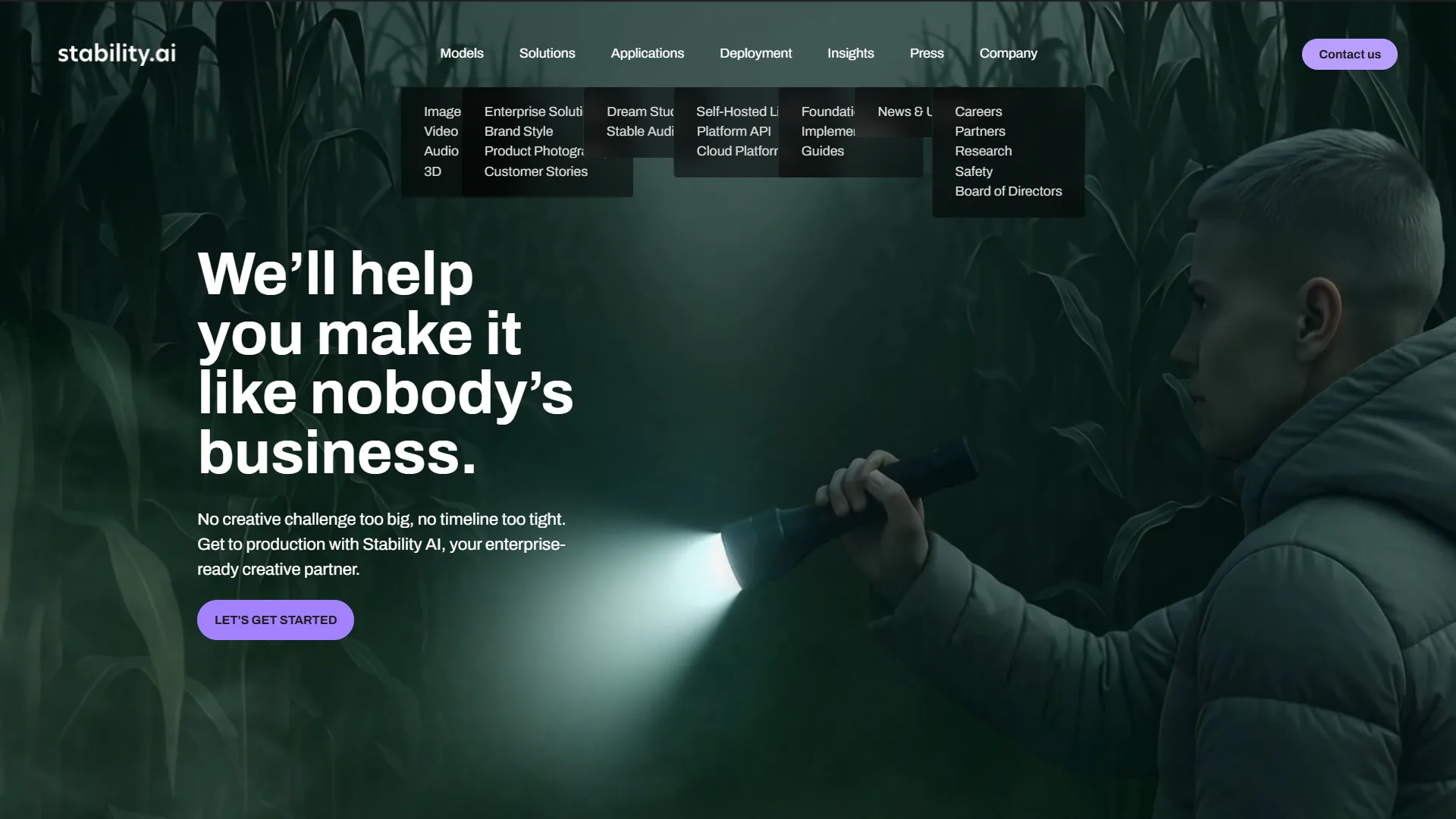
What makes Stable Diffusion stand out:
The core advantage is complete control. Running SD locally means unlimited image generation with no per-image costs after the initial hardware investment. You can fine-tune models on your own datasets, use ControlNet to precisely control pose and composition, and integrate the model into custom pipelines. For enterprises with data privacy requirements, local deployment means sensitive imagery never leaves your infrastructure.
The SD 3.5 architecture (Multimodal Diffusion Transformer) shows meaningful improvements in prompt adherence over earlier versions. Complex descriptions with multiple subjects, specific artistic styles, or technical requirements are interpreted more accurately than SD 1.5 or SDXL.
Where it falls short:
The technical setup is genuinely demanding. Getting AUTOMATIC1111 or ComfyUI running correctly on consumer hardware takes time, and troubleshooting CUDA versions, model compatibility, and extension conflicts is part of the deal. SD 3.5 Medium requires 9.9GB VRAM minimum - if you’re on an older card or don’t have a dedicated GPU, local deployment isn’t practical.
Out-of-the-box results from Stable Diffusion also require more prompt engineering effort than Midjourney. Getting consistently high-quality output means learning samplers, CFG scales, and model selection. For users who just want great images without the learning curve, the managed alternatives deliver better immediate results - see our comparison of Adobe Firefly vs Stable Diffusion vs Leonardo for more depth.
Pricing: Free for local use (hardware costs apply). DreamStudio offers pay-as-you-go credit pricing for cloud access with no monthly commitment.
Best for: Developers building AI pipelines, enterprises needing on-premise deployment, technically confident users who want maximum customization and zero per-image costs.
Not ideal for: Non-technical users, teams without GPU hardware, anyone who needs great results immediately without setup time.
Midjourney
Midjourney is the alternative most people are thinking of when they decide Stable Diffusion isn’t working for them. The V7 model, which became the default in mid-2026, produces images with a level of artistic coherence that’s immediately noticeable - complex scenes maintain internal consistency, textures are rich and detailed, and the model’s interpretation of stylistic direction is more nuanced than any other tool in this comparison.
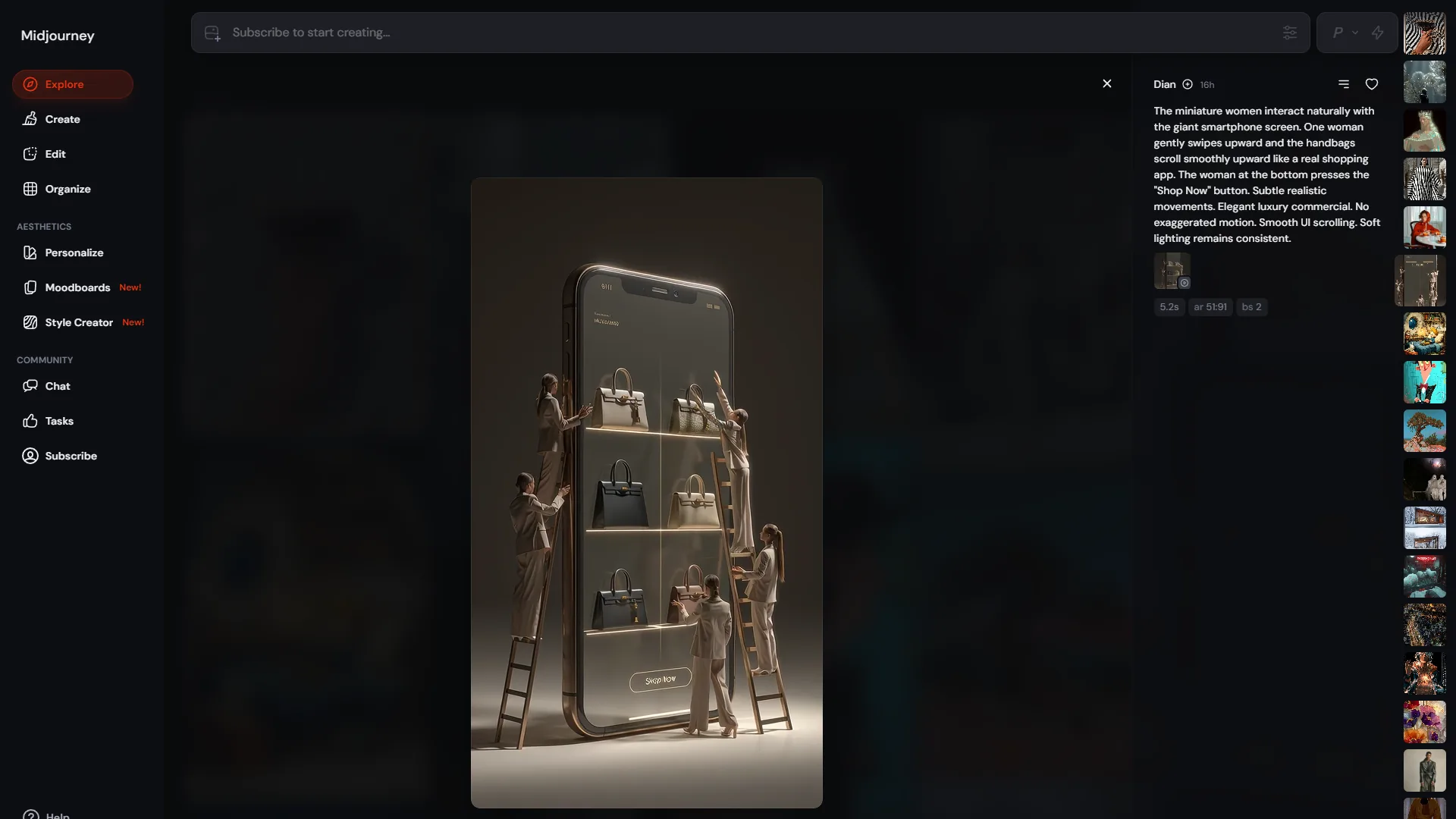
What makes Midjourney stand out:
Midjourney is the closed-source Stable Diffusion alternative built for professional artists and marketing teams who need polished images without managing models or GPUs. For professional creative work - concept art, marketing visuals, book covers, product photography mockups - Midjourney consistently delivers results that feel finished rather than like drafts that need further work. The V7 improvements to anatomical accuracy (hands, body proportions) address one of the long-standing frustrations with AI image generation.
The personalization feature is genuinely useful for regular users: after rating 200 images, Midjourney learns your aesthetic preferences and starts tailoring outputs accordingly. No other tool in this comparison offers anything similar.
Draft Mode, available on Standard plans and above, renders images at 10x speed for approximately half the cost - useful for rapid iteration and exploration before committing to high-quality generations.
Where it falls short:
There’s no free tier. The Basic plan starts at $10 per month, and if you want Relax mode (unlimited generation at slower speeds), you need the Standard plan at $30 per month. This is a meaningful difference from Stable Diffusion, where your only cost is hardware.
Midjourney also doesn’t support self-hosting or on-premise deployment, which rules it out for enterprises with data residency requirements. And while the web interface has improved significantly, the platform still routes through Discord for many workflows, which some users find friction-inducing.
Pricing:
- Basic: $10 per month (~200 Fast images)
- Standard: $30 per month (unlimited Relax mode + 15h Fast GPU)
- Pro: $60 per month (stealth mode, 30h Fast GPU)
- Mega: $120 per month (maximum GPU allocation)
Annual billing saves 20% across all tiers.
Best for: Professional artists, marketing teams, concept designers, anyone who prioritizes image quality over cost flexibility.
Not ideal for: Users needing free access, enterprises with data privacy requirements, teams that need programmatic API integration at scale.
Flux
Flux is an open-source Stable Diffusion alternative from Black Forest Labs that prioritizes prompt adherence and accurate text rendering, making it the strongest free option for developers wanting SD-style flexibility with sharper fidelity. The Flux.1 models from Black Forest Labs - particularly Flux.1 [dev] and the faster Flux.1 [Schnell] - are open-source and have been widely adopted as the technical successor to older Stable Diffusion versions among the developer community. Where SD 3.5 is Stability AI’s official flagship, Flux has captured significant mindshare among power users who want strong photorealism and excellent prompt adherence.
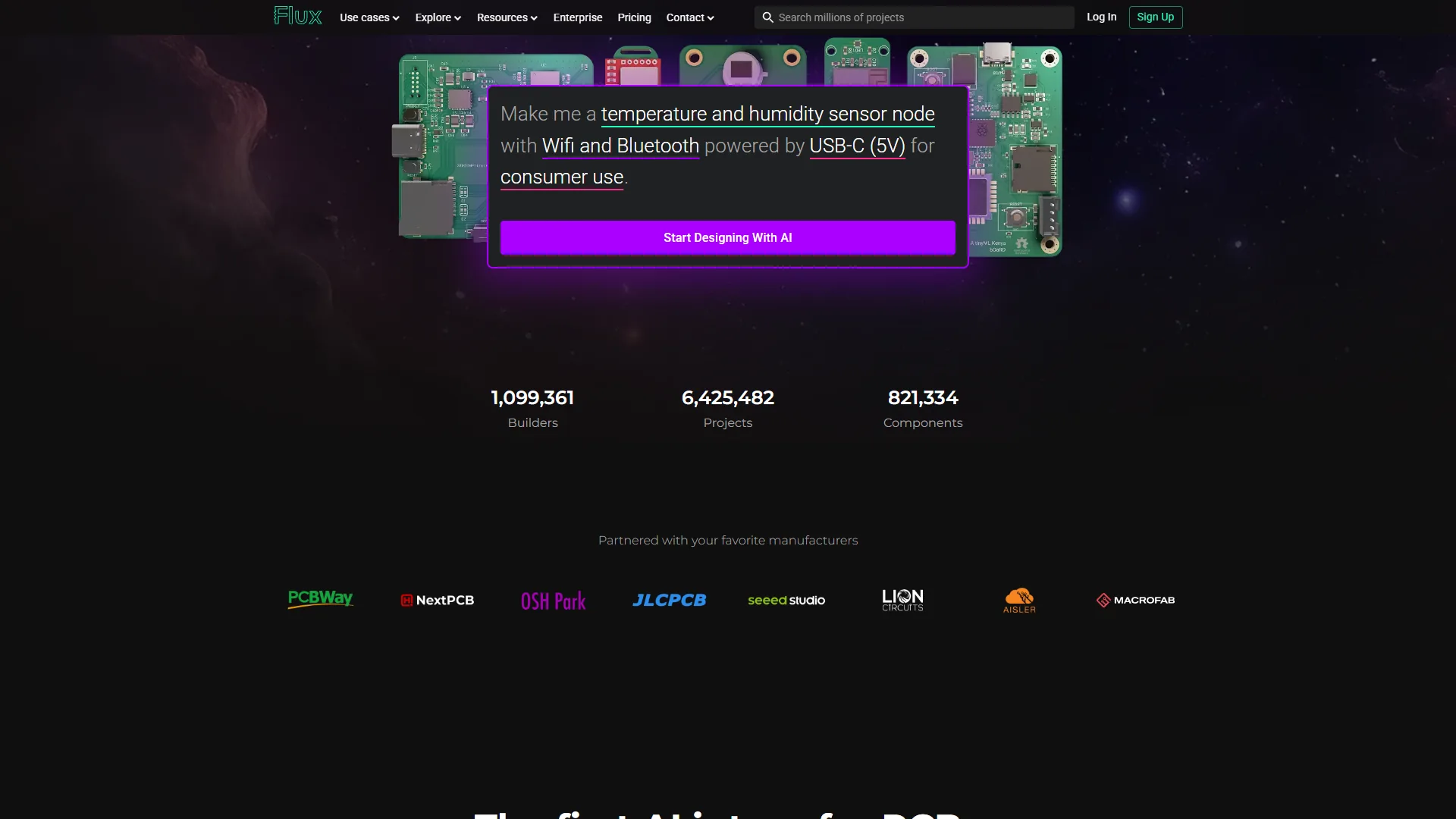
What makes Flux stand out:
Flux’s primary technical advantage over Stable Diffusion is prompt adherence. Complex prompts with specific compositional requirements, detailed subject descriptions, or nuanced style directions tend to produce more accurate results from Flux than from equivalent SD versions. For workflows where matching a detailed creative brief matters, this is a meaningful improvement.
Text rendering in images is another area where Flux outperforms Stable Diffusion (though Ideogram leads the market on this specific task). Generating images that include legible words, signs, or labels - historically a weak point for diffusion models - works more reliably with Flux.
Flux is accessible through a range of third-party platforms including Replicate, fal.ai, and various managed inference services, which lowers the barrier compared to setting up a full local environment. For users who want the open-source model ecosystem without the heaviest setup requirements, these platforms provide a middle path.
Where it falls short:
Flux doesn’t have a single official polished interface the way Midjourney or DreamStudio does. You’re either running it yourself or using a third-party platform with its own pricing, UX, and reliability considerations. This fragmentation can be frustrating for users who want a consistent, maintained experience.
For purely artistic quality - the kind of output that’s immediately usable for professional creative work - Midjourney V7 still has an edge. Flux is technically strong and improving rapidly, but the aesthetic polish of Midjourney’s outputs reflects a different set of priorities: Midjourney is optimized for what looks great, while Flux is optimized for accurate execution of what you specified.
Pricing: Open-source (run yourself). Third-party platforms typically charge credit-based or subscription tiers ranging from free tiers to $10-50+/month depending on usage volume and platform.
Best for: Developers, technically confident users who want a modern alternative to Stable Diffusion, workflows requiring strong prompt accuracy, applications needing text-in-image generation.
Not ideal for: Users who want a fully managed, polished platform experience, teams prioritizing maximum artistic quality over technical control.
Which Tool Fits Your Workflow
Choosing between Stable Diffusion, Midjourney, and Flux comes down to three workflow factors: GPU hardware and technical confidence, image quality versus cost, and whether you need on-premise deployment for data privacy. The decision usually comes down to a few key questions:
Do you have GPU hardware and technical confidence?
If yes, Stable Diffusion remains the most cost-effective option for high-volume generation. Zero per-image costs and complete customization make it ideal for production workflows where you’re generating hundreds or thousands of images regularly.
If your primary need is strong prompt adherence with a more accessible setup than traditional SD, Flux is worth evaluating as a local alternative - particularly if you’re already comfortable with Stable Diffusion workflows and want a model upgrade.
Is professional image quality your top priority?
Midjourney is the clear choice. For concept art, marketing visuals, and creative work where the output needs to be immediately presentable, V7’s artistic coherence is meaningfully ahead of the alternatives. The subscription cost is justified for teams where image quality directly affects deliverable quality.
Do you need on-premise deployment or data privacy?
Both Stable Diffusion and Flux support local deployment, which Midjourney does not. For healthcare, finance, legal, or any industry with strict data handling requirements, the open-source options are the only viable path.
Are you a non-technical user wanting quick results?
Midjourney’s managed platform, while Discord-adjacent, provides the fastest path from prompt to polished image without infrastructure setup. If budget is a concern, several third-party Flux platforms offer free tiers that provide good image quality without a monthly subscription commitment.
Which Stable Diffusion Alternative Should You Choose?
The best Stable Diffusion alternative is Midjourney for quality-first work, SD 3.5 for on-premise deployment, and Flux for open-source with stronger prompt adherence. For most professional teams, Midjourney delivers the best image quality with the least friction. The subscription cost is manageable, the results are consistently strong, and the V7 model’s improvements to coherence and anatomical accuracy have addressed the main frustrations from earlier versions.
For technically capable users who need maximum control, unlimited generation, or on-premise deployment, Stable Diffusion remains the gold standard in the open-source world. The SD 3.5 family is competitive on quality while offering flexibility that no commercial platform can match.
Flux occupies an interesting middle ground - a technically strong open-source model that often outperforms equivalent Stable Diffusion versions on prompt accuracy, accessible through third-party platforms without the heaviest setup requirements. For developers evaluating their options in the open-source ecosystem, it’s worth testing alongside SD 3.5.
The practical approach: if you’re unsure, start with a Midjourney Basic subscription ($10 per month) to establish a quality baseline. If you find yourself wanting more control, lower costs, or custom workflows, that’s when exploring the open-source Stable Diffusion alternatives makes sense.
FAQ
Q: Is Stable Diffusion obsolete?
Stable Diffusion is not obsolete. The SD 3.5 family - including Large (8.1B parameters) and Medium (2.5B parameters) variants - competes with closed-source offerings on image quality, particularly for photorealistic content. It remains the benchmark for open-source image generation, offering complete control, unlimited local generation, and on-premise deployment that no commercial platform can match.
Q: Is there anything better than Stable Diffusion?
Out-of-the-box results from Stable Diffusion also require more prompt engineering effort than Midjourney. Getting consistently high-quality output means learning samplers, CFG scales, and model selection.
Q: Which is better, flux or Stable Diffusion?
Both Stable Diffusion and Flux support local deployment, which Midjourney does not. For healthcare, finance, legal, or any industry with strict data handling requirements, the open-source options are the only viable path.
Q: What are the best Stable Diffusion alternatives in 2026?
The two strongest Stable Diffusion alternatives are Midjourney and Flux. Midjourney sets the industry standard for artistic quality, while Flux - the open-source model from Black Forest Labs - competes on technical strengths and prompt adherence. They serve different audiences, so the right pick depends on your workflow, budget, and technical comfort level.
Q: Is Midjourney better than Stable Diffusion for professional creative work?
For concept art, marketing visuals, and book covers where output needs to be immediately presentable, Midjourney V7 has a clear edge. Its artistic coherence, rich textures, and improved anatomical accuracy produce results that feel finished rather than like drafts. Stable Diffusion requires more prompt engineering effort to reach comparable quality.
Related Reading
The articles below extend this comparison with deeper reviews and adjacent AI image generators worth evaluating.
- Stable Diffusion - Full review and ratings
- Midjourney - Full review and ratings
- Flux - Full review and ratings
- Flux Alternatives 2026: Best AI Image Generators Compared
- Best AI Image Generators for 2024
- Canva Alternatives: Best Design Tools in 2026
External Resources
The sources below provide vendor documentation and independent benchmarks for verifying the claims in this comparison.