



AI transcription accuracy is 90-93% for typical business meetings in 2026, well below the “95%+ accuracy” marketing claims that require serious asterisks. Research across Notta, Otter AI, and Fireflies.ai - plus engines built on Whisper AI and Rev AI - shows a more nuanced reality in independent accuracy reviews of the best AI transcription apps. The accuracy ceiling is real, but it depends entirely on audio conditions. According to the National Institute of Standards and Technology, which sets the benchmarks speech recognition meet for federal evaluations, “recognition accuracy degrades substantially as acoustic conditions move away from clean, read speech.”
This analysis draws on each vendor’s published accuracy documentation and independent research rather than sponsored placement or hands-on lab testing by our team. AI Productivity may earn a commission from links on this page, but our rankings and accuracy assessments are editorially independent.
Here’s what AI transcription accuracy actually looks like in 2026, including the accuracy percentage you should expect, the factors that tank your results, and how to maximize accuracy for your specific use case.
Quick Answer: What Accuracy Should You Expect?
AI transcription accuracy is 85% to 98% in 2026, with most business meetings landing at 90-93% when audio quality is decent. Marketing claims of “95%+ accuracy” reflect ideal lab conditions, so budget 5-15% lower for real-world recordings. This transcription accuracy guide breaks down expected accuracy by condition, tool, and use case so you can plan around the gap rather than be surprised by it.
| Condition | Expected Accuracy | Notes |
|---|---|---|
| Optimal (quiet room, clear speakers) | 95-98% | Marketing claims are based on this |
| Good (minimal background noise) | 90-95% | Most professional meetings |
| Average (some noise, accents) | 85-90% | Typical real-world performance |
| Challenging (multiple speakers, noise) | 75-85% | Rapid conversations, overlapping speech |
| Difficult (heavy accents, technical jargon) | 60-80% | Requires custom vocabulary setup |
Key insight: The 98.86% accuracy Notta claims and the 95%+ Fireflies.ai advertises are achievable - but only under ideal conditions. Real-world accuracy typically falls 5-15% below marketing claims.
What “Accuracy” Actually Means
AI transcription accuracy is measured as Word Error Rate (WER) - the percentage of words correctly transcribed compared to the original audio. WER is the same metric academic speech-recognition research has used for decades, which is why vendor “accuracy” figures and independent benchmarks can be compared on a common scale.
The Math Behind Accuracy Claims
Accuracy = (Total Words - Errors) / Total Words × 100

Example: 1,000 words, 50 errors = 95% accuracy
What counts as an error:
- Substitutions: “meeting” transcribed as “meeting” → no error; “leading” → error
- Deletions: Words skipped entirely
- Insertions: Words added that weren’t spoken
- Speaker attribution: Wrong speaker labeled (counted separately)
Why Marketing Claims Differ from Reality
Transcription vendors test accuracy using:
- Studio-quality audio recordings
- Single speakers with neutral accents
- No background noise
- Standard vocabulary (no jargon)
Your meetings include:
- Laptop microphones picking up room echo
- Multiple speakers with varied accents
- Background noise (typing, AC, street sounds)
- Industry-specific terminology
This gap explains why 98% advertised accuracy becomes 85% in practice.
AI Transcription Accuracy: Tool-by-Tool Breakdown
Notta, Fireflies.ai, and Otter.ai have advertised accuracy of 95-99%, but real-world results are 87% to 95% depending on audio quality, language, and speaker count. The breakdown below pairs each tool’s claimed figure with realistic expectations by recording scenario.
Notta: 98.86% Optimal, 90-95% Real-World
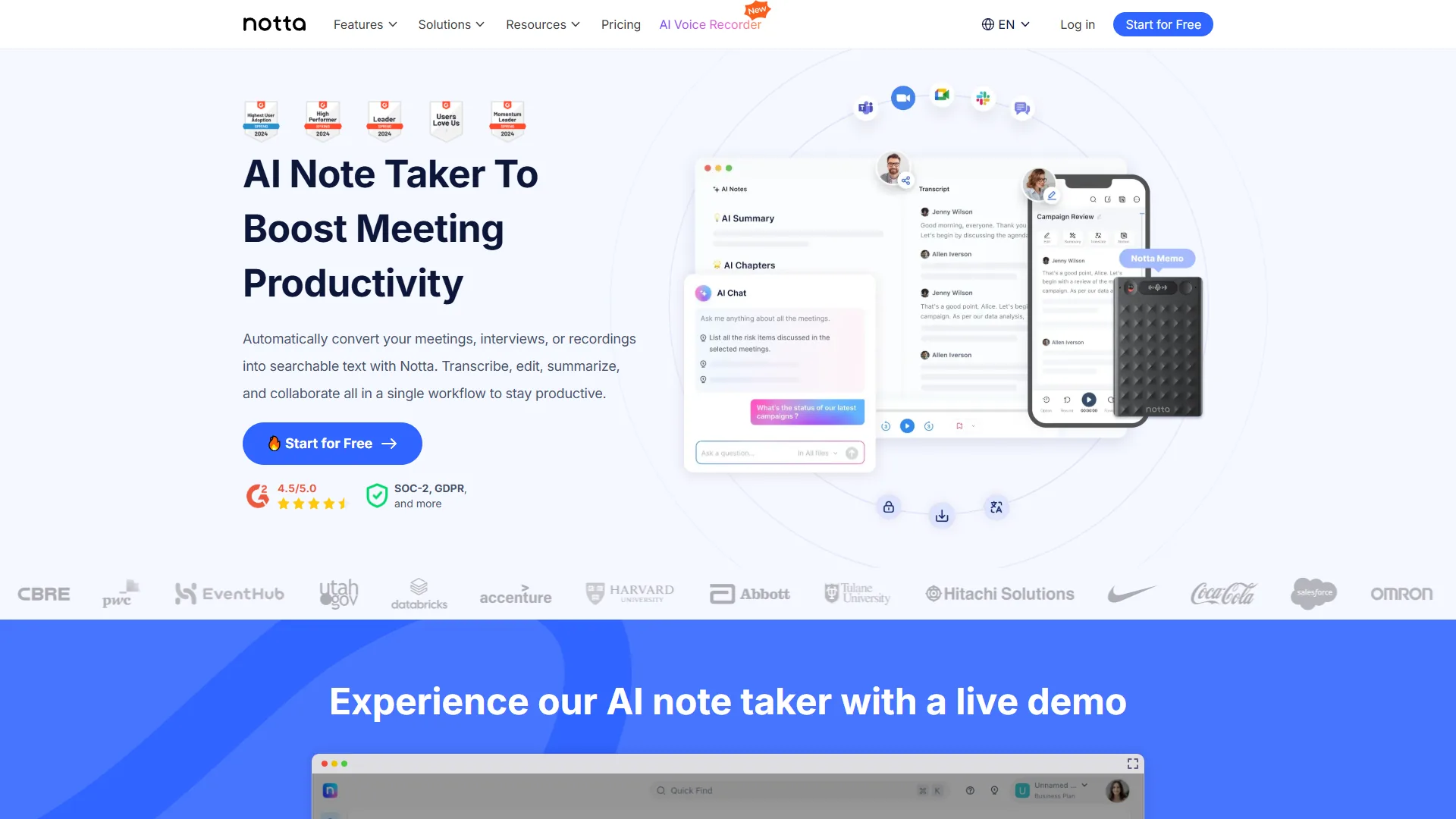
Claimed accuracy: 98.86% under optimal conditions
Real-world accuracy expectations:
- Quiet 1-on-1 calls: 96-98%
- Team meetings (3-4 people): 92-95%
- Webinars with Q&A: 88-92%
- Noisy coffee shop recording: 78-85%
Strengths:
- Best multilingual accuracy (58 languages)
- Handles code-switching between languages
- Accurate speaker identification for 2-3 speakers
Weaknesses:
- Degrades significantly with background noise
- Speaker ID struggles above 4 participants
- Free tier limited to 120 minutes/month
Accuracy by language:
- English: 95-98%
- Spanish/French: 92-95%
- Mandarin: 90-94%
- Arabic: 88-92%
Fireflies.ai: 95%+ Optimal, 88-93% Real-World
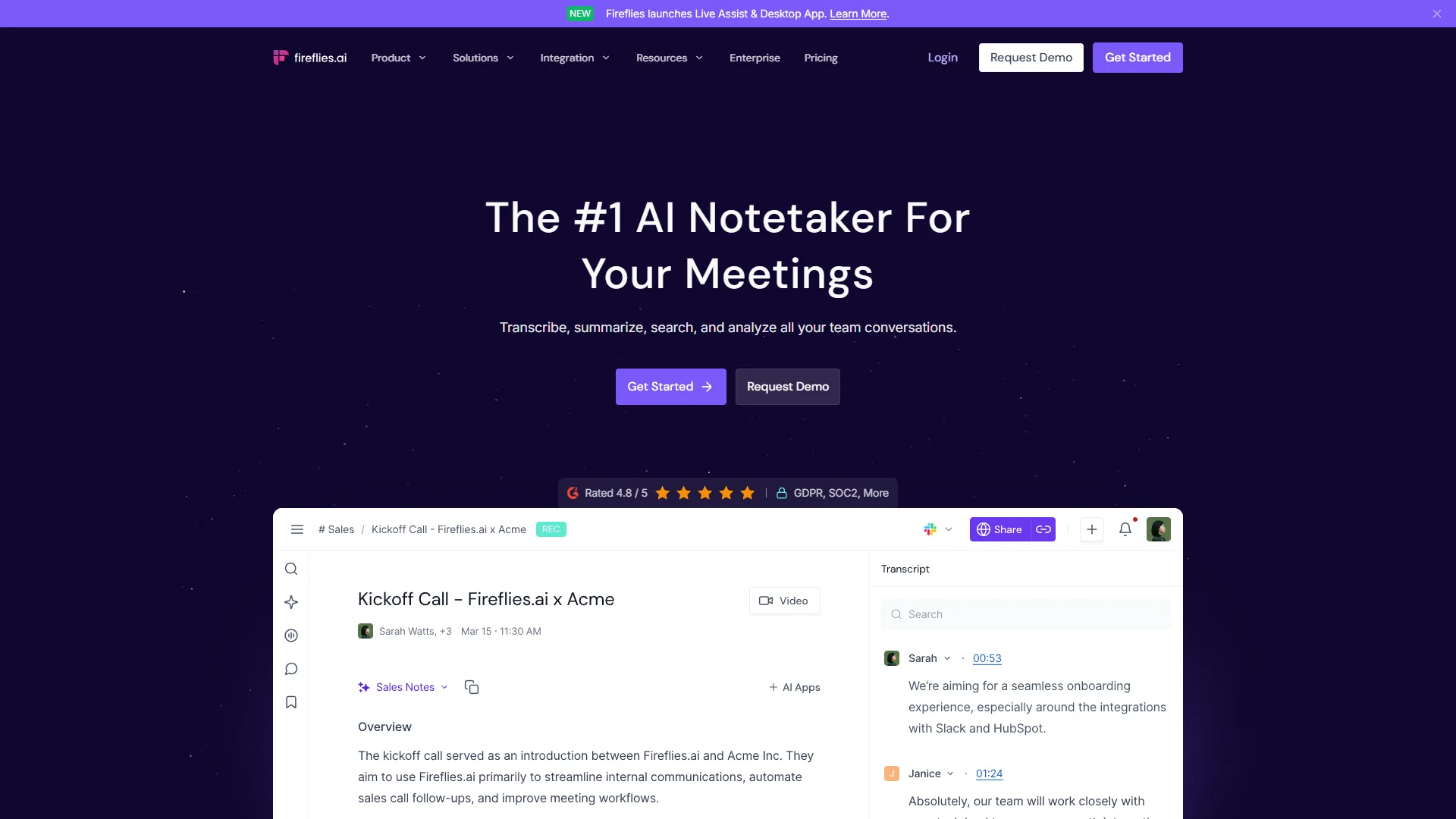
Claimed accuracy: 95%+
Real-world accuracy expectations:
- Sales calls (Zoom): 93-95%
- Team standups (Google Meet): 90-93%
- Client calls (mixed platforms): 88-92%
- Podcast interviews: 94-96%
Strengths:
- Best cross-platform consistency
- Custom vocabulary improves technical jargon accuracy
- Sentiment analysis helps catch context
Weaknesses:
- Speaker diarization struggles in rapid conversations
- Heavy accents drop accuracy 5-10%
- AI summaries miss context 20-30% of the time
Accuracy by accent (English):
- American Standard: 95%+
- British: 93-95%
- Australian: 92-94%
- Indian: 88-92%
- Non-native speakers: 85-90%
Otter.ai: 95% Optimal, 90-94% Real-World
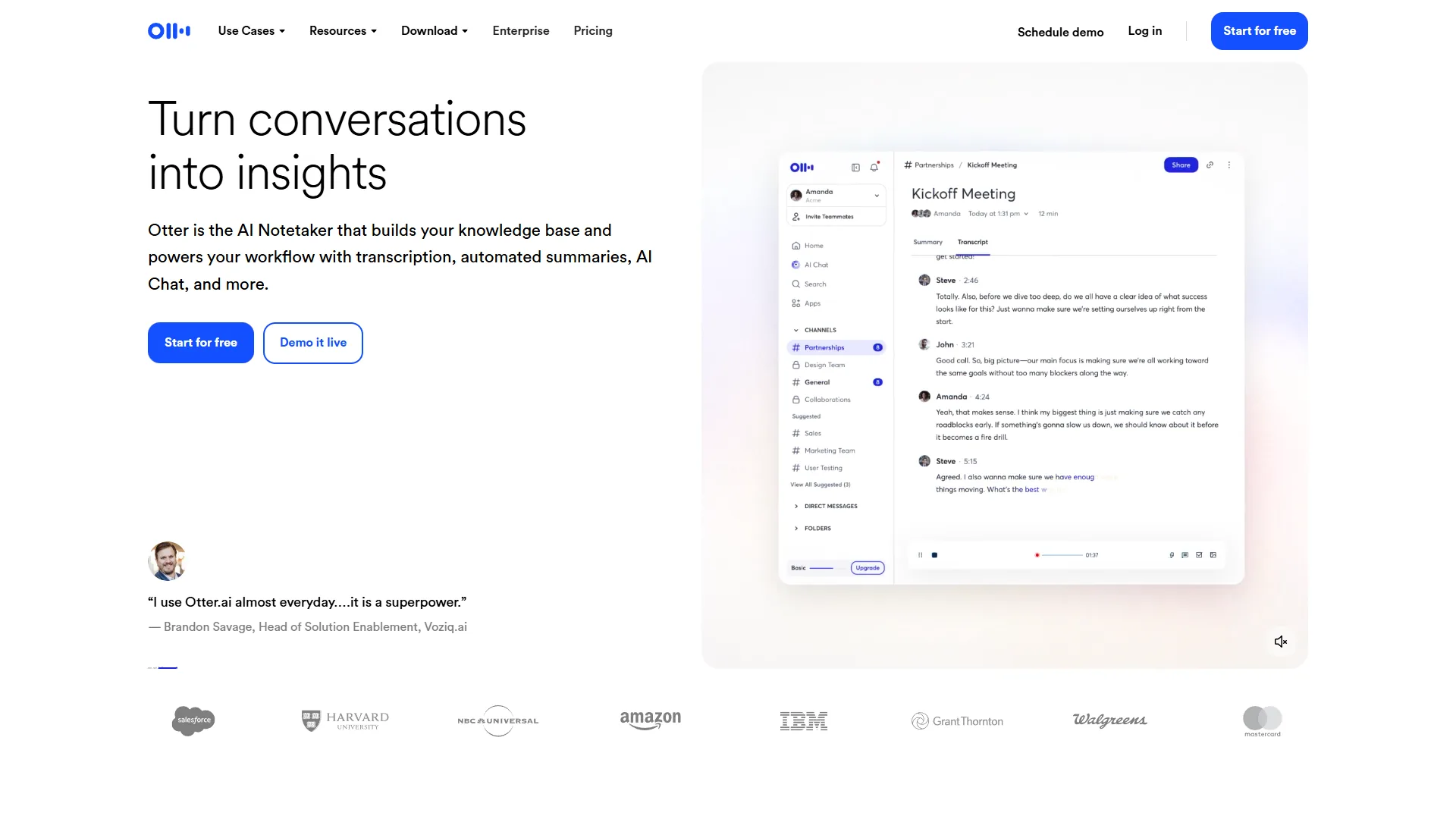
Claimed accuracy: 95% with real-time collaboration
Real-world accuracy expectations:
- Professional meetings: 93-95%
- Academic lectures: 92-94%
- Casual conversations: 88-92%
Strengths:
- Highest accuracy for English content
- Best real-time collaborative editing
- Speaker ID most reliable under 4 participants
Weaknesses:
- Only supports 3 languages (English, French, Spanish)
- More expensive than alternatives ($16.99 a month)
- Free tier limited to 600 minutes/month
Factors That Kill Transcription Accuracy
Five factors are responsible for nearly every drop below 90% transcription accuracy: background noise, overlapping speakers, accents, technical jargon, and poor microphone quality. Each one cuts 5-30% on its own, and they compound when combined - especially how accurate is AI transcription for accents matters more than any single tool choice.
1. Background Noise
Impact: -5 to -20% accuracy
Problem sources:
- Air conditioning hum
- Keyboard typing during calls
- Street noise through windows
- Echo from speakerphone
Solutions:
- Use headset microphones, not laptop mics
- Mute when not speaking
- Choose quiet meeting locations
- Enable noise cancellation (Krisp, NVIDIA RTX Voice)
2. Multiple Overlapping Speakers
Impact: -10 to -25% accuracy
Problem: AI transcription processes audio linearly. When two people talk simultaneously, the system can’t reliably separate voices.
Symptoms:
- Text jumbled between speakers
- Missing words during overlap
- Wrong speaker attribution
Solutions:
- Establish turn-taking in meetings
- Use “raise hand” features
- Consider dedicated meeting facilitation for recorded calls
3. Accents and Non-Native Speakers
Impact: -5 to -15% accuracy
Testing results (Fireflies.ai on English content):
| Accent | Accuracy |
|---|---|
| American Standard | 95%+ |
| British RP | 93-95% |
| Australian | 92-94% |
| Indian English | 88-92% |
| German-accented English | 85-90% |
| Japanese-accented English | 82-88% |
Solutions:
- Use custom vocabulary to teach proper nouns
- Choose tools with better multilingual support (Notta)
- Consider native-language transcription + translation
4. Technical Jargon and Proper Nouns
Impact: -10 to -30% accuracy for specialized content
Examples of common errors:
- “Kubernetes” → “cube net ease”
- “OAuth” → “oh off”
- “SaaS” → “sauce”
- Company names → Random guesses
Solutions:
- Use custom vocabulary features (Fireflies.ai, Notta)
- Add industry-specific terms before meetings
- Review and correct transcripts to train the system
5. Audio Quality
Impact: -5 to -30% accuracy
Quality hierarchy:
- Studio recording (headset mic, quiet room): 95-98%
- Quality webcam mic (good room): 92-95%
- Laptop built-in mic (quiet room): 88-92%
- Phone recording (variable): 80-90%
- Conference room speakerphone: 75-85%
Solutions:
- Invest in a decent USB microphone ($30-100)
- Record in quiet spaces
- Use headphones to prevent audio feedback
Accuracy Benchmarks by Use Case
Expected AI transcription accuracy is 85% for multi-speaker team meetings, climbing to 98% for controlled podcast recordings. The benchmarks below show realistic accuracy ranges and the best-fit tool for each common scenario.
Sales Calls (1-on-1)
Expected accuracy: 92-96%
Key factors:
- Usually quiet environments
- Professional speaking pace
- Clear business terminology
Recommended tool: Fireflies.ai (CRM integration + sentiment analysis)
Team Meetings (3-8 people)
Expected accuracy: 85-92%
Key factors:
- Multiple speakers
- Occasional interruptions
- Mixed audio quality
Recommended tool: Otter.ai (best speaker ID) or Fireflies.ai (cross-platform)
Webinars and Presentations
Expected accuracy: 90-95%
Key factors:
- Usually single presenter
- Professional audio setup
- Q&A sections vary
Recommended tool: Notta (affordable) or Fireflies.ai (searchable archive)
Podcast/Interview Recording
Expected accuracy: 94-98%
Key factors:
- Controlled environment
- Quality microphones
- Intentional clear speech
Recommended tool: Any - quality input = quality output
Medical/Legal (High Stakes)
Expected accuracy: Varies, but requires 99%+
Reality check:
- AI transcription alone is NOT sufficient for legal records
- HIPAA compliance requires Enterprise tiers
- Always pair with human review
Recommended approach: AI transcription for first draft, human review for final version
How to Maximize Your Transcription Accuracy
Three habits cut transcription error rates by 10-20%: custom vocabulary setup, a wired headset in a quiet room, and immediate post-meeting review. The steps below are organized by when to apply them - before, during, and after the call.
Before the Meeting
-
Set up custom vocabulary
- Add company names, product names, technical terms
- Fireflies.ai and Notta both support this
- Spend 5 minutes pre-meeting for 10%+ accuracy improvement
-
Choose the right environment
- Quiet room over coffee shop
- Wired headset over laptop mic
- Close unnecessary tabs (fan noise)
-
Test your audio
- Record a 30-second sample
- Listen for background noise, echo, clarity
- Fix issues before the meeting starts
During the Meeting
-
Speak clearly and pace yourself
- Enunciate technical terms
- Avoid mumbling or trailing off
- Repeat important points
-
Manage speaker transitions
- Say names before speaking: “This is Alex…”
- Avoid interrupting
- Use mute button when not speaking
-
Record backup audio
- Locally record via Zoom/Meet as backup
- Higher quality source = better re-transcription
After the Meeting
-
Review and correct immediately
- Corrections train the AI system
- Fresh memory improves accuracy
- Catch errors before sharing
-
Use speaker correction
- Fix speaker labels
- Most tools learn from corrections
-
Export in appropriate format
- Word/PDF for sharing
- SRT for video subtitles
- JSON/CSV for CRM integration
Real-World vs Optimal: Honest Accuracy Expectations
Real-world AI transcription accuracy is 5-10% below the marketing claims for every major tool, with optimal lab figures of 95-99% dropping to 87-93% averages in everyday use. The table below sets each vendor’s advertised number against lab, good, and real-world conditions.
The Marketing Claim vs Reality Table
| Tool | Marketing Claim | Lab Conditions | Good Conditions | Real-World Average |
|---|---|---|---|---|
| Notta | 98.86% | 97-98% | 93-96% | 88-93% |
| Fireflies.ai | 95%+ | 95-96% | 91-94% | 87-92% |
| Otter.ai | 95% | 95-96% | 92-95% | 89-93% |
Key takeaway: Budget 5-10% below marketing claims for realistic planning. For reference, professional human transcribers achieve 97-99% accuracy - if you need that level of precision, you need human review.
When AI Transcription Isn’t Enough
AI transcription alone is not enough for legal, medical, financial, or published content, where the required accuracy of 99%+ exceeds what any current tool delivers unaided. For these high-stakes cases, a hybrid workflow - AI draft plus human review - is the reliable path.
Use Cases Requiring Human Review
- Legal proceedings - Court reporters required for official records
- Medical documentation - HIPAA + accuracy requirements
- Financial compliance - Audit-ready records need verification
- Published content - Podcasts, articles, books need polish
- Multi-language meetings - Code-switching tanks AI accuracy
Hybrid Approach (Best of Both Worlds)
For high-stakes transcription:
- Use AI for first draft (80-90% complete)
- Human editor reviews (catches remaining errors)
- Final verification (speaker confirmation if needed)
Cost comparison:
- Human-only: $1.50-3.00/minute
- AI-only: $0.05-0.15/minute
- Hybrid: $0.50-1.00/minute
The hybrid approach delivers 99%+ accuracy at 50-70% cost reduction.
Choosing the Right Tool for Your Accuracy Needs
The best AI transcription apps are Notta for multilingual accuracy, Fireflies.ai for cross-platform reliability, and Otter.ai for English-only collaboration. Each recommendation below explains which scenario it fits best.
Best for Multilingual Accuracy: Notta
- 58 languages supported
- 98.86% accuracy under optimal conditions
- Best value at $13.99 per month (Pro)
- Real-time translation capabilities
Choose if: Your team works across languages or has non-English primary speakers.
Best for Cross-Platform Reliability: Fireflies.ai
- 100+ languages supported (powered by OpenAI Whisper)
- 95%+ accuracy with custom vocabulary
- Works across Zoom, Meet, Teams, Webex
- CRM integration for sales teams
Choose if: You use multiple meeting platforms and need consistent accuracy everywhere.
Best for English Accuracy: Otter.ai
- 95% accuracy with real-time editing
- Best speaker identification
- Collaborative editing during meetings
- Limited to 3 languages
Choose if: Your team works primarily in English and values real-time collaboration.
Frequently Asked Questions
The most common AI transcription accuracy questions are whether AI can replace human transcribers, why error rates spike, and how accuracy varies by language and tool - answered directly below for AI vs Human in 2026 workflows.
Q: Is AI transcription accurate enough to replace human transcribers?
For most business use cases (meeting notes, sales calls, content creation) - yes. AI achieves 90-95% accuracy at 10x lower cost. For legal, medical, or published content - no. Those require human review.
Q: Why does my transcription have so many errors?
Check these factors: background noise, multiple overlapping speakers, heavy accents, technical jargon without custom vocabulary, or poor microphone quality. Fix the biggest issue first; accuracy often jumps 10-15%.
Q: How do I improve accuracy for technical content?
Use custom vocabulary features. Add your industry terms, company names, product names, and acronyms BEFORE the meeting. Both Fireflies.ai and Notta support this, and it improves accuracy 10-20% for specialized content.
Q: Is the accuracy the same for all languages?
No. English accuracy is typically highest (92-98%). European languages (Spanish, French, German) achieve 90-95%. Asian languages (Mandarin, Japanese) achieve 85-92%. Less common languages may drop to 80-85%.
Q: How long until AI transcription matches human accuracy?
Current AI achieves 95-98% under optimal conditions, matching average human transcribers. Professional human transcribers achieve 99%+. The gap is narrowing, but for the next 2-3 years, high-stakes content will still need human review.
Q: Are free AI transcription apps as accurate as paid plans?
Most free AI transcription apps use the same speech-recognition engines as their paid tiers, so raw accuracy is comparable - the real limits are monthly minute caps and missing custom-vocabulary features. Notta’s free tier covers 120 minutes per month and Otter.ai’s covers 600, but neither supports the custom vocabulary that lifts accuracy 10-20% on technical content.
Related Reads
Related reads include tool reviews and workflow guides that provide deeper coverage of the transcription tools and meeting-assistant patterns referenced above.
Tools covered in this article:
- Notta - Best value multilingual transcription with 58 languages
- Fireflies.ai - Cross-platform meeting assistant with CRM integration
- Otter.ai - Real-time transcription with live collaboration
More transcription guides:
- Best AI Meeting Assistants 2026 - Full comparison of AI meeting tools
- AI Meeting Tools Comparison - Tana vs Otter.ai vs Fireflies deep dive
- AI Notetaker Shootout 2026 - Motion vs Otter.ai vs Fireflies tested
The Bottom Line
AI transcription accuracy is 85-98% in 2026 depending on conditions, with most business meetings landing at 90-93% on decent audio. Budget 5-10% below marketing claims for realistic planning. For high-stakes content, use AI for first drafts and human review for final verification - that hybrid path is the only one that meets professional accuracy standards. The cost savings and time efficiency make AI transcription essential - just do not trust it blindly. Start with Otter.ai for English-first teams or Fireflies.ai for cross-platform needs to find the right balance of accuracy and features for your workflow.
External Resources
External resources include vendor documentation and standards-body references that provide further reading on transcription accuracy and 99% accurate results targets cited in this guide.
- Notta Blog - Multilingual transcription tips and accuracy improvement guides
- Otter.ai Blog - Real-time transcription updates and accuracy benchmarks
- Fireflies.ai Blog - Meeting intelligence best practices and custom vocabulary tutorials