


AI is reshaping software engineering teams in 2026 through 51% AI-assisted code on GitHub, a 20% drop in early-career developer hiring, and CEO mandates with hard deadlines - the defining ai disruption 2026 story across the industry.
The AI Impact on Software Engineering Teams Is No Longer Theoretical
The AI impact on software engineering teams is structural: 51% of committed code on GitHub is now AI-assisted, early-career developer employment has fallen roughly 20%, and CEOs are mandating AI adoption with hard deadlines. The conversation in 2026 has shifted from “will it happen” to “how fast.”
GitHub reports that 51% of committed code on its platform is now AI-assisted. Google says over 30% of its new code is AI-generated. Microsoft puts the figure at 20-30%. Meta is targeting 50% within the year. These are not projections from optimistic pitch decks - they are production numbers from companies that collectively employ hundreds of thousands of engineers.
The AI impact software engineering teams feel reaches everywhere - CEO memos in Slack channels and the quiet restructuring of who gets hired, who gets promoted, and which roles stop existing. This analysis separates mandate theater from real structural change and offers practical guidance for developers. Our analysis draws on current vendor documentation, published company statements, and independent research from Stanford HAI and the Anthropic Economic Index rather than sponsored placement. AI Productivity may earn a commission from links on this page; our analysis and rankings are editorially independent.
Why Are CEOs Mandating AI Adoption Across Engineering Teams?
A distinct pattern has emerged in 2026: CEOs are issuing top-down directives requiring AI adoption, often with dramatic language and hard deadlines. Some mandates produce real results; others produce mostly fear.
Shopify: Prove AI Cannot Do It First
Shopify CEO Tobi Lutke’s internal memo became one of the most discussed documents in tech this year. The directive was blunt: teams must demonstrate that AI cannot do a task before requesting additional headcount. Every hiring request now requires proof that the work is beyond what AI tools can handle.
This is not a suggestion - it is a structural change to how Shopify allocates engineering resources. The mandate reframes headcount expansion as a last resort, not a default response to growing workloads.
Block: Hiring Freeze and Layoffs
Jack Dorsey took an even harder line at Block. The company implemented a hiring freeze and cut approximately 4,000 positions. The reasoning was explicit: AI can absorb work that previously required additional engineers. Block’s approach treats AI adoption not as a gradual transition but as a step-function change in how much output a fixed team can produce.
Meta: AI in Performance Reviews
Meta wove AI adoption directly into its performance evaluation system. “AI-driven impact” is now a factor in engineer reviews - meaning developers who do not actively use AI tools in their workflows risk lower performance ratings. This turns AI adoption from an optional productivity boost into a career requirement.
The Mandate Spectrum
Not every company approaches this the same way - the mandates fall along a spectrum:
| Company | Mandate Type | Approach |
|---|---|---|
| Shopify | Headcount gatekeeping | Prove AI cannot do it first |
| Block | Workforce reduction | Hiring freeze + 4,000 layoffs |
| Meta | Performance integration | AI usage in reviews |
| Intuit | Productivity measurement | 40% faster coding, 39% more code per developer |
| Fiverr | Direct warning | CEO email: “AI is coming for you” |
The common thread is urgency. The AI impact software engineering teams are feeling is not theoretical when CEOs are treating adoption as a competitive necessity, not an experiment.
Which Engineering Roles Are Actually Affected by AI?
Junior dev, QA, and legacy maintenance roles are shrinking fastest, while AI/ML engineering, platform engineering, and senior architecture roles are growing across ai in software engineering teams. The Stanford HAI data tells a stark story: employment among early-career developers aged 22-25 has declined approximately 20% from its peak. This impact is not distributed evenly - some positions are absorbing AI naturally, while others are being compressed or eliminated.
Roles Under Significant Pressure
Junior development positions are feeling the squeeze most acutely. The tasks that historically trained junior engineers - writing boilerplate, implementing straightforward CRUD operations, fixing simple bugs - are precisely the tasks AI handles best. Companies like Intuit report 40% faster coding and 39% more code per developer, and that efficiency often reduces the need for entry-level headcount.
QA and manual testing roles are being automated at scale. AI-powered testing tools can generate test suites, identify edge cases, and run regression tests faster than manual testers. The 45,363 tech layoffs recorded in 2026 include a meaningful share from quality assurance departments, with roughly 9,238 layoffs (about 20%) directly linked to AI and automation.
Legacy maintenance and support engineers are increasingly handled by AI systems that can read, understand, and modify older codebases. Atlassian is among the companies cutting legacy support roles as AI tools prove capable of handling routine maintenance work.
Roles Growing in Demand
AI job postings are growing 74% year-over-year. The roles being created are different from the ones being eliminated:
- AI/ML engineers building and fine-tuning the models teams use
- Platform engineers integrating AI tools into dev infrastructure
- Senior architects designing systems that humans and AI build together
- AI-augmented team leads managing smaller, more productive pods
The pattern is clear: the AI impact software engineering teams experience is not about eliminating work. It is pushing the work upward in complexity and downward in headcount.
The Klarna Cautionary Tale
Klarna’s experience is the canonical case. The Swedish fintech cut roughly 40% of its workforce, betting that AI could absorb roles across customer service, engineering, and operations. Our AI hype vs reality analysis covers the full backtracking pattern.
The results were initially celebrated - Klarna reported dramatic cost savings and positioned itself as a model for AI-first operations.
Then reality intervened. Service quality declined, customer satisfaction dropped, and complex issues requiring human judgment fell through the cracks. The company began rehiring for roles it had eliminated.
According to Sebastian Siemiatkowski, CEO at Klarna: “From a brand perspective, a company perspective, I just think it is so critical that you are clear to your customer that there will be always a human if you want” - a public concession that the firm cut too far on cost.
The Klarna story illustrates a pattern that repeats across industries: initial AI productivity gains are real, but second-order effects - lost institutional knowledge, degraded service, burnt-out staff - take months to manifest. By then, the damage is expensive to reverse.
Duolingo followed a similar arc, announcing an AI-first approach only to walk portions of it back when the limitations became apparent.
The lesson is not that AI adoption is wrong. The lesson is that speed of adoption without structural planning creates problems that AI cannot solve.
How Teams Are Actually Restructuring
Companies navigating the transition successfully are not simply layering AI onto existing team structures - they are rethinking how engineering teams operate.
The Pod Model
Teams integrating AI deeply report 40-70% reductions in cycle time. That efficiency comes from smaller, more senior, more autonomous groups - often called “pods” - that use AI to handle the work that previously required larger teams.
A typical restructured pod looks like:
- 2-3 senior engineers (down from 5-8 in a traditional team)
- AI coding assistants for implementation, testing, and documentation
- 1 technical lead for architecture and code review
- Shared platform team maintaining AI tooling
Microsoft’s reorganization under Mustafa Suleyman, merging Copilot AI teams into one division, signals that even AI-tool makers are restructuring around them.
What This Means for Engineering Culture
The shift to smaller, AI-augmented teams changes more than headcount - it changes the nature of engineering work:
Code review becomes more critical. When AI generates 30-50% of code, human review shifts from catching syntax issues to evaluating architectural decisions, security implications, and maintainability.
Mentorship models need reinvention. The traditional junior-to-senior pipeline assumed juniors would learn by writing lots of basic code. If AI handles that code, teams need new approaches to developing talent.
Burnout risk is increasing, not decreasing. Despite the productivity gains, 46.4% of engineering leaders expect burnout rates to rise. Smaller teams with AI tools still face the same deadlines, stakeholder demands, and on-call rotations - just with fewer humans to share the load.
Which AI Tools Are Driving the Shift in Software Engineering?
Claude, Cursor, and GitHub Copilot are the three tools driving the shift in software engineering, and each is central to how engineering teams are restructuring their workflows.
Claude
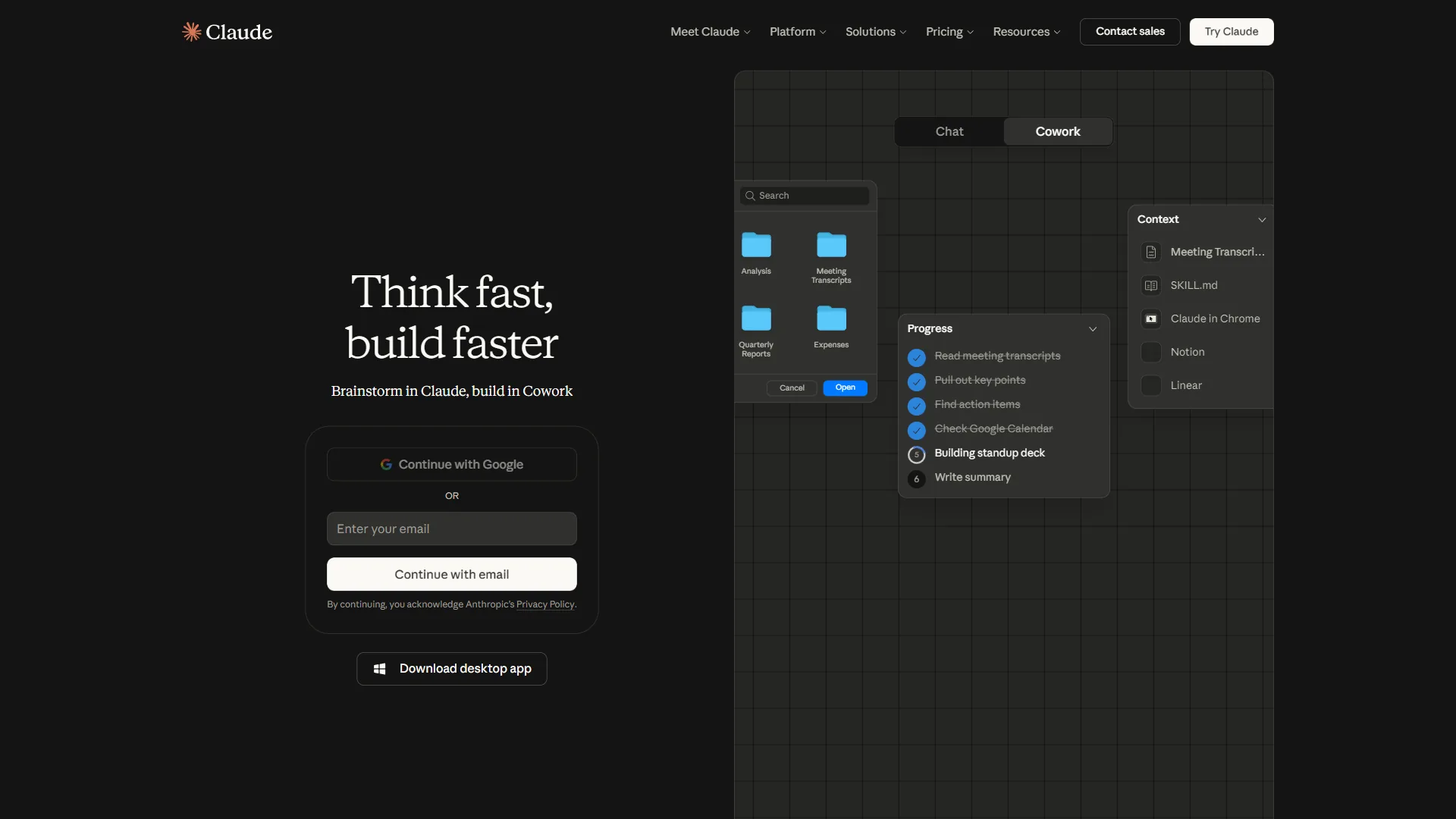
Claude has emerged as a powerful option for engineering teams, particularly through Claude Code - a terminal-based AI assistant that operates directly in development environments. Its strength lies in understanding large codebases, reasoning about complex architectural decisions, and executing multi-file changes autonomously.
For teams adopting the pod model, Claude’s ability to handle context-heavy tasks - refactoring legacy code, writing test suites, debugging cross-service issues - is particularly valuable for senior engineers managing larger scopes.
Cursor
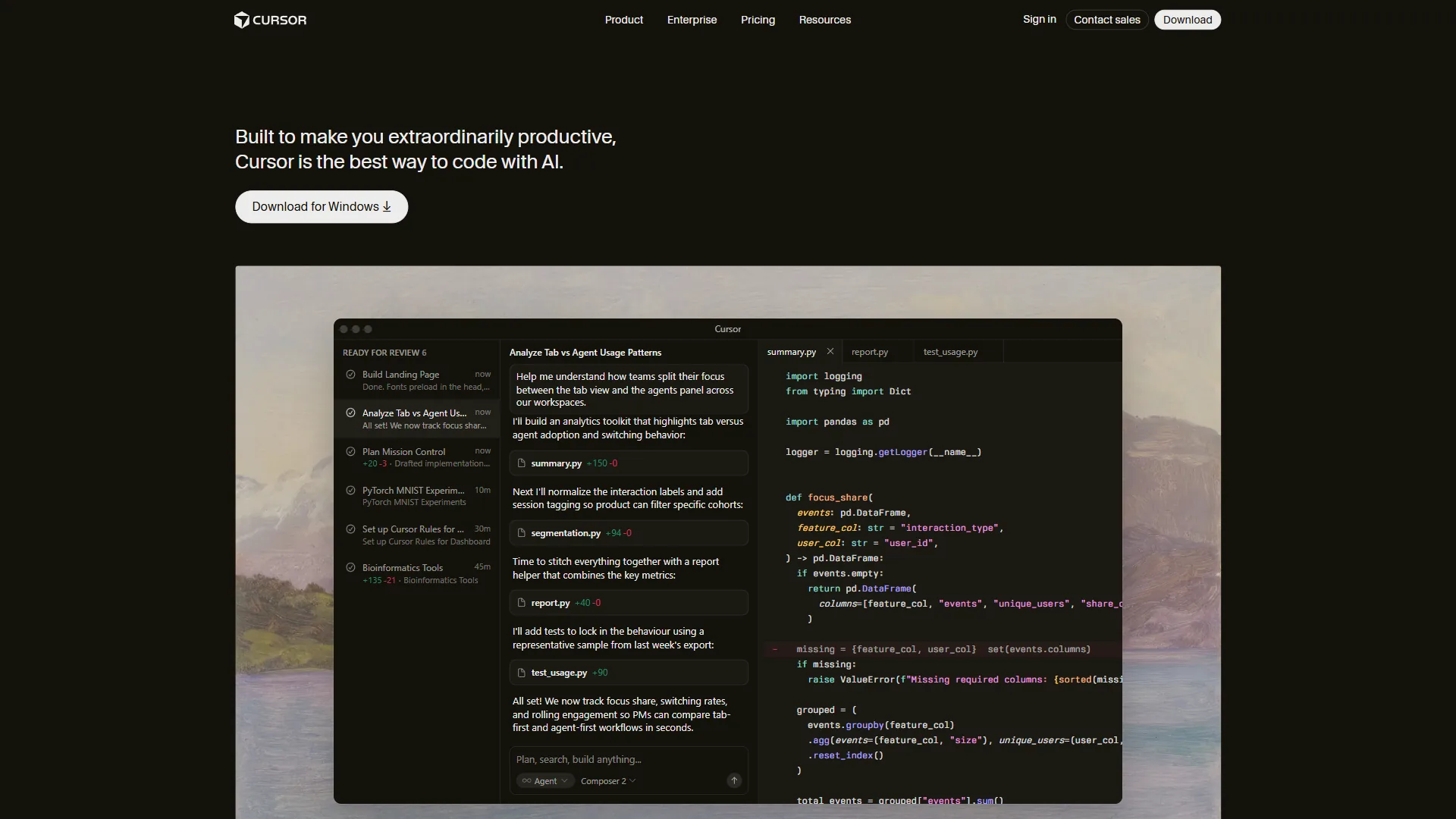
Cursor represents the AI-first IDE approach, built as a VS Code fork with deep AI integration. Its Composer Agent can execute multi-file tasks in under 30 seconds, and support for parallel agents working in isolated git worktrees means individual developers can manage workloads that previously required multiple team members.
Teams using Cursor report measurably higher pull request volume without corresponding drops in code quality - exactly the kind of productivity gain that enables the smaller-team restructuring described above.
GitHub Copilot
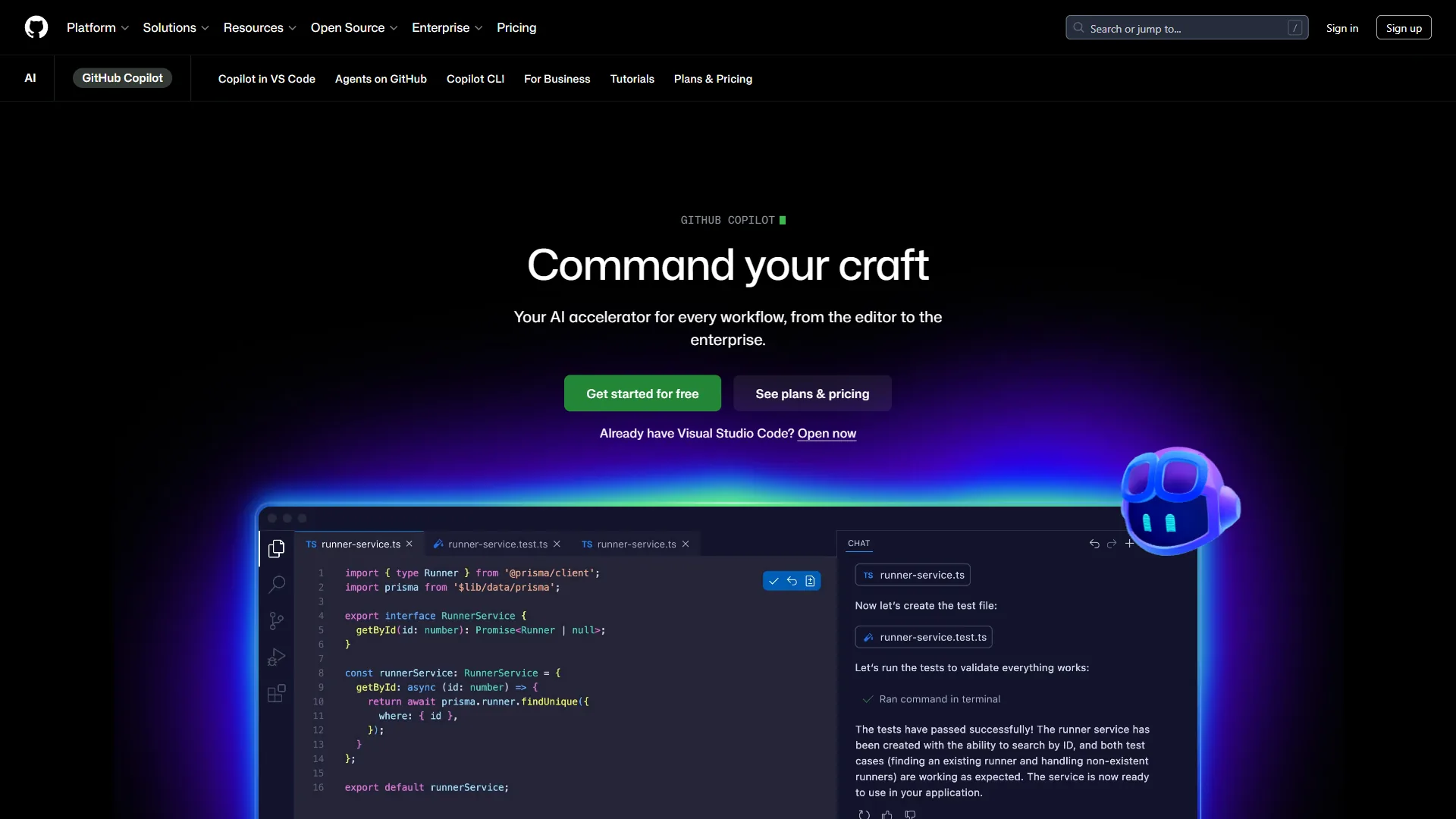
GitHub Copilot remains the most widely adopted AI coding assistant, with over 1.8 million paid subscribers. Its integration with GitHub’s ecosystem - pull requests, code review, Actions workflows - makes it the natural choice for organizations already built on GitHub infrastructure.
GitHub’s own data showing 51% AI-assisted code on the platform underscores how deeply Copilot has penetrated professional development workflows. For large enterprises with established GitHub workflows, Copilot offers the lowest-friction path to AI-augmented development.
What Developers Should Do Right Now
The data points one way: AI is not a phase, and teams that adopt it effectively will outperform those that do not. Here is practical guidance for developers at every career stage.
For Early-Career Developers
The 20% decline in early-career employment is concerning but not catastrophic. The developers being hired into junior roles in 2026 are expected to be productive with AI from day one. That means:
- Learn AI-augmented development as a core skill, not an add-on. Treat Cursor, GitHub Copilot, and Claude as essential tools, not shortcuts.
- Focus on skills AI handles poorly: system design, cross-team communication, product thinking, and debugging complex distributed systems.
- Build projects that demonstrate AI-augmented productivity. Showing you can ship 3x faster with AI tools is more valuable than showing you can write code without them. See our best AI code editors and AI pair programming guide for tooling deep dives.
For Mid-Career Engineers
The mid-career cohort is best positioned for this transition. You have enough experience to review AI-generated code critically and enough career runway to benefit from the productivity gains. Priorities include:
- Become the person who evaluates AI output, not just the person who produces code. Code review skills are increasingly valued.
- Learn to manage AI-augmented workflows. The ability to decompose complex problems into tasks that AI can handle - and tasks that require human judgment - is becoming a core engineering competency.
- Document your AI-augmented productivity gains. In a world where Meta puts “AI-driven impact” in performance reviews, having data on how AI tools improve your output is career insurance.
For Engineering Leaders
Understanding the full AI impact software engineering teams face means learning from both successes and failures. The mandate wave is real, but Klarna’s experience shows that speed without strategy is dangerous. Leaders should:
- Restructure gradually. Cut too fast and you lose institutional knowledge. The companies seeing the best results are running 3-6 month transitions, not overnight transformations.
- Invest in AI tooling infrastructure. The teams reporting 40-70% cycle time reductions have dedicated platform support for their AI tools - prompt libraries, fine-tuned models, integration pipelines.
- Plan for the mentorship gap. If junior roles shrink, where do senior engineers come from in five years? The teams solving this problem now will have a structural advantage later.
The Bottom Line: AI Impact Software Engineering Teams
The AI impact on software engineering teams is a structural shift, not a cyclical one: 51% AI-assisted code, a 20% early-career employment decline, and 74% growth in AI job postings describe a permanent change in how software gets built and who builds it.
But the Klarna story matters as much as the GitHub statistics. Companies that treat AI as a reason to cut headcount are discovering that the hardest parts of software engineering - architecture, judgment, mentorship, debugging novel problems - are exactly the parts AI cannot handle.
The most effective engineering organizations in 2026 are not replacing developers with AI - they are building smaller, more senior, more autonomous teams that use AI to multiply output. The developers thriving here treat AI as a force multiplier for their expertise, not a threat to their relevance.
The mandate emails will keep coming and restructuring will continue. But engineers who learn to work with AI effectively will be more valuable, not less - someone still needs to decide what to build, evaluate whether it was built correctly, and fix what AI gets wrong.
FAQ
The FAQ below answers the most common questions about ai impact software engineering teams, AI coding adoption rates, and corporate mandates in 2026 key trends.
Q: How much code is actually written by AI in 2026?
GitHub reports that 51% of committed code on its platform is now AI-assisted. Google says over 30% of its new code is AI-generated, Microsoft puts the figure at 20-30%, and Meta is targeting 50% within the year. These are production numbers from companies employing hundreds of thousands of engineers, not projections from pitch decks.
Q: What is Shopify’s AI mandate for engineering teams?
Shopify CEO Tobi Lutke issued an internal memo requiring teams to demonstrate that AI cannot do a task before requesting additional headcount. Every hiring request now requires proof the work is beyond what AI tools can handle. The mandate reframes headcount expansion as a last resort rather than a default response to growing workloads.
Q: How is Meta incorporating AI into engineer performance reviews?
Meta wove AI adoption directly into its performance evaluation system. AI-driven impact is now a factor in engineer reviews, meaning developers who do not actively use AI tools in their workflows risk lower performance ratings. This turns AI adoption from an optional productivity boost into a career requirement at the company.
Q: How did Block respond to AI capabilities in its engineering workforce?
Jack Dorsey took a hard line at Block, implementing a hiring freeze and cutting approximately 4,000 positions. The reasoning was explicit: AI can absorb work that previously required additional engineers. Block’s approach treats AI adoption not as a gradual transition but as a step-function change in how much output a fixed team can produce.
Q: How is AI software engineer salary changing in 2026?
AI/ML engineer salaries are rising as AI job postings grow 74% year-over-year, while early-career salaries flatten due to the 20% drop in entry-level hiring. The premium sits with engineers who pair AI tooling fluency with senior architecture skill.
Related Reading
Related Reading covers the AI coding tools and guides that expand on the engineering shifts in this analysis.
Tools covered in this article:
- Claude - AI assistant with terminal-based coding capabilities
- Cursor - AI-first code editor with multi-file editing
- GitHub Copilot - AI pair programming assistant for developers
More on AI and development:
- Best AI Code Editors 2026 - Top AI-powered code editors compared
- AI Pair Programming Guide - Complete guide to AI-augmented development
- AI Coding Assistants: Future 2026 - Where AI coding tools are heading next
- AI Tools for Developers - Best AI tools for software engineers
External Resources
External Resources are the primary research and industry data sources behind this analysis - GitHub Research and Stanford HAI cover the core ai disruption 2026 evidence.
- GitHub Research - Developer productivity studies and AI adoption data
- Stanford HAI - Human-centered AI research on workforce impacts