





Writesonic has earned its place in many content teams’ daily workflows, particularly through its Writesonic AI Writer module and ChatSonic Writer assistant. The combination of AI-powered article generation and built-in SEO optimization eliminates the constant tool-switching that slows down content pipelines. If you are looking for a writesonic SEO content solution that handles everything from keyword research to final optimization, this guide covers every feature that matters and how to get the most from each one.
Writesonic currently holds across major review platforms, and its performance under real production workloads explains why content teams are adopting it at scale.
Why Writesonic Stands Out for SEO Content Creation
Most AI writing tools generate text. Writesonic generates text that is built for search performance from the start. The platform combines GPT-4o and Claude 3.7 Sonnet models with a full SEO toolkit, so you are not just creating content - you are creating content engineered to rank.
Three capabilities set it apart from alternatives like Jasper and Copy.ai:
- Dual AI model access - Switch between GPT-4o for creative content and Claude 3.7 Sonnet for nuanced, longer-form articles. This flexibility lets you match the model to the task rather than working around a single model’s limitations.
- Integrated SEO auditing - Run technical site audits covering up to 2,500 pages directly within the platform. No need for a separate tool like Surfer SEO for basic optimization checks.
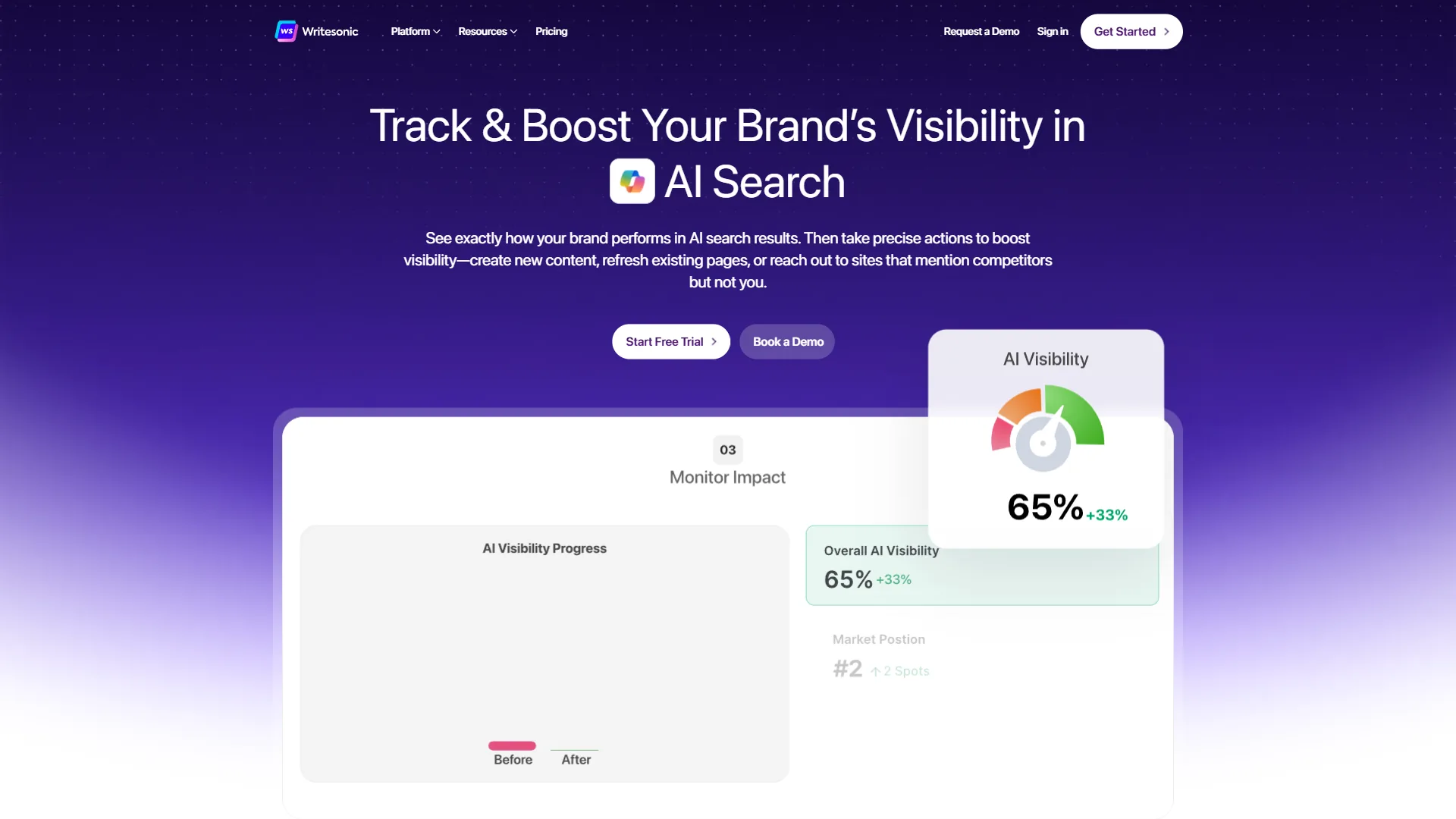
- AI Visibility Tracking - Monitor how your brand appears in AI-powered search results across ChatGPT, Gemini, and Perplexity. This Generative Engine Optimization (GEO) capability is something most competitors have not even started building.
Getting Started with AI Article Writer 5.0
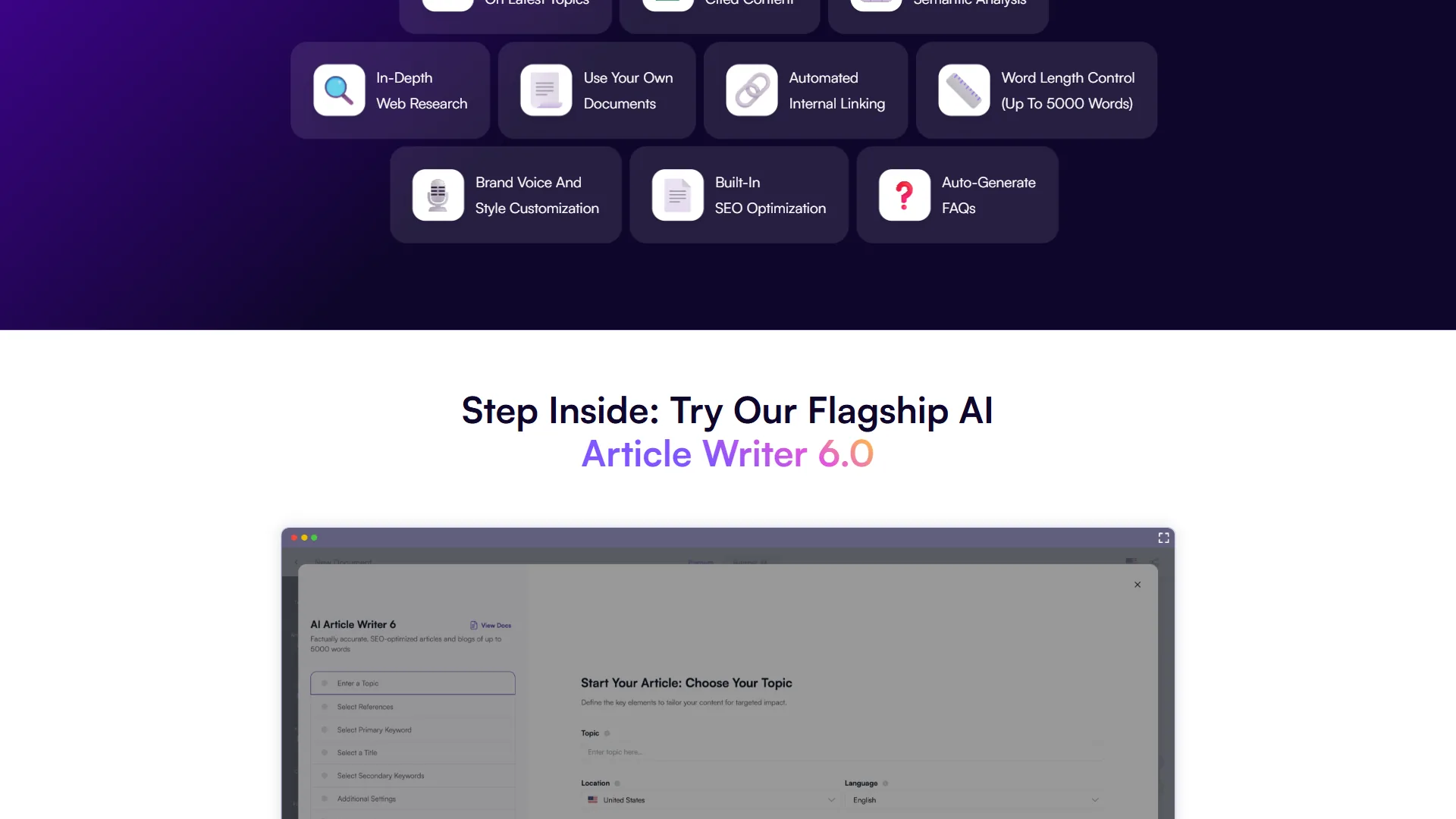
The AI Article Writer is Writesonic’s flagship feature for long-form writesonic SEO content production, accessible from the dashboard immediately after your Writesonic login. Version 5.0 represents a significant upgrade in output quality and SEO awareness compared to earlier iterations, which is why it dominates any recent writesonic seo content review.
Setting Up Your First Article
- Navigate to the Article Writer section from your dashboard
- Enter your target keyword or topic
- Select your preferred AI model (GPT-4o or Claude 3.7 Sonnet)
- Configure article parameters:
- Word count target - Set between 1,000 and 5,000 words
- Tone of voice - Choose from professional, casual, authoritative, or custom brand voice profiles
- SEO optimization level - Enable keyword density suggestions, meta description generation, and heading structure recommendations
Optimizing Output Quality
The raw output from Writesonic is good, but the real value comes from knowing how to guide the AI effectively. Here are the techniques that improve every article:
- Front-load your keyword - Place your primary keyword in the first instruction field. Writesonic weights early inputs more heavily when structuring the article.
- Use the outline editor - After the AI generates an initial outline, rearrange sections to match your content strategy. The final article follows this structure closely.
- Enable fact-checking - Writesonic includes a built-in fact-checking layer that flags claims it cannot verify. This saves editing time and prevents publishing inaccurate statistics.
- Set language preferences - With support for 30+ languages, you can generate content for international markets directly rather than translating afterward.
Chatsonic: Your Conversational SEO Research Partner
Chatsonic is Writesonic’s conversational AI, similar to ChatGPT but with real-time web access built in. For SEO professionals, this means you can research trending topics, analyze competitor content, and generate content briefs without leaving the platform.
Practical use cases for SEO workflows:
- Keyword research expansion - Ask Chatsonic to suggest long-tail variations of your target keywords. It pulls from current search data rather than relying solely on training data.
- Competitor content analysis - Paste a competitor’s URL and ask for a content gap analysis. Chatsonic identifies topics they cover that you have not addressed yet.
- Meta description generation - Feed it your article draft and ask for three meta description variations under 160 characters. Pick the one with the strongest call to action.
The conversational format is particularly useful for iterative content refinement. Instead of regenerating an entire article when one section needs work, you can discuss specific changes with Chatsonic and apply targeted edits.
Brand Voice Configuration for Consistent Writesonic SEO Content
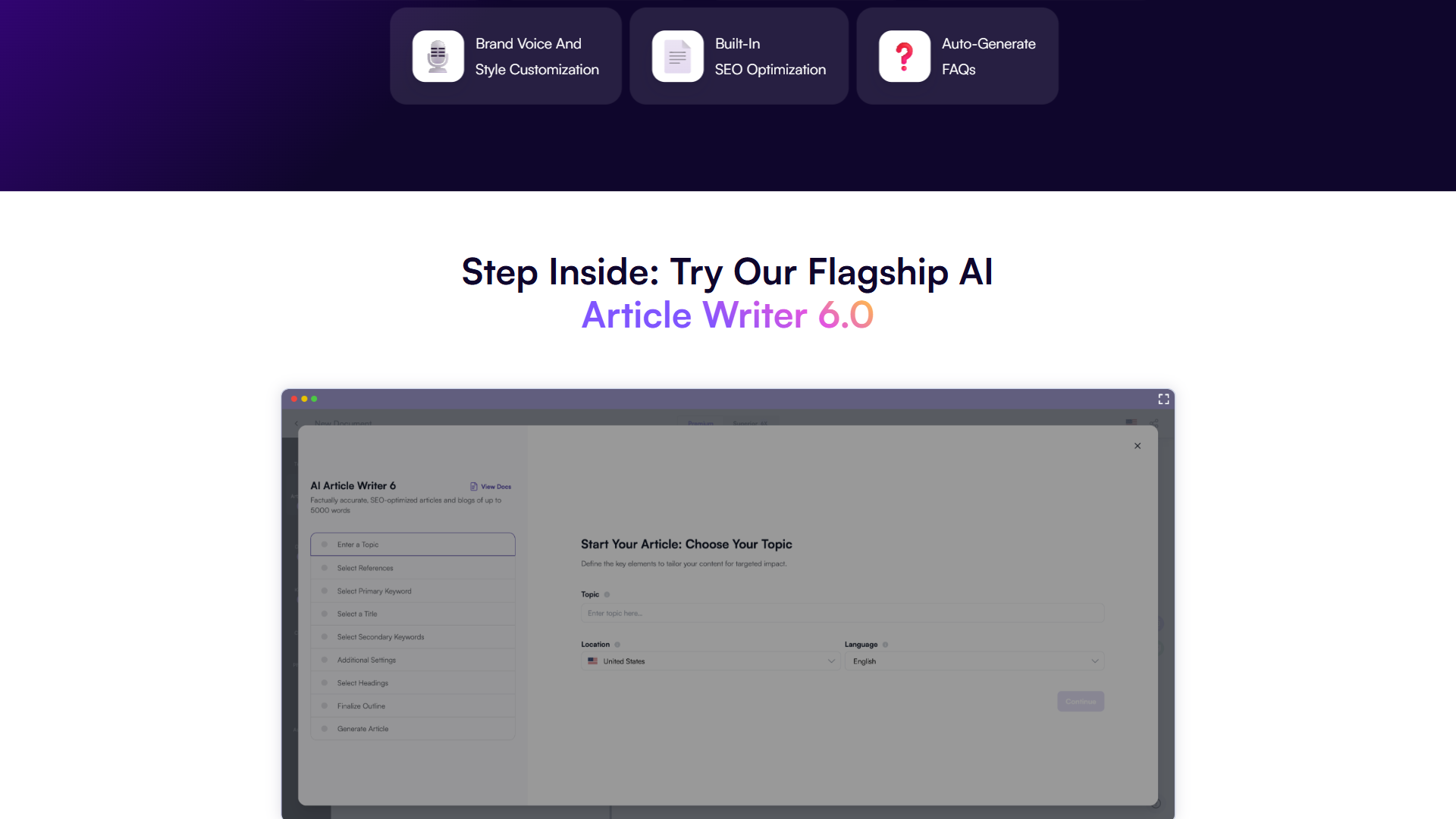
One of the most underused features in Writesonic is brand voice customization. Without it, every article sounds generically AI-generated. With it, your content maintains a consistent identity across hundreds of pieces.
Building Your Brand Voice Profile
- Navigate to the Brand Voice settings
- Upload 3-5 sample articles that represent your ideal tone
- Add specific instructions:
- Vocabulary preferences - Words to use and words to avoid
- Sentence structure - Short and punchy or detailed and explanatory
- Point of view - First person, third person, or brand perspective
The Starter plan includes writing styles for solo operators. The Basic plan at $249/month expands this further, and higher plans offer unlimited profiles - ideal for agencies managing multiple client voices.
Bulk Content Generation at Scale
For content creators and SEO specialists managing large content calendars, Writesonic’s bulk generation capabilities transform what is possible in a single week.
How Bulk Generation Works
Rather than creating articles one at a time, you can queue up multiple pieces with different keywords, tones, and formats. The system processes them in parallel and delivers completed drafts for review.
Volume limits by plan:
| Plan | Articles/Month | Site Audits/Month | Price |
|---|---|---|---|
| Starter | 15 | 10 (1 user) | $99/month |
| Basic | 25 | 20 (2 users) | $249/month |
| Growth | 50 | 50 (3 users) | $499/month |
| Enterprise | Custom | Custom | Custom |
For content agencies producing client work, the Basic plan at $249/month is a strong starting point. Each article at that price point means very low platform fees per piece - a fraction of what even the most affordable freelance writers charge.
Maintaining Quality at Volume
Bulk generation only works if quality stays consistent. Here is how I maintain standards across large batches:
- Template articles - Create one manually optimized article per content type. Use it as the reference when configuring batch jobs.
- Plagiarism checking - Writesonic includes a built-in plagiarism checker. Run every batch output through it before publishing. Original content is not negotiable for SEO.
- Human review checkpoints - Assign editors to review every fifth article in detail. This catches systematic issues early before they propagate across the entire batch.
What Does Writesonic’s SEO Audit Check for Technical Optimization?
Beyond content generation, Writesonic’s technical SEO audit capabilities deserve attention. The platform scans your site for common issues that silently kill rankings.
What the Audit Covers
- Broken links and redirects - Identifies 404 errors and redirect chains that waste crawl budget
- Meta tag analysis - Flags missing, duplicate, or poorly optimized title tags and meta descriptions
- Page speed indicators - Highlights pages with performance issues affecting Core Web Vitals
- Content gaps - Compares your site content against competitors ranking for your target keywords
The audit depth scales with your plan. Lite covers 200 pages per audit, which works for small sites or specific sections. The Advanced plan’s 2,500-page capacity handles most mid-market websites comfortably. For larger enterprise sites, the custom Enterprise plan removes these limits entirely.
WordPress Integration and Publishing Workflow
Writesonic connects directly to WordPress, creating a streamlined path from draft to published post. The integration supports:
- One-click publishing - Push completed articles directly to WordPress as drafts or published posts
- Category and tag mapping - Pre-configure WordPress categories and tags within Writesonic so articles arrive properly organized
- Featured image generation - Use Photosonic (Writesonic’s image AI) to create header images that publish alongside the article
For teams using other CMS platforms, the Writesonic API provides programmatic access to content generation. You can integrate article creation into custom publishing workflows, content calendars, or internal tools.
How Does AI Visibility Tracking Give You a GEO Advantage?
Generative Engine Optimization (GEO) is where Writesonic is investing most aggressively, and it is the feature that marketers should pay closest attention to. As AI chatbots increasingly serve as the first point of contact for information seekers, appearing in their responses becomes as important as ranking on page one of Google.
How GEO Works in Practice
The AI Visibility Action Center monitors your brand mentions across:
- ChatGPT responses - When users ask ChatGPT about topics in your industry, does your brand appear in the answers?
- Google Gemini - Same monitoring for Google’s AI assistant
- Perplexity - Tracks visibility in Perplexity’s AI-powered search results
When gaps are identified, the Action Center suggests content modifications designed to increase your chances of being cited in AI responses. This typically involves structuring content in ways that AI models prefer when sourcing information - clear definitions, structured data, authoritative sourcing, and comprehensive topic coverage.
According to Gartner research, traditional search engine volume is expected to decline 25% by 2026 as AI assistants capture more queries. Getting ahead of this shift now positions your content strategy for long-term relevance.
Practical Tips for Maximum Writesonic SEO Content ROI
These are the habits that deliver the highest return:
Content planning:
- Use Chatsonic to generate a monthly content calendar based on trending keyword opportunities in your niche
- Map each planned article to a specific landing page or product page to build internal link authority
- Prioritize topics where Writesonic’s AI Visibility tracking shows gaps in AI search coverage
Writing optimization:
- Always select the AI model that matches your content type - GPT-4o for shorter marketing copy, Claude 3.7 Sonnet for detailed guides and technical content
- Run the plagiarism checker before every publication, not just occasionally
- Use the brand voice feature even for single-author blogs to maintain consistency across writing sessions
Technical SEO:
- Schedule monthly site audits and track issue resolution over time
- Use audit findings to guide content updates - if Writesonic flags thin content on a page, regenerate that section using the Article Writer with updated keywords
How Writesonic Compares to Alternatives
If you are evaluating writesonic SEO content capabilities against other platforms, here is how the key competitors stack up:
| Feature | Writesonic | Jasper | Copy.ai | Surfer SEO |
|---|---|---|---|---|
| AI Article Writer | Yes | Yes | Yes | No |
| SEO Auditing | Yes | No | No | Yes |
| AI Visibility (GEO) | Yes | No | No | No |
| Brand Voice | Basic | Advanced | Basic | N/A |
| Bulk Generation | Yes | Yes | Yes | No |
| Starting Price | $99/month | See Jasper pricing | Free tier | See Surfer SEO pricing |
| Rating | 4.7/5 | 4.7/5 | 4.7/5 | 4.8/5 |
Writesonic’s strength is the combination of content generation and SEO tooling in one platform. Jasper offers stronger brand voice controls and team collaboration. Copy.ai wins on entry price with a free tier. Surfer SEO provides deeper SEO analysis but lacks content generation entirely.
For writers and copywriters who primarily need polished prose, Grammarly remains the better choice for editing and refinement. Writesonic targets a different use case - generating new content at scale with SEO performance as the primary goal.
The Bottom Line
Writesonic delivers a compelling package for anyone serious about scaling writesonic SEO content production without sacrificing quality. The AI Article Writer 5.0 produces publication-ready drafts that need minimal editing, the SEO audit tools catch technical issues before they hurt rankings, and the GEO features position your content for the AI search era that is already arriving.
The Starter plan at $99/month is a reasonable starting point for solo content creators producing up to 15 articles monthly. Teams and agencies should look at the Basic plan at $249/month, where the additional article limits and advanced SEO features justify the investment many times over.
Start with the 7-day free trial to test the Article Writer and Chatsonic with your actual keywords. If the output quality matches your standards after a week of real use, Writesonic is worth the subscription.
Frequently Asked Questions
Which AI is best for writing SEO content?
For content creators and SEO specialists managing large content calendars, Writesonic’s bulk generation capabilities transform what is possible in a single week. The combination of GPT-4o and Claude 3.7 Sonnet plus integrated SEO auditing makes it a strong default for teams that want one platform instead of stitching together separate writing and optimization tools.
What is SEO in Writesonic?
SEO in Writesonic is an integrated toolkit that combines AI content generation with search optimization. The platform pairs GPT-4o and Claude 3.7 Sonnet models with keyword density suggestions, meta description generation, heading structure recommendations, and technical site audits covering up to 2,500 pages, so you are creating content engineered to rank rather than just generating text.
Is SEO dead or evolving in 2026?
SEO is evolving, not dead. According to Gartner research, traditional search engine volume is expected to decline 25% by 2026 as AI assistants capture more queries. Writesonic addresses this shift with AI Visibility Tracking and Generative Engine Optimization, monitoring brand mentions across ChatGPT, Gemini, and Perplexity so content strategies stay relevant for the AI search era.
How many articles and site audits do Writesonic plans include?
Writesonic volume scales with plan tier. Starter at $99/month includes 15 AI article generations and 10 site audits per month. Basic at $249/month includes 25 article generations and 20 site audits per month. Growth at $499/month unlocks 50 article generations and 50 site audits per month. Enterprise plans offer custom limits.
Does Writesonic integrate with WordPress and other CMS platforms?
Yes - Writesonic offers a one-click WordPress integration that pushes drafts or published posts directly to your site, with category and tag mapping configured inside Writesonic. For other content management systems, the Writesonic API enables custom publishing workflows so you can wire article generation into internal calendars or production tools.
Want to learn more about Writesonic?
Related Guides
- Writesonic GEO AI Search Visibility Guide
- NeuronWriter Guide: Optimize Content for Google and AI Search
- Surfer SEO Tips and Tricks
- AI Content Writing Workflow
- Content Optimization Guide
External Resources
Related Guides
- AI Content Writing Workflow: 2026 Walkthrough for Teams
- Content Optimization Guide: 2026 Walkthrough for Teams
- How to Write Faster With AI: 6 Tools Compared for 2026
- How to Write Proposals with AI: ChatGPT, Notion, Grammarly
- Surfer SEO Tips: Hit Content Editor Scores Above 75
- Topic Authority SEO - Framework, Metrics and Tools
- Writesonic Geo AI Search: 2026 Walkthrough for Teams