








The best AI tools for marketers in 2026 are Semrush for SEO, HubSpot for automation, Jasper for content, Hootsuite for social, Mailchimp for email, Grammarly for writing, Canva for design, and Buffer for budget scheduling.
Editorial disclosure: AI Productivity may earn a commission from affiliate links on this page. Our rankings are editorially independent and based on vendor documentation, public pricing, and independent research - not sponsored placement.
The eight tools - Semrush, HubSpot, Jasper, Hootsuite, Mailchimp, Grammarly, Canva, and Buffer - each handle a different piece of the marketing stack. According to McKinsey research on AI-powered marketing, generative AI can lift marketing productivity by 5 to 15 percent of total spend.
Here is what each tool actually delivers, what it costs, and where it falls short.
How Did We Test These AI Marketing Tools?
Our methodology weights five criteria - AI feature depth, learning curve, pricing transparency, integration quality, and measurable time savings - applied to vendor documentation and public pricing rather than sponsored placement. “AI marketing tools that actually save time succeed by matching one workflow well, not by claiming to do everything,” according to George Mustoe, editor at AI Productivity.
- AI Feature Depth - Useful output or a thin wrapper around generic suggestions?
- Learning Curve - How quickly does a marketer get value without a dedicated onboarding manager?
- Pricing Transparency - Predictable costs or hidden limits?
- Integration Quality - Works with your stack or creates another silo?
- Measurable Time Savings - Specific hours saved per week, or hand-wavy ROI?
Limitations are weighted heavily.
1. Semrush - Best for SEO and Competitive Intelligence
Semrush is the most comprehensive SEO platform among AI marketing tools in 2026, combining keyword research, competitive intelligence, and content optimization in one workspace.
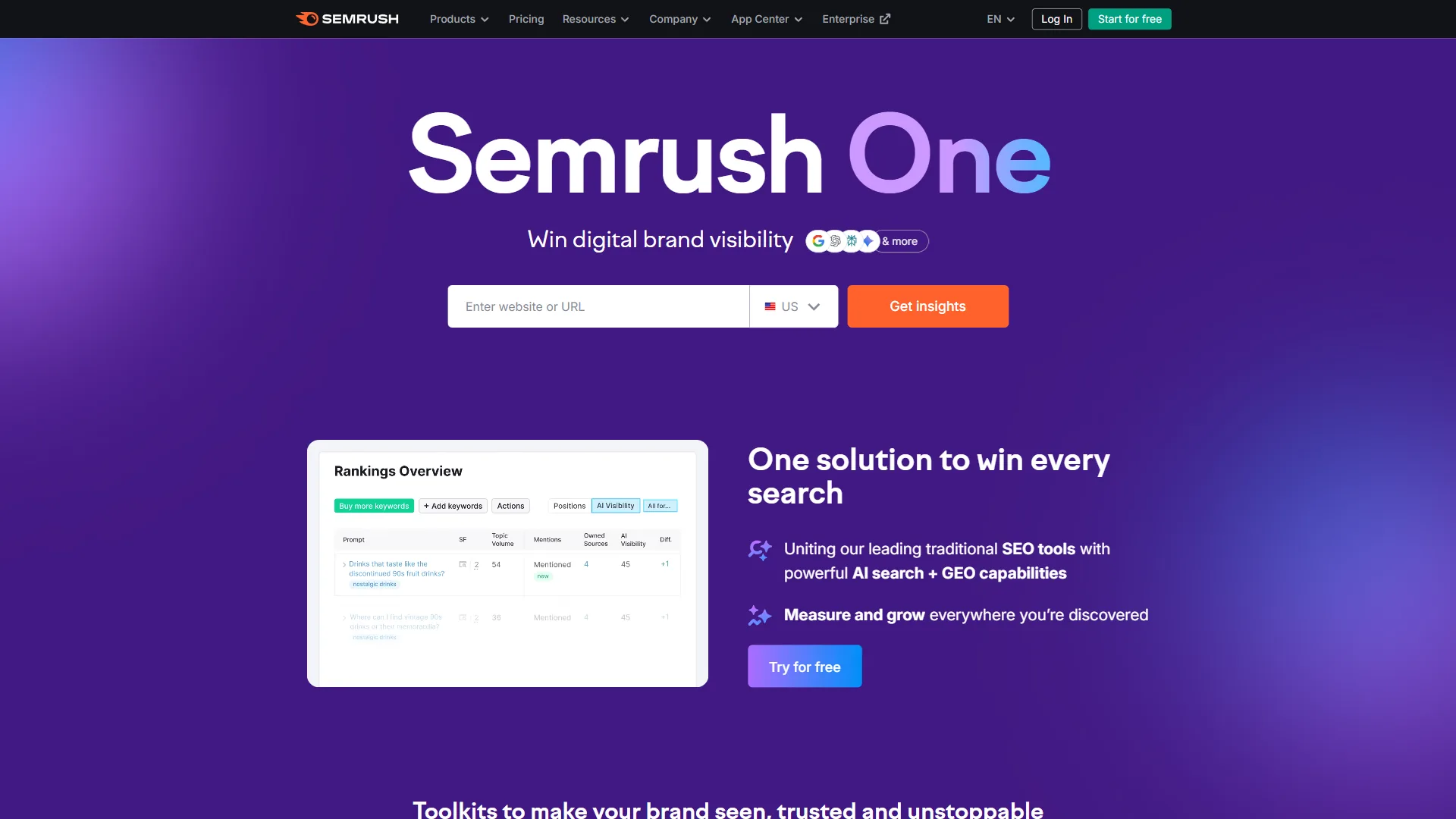
Semrush () ships a 2026 AI Visibility Toolkit that tracks how your brand appears across ChatGPT, Google AI Overviews, and Perplexity.
Semrush Copilot flags declining keywords, technical issues, and content gaps in a prioritized feed - roughly 2-3 hours saved per week on routine auditing. The Content Toolkit generates SEO-optimized drafts from real SERP data, cutting content creation time by 40-50%. Competitive Analysis reverse-engineers any competitor’s keywords, backlinks, ad spend, and content performance.
Limitations. Dense interface, steep pricing for solo marketers. Pro at around $139.95 per month is a serious commitment; useful features like historical data require Guru at around $249.95 per month. Teams focused purely on technical SEO may find Ahrefs more efficient.
Best for. Marketing teams and agencies relying on organic search as a primary channel.
Pricing. Free (10 queries/day) - Pro $139.95/mo (5 projects, 500 keywords) - Guru $249.95/mo (15 projects, 1,500 keywords, Content Toolkit) - Business $499.95/mo (40 projects, 5,000 keywords, API).
2. HubSpot - Best for Marketing Automation and CRM
HubSpot is the strongest all-in-one platform among AI marketing tools in 2026, consolidating CRM, email automation, landing pages, and analytics powered by Breeze AI.
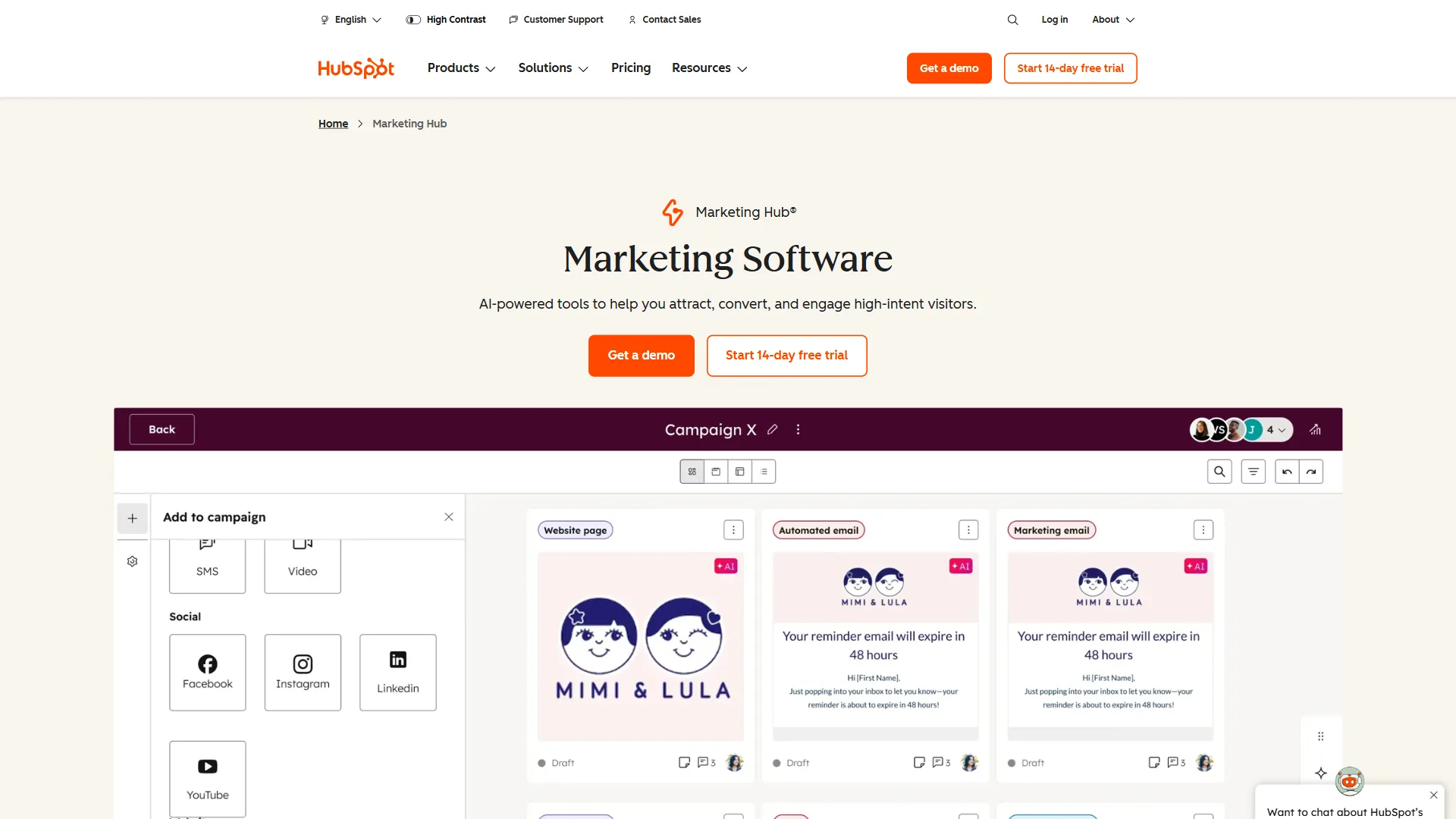
HubSpot () has evolved from inbound tool into full-stack platform for marketers who want to avoid stitching five subscriptions together.
Breeze AI Suite is HubSpot’s 2026 AI layer - a Prospecting Agent that engages leads automatically, a Customer Agent for 24/7 support, a Data Agent that enriches contact records. Predictive Lead Scoring ranks leads by conversion likelihood, trained on your actual deal history. The Free CRM remains one of the best entry points in marketing tech.
Limitations. The pricing jump from Starter (around $20 per month) to Professional (around $890 per month) is jarring. Advanced reporting often requires a certified specialist. B2C and high-volume e-commerce teams often find Klaviyo or Salesforce better fits.
Best for. Growing teams wanting a single platform for CRM, email, automation, and analytics, particularly B2B inbound programs.
Pricing. Free CRM - Starter $20/mo (1,000 contacts, email, ad management) - Professional $890/mo (2,000 contacts, full automation, A/B testing) - Enterprise $3,600/mo (predictive lead scoring, custom objects).
3. Jasper - Best for AI Content Creation at Scale
Jasper is the best AI tool for marketing teams that need brand-consistent content at volume, with brand voice controls and campaign workflows generic chatbots lack.
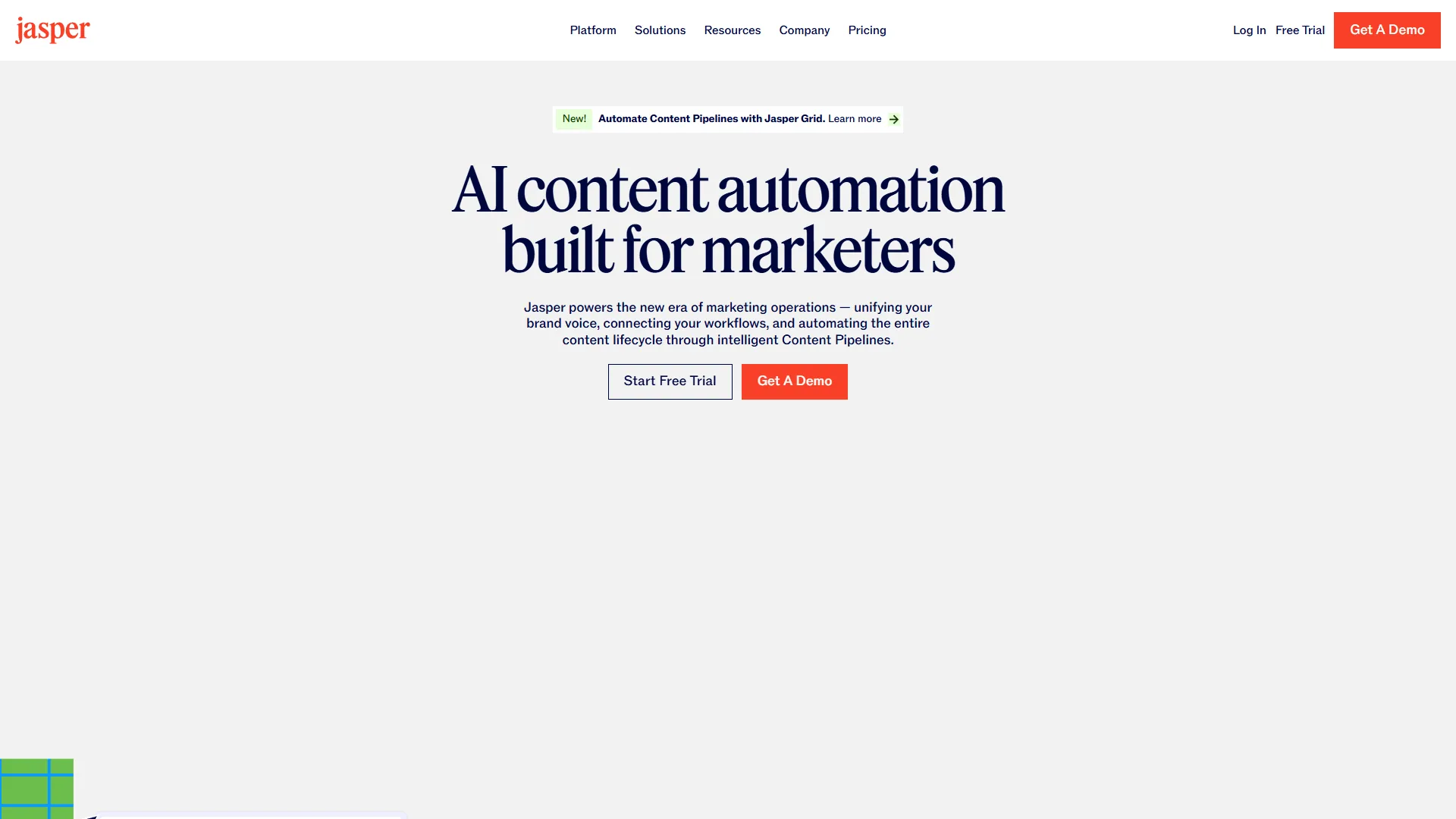
Jasper () is purpose-built for marketing teams. While ChatGPT can write marketing copy, Jasper adds brand voice, campaign workflows, and collaboration that matter at volume.
Brand Voice (Jasper IQ) learns your tone, terminology, and style, then applies them to every piece of generated content. Marketing Agents autonomously plan campaigns, generate multi-channel content, and run SEO audits. Jasper Canvas is a 2026 multi-agent workspace where teams collaborate on content with AI in real time.
Limitations. Jasper requires investment in setup - budget 2-4 hours for brand voice configuration. Creator (around $49 per month) works for solo marketers; teams need Pro (around $69 per month). Solo creatives wanting a general-purpose AI find ChatGPT or Claude more flexible at the same price.
Best for. Marketing teams producing 10+ content pieces per week who need brand consistency. Agencies managing multiple client voices benefit most.
Pricing. Creator $49/mo (1 brand voice, 1 user, SEO mode) - Pro $69/mo (3 brand voices, 5 users, Jasper Art, collaboration) - Business custom (unlimited voices, marketing agents, API, SSO).
4. Hootsuite - Best for Social Media Management
Hootsuite is the strongest enterprise option for AI tools used in marketing across social channels, combining scheduling, analytics, and real-time social data through OwlyGPT.
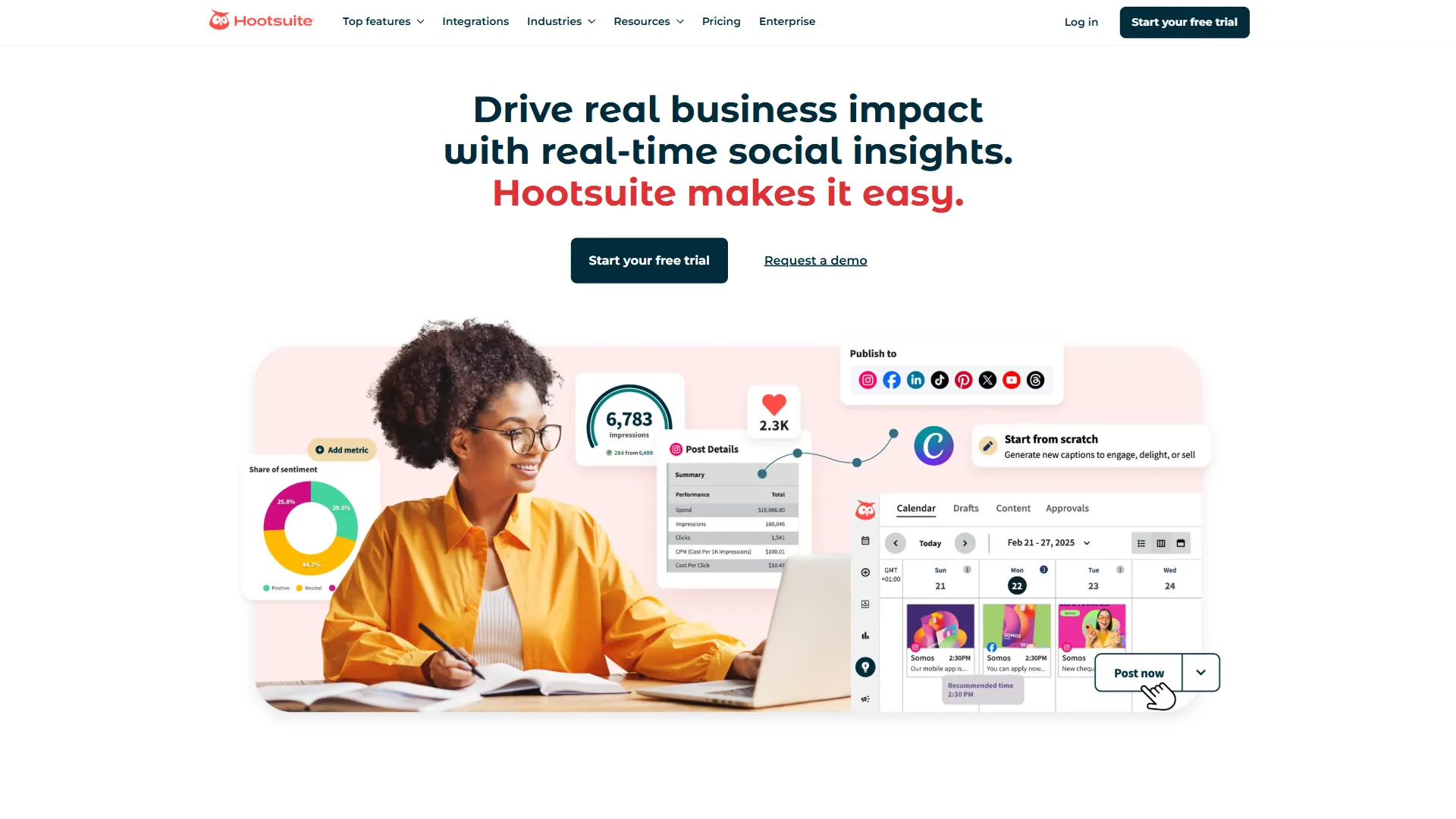
Hootsuite () has managed social media for over a decade, and its AI features now go well beyond basic scheduling.
OwlyGPT is powered by real-time social data - fundamentally different from plugging ChatGPT into a scheduler. It analyzes trending topics, competitor activity, and audience engagement. OwlyWriter AI generates captions, hashtags, and campaign ideas with brand voice personalization. Social Listening and Analytics track brand mentions, sentiment, and competitor activity via the Blue Silk AI engine.
Limitations. The free plan was removed. Professional at around $99 per month is reasonable for businesses but steep for solo marketers - light users should look at Buffer or Later instead. The dashboard feels cluttered when managing more than 10 profiles.
Best for. Teams managing 5+ social profiles who need scheduling, analytics, and social listening in one dashboard.
Pricing. Professional $99/mo billed annually (1 user, 10 accounts, OwlyWriter AI) - Team $249/mo (3 users, 20 accounts, approval workflows) - Enterprise custom (unlimited users, 50+ accounts).
5. Mailchimp - Best for Email Marketing with AI Optimization
Mailchimp is the most accessible email platform among free AI tools for marketing, pairing a genuine free tier with Intuit Assist AI for copy, send-time, and segmentation.
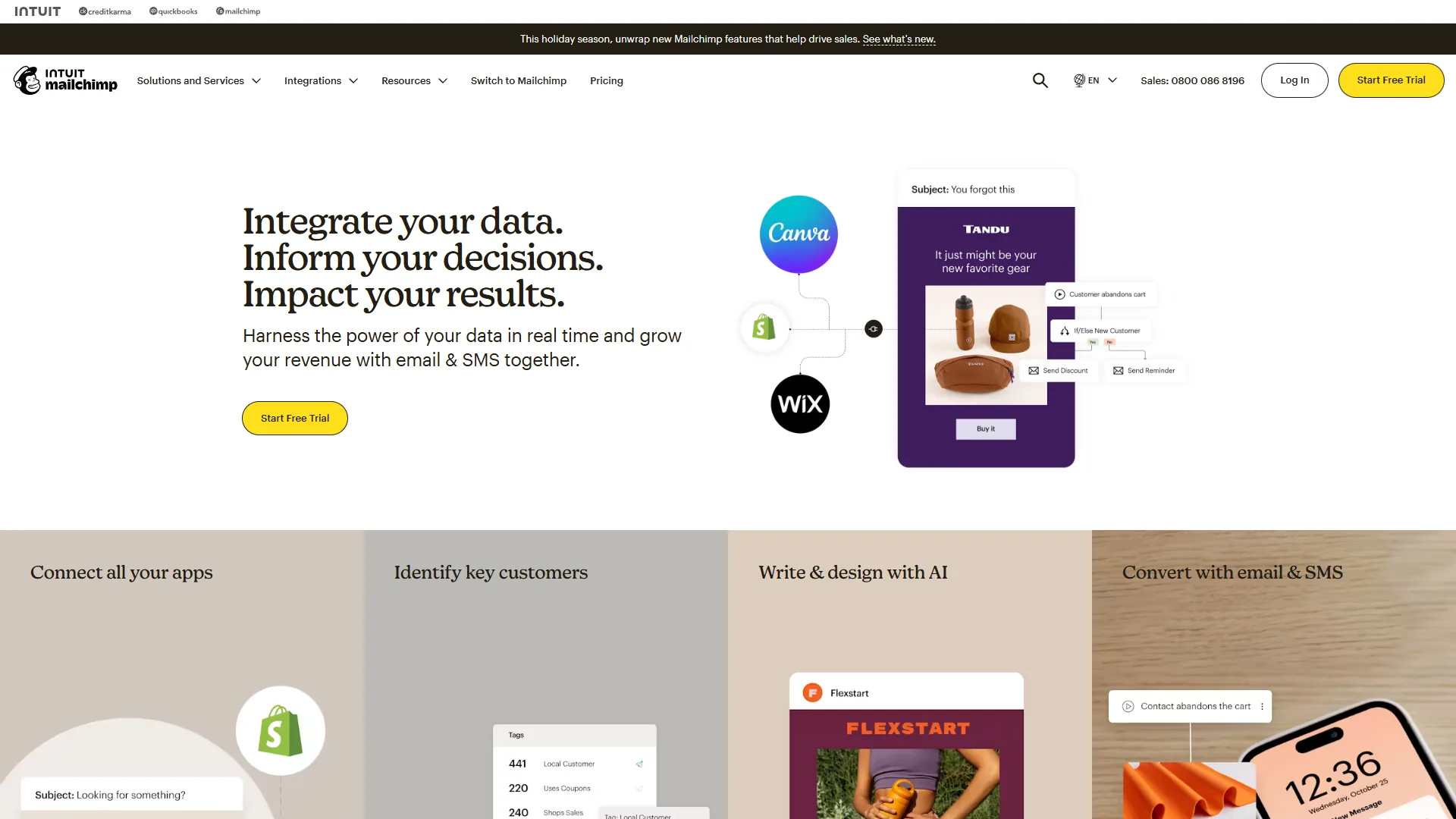
Mailchimp () powers email marketing for millions of businesses, and Intuit Assist AI has transformed it into a smart marketing automation platform.
Intuit Assist generates email copy, subject lines, and entire campaign flows. Send Time Optimization schedules delivery when each subscriber is most likely to engage. According to Litmus research on email engagement, personalized send-time optimization can improve open rates by 20% or more compared to batch sending. Predictive Segmentation groups contacts by purchase likelihood, engagement, and churn risk - feeding Customer Journey Builder flows.
Limitations. Free tier caps at 500 contacts and 1,000 monthly sends. AI features require Standard (around $20 per month) - the Essentials plan at around $13 per month skips most AI capability. Heavy e-commerce senders should evaluate Klaviyo, ActiveCampaign, or Customer.io instead.
Best for. Small to mid-sized businesses wanting AI-powered email optimization without enterprise complexity.
Pricing. Free (500 contacts, 1,000 sends) - Essentials $13/mo (50K contacts, A/B testing) - Standard $20/mo (100K contacts, Intuit Assist AI, send time optimization) - Premium $350/mo (250K contacts, multivariate testing).
6. Grammarly - Best Writing Assistant for Marketing Copy
Grammarly is the best AI writing assistant for marketers in 2026 because it works inside the apps marketing teams already write in, enforcing tone and clarity across email, docs, and social.
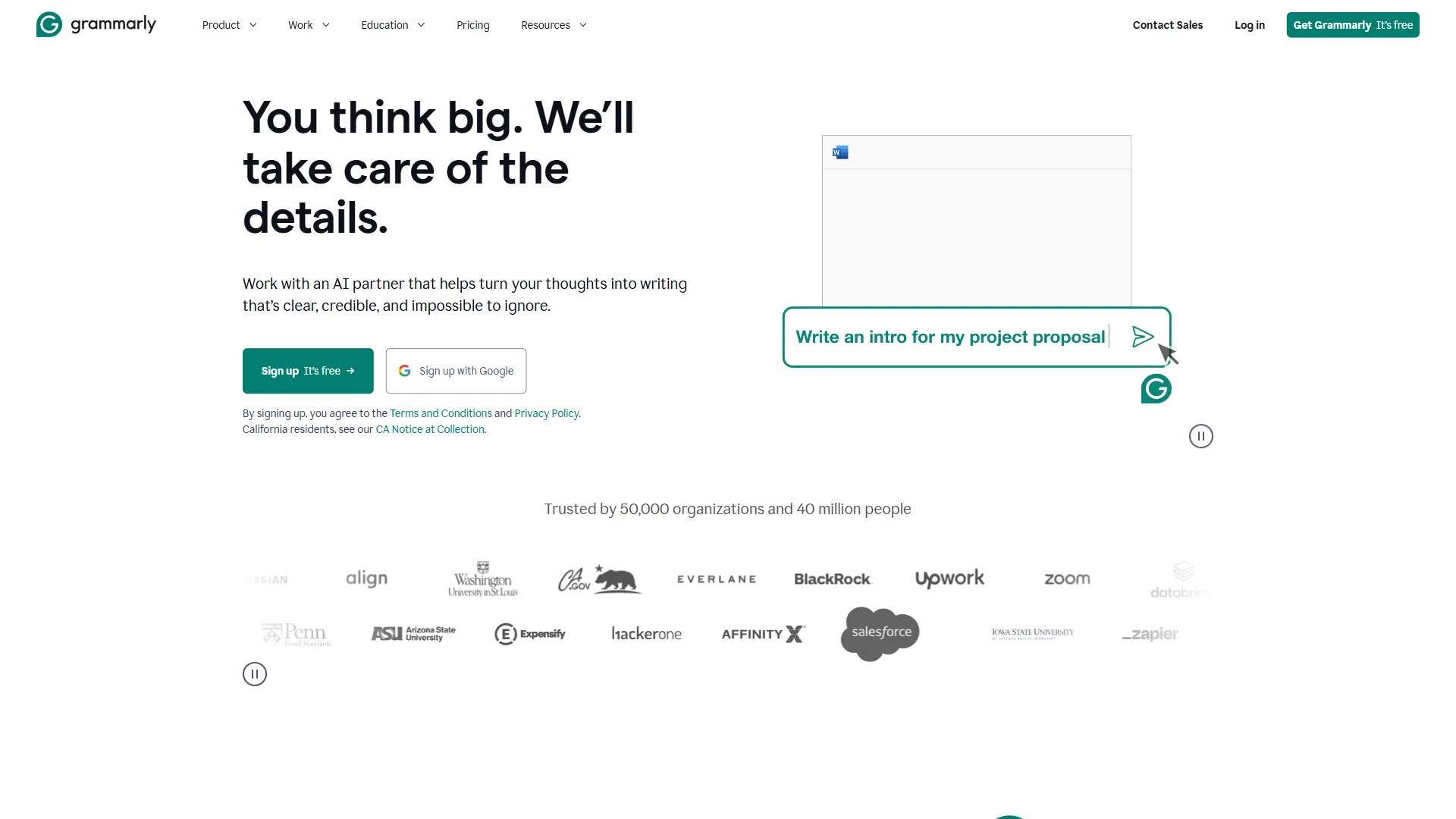
Grammarly () goes far beyond spell-check, catching errors, improving clarity, and enforcing brand tone wherever marketers write.
AI Writing Prompts generate drafts, rephrase paragraphs, and adjust tone inside Gmail, Google Docs, LinkedIn, Slack, and 500,000+ apps via the browser extension. Brand Tone and Style Guides (Pro tier) define terminology, formality, and banned phrases, then enforce them across teams. Plagiarism Detection scans content against billions of web pages.
Limitations. Free tier caps AI prompts at 100 per month. Pro at around $12 per month (billed annually) is strong value, but monthly billing at around $30 is steep. Highly technical, legal, or domain-specific writers find over-correction of jargon a real drawback.
Best for. Marketers writing across multiple platforms daily who need consistent quality without slowing down.
Pricing. Free (basic grammar, 100 AI prompts/month) - Pro $12/mo billed annually (1,000 AI prompts/month, plagiarism detection, brand tone) - Enterprise custom (2,000+ prompts, SSO).
7. Canva - Best for Visual Content and Design
Canva is the default design tool among AI marketing tools in 2026 for marketers who are not graphic designers, with Magic Studio turning text prompts into images, presentations, and resized layouts in seconds.
Canva () has become the default design tool for marketers - and increasingly for those who already are designers.
Magic Studio is Canva’s AI powerhouse. Magic Design generates templates from a text description, Magic Media creates images and videos from prompts (now powered by Veo 3), and Magic Write handles copy with brand voice awareness. Magic Resize instantly adapts a single design for Instagram, LinkedIn, Facebook, Twitter, Pinterest, and email. Brand Kit stores logos, colors, fonts, and templates with element locking for multi-creator teams.
Limitations. Free tier caps Magic Write at 25 uses. Pixel-perfect print, advanced typography, and vector illustration still require Figma or Adobe Illustrator. Magic Studio has credit caps; the best collaboration features are gated to the Teams tier.
Best for. Marketing teams and solopreneurs needing professional-looking visuals without design expertise.
Pricing. Free (2M+ templates, 5GB storage, 25 Magic Write uses) - Pro $15/mo (140M+ premium assets, 1TB storage, Magic Studio 500 credits, Brand Kit) - Teams $10/user/mo (unlimited storage, shared folders).
Is Buffer the Best Budget AI Social Tool?
Buffer is the best value pick among AI tools for marketing on a budget, focused on clean scheduling and an AI assistant without enterprise complexity.
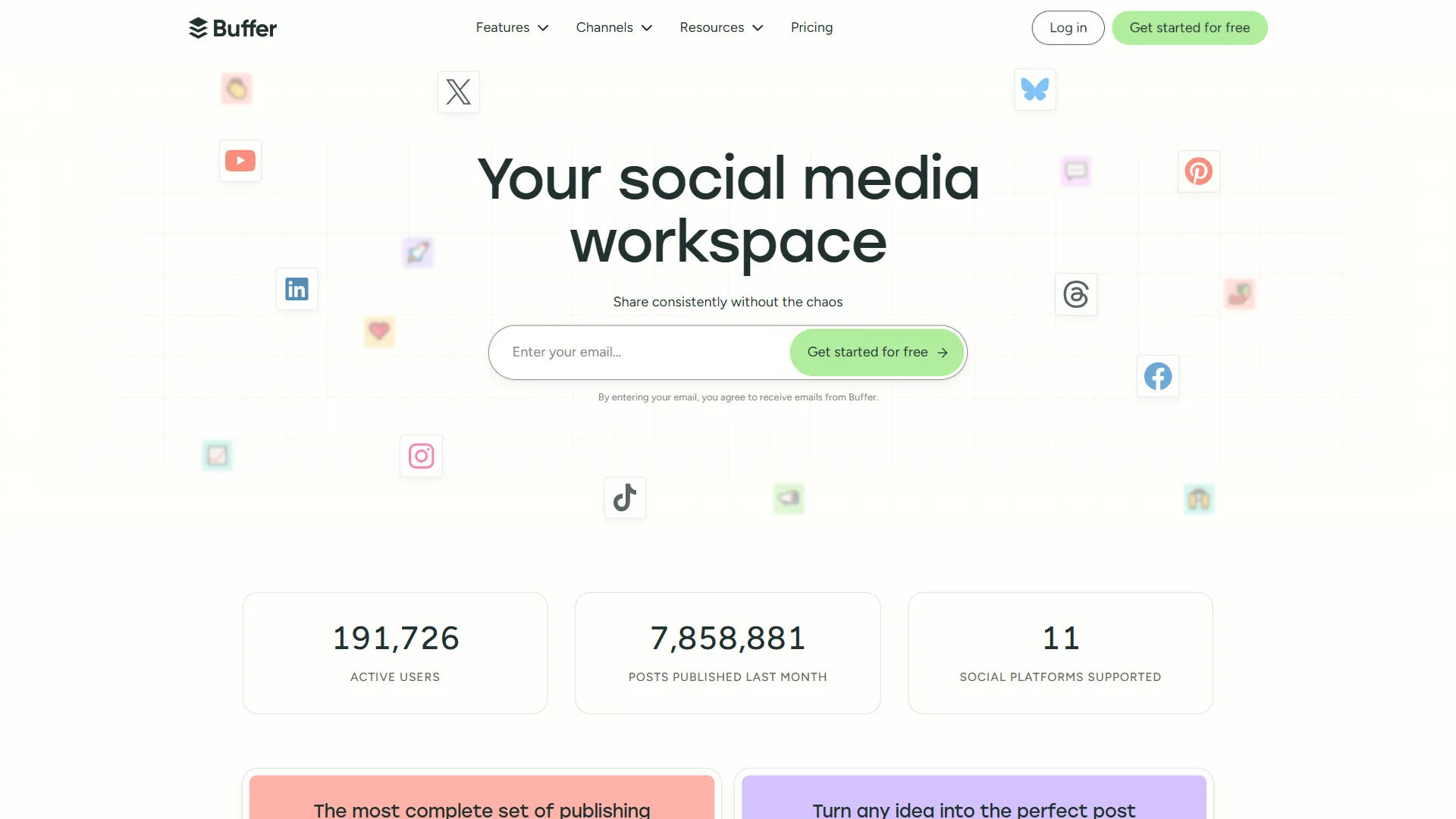
Buffer () takes the opposite approach to Hootsuite - clean scheduling and an AI assistant without enterprise complexity or pricing.
The AI Assistant (powered by GPT-4) generates post ideas, repurposes content across platforms, and suggests reply drafts. The Scheduling Interface is the cleanest in the category - drag-and-drop calendar, one-click scheduling, and a queue system that spaces posts. Per-Channel Pricing at $6/channel/month means 5 profiles cost around $30 per month total - a fraction of what Hootsuite or Sprout Social charges.
Limitations. Analytics lag Hootsuite and Sprout Social - no advanced reporting, social listening, or competitor benchmarking. The free AI assistant offers only 5 reply suggestions per week.
Best for. Solo marketers, freelancers, and small teams needing reliable scheduling without enterprise pricing.
Pricing. Free (3 channels, 10 posts each, AI Assistant) - Essentials $6/channel/mo (unlimited posts, unlimited AI suggestions) - Team $12/channel/mo (unlimited team members, approval workflows).
How Do the Top AI Marketing Tools Compare?
The table below summarizes the eight best AI marketing tools in 2026 with starting price, AI highlight, and editorial rating side by side.
| Tool | Category | Starting Price | AI Highlight | Rating |
|---|---|---|---|---|
| Semrush | SEO | $139.95/mo | Copilot SEO assistant | 4/5 |
| HubSpot | Automation | Free | Breeze AI agents | 4/5 |
| Jasper | Content | $49/mo | Brand voice AI | 4/5 |
| Hootsuite | Social | $99/mo | OwlyGPT real-time data | 4/5 |
| Mailchimp | Free | Intuit Assist optimization | 4/5 | |
| Grammarly | Writing | Free | Contextual tone detection | 4/5 |
| Canva | Design | Free | Magic Studio suite | 5/5 |
| Buffer | Social | Free | GPT-4 content assistant | 4/5 |
Which AI Marketing Tools Fit Your Use Case?
The best AI marketing tools for smarter workflows are not a single stack - they are 2-3 platforms picked for your primary channel.
Content-first: Semrush + Jasper + Grammarly. Total: roughly $200-270/month.
Social-focused: Hootsuite or Buffer + Canva. Total: $30-115/month.
Full-funnel: HubSpot + Mailchimp + Canva. Total: $35-930/month.
Bootstrap budget: Buffer free + Mailchimp free + Canva free + Grammarly free. Total: $0 a month - a real entry point among free AI tools for social media and email.
Start with the free tiers. Upgrade only when you hit a limit that costs more time than money.
The Bottom Line
The best AI tools for marketers in 2026 are the ones that eliminate a specific workflow bottleneck without creating new ones - not the ones with the longest feature lists.
Semrush dominates SEO. HubSpot consolidates automation. Jasper scales content with brand consistency. Hootsuite and Buffer handle social at different price points. Mailchimp makes email accessible. Grammarly catches what you miss. Canva turns non-designers into content creators.
Pick the tool that solves your biggest time drain first. Master it. Measure the impact. Then expand from there.
FAQ
The most common questions about AI tools for marketers cover free options, small-business budgets, social workflows, and how to choose - answered below.
What Are the Best Free AI Tools for Marketers?
Strong free tiers include Buffer (3 social channels + AI Assistant), Mailchimp (500 contacts, 1,000 monthly sends), Canva (2M templates + 25 Magic Write uses), and Grammarly (100 AI prompts per month). Combined, they deliver genuine functionality at zero monthly cost.
Which AI Tools for Marketers Work Best for Small Business Budgets?
Budget-conscious small businesses get the most value from Buffer at $6 per channel per month, Mailchimp Standard at $20 per month with Intuit Assist AI, and Canva Pro at $15 per month. The combination covers social, email, and visual content for roughly $65 per month total.
What Are the Best AI Tools for Social Media Marketing?
Hootsuite leads for teams managing 5 or more social profiles, using OwlyGPT and OwlyWriter AI for captions and hashtags. Buffer is the budget alternative with a GPT-4 AI assistant at $6 per channel. Canva handles visuals with Magic Resize.
How Do I Choose the Right AI Tools for Marketers?
Start by identifying your biggest time drain - SEO, content, social, or email - then pick the tool that solves that specific bottleneck. Most teams get the best results from 2-3 platforms without overlap. Master one tool before expanding.
Related Reading
These related guides expand on individual categories covered above.
- Semrush, HubSpot, Jasper, Hootsuite - Full tool reviews
- Mailchimp, Grammarly, Canva, Buffer - Full tool reviews
- Best AI SEO Tools in 2026 - SEO-specific platforms beyond Semrush
- Best AI Writing Tools in 2026 - AI content creation platforms compared
- Best Social Media Management Tools in 2026 - Scheduling and analytics breakdown
- Best Email Marketing Tools in 2026 - ActiveCampaign, Klaviyo, and more
- Best AI Design Tools in 2026 - Visual creation tools for marketers
External Resources
These third-party resources offer additional industry data, frameworks, and research underpinning the analysis above.
- Semrush: State of AI in Marketing 2026 - Industry data on AI adoption across marketing teams
- HubSpot: The AI Marketing Playbook - Practical frameworks for integrating AI into marketing workflows
- McKinsey: AI-Powered Marketing Reaches New Heights - Research on productivity gains from AI in marketing functions