


The best AI tools for event planners in 2026 are Calendly for scheduling, Notion for event databases, and Reclaim.ai for calendar protection, saving 12-17 hours per week combined. Managing multiple events simultaneously is a constant juggling act. Between vendor calls, client meetings, venue walkthroughs, and timeline coordination, event planners often spend more time on logistics than creative planning - no event planner free from a packed calendar escapes this pull. The right AI tools for event planners can transform this chaos into a streamlined workflow that saves hours every week.
Our analysis draws on current vendor pricing pages, product documentation, and independent research into how professional event planners use AI for event planning - from wedding coordinators to corporate conference managers - rather than sponsored placement. Three essential AI-powered solutions stand out for addressing the unique demands of event management, and the picks below reflect that research-based methodology. Disclosure: AI Productivity may earn a commission from links on this page; our rankings are editorially independent.
TL;DR: The Best AI Tools for Event Planners in 2026
The three best AI tools for event planners in 2026 are Calendly ($0-20/month) for vendor scheduling, Notion ($0-18/month) for event databases and client portals, and Reclaim.ai ($0-18/month) for focus time across multiple events. AI Tools for Event Planners are software platforms that automate repetitive tasks specific to event planners workflows, and many of the top AI tools for event planners free tiers cover real production work. The top picks in 2026 include Calendly, Notion, Reclaim.ai. Each tool targets different parts of the daily workload, from client communication to document processing and analysis.
For vendor and client scheduling: Calendly ($0-20/month) - Eliminates scheduling back-and-forth with clients and vendors
For event planning databases: Notion ($0-18/month) - AI-powered workspace for checklists, vendor tracking, and client management
For calendar optimization: Reclaim.ai ($0-18/month) - Smart scheduling that protects your time across multiple events
Why You Need These Tools
Event planning has five challenges generic productivity apps struggle to address: multi-event coordination across overlapping timelines, vendor relationship management for dozens of suppliers and contracts, client communication without constant emails, focus-time protection when everyone needs “just five minutes,” and checklist complexity spanning hundreds of tasks per event.
According to the Events Industry Council, professional event planners manage an average of 8-12 concurrent projects, each with unique timelines and stakeholders. The tools in this guide offer practical artificial intelligence in events examples for AI for event planning, showing how AI specifically addresses these multi-event management challenges.
1. Calendly: Automate Client and Vendor Scheduling
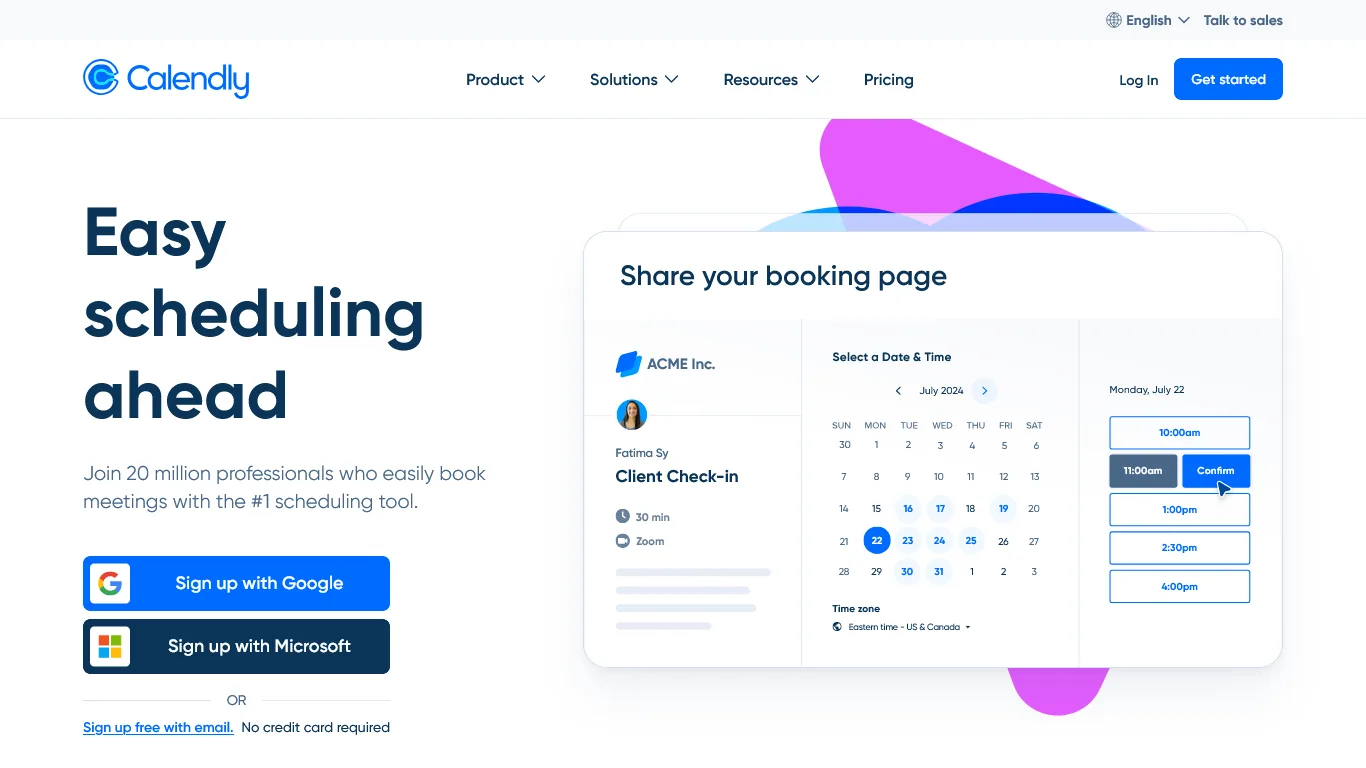
Calendly automates client and vendor scheduling for event planners by letting attendees self-book from your live availability, eliminating 5-8 hours per week of email coordination. The endless email chains trying to coordinate meetings with caterers, florists, photographers, and clients drain hours from every week. “Can you meet Tuesday at 2?” “Sorry, I have a site visit. How about Thursday?” This inefficiency multiplies when you are coordinating across multiple events.
Why Calendly Works for Event Planners
Eliminate Scheduling Friction
Event planners report spending 5-8 hours weekly on scheduling before Calendly; with automated booking, that drops to under 30 minutes - $300-600 of recovered productive time every week at a $75/hour billing rate.
Multiple Event Types for Different Stakeholders
Create dedicated booking pages with their own durations, buffer times, and availability windows for client consultations (60-90 minutes), vendor meetings (30 minutes), venue walkthroughs (2 hours with travel buffer), day-of coordination calls (15 minutes), and post-event reviews (45 minutes).
Smart Buffer Time Management
Calendly auto-adds buffer time before and after appointments - 30-minute buffers for venue visits, 15 minutes between office meetings - so travel between venues, vendor locations, and client meetings stays realistic.
Payment Collection for Consultations
For planners who charge for initial consultations, Calendly integrates with Stripe and PayPal, so clients pay at booking and commitment is built in.
Group Event Scheduling
When you need to coordinate a meeting with the couple, their parents, and the venue coordinator, Calendly’s group scheduling finds times that work for everyone - without the endless email thread. According to Meeting Professionals International, an industry trade body, “scheduling coordination is among the top time drains for event professionals across the meetings industry.”
Calendly Pricing for Event Planners
| Plan | Monthly Cost | Best For |
|---|---|---|
| Free | $0 | Testing with basic scheduling needs |
| Standard | $12/month | Solo event planners |
| Teams | $20/month | Planning companies with multiple coordinators |
Recommendation: The Standard plan is ideal for most independent event planners; unlimited event types let you create specialized booking pages for every client and vendor scenario.
Real Impact: The Numbers
Calendly delivers three measurable wins for event planners: 5-8 hours per week of scheduling time recovered, a 50% no-show reduction from automated reminders, and a more professional client booking experience. At typical event-planner rates, reclaimed scheduling time represents $1,200-2,400 per month in productivity value.
Limitations and who it’s not for: Calendly is not ideal for planners who need full event registration, ticketing, or attendee management - it handles 1:1 and small-group scheduling, not large guest lists. Skip Calendly if your business depends on collecting deposits at booking; native payment routing is limited compared with dedicated event-registration tools, round-robin routing is locked behind the Teams plan, and free-tier customization is limited.
2. Notion: Your Event Command Center
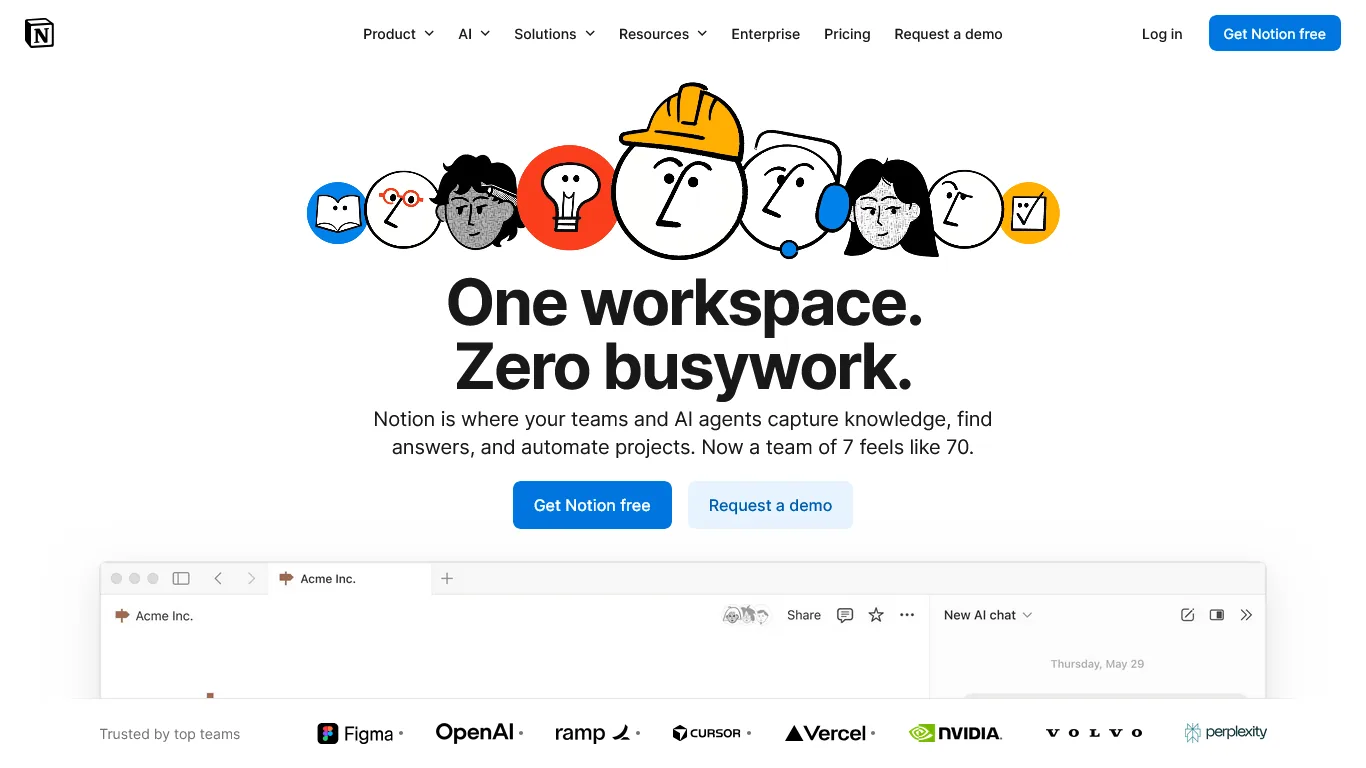
Event planning requires tracking hundreds of details across multiple projects. Venue contacts, vendor contracts, guest counts, dietary restrictions, timeline items, budget line items - the list never ends. Notion transforms this complexity into organized, searchable, AI-enhanced databases.
Why Notion is Essential for Event Planners
Event Databases That Scale
Create four interconnected databases - an Events Master List (status, dates, budget, client), a Vendor Directory (suppliers, contacts, pricing, quality ratings), Task Timelines that auto-adjust to event dates, and Client Portal pages where clients track progress. The power comes from relationships between them: link vendors to events, tasks to milestones, and reference client preferences anywhere.
AI-Powered Event Planning
Notion’s AI handles four high-leverage workflows: cross-event Q&A (“What vendors have we used for outdoor weddings under $50K?”), content generation (vendor RFPs, client updates, social posts), summarization of long vendor proposals into decision points, and preliminary timeline drafts from event parameters.
Template Library for Common Events
Master templates for weddings, corporate conferences, private parties, and nonprofit galas mean each new event starts with proven checklists and timelines, so nothing falls through the cracks.
Client Collaboration Without Email Overload
Share specific Notion pages with clients so they can see progress, comment, and approve choices without endless email threads, while permissions keep your internal notes private.
Event Planning Database Structure
A proven Notion structure for event planning uses three linked databases: an Events database (name, date, venue, client, budget, theme, timeline template), a Vendors database (company, category, pricing tier, quality rating, events used for), and a Tasks database (task, status, due date relative to event, assignee, dependencies). Each row in one database links back to the others, so a single vendor record surfaces every event that has used it.
Notion Pricing for Event Planners
| Plan | Monthly Cost | Best For |
|---|---|---|
| Free | $0 | Testing core features |
| Plus | $12/month | Solo planners without AI |
| Business | $18/month | Full AI features recommended |
Recommendation: The Business plan unlocks full AI capabilities. For planners managing multiple complex events, the ability to query across all event data provides tremendous value.
ROI Calculation
Notion saves event planners 3-4 hours per event via templates and AI, 2 hours per week on client communication via shared pages, and 1 hour per vendor decision via historical data - 15-20 hours per month for planners running 3-4 events, or over $1,000 in productivity value from an $18 investment.
Limitations and who it’s not for: Notion is not the right tool for planners who need true offline access at venues (the offline cache is limited and most features require connectivity) or a turnkey CRM with built-in email sequences and lead scoring - you build that structure yourself. AI features sit behind the Business tier and the database setup curve frustrates planners who want plug-and-play tooling.
3. Reclaim.ai: Protect Your Time Across Multiple Events
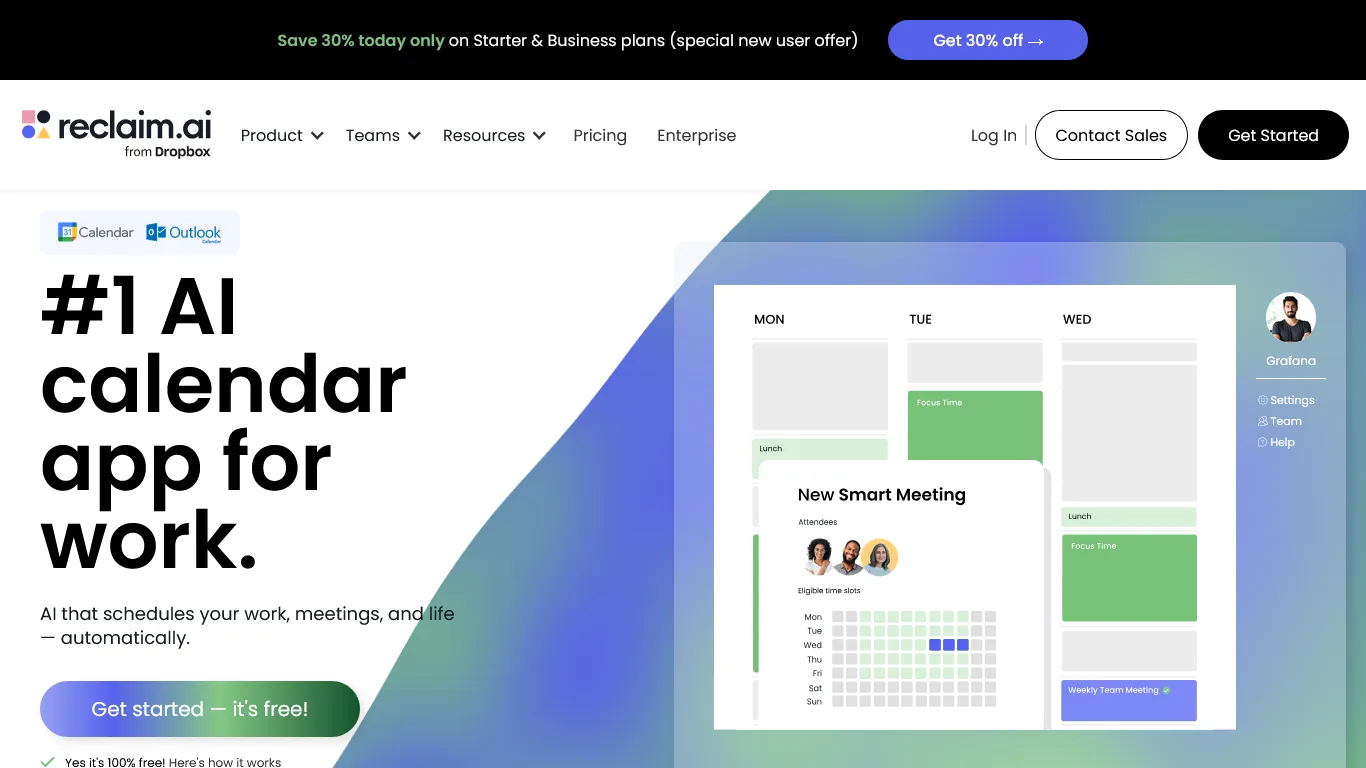
Reclaim.ai protects focus time across multiple events for event planners by auto-scheduling priority work and defending those blocks from meeting requests, recovering 10-15 hours of weekly deep work. Event planners face a unique challenge: every client, vendor, and stakeholder believes their event is the priority. Without intelligent time protection, your calendar becomes a series of back-to-back meetings with no time for actual planning work.
Why Reclaim.ai Works for Event Planners
Smart Scheduling for Multi-Event Workflows
Reclaim.ai analyzes your calendar and auto-schedules four work types - focus work on specific events, vendor follow-ups, administrative tasks, and personal breaks - learning your patterns so important work lands during peak productivity hours.
Focus Time Protection
Block dedicated time for timelines, layouts, and contract review - Reclaim.ai defends those blocks, auto-rescheduling or declining conflicts while keeping flexibility for genuine emergencies.
Task Integration
Connect Reclaim.ai to your task manager (including Notion); tasks appear on your calendar when they need attention, scheduled around meetings and commitments, eliminating forgotten follow-ups.
Buffer Time Intelligence
Reclaim.ai understands context - longer buffers before venue visits (accounting for travel), shorter buffers between video calls - adapting to your actual schedule patterns rather than manual blocking.
Burnout Prevention
Reclaim.ai tracks working hours and meeting load, flagging burnout-risk patterns and protecting personal time during heavy periods, aligning with industry research on event planner wellness that ties sustainable scheduling to lower turnover.
Reclaim.ai Pricing for Event Planners
| Plan | Monthly Cost | Best For |
|---|---|---|
| Free | $0 | Basic smart scheduling |
| Starter | $12/month | Solo planners with moderate complexity |
| Business | $18/month | Heavy meeting loads recommended |
Recommendation: Start with the free plan to experience AI scheduling. Upgrade to Starter or Business when managing multiple concurrent events with complex stakeholder calendars.
Real Impact: Protected Productivity
Before Reclaim.ai, calendars get dominated by meetings, planning slides to after hours, and forgotten tasks turn into missed deadlines. After Reclaim.ai, planners report 10-15 hours of protected focus time weekly, tasks scheduled automatically at optimal times, and clearer separation between event workstreams.
Limitations and who it’s not for: Reclaim.ai is not a good fit for planners who run their lives in Apple Calendar - native support is Google Calendar and Microsoft 365 only, with limited iCloud integration. Skip Reclaim if your team uses calendars outside that pair or needs granular per-team-member scheduling controls. Occasional event reshuffling can confuse vendors viewing your shared calendar, and AI habit-scheduling features demand a few weeks of training before they feel reliable.
Best Picks by Use Case
Here is how these three tools work together for maximum efficiency:
Weekly Workflow Integration
A weekly workflow integrating Calendly, Notion, and Reclaim.ai runs in three beats: a 30-minute Monday planning pass (review Notion event milestones, confirm Reclaim.ai focus blocks, verify Calendly vendor bookings), automated mid-week coordination (vendors self-book, focus time stays protected, clients update via shared Notion pages), and a 45-minute Friday review (update Notion databases, ask Notion AI to summarize outstanding items, let Reclaim.ai adjust next week).
Integration Points
All three tools connect through native calendar sync and Zapier: Calendly bookings appear instantly in Google/Outlook, Reclaim.ai schedules around existing commitments, and Notion tasks become Reclaim-managed calendar blocks.
Pricing Comparison
| Tool | Monthly Cost | Time Saved | Value at $75/hour |
|---|---|---|---|
| Calendly Standard | $12 | 5-8 hours/week | $1,500-2,400 |
| Notion Business | $18 | 4-5 hours/week | $1,200-1,500 |
| Reclaim.ai Starter | $12 | 3-4 hours/week | $900-1,200 |
| Total | $42/month | 12-17 hours/week | $3,600-5,100 |
The math is clear: $42 monthly investment returns $3,600+ in recovered productive time.
Selection Criteria
Our selection criteria for AI tools for event planners prioritizes three factors: free-tier viability for solo planners, calendar/database integrations with Google Workspace and Microsoft 365, and measured time savings of at least three hours per week. The seven-day rollout below mirrors how most event planners onboard these three picks in sequence.
Day 1-2: Set Up Calendly
- Create account and connect calendar
- Build event types for consultations, vendor meetings, and site visits
- Share booking link with one active vendor to test
Day 3-4: Build Notion Foundation
- Create events database with current projects
- Import or create vendor directory
- Set up one event with task checklist
Day 5-6: Activate Reclaim.ai
- Connect to calendar
- Define focus time preferences
- Add recurring tasks (weekly admin, monthly invoicing)
Day 7: Integrate and Test
- Test booking flow with a colleague
- Verify calendar sync across tools
- Refine settings based on initial experience
Pro Tips
Pro tips for AI tools for event planners focus on three power-user moves: build reusable Notion event templates, score vendors against historical data, and auto-populate client dashboards. Once comfortable with the basics, implement these power-user strategies:
Event Template System
Build reusable Notion templates per event type - a 12-month wedding timeline with 200+ tasks, a corporate conference checklist that bakes in AV and catering coordination, and a scaled private-party plan - so every new event starts populated with proven workflows.
Vendor Scoring and Selection
Track vendor performance in Notion across four dimensions (reliability rating 1-5, communication quality, price relative to quality, client feedback) so you can query: “Show me highly-rated caterers under $100 per person who are great communicators.”
Client Dashboard Automation
Templated client dashboards in Notion auto-populate with event countdown, completed milestones, upcoming decisions, and real-time budget status, so clients stay informed without constant email updates from you.
Bonus Tips
Bonus tips for AI tools for event planners answer the four questions planners ask most often about calendar privacy, Notion security, Reclaim.ai boundaries, and mobile on-site use. The quick answers below resolve each one.
Q: Can clients see my calendar availability?
With Calendly, clients see only the times you designate as available - never other appointments, personal commitments, or event details.
Q: How secure is client data in Notion?
Notion uses AES-256 encryption and is SOC 2 Type 2 certified; restrict page access and audit views for sensitive client information.
Q: Will Reclaim.ai schedule over my personal time?
Reclaim.ai respects boundaries you define - mark personal events, set working hours, and the AI schedules only within approved windows.
Q: Can I use these tools on mobile during events?
All three tools have robust mobile apps - update Notion checklists from the venue, check Calendly bookings between meetings, see your Reclaim.ai schedule anywhere.
The Bottom Line
AI tools for event planners do not replace your expertise - they amplify it. With Calendly eliminating scheduling friction, Notion organizing your event data, and Reclaim.ai protecting your productive time, you save 12-17 hours weekly on admin work, manage more events without proportional time increase, deliver a better client experience, and reduce stress from dropped balls.
The combined cost of around $42 per month pays for itself within the first few hours of reclaimed time, and all three tools offer free tiers. Stop letting logistics consume your creative energy.
FAQ
Frequently asked questions about AI tools for event planners cover the top picks, weekly time savings, free-tier options, and vendor/client workflows.
Q: What are the best AI tools for event planners in 2026?
The top AI tools for event planners in 2026 are Calendly for automating client and vendor scheduling, Notion for building AI-powered event databases and client portals, and Reclaim.ai for protecting focus time across multiple events. Each targets a different part of the daily workload, from communication to project tracking and calendar management.
Q: How much time can AI tools save event planners each week?
Using Calendly, Notion, and Reclaim.ai together saves event planners 12-17 hours per week - Calendly recovers 5-8 hours on scheduling, Notion saves 4-5 hours on planning and communication, and Reclaim.ai protects 3-4 hours of focus time, all for a combined $42 per month.
Q: Are there free AI tools for event planning?
Yes - all three recommended tools offer free tiers. Calendly’s free plan supports basic scheduling, Notion’s free plan covers core database features, and Reclaim.ai’s free plan includes smart calendar scheduling, so planners can build a functional AI-assisted workflow at no cost.
Q: How do AI tools help event planners manage vendors and clients?
Calendly eliminates scheduling back-and-forth by letting vendors and clients self-book from your available times, while Notion provides a shared workspace where clients view progress and approve decisions without email threads - and its AI answers questions like which vendors have served specific event types.
Related Reads
Related reads on AI tools for event planners deepen the picks above with full reviews of each tool plus adjacent guides on AI scheduling assistants and AI calendar tools. Tradeoffs: Each pick above has limitations - explore more AI productivity tools and guides to find the right fit for your workflow:
- Calendly - In-depth review, pricing, and ROI analysis
- Notion - In-depth review, pricing, and ROI analysis
- Reclaim.ai - In-depth review, pricing, and ROI analysis
- AI Scheduling Assistants: Complete Guide for 2026
- Best AI Calendar Tools for 2026
- AI Tools for Solopreneurs: The Ultimate 2026 Stack
External Resources
External resources for AI tools for event planners come from two industry bodies that publish standards and continuing education for event professionals. For industry guidance and professional development:
- Events Industry Council - Standards and certifications for event professionals
- International Live Events Association - Community and resources for live event planners