




Semrush vs Ahrefs is a comparison of two leading SEO platforms that serve different workflows. Semrush covers SEO, PPC, social media, and content marketing in one dashboard with a 26 billion keyword database. Ahrefs focuses purely on SEO with the largest backlink index - over 35 trillion links - and lower entry pricing.
The semrush vs ahrefs debate has defined the SEO industry for over a decade, and the gap between the two platforms has narrowed in some areas while widening in others heading into 2026. Semrush has doubled down on being an all-in-one marketing suite with PPC, social media, and AI visibility tracking, while Ahrefs has stayed laser-focused on SEO and built the largest backlink index on the planet.
The “right” answer depends entirely on what you need beyond organic search, including how lower-cost alternatives like Semrush vs Ubersuggest compare. This guide walks through every major feature so you can decide with confidence.
Quick Verdict
Semrush wins for all-in-one marketing teams, while Ahrefs wins for SEO specialists who need the deepest backlink data at a lower entry price.
| Factor | Semrush | Ahrefs |
|---|---|---|
| Rating | ||
| Cheapest Paid Plan | $139.95/mo (Pro) | $29/mo (Starter) |
| Comparable Tier | $139.95/mo (Pro) | $129/mo (Lite) |
| Keyword Database | 26B+ keywords | Largest database |
| Backlink Index | Large | 35T+ links (largest) |
| Keyword Research | 5/5 | 5/5 |
| Backlink Analysis | 4/5 | 5/5 |
| Site Audit | 5/5 | 4/5 |
| PPC Tools | 5/5 | N/A (SEO only) |
| Content Tools | 4/5 | 4/5 |
| AI Features | 4/5 (Copilot, AI Visibility) | 4/5 (Brand Radar, AI Content Helper) |
| Best For | Marketing agencies | SEO specialists |
What Is Semrush?
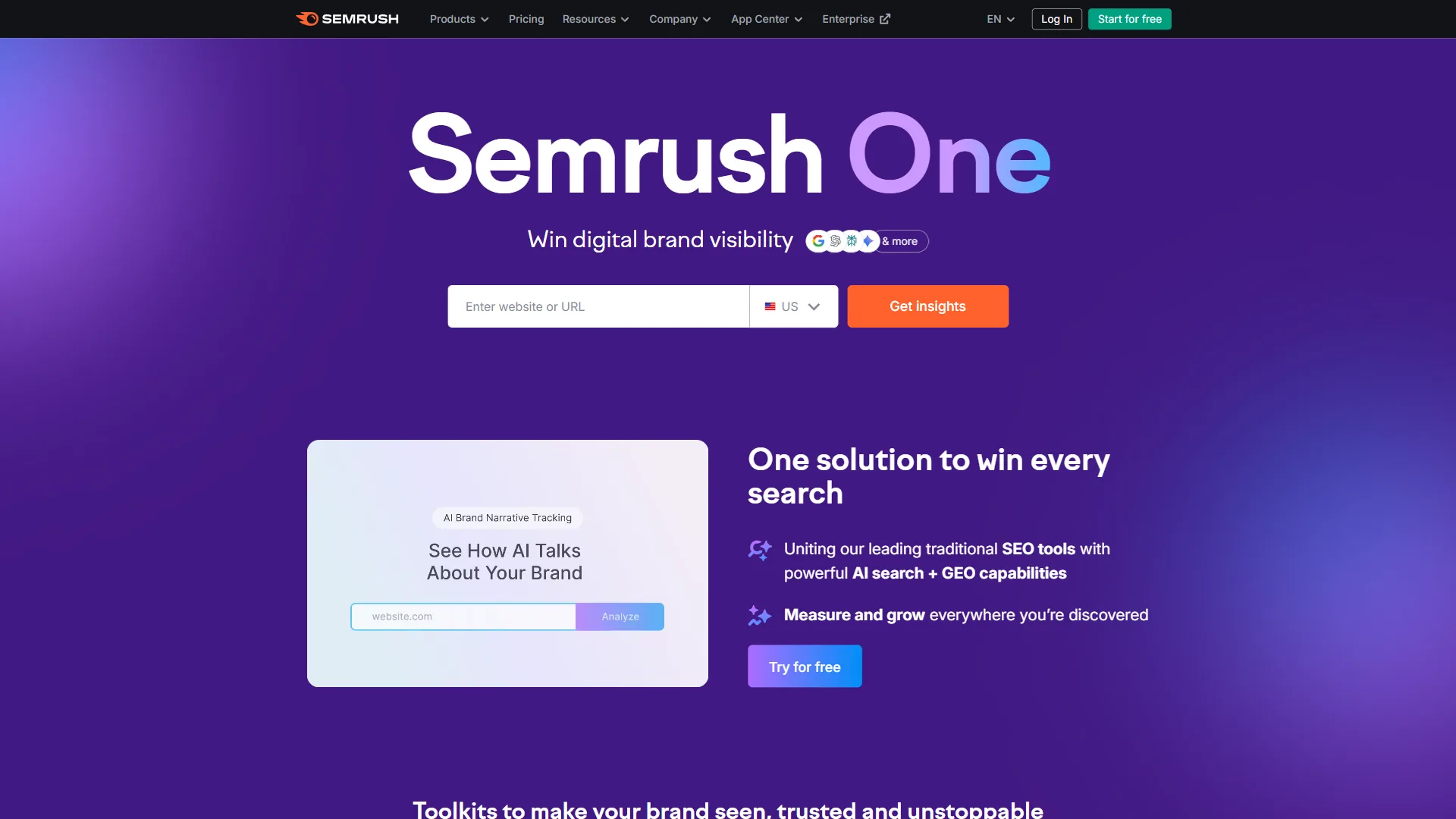
Semrush is an all-in-one digital marketing platform that combines SEO, PPC, social media, and content marketing inside a single dashboard. Semrush launched in 2008 and has grown to serve over 10 million marketers worldwide.
The platform’s keyword database tops 26 billion keywords, and its site audit tool runs 140+ technical checks. In 2026, Semrush added the AI Visibility Toolkit that tracks how your brand appears across ChatGPT, Google AI Overviews, Perplexity, and Gemini - a feature that reflects how much search has changed, particularly as SparkToro’s research on zero-click searches shows growing traffic diversification away from traditional search.
Semrush Pricing (February 2026)
| Plan | Monthly | Annual (per month) | Projects | Tracked Keywords |
|---|---|---|---|---|
| Free | $0 | $0 | 1 | 10 requests/day |
| Pro | $139.95 | $117.33 | 5 | 500 |
| Guru | $249.95 | $208.33 | 15 | 1,500 |
| Business | $499.95 | $416.66 | 40 | 5,000 |
| Enterprise | Custom | Custom | Custom | Custom |
Semrush offers a 14-day free trial on paid plans. The Guru tier unlocks historical data and the Content Toolkit (formerly ContentShake AI), while Business adds API access and Share of Voice metrics.
Semrush Strengths
-
All-in-one marketing suite - SEO, PPC, social scheduling, content marketing, and competitive intelligence in one platform, replacing three or four standalone tools.
-
Keyword Magic Tool - The flagship keyword research feature groups semantically related terms and adds intent classifications, useful for mapping content clusters.
-
Position tracking - Daily rank monitoring with local-level granularity, plus mobile vs. desktop split and SERP feature tracking.
-
AI Copilot - Semrush’s AI assistant surfaces actionable recommendations across projects, flagging technical issues, keyword opportunities, and content decay.
Semrush Weaknesses
- Price of entry - At $139.95 per month for Pro, Semrush is one of the most expensive starting points in SEO tooling. There is a free tier, but it limits you to 10 requests per day.
- Feature overload - The sheer breadth of the platform means new users can feel overwhelmed. Many features are buried in submenus, and it takes weeks to learn where everything lives.
- Plan-gated features - Historical data, content tools, and white-label reports require Guru ($249.95 per month) or higher. The add-on AI Visibility Toolkit costs another $99 per month.
What Is Ahrefs?
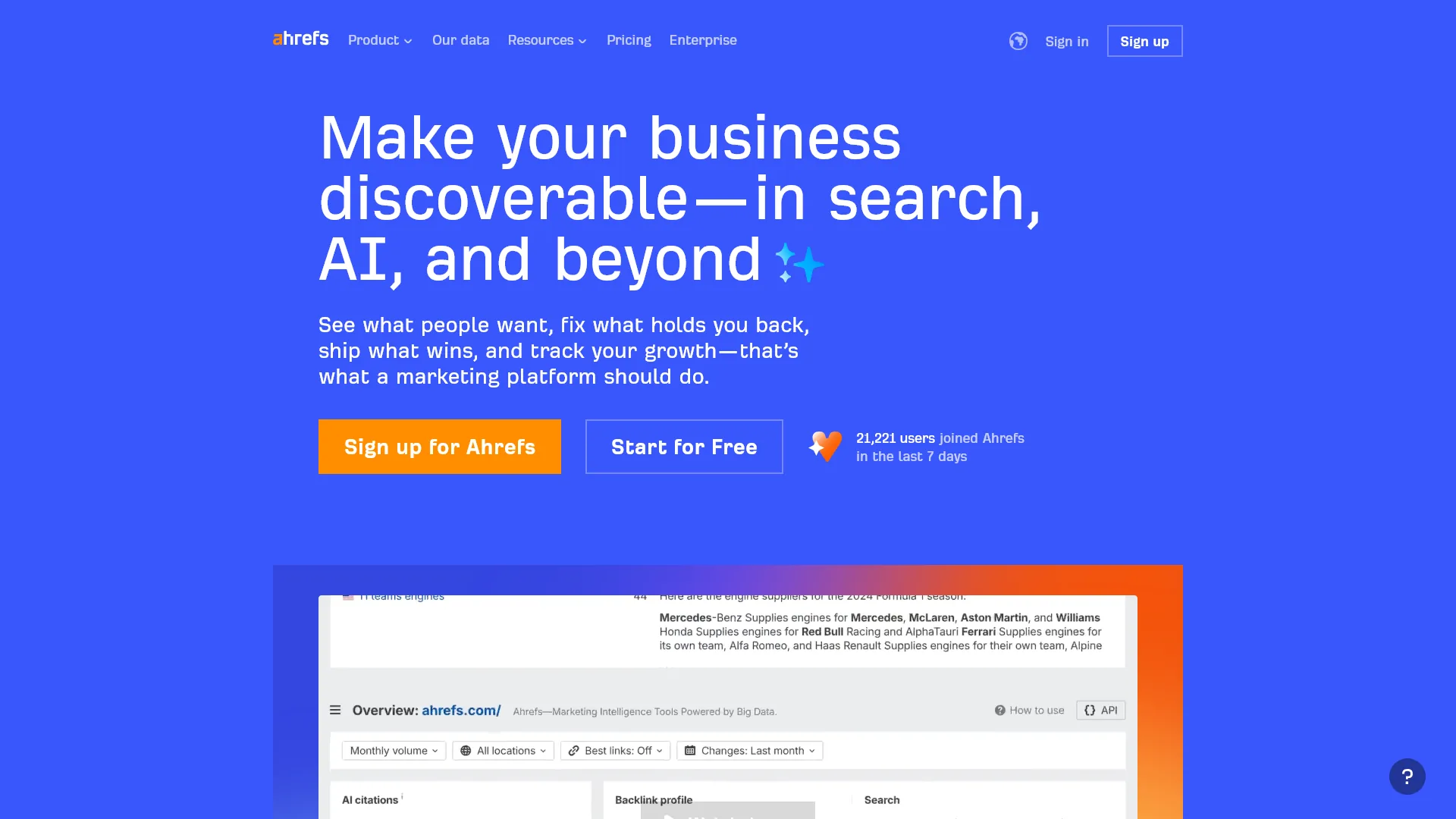
Ahrefs is a specialist SEO platform built around the industry’s largest backlink index, with a crawler that refreshes every 15 minutes and indexes 35 trillion+ external links. Ahrefs started as a backlink analysis tool and now serves 44% of S&P 500 companies.
Where Semrush went wide, Ahrefs went deep. There are no PPC tools or social media scheduling features. Instead, every feature is designed for organic search - keyword research, backlink analysis, content exploration, site auditing, and rank tracking. In 2026, Ahrefs added Brand Radar to track brand visibility across AI chatbots and AI Content Helper for on-page optimization.
Ahrefs Pricing (February 2026)
| Plan | Monthly | Annual (per month) | Projects | Credits |
|---|---|---|---|---|
| Webmaster Tools | $0 | $0 | Verified sites | Limited |
| Starter | $29 | $29 | 2 | 100/mo |
| Lite | $129 | $108 | 5 | 500/user |
| Standard | $249 | $208 | 20 | Unlimited |
| Advanced | $449 | $374 | 50 | Unlimited |
Ahrefs Webmaster Tools gives verified site owners free access to Site Audit and Site Explorer for their own domains. The Starter plan at $29 per month is a low-risk entry point, though the 100-credit monthly cap limits serious research.
Ahrefs Strengths
-
Backlink index - With 35 trillion+ links crawled, Ahrefs consistently uncovers 15-25% more referring domains than Semrush on the same queries.
-
Intuitive interface - Site Explorer, Keywords Explorer, Content Explorer, and Site Audit are the four pillars, with everything branching logically from there.
-
Content Explorer - Search billions of pages by topic and filter by traffic, referring domains, or publish date to surface content gaps competitors are ranking for.
-
Brand Radar - The 2026 addition tracks brand mentions across ChatGPT, Perplexity, Google AI Overviews, and Gemini.
Ahrefs Weaknesses
- No PPC or social media tools - If your team manages paid advertising alongside SEO, you will need a separate platform.
- Credit-based system on lower plans - Starter and Lite plans use credits for reports. Heavy researchers can burn through their monthly allocation quickly.
- Steeper learning curve for beginners - While the UI is clean, the sheer volume of data can intimidate SEO newcomers.
Feature-by-Feature: Keyword Research
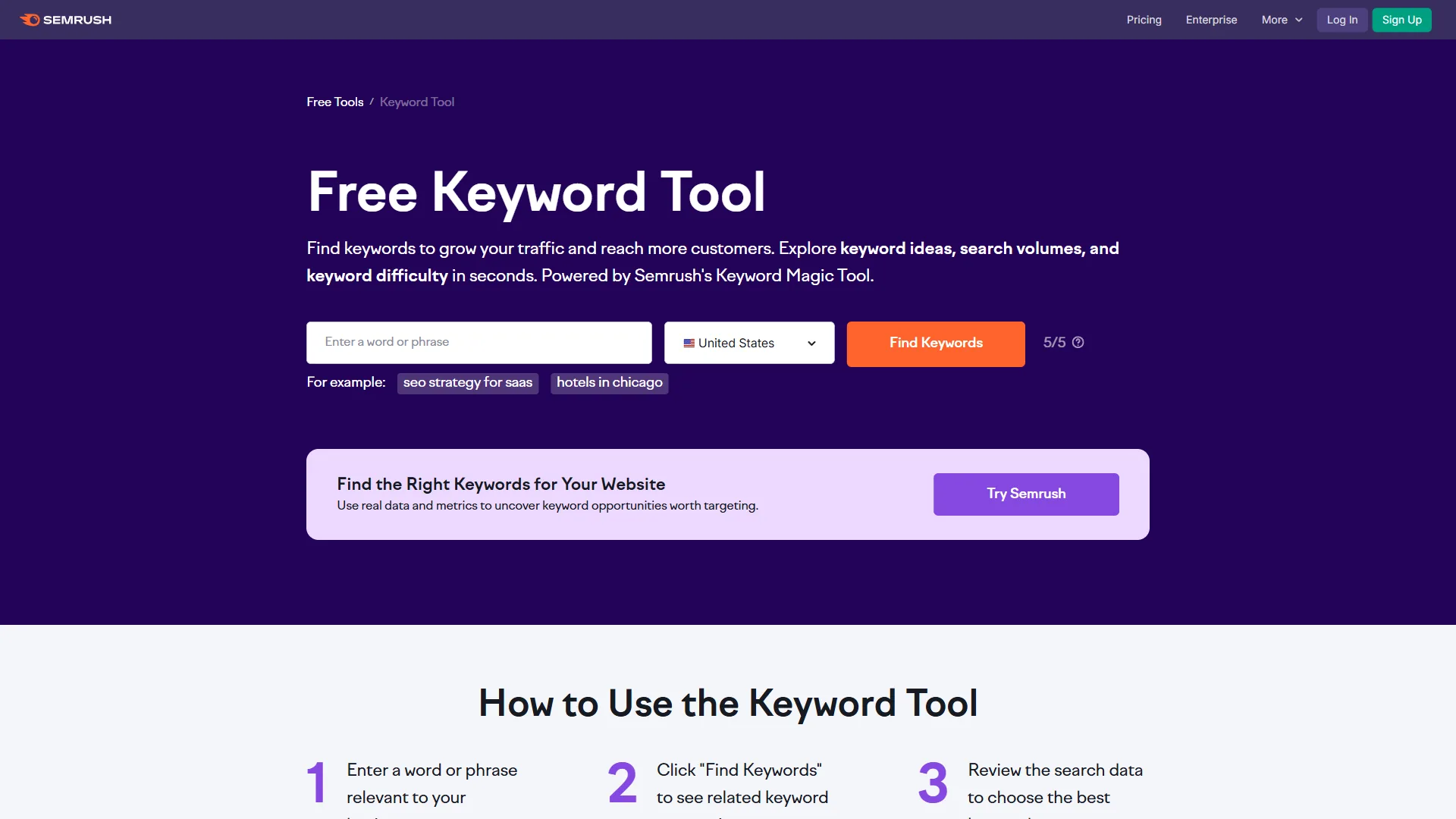
Both platforms deliver excellent keyword research, but they take different approaches.
Semrush’s Keyword Magic Tool groups keywords into topical clusters automatically. You search a seed keyword and get back thousands of variations organized by subtopic, with search volume, keyword difficulty, intent classification, and SERP features. The intent data - informational, navigational, commercial, or transactional - is a standout feature that Semrush pioneered.
Ahrefs Keywords Explorer takes a more data-dense approach. You get search volume, keyword difficulty (calculated from actual backlink data), clicks data (including zero-click searches), and the parent topic feature that shows which broader keyword a piece of content should target. The clicks metric is unique to Ahrefs and helps you avoid keywords with high volume but low actual click-through.
Verdict: Semrush wins for content planning teams that need intent classification and topical clustering. Ahrefs wins for SEO specialists who want click-level accuracy and backlink-correlated difficulty scores. For pricing context, see our Semrush pricing breakdown.
Feature-by-Feature: Backlink Analysis
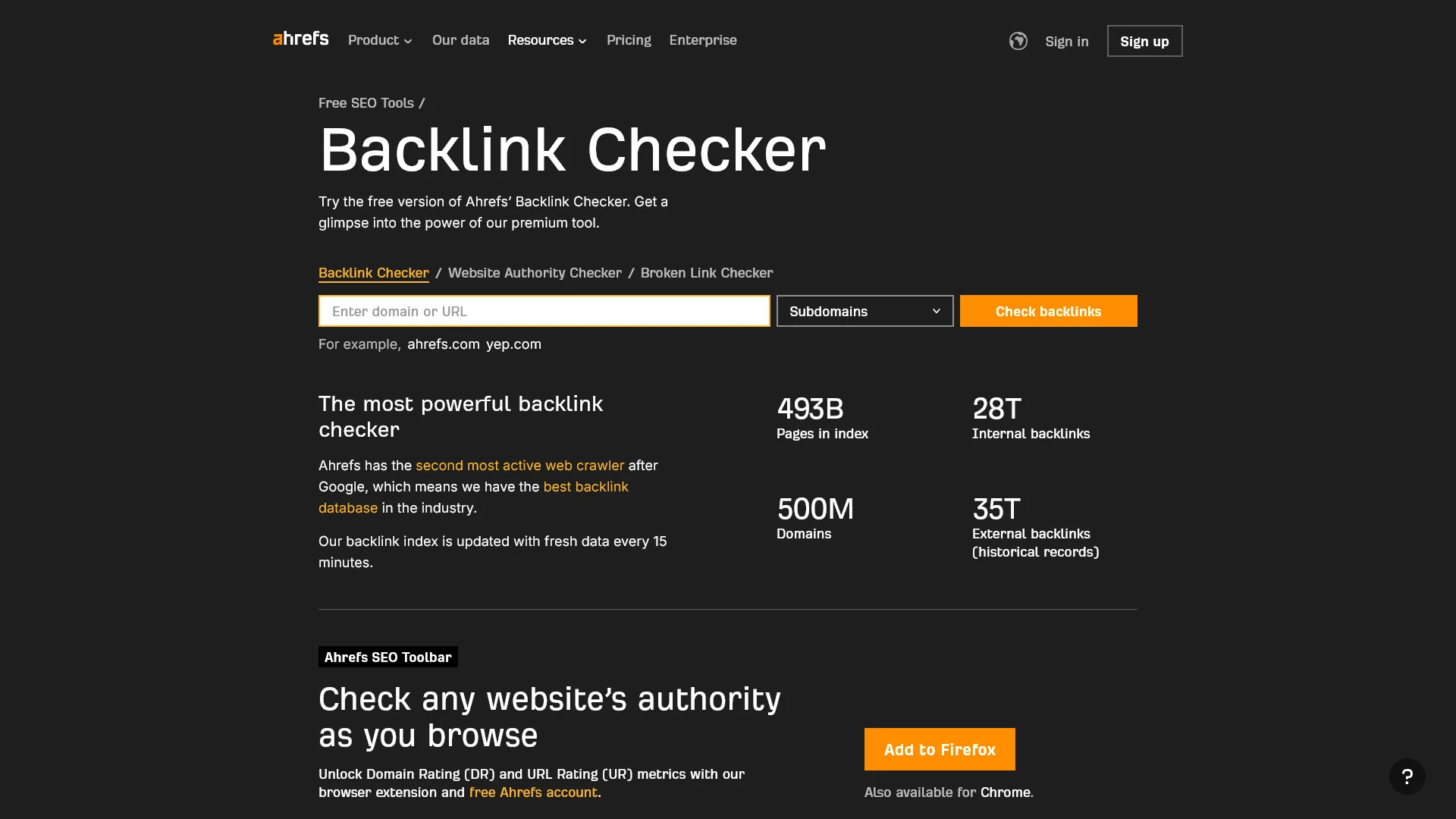
Ahrefs wins backlink analysis on raw scale, while Semrush wins on toxic-link cleanup workflow tied to Google Search Console. The semrush vs ahrefs gap is widest here: Ahrefs maintains 35 trillion+ external links with a crawler that refreshes every 15 minutes, and across benchmark comparisons it consistently finds more referring domains, faster.
According to Patrick Stox, Product Advisor at Ahrefs, “The thing you want to look at for any tool that crawls the web is the freshness of the data and the size of the index.” Both metrics favor Ahrefs in third-party comparisons of crawl recency and index depth.
Semrush’s backlink database is solid and has grown significantly in recent years, but it still trails Ahrefs in raw discovery. Where Semrush adds value is the Backlink Audit tool, which integrates directly with Google Search Console to help you identify and disavow toxic links - a workflow Ahrefs does not automate as cleanly.
Verdict: Ahrefs wins for link building, competitor backlink research, and raw link discovery. Semrush wins if toxic link cleanup and Google Search Console integration matter to your workflow.
Feature-by-Feature: Site Audit
Both platforms offer comprehensive site auditing. Semrush runs 140+ technical checks and assigns a site health score. Ahrefs takes a similar approach with its own audit tool that checks for broken links, redirect chains, thin content, and crawlability issues.
In practice, Semrush’s audit is slightly more actionable because it groups issues by priority and provides fix instructions inline. Ahrefs surfaces the same issues but requires a bit more manual interpretation.
Verdict: Slight edge to Semrush for the guided fix recommendations and integration with its On-Page SEO Checker.
Feature-by-Feature: AI Features in 2026
Both platforms have embraced AI search tracking as organic search fragments across traditional and AI-powered engines.
Semrush AI Visibility Toolkit ($99 per month add-on) tracks brand mentions across ChatGPT, Google AI Overviews, Perplexity, and Gemini. The AI Copilot assistant proactively surfaces optimization opportunities. Content Toolkit uses AI to generate and optimize articles.
Ahrefs Brand Radar (included in Standard and above) monitors brand visibility across AI chatbots. AI Content Helper provides on-page content suggestions. AI Keyword Translations cover 40+ languages on Advanced plans. AI References tracks when AI engines cite your content.
Verdict: Comparable AI feature sets, but Semrush charges an extra $99 per month for AI Visibility while Ahrefs includes Brand Radar starting at the $249 Standard tier.
Feature-by-Feature: Beyond SEO
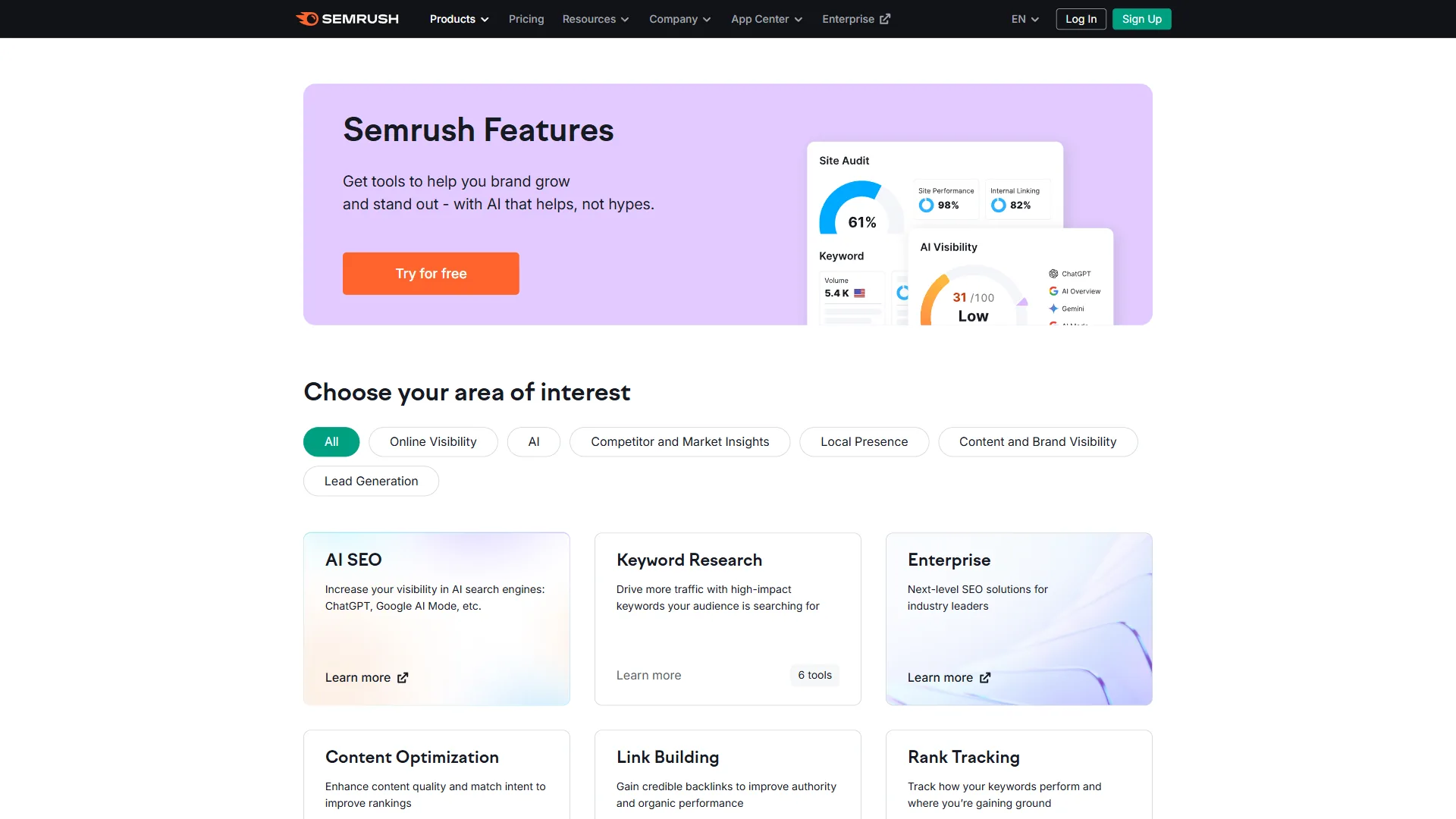
Semrush is the clear winner beyond SEO, bundling PPC research, social scheduling, content marketing, and competitive intelligence into one subscription. The platform includes:
- PPC Research - Analyze competitor ad spend, keywords, and copy. Plan Google Ads campaigns with keyword-level CPC data.
- Social Media Toolkit - Schedule posts, track engagement, and benchmark against competitors across major platforms.
- Content Marketing Platform - Topic research, SEO Writing Assistant, and the Content Toolkit for AI-assisted article creation.
- Competitive Intelligence - Traffic analytics, market explorer, and gap analysis across organic, paid, and display channels.
Ahrefs offers none of these. If SEO is your only channel, that is fine. But for marketing teams managing multiple channels from one budget, Semrush consolidates tools you would otherwise pay for separately.
Verdict: Semrush wins by default - Ahrefs does not compete in PPC, social media, or paid advertising.
Pricing Breakdown: What You Actually Pay
Ahrefs starts at $29 per month for Starter while Semrush starts at $139.95 per month for Pro, a nearly 5x gap at the entry tier that narrows to parity around the $129-$140 comparable tier. The semrush vs ahrefs pricing comparison deserves a closer look because the entry points are very different.
Budget entry: Ahrefs Starter at $29 per month is dramatically cheaper than Semrush Pro at $139.95 per month. However, the Starter plan’s 100-credit limit makes it suitable only for light research or personal projects.
Comparable tiers: Ahrefs Lite at $129 per month lines up against Semrush Pro at $139.95 per month. At this level, you get broadly similar SEO capabilities - five projects, keyword tracking, site audit, and backlink analysis. Semrush includes PPC and social tools at no extra cost.
Mid-range: Ahrefs Standard ($249 per month) and Semrush Guru ($249.95 per month) are nearly identical in price. Guru adds historical data and content tools. Standard gives you unlimited credits and Brand Radar.
Enterprise: Both offer custom enterprise plans. Ahrefs publishes a $1,499/month Enterprise tier while Semrush requires a conversation with sales.
For teams that need only SEO tools, Ahrefs often delivers better value per dollar. For teams that also manage PPC, social media, or content marketing, Semrush’s all-in-one approach can replace two or three separate subscriptions. Compare both against budget alternatives in our SE Ranking vs Ahrefs vs Moz guide.
Choose Semrush if
Semrush is the right choice when a team needs SEO plus PPC, social, and content tooling consolidated under one subscription.
Semrush is the better choice for:
- Marketing agencies managing SEO, PPC, and social media across multiple clients
- In-house marketing teams that need one platform for all digital channels
- Content marketers who want AI-assisted writing and topic research built in
- Teams that value competitive intelligence across paid and organic search
- Businesses willing to invest $140+/month for a comprehensive marketing suite
Choose Ahrefs if
Ahrefs is the right choice when organic search is the primary channel and backlink depth, content discovery, or a $29 entry tier matter most.
Ahrefs is the better choice for:
- SEO specialists and link builders who need the deepest backlink data available
- Content strategists using Content Explorer to find ranking opportunities
- Independent bloggers and site owners who want a lower entry point ($29 per month)
- Teams that prefer a focused SEO tool over a broad marketing platform
- Organizations tracking brand visibility across AI search engines in 2026
The Bottom Line: Semrush vs Ahrefs
The semrush vs ahrefs decision is not about which platform is “better” - it is about which matches how you work. Both are industry-leading SEO tools with excellent keyword research, site auditing, and rank tracking.
Choose Semrush if your team handles SEO alongside PPC, social media, or content marketing. The all-in-one approach saves money and context-switching when you manage multiple channels. The AI Copilot and Content Toolkit add genuine value for content-heavy workflows.
Choose Ahrefs if organic search is your primary focus and you want the best backlink data in the industry. The cleaner interface, Content Explorer, and lower Starter tier make it a strong pick for SEO specialists and independent site owners.
Recommendation: test Semrush’s 14-day trial and Ahrefs’ Webmaster Tools on your own domains. Whichever surfaces insights you want to act on immediately is the right tool for your workflow.
Methodology: this comparison draws on current vendor pricing pages, official product documentation, and independent industry research rather than sponsored placement. Disclosure: AI Productivity may earn a commission from links on this page; our rankings remain editorially independent.
FAQ
Q: Why is Ahrefs better than Semrush?
Ahrefs is better than Semrush for pure SEO work because it has the largest backlink index (35 trillion+ links), a cleaner interface, and a much lower $29 entry tier. Ahrefs is not better for teams that also need PPC, social media, or content-marketing tooling - that work goes to Semrush.
Q: How does Semrush pricing compare to Ahrefs pricing?
Ahrefs starts at $29 per month versus Semrush’s $139.95 per month at the entry tier. At comparable mid-range tiers, Ahrefs Lite ($129) and Semrush Pro ($139.95) are near parity, and Ahrefs Standard and Semrush Guru both sit around $249 per month.
Q: Do Semrush and Ahrefs both track AI search visibility in 2026?
Yes, both track AI search visibility in 2026. Semrush sells an AI Visibility Toolkit ($99 per month add-on) covering ChatGPT, Google AI Overviews, Perplexity, and Gemini. Ahrefs includes Brand Radar from the $249 Standard tier and adds AI References to monitor when engines cite your content.
Related Reading
Related guides expand on the tools and SEO workflows in this comparison.
Tools covered in this article:
- Semrush - All-in-one digital marketing platform
- Ahrefs - SEO platform with the largest backlink index
More SEO and marketing guides:
- Best AI SEO Tools 2026 - Top SEO tools compared
- Clearscope Review - Content optimization platform
- Grammarly Review - AI writing assistant for marketers
- Best AI Tools for Marketers - Top marketing tools including Semrush for SEO workflows
- Best SEO Tools for Content Optimization - Broader comparison of SEO platforms
External Resources
External resources link to vendor documentation and independent industry coverage referenced in this comparison.
- Semrush Blog - SEO insights, product updates, and marketing guides
- Ahrefs Blog - SEO tutorials, case studies, and data research
- Ahrefs’ Own Comparison - Ahrefs’ take on the head-to-head matchup