



HubSpot pricing in 2026 costs $0 for the free CRM, around $15 per month for the Starter Customer Platform, around $890 per month for Professional Marketing Hub, and around $3,600 per month for Enterprise Marketing Hub before onboarding fees. The hub-based structure makes HubSpot harder to compare than most SaaS platforms because each hub is priced as a separate product.
The real challenge with HubSpot pricing is not the sticker price - it is the layered costs that compound as you grow: mandatory onboarding fees from $1,500 to $7,000, contact-tier overages on Marketing Hub, per-seat charges beyond included core seats, and Breeze AI intelligence credits that deplete faster than expected. This guide breaks down every plan, maps out the hidden costs, and identifies which tier fits your budget and team size. Our analysis draws on HubSpot’s current vendor pricing documentation and independent research rather than sponsored placement, and AI Productivity may earn a commission from links on this page - our rankings stay editorially independent.
Quick Verdict: HubSpot Pricing Overview
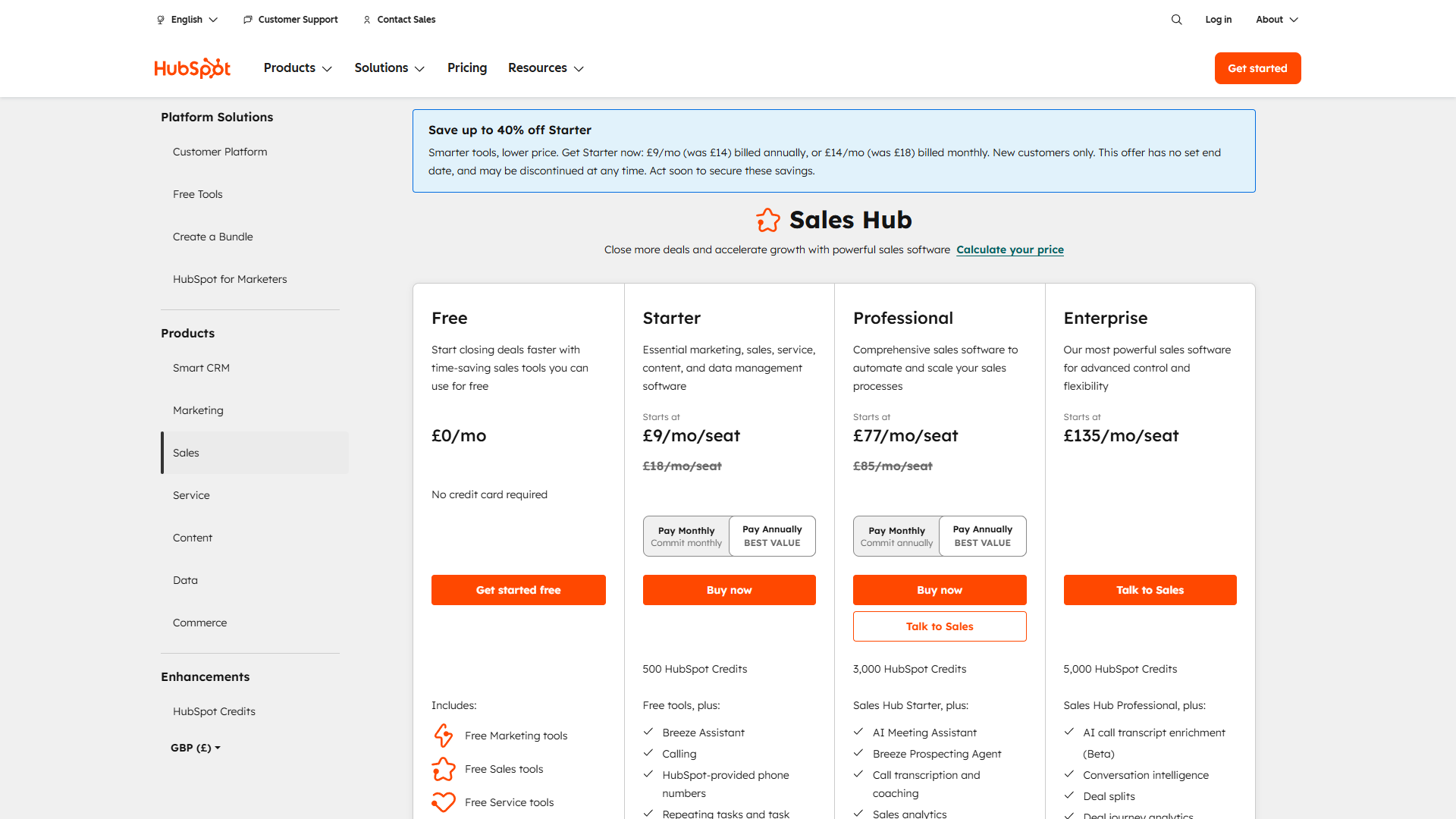
HubSpot pricing in 2026 starts at around $15 per month for paid plans across the Starter, Professional, and Enterprise tiers. Use this guide as a HubSpot pricing calculator substitute - the right plan depends on team size, feature needs, and how heavily you use premium capabilities. This HubSpot pricing plans comparison covers every tier with guidance on which delivers the best value.
Here is every HubSpot plan side by side as of March 2026:
| Plan | Monthly Price | Annual Price (per mo) | Contacts Included | Core Seats | Onboarding Fee |
|---|---|---|---|---|---|
| Free Tools | $0 | $0 | Unlimited (CRM) | 5 free | $0 |
| Starter Customer Platform | $15 | $9 | 1,000 marketing | 2 paid | $0 |
| Professional Marketing Hub | $890 | $801 | 2,000 marketing | 3 | $3,000 |
| Professional Sales Hub | $500 | $450 | N/A | 3 | $1,500 |
| Professional Service Hub | $500 | $450 | N/A | 3 | $1,125 |
| Enterprise Marketing Hub | $3,600 | $3,240 | 10,000 marketing | 5 | $7,000 |
| Enterprise Sales Hub | $1,500 | $1,350 | N/A | 5 | $3,500 |
| Enterprise Service Hub | $1,500 | $1,350 | N/A | 5 | $3,500 |
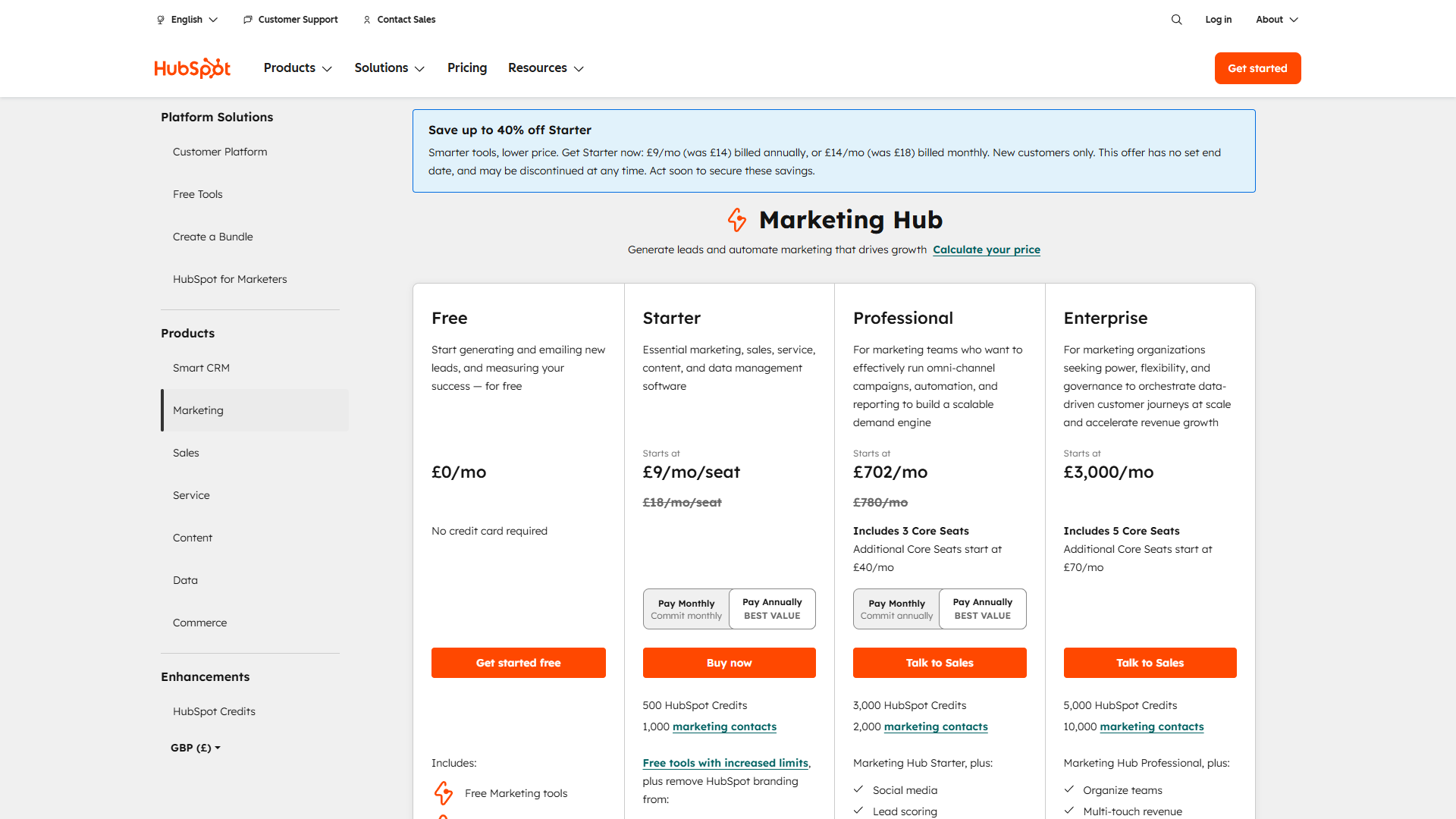
The gap between HubSpot Starter pricing (around $15 per month) and Professional (around $890 per month for marketing) is the biggest pricing cliff in HubSpot’s lineup. Understanding what you gain at each tier - and what hidden costs come with it - determines whether HubSpot delivers value or drains your budget.
HubSpot Free Tools: What You Actually Get
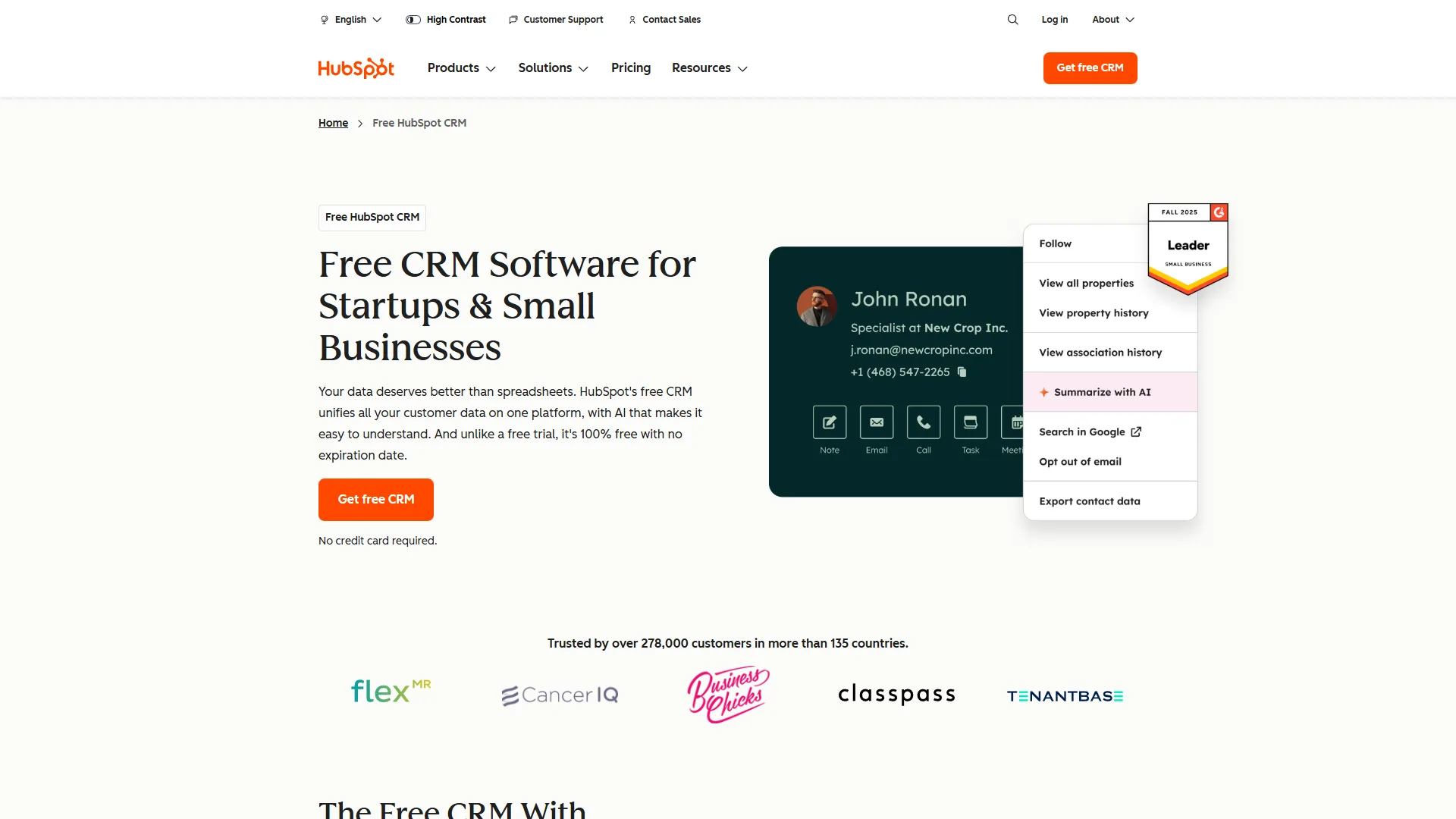
HubSpot’s free CRM is one of the more generous free tiers in the CRM market, and it handles Email Marketing basics too. Unlike competitors that gate basic contact management behind a paywall, HubSpot gives you a functional CRM with real capabilities at $0.
What is included:
- Contact management - Store unlimited contacts in the CRM with company records, deals, and tickets
- 5 free core seats - Up to five users with unlimited view-only seats for broader team access
- 2,000 emails per month - Bulk email with HubSpot branding in the footer
- Meeting scheduling - One personal booking link per user
- Email tracking and notifications - See when contacts open emails, with 200 notifications per month
- Basic Breeze AI - Limited access to the AI assistant for simple tasks
- Live chat - One chat widget with HubSpot branding
- Reporting dashboard - Up to 10 reports with standard analytics
Practical limitations that push you to upgrade:
The free plan works until it does not. The 5 free core seats cover basic CRM functions, but paid features like sequences, quotes, and calling require a Starter upgrade. HubSpot branding on all outgoing emails and chat widgets looks unprofessional for client-facing teams. The 2,000 email cap sounds generous until you run a single marketing campaign to your full contact list. And there is no marketing automation at all - every email sequence, follow-up, and workflow must be manual.
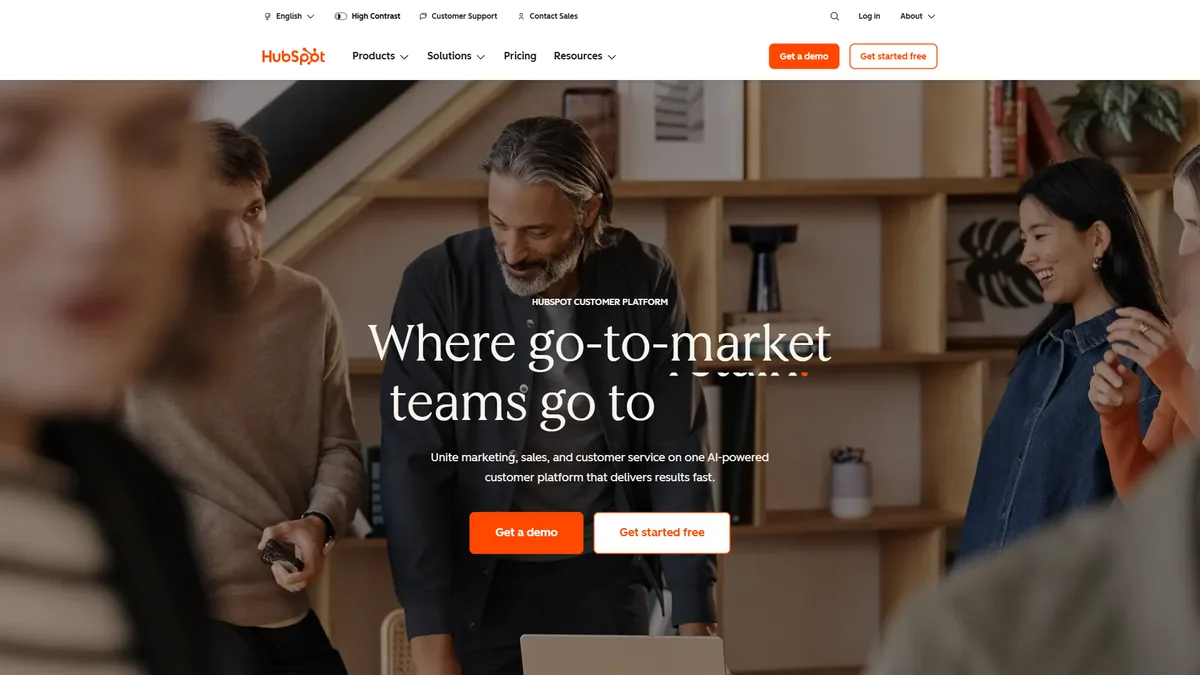
Who it is for: Solo founders validating an idea, very small teams under three people, and anyone who needs a contact database without marketing automation. When automation, custom branding, or more than two active users become necessary, the free tier becomes a bottleneck. The HubSpot vs Salesforce comparison shows where each platform pulls ahead, and our best AI CRM tools roundup covers other free-tier options worth testing alongside it.
Starter Customer Platform: All Five Hubs for Around $15 a Month
The Starter Customer Platform is HubSpot’s entry-level paid tier, and the value proposition is straightforward: access to all five hubs - Marketing, Sales, Service, Content, and Operations - for around $15 per month (around $9 per month billed annually).
What Starter adds over Free:
- All five hubs - Marketing, Sales, Service, Content, and Operations in a single package
- 1,000 marketing contacts - Your first 1,000 contacts that receive marketing emails are included
- Remove HubSpot branding - Clean, professional emails and chat widgets
- Breeze AI Assistant - Full access to the conversational AI for drafting emails, summarizing contacts, and writing content
- Basic Breeze Customer Agent - An AI-powered support bot that can handle routine customer questions
- Email automation basics - Simple sequences and follow-up automation
- 2 deal/ticket pipelines per hub - Enough for most small businesses to manage sales and support workflows
- 500 calling minutes per account - Built-in phone dialer with call recording
- No onboarding fee - Get started immediately without a mandatory setup consultation
The 40% first-year discount:
HubSpot frequently runs promotions offering 40% off the first year for new Starter customers. At annual billing, that drops the effective price to roughly $5.40 per month for year one. After the discount expires, the price reverts to around $9 per month (annual) or around $15 per month (monthly). Worth factoring into your budget since the renewal cost doubles from the promotional rate. Always confirm current promo terms on the official pricing page before checkout.
What “all five hubs” means in practice:
At the Starter tier, each hub provides essential features but not advanced capabilities - Marketing Hub gives email automation but not A/B testing, Sales Hub gives pipelines but not lead scoring, and Service Hub gives tickets but not a knowledge base. Starter is a foundation that covers the basics across every department rather than going deep in any single area.
Who it is for: Growing small businesses with 2-10 people who need a unified platform without the complexity or cost of Professional. If your team sends fewer than 1,000 marketing emails per month, runs 1-2 deal pipelines, and wants basic automation, Starter is the right fit.
Professional Hub Pricing: Where HubSpot Gets Serious
Professional is where HubSpot transforms from a basic CRM into a full-scale marketing and sales machine. It is also where the pricing becomes significantly more complex because each hub is priced separately.
Professional Marketing Hub - Around $890 a Month
The Marketing Hub at the Professional tier is HubSpot’s flagship product and the most expensive Professional plan.
What is included:
- 2,000 marketing contacts - The base includes 2,000 contacts, with additional contacts available in tiers (see Hidden Costs section)
- 3 core seats - Additional seats cost extra
- Omnichannel marketing automation - Build workflows that span email, SMS, social, ads, and chat
- A/B testing - Test subject lines, content, landing pages, and CTAs
- Dynamic personalization - Smart content that adapts based on contact properties, lifecycle stage, or list membership
- Blog and SEO tools - Built-in content management with topic clusters and SEO recommendations
- Custom reporting - Up to 100 custom reports with cross-object analytics
- Campaign management - Organize assets, track attribution, and measure campaign ROI
- Breeze AI with memory - The AI assistant remembers past interactions and provides contextual suggestions
- Breeze Prospecting Agent - An AI-powered BDR that identifies and engages potential leads automatically
- $3,000 one-time onboarding fee - Mandatory for new Professional Marketing Hub customers
Professional Sales Hub - Around $500 a Month
Sales Hub Professional is priced lower than Marketing Hub but delivers substantial capability for revenue teams.
What is included:
- 3 core seats - Additional seats at per-seat pricing
- 3,000 calling minutes per user - Six times the Starter allocation
- Lead scoring - Predictive and rule-based scoring to prioritize deals
- Sales playbooks - Up to 5 playbooks with guided selling scripts and battle cards
- Sales sequences and automations - Multi-step outreach workflows
- Multiple deal pipelines - No longer limited to two
- Custom reporting - Sales-specific analytics with forecasting
- Breeze Customer Agent - Resolves 50%+ of support tickets automatically
- AI-powered workspaces - Intelligent dashboards that surface priority tasks
- $1,500 one-time onboarding fee
Professional Service Hub - Around $500 a Month
Service Hub mirrors Sales Hub pricing and unlocks the tools needed for a structured customer support operation.
Key additions: Knowledge base with customer portal, NPS and CSAT surveys, SLA management, customer health scoring, and advanced ticket routing. The onboarding fee is $1,125.
Comparing Professional Hubs
| Feature | Marketing ($890/mo) | Sales ($500/mo) | Service ($500/mo) |
|---|---|---|---|
| Core Seats | 3 | 3 | 3 |
| Automation | Omnichannel workflows | Sequences + tasks | Ticket routing + SLAs |
| AI Features | Prospecting Agent + memory | Workspaces + scoring | Customer Agent |
| Key Unlock | A/B testing, attribution | Playbooks, forecasting | Knowledge base, surveys |
| Onboarding | $3,000 | $1,500 | $1,125 |
Most mid-market companies start with one hub and expand - a marketing-led organization typically begins with Marketing Hub Professional and adds Sales Hub later. Bundles save money when you need multiple hubs, and HubSpot’s sales team quotes custom bundle pricing that beats purchasing each hub separately.
Limitations and who it’s not for: Professional has real drawbacks - $1,125-$3,000 onboarding fees are mandatory, contact-based pricing escalates fast on Marketing Hub (a 50K-contact account hits roughly $3,290 per month), and you cap out below Enterprise on custom objects and seat counts. Skip Professional if your team is under 5 people, if you cannot justify the onboarding investment, or if your CRM needs are sales-only - Pipedrive at around $14 per user per month covers that for less. For teams leaning on automation rather than CRM, ActiveCampaign delivers similar workflow depth at around $149 per month versus around $890 per month on Marketing Hub Pro.
Enterprise Hub Pricing: Full Platform Power
Enterprise is the top tier for each hub, designed for organizations with complex workflows, large teams, and compliance requirements. Like Professional, each hub has its own Enterprise price.
Enterprise Marketing Hub - Around $3,600 a Month
What is included:
- 10,000 marketing contacts - Five times the Professional allocation
- 5 core seats - More seats included by default
- Unlimited automated emails - No caps on workflow-triggered email sends
- Custom objects - Create data structures beyond contacts, companies, deals, and tickets
- Multiple brand domains - Manage separate brands from a single HubSpot instance
- Salesforce custom object mapping - Deep integration with existing Salesforce deployments
- Hierarchical teams - Complex org structures with cascading permissions
- Field-level permissions - Control who can see and edit specific data fields
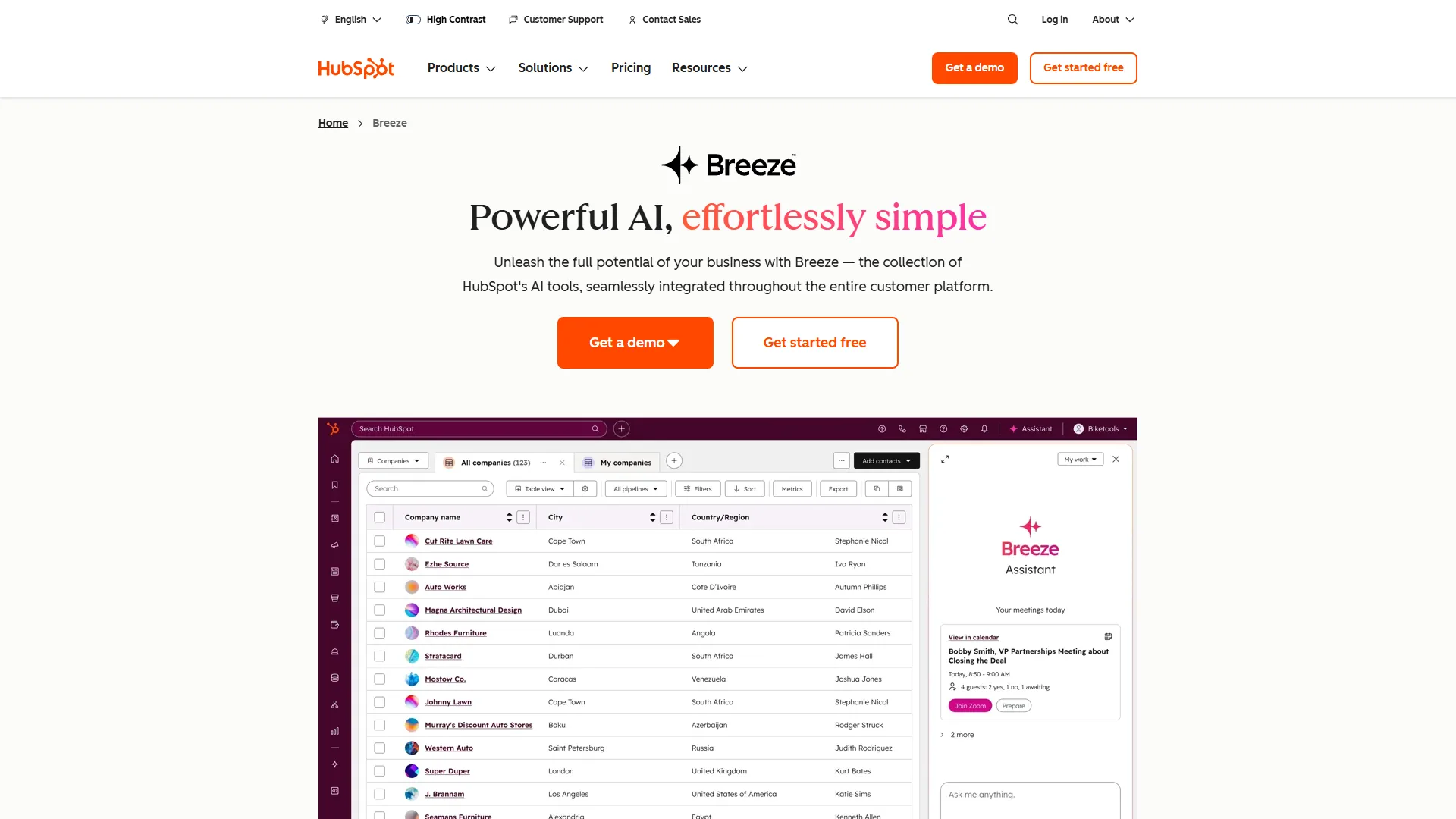
- Full Breeze AI Suite - Access to every AI feature including advanced analytics
- Breeze Studio - Build custom AI agents tailored to your business processes
- Breeze Marketplace - Access community-built agents and templates
- Data Hub - AI-powered data management, enrichment, and deduplication
- Priority support with dedicated CSM - Named account manager
- $7,000 one-time onboarding fee
Enterprise Sales/Service Hub - Around $1,500 a Month Each
Key additions over Professional:
- 5 core seats included
- 100+ deal pipelines (Sales) or unlimited ticket pipelines (Service)
- 5,000 sales playbooks - Versus 5 at Professional
- 12,000 calling minutes per user - Four times the Professional allocation
- Advanced Customer Agent with voice - AI handles phone-based support
- Custom AI assistants via Breeze Studio - Build agents for specific use cases
- Full Breeze AI Suite - Everything in the AI portfolio
- $3,500 one-time onboarding fee per hub
Enterprise Pricing Comparison
| Feature | Marketing ($3,600/mo) | Sales ($1,500/mo) | Service ($1,500/mo) |
|---|---|---|---|
| Core Seats | 5 | 5 | 5 |
| Onboarding | $7,000 | $3,500 | $3,500 |
| Key Unlock | Custom objects, brand domains | 100+ pipelines, 5K playbooks | Unlimited pipelines, voice AI |
| Annual Price | $3,240/mo | $1,350/mo | $1,350/mo |
| Annual Commitment | Required | Required | Required |
Organizations that need negotiated enterprise rates beyond published tiers should reach out to HubSpot’s sales team directly. Large deployments with 50+ seats and multi-hub bundles can sometimes secure volume discounts that are not listed on the public pricing page.
Limitations and who it’s not for: Enterprise has steep downsides - $7,000 onboarding for Marketing alone, mandatory annual commitments, and per-seat costs of $50-$100+ beyond the included 5 core seats. Skip Enterprise if you have under 50 seats, if you cannot commit to a 12-month contract, or if you do not need custom objects, hierarchical teams, or Breeze Studio. For teams standardized on Salesforce, the custom object mapping is the main reason to consider Enterprise.
Annual vs Monthly: How Much Do You Save?
HubSpot offers a 10% discount on annual billing for Professional and Enterprise tiers. Here is how the savings break down:
| Plan | Monthly Billing | Annual Billing (per mo) | Annual Savings | Savings % |
|---|---|---|---|---|
| Starter | $15/mo | $9/mo | $72/year | 40% |
| Pro Marketing | $890/mo | $801/mo | $1,068/year | 10% |
| Pro Sales | $500/mo | $450/mo | $600/year | 10% |
| Pro Service | $500/mo | $450/mo | $600/year | 10% |
| Enterprise Marketing | $3,600/mo | $3,240/mo | $4,320/year | 10% |
| Enterprise Sales | $1,500/mo | $1,350/mo | $1,800/year | 10% |
| Enterprise Service | $1,500/mo | $1,350/mo | $1,800/year | 10% |
Important commitment details:
Starter is the only tier that lets you pay monthly without a long-term commitment. Professional and Enterprise plans require an annual contract - you cannot pay month-to-month at those tiers. The “monthly price” listed for Professional and Enterprise is what you pay each month of your annual commitment, not a cancelable monthly subscription.
The Starter discount is the most aggressive at 40% off, dropping from around $15 per month to around $9 per month when billed annually. This makes Starter one of the best entry points in the CRM market for businesses that commit to a full year.
Tradeoffs of annual billing: Annual commitments have real downsides - no partial refund if you stop mid-year, downgrades take effect only at renewal, and Professional/Enterprise tiers force annual billing. Skip annual if your revenue is unpredictable, if you are testing HubSpot for a single quarterly campaign, or if you might switch CRMs within 6 months.
Hidden Costs and Add-Ons
The published plan prices are just the starting point. Several additional costs can push your actual HubSpot spend well beyond the base tier price.
Contact-Based Pricing Escalation (Marketing Hub)
Marketing Hub charges based on the number of marketing contacts - contacts you actively email or target with ads. This is the cost that surprises most teams.
| Contact Tier | Professional Monthly | Enterprise Monthly |
|---|---|---|
| 2,000 (included) | $890 | N/A |
| 5,000 | $1,140 | N/A |
| 10,000 (included Enterprise) | $1,540 | $3,600 |
| 25,000 | $2,340 | $4,200 |
| 50,000 | $3,290 | $4,900 |
| 100,000 | $4,740 | $6,200 |
A Professional Marketing Hub customer growing from 2,000 to 50,000 contacts sees their bill jump from around $890 to roughly $3,290 per month - nearly 4x the base price - without upgrading their plan tier. This is the single most important cost to model when budgeting HubSpot.
Onboarding Fees Summary
Every Professional and Enterprise hub requires a one-time onboarding fee. These are mandatory, not optional.
| Hub + Tier | Onboarding Fee |
|---|---|
| Professional Marketing | $3,000 |
| Professional Sales | $1,500 |
| Professional Service | $1,125 |
| Enterprise Marketing | $7,000 |
| Enterprise Sales | $3,500 |
| Enterprise Service | $3,500 |
If you buy Professional Marketing + Sales together, that is $4,500 in onboarding fees before your first month of use. Enterprise Marketing + Sales totals $10,500. Some HubSpot Solutions Partners offer onboarding at lower rates - HubSpot allows this as an alternative to their direct onboarding.
Additional Seat Costs
Each plan includes a set number of core seats (3 for Professional, 5 for Enterprise). Beyond that, you pay per additional seat. Exact seat pricing depends on the hub and tier, but expect roughly $25 to $75 per month per additional seat at Professional and $50 to $100+ at Enterprise.
Breeze Intelligence Credits
Breeze Intelligence - the data enrichment product - runs on a credit system. It is separate from the AI assistant that comes with your hub subscription. Credits are consumed when you enrich contacts, research companies, or use buyer intent features. Credit packs start at roughly $150 per month for 100 credits.
API Call Limits
Free and Starter plans have limited API calls. Professional allows 500,000 API calls per day, and Enterprise allows 1,000,000. If you run heavy integrations or sync large datasets, hitting the API ceiling forces you to purchase additional capacity or optimize your integration architecture - the HubSpot developer docs spell out the exact rate limits per endpoint.
Pricing Comparison: HubSpot CRM vs Marketing Hub vs Sales Hub
HubSpot CRM is free for unlimited contacts, while Marketing Hub starts at around $890 per month and Sales Hub at around $500 per month at the Professional tier - each hub is a separate product with its own price. Here is how they compare at each tier:
Free tier - All hubs share a single free CRM with basic features from each department. There is no difference at this level because the free tools are bundled together.
Starter (around $15 per month) - This bundles all five hubs into one package. You do not choose individual hubs at the Starter level. This is the simplest pricing tier HubSpot offers.
Professional tier - Each hub is priced separately:
- Marketing Hub at around $890 per month is the most expensive because it includes contact-based pricing, automation, and attribution tools
- Sales Hub and Service Hub both start at around $500 per month with seat-based scaling
- You can buy individual hubs or bundle them for a discount
Enterprise tier - Same separate pricing model:
- Marketing Hub at around $3,600 per month for organizations with large contact databases and complex campaigns
- Sales and Service Hubs at around $1,500 per month each for teams that need advanced AI, custom objects, and hierarchical permissions
The practical decision: Most businesses start with Marketing Hub or Sales Hub depending on whether their growth is marketing-led or sales-led. The CRM (contacts, companies, deals) is shared across all hubs, so adding a second hub later does not duplicate your data - it adds new capabilities on top of the existing foundation.
Bundle pricing tip: HubSpot does not publicly list bundle prices, but their sales team routinely offers 10-20% discounts when purchasing multiple Professional or Enterprise hubs together. If you need Marketing + Sales, always ask for bundle pricing before buying individually.
HubSpot Discounts and Programs
Beyond standard annual billing discounts, HubSpot offers several programs that can significantly reduce costs.
HubSpot for Startups
The HubSpot for Startups program offers tiered discounts based on funding stage:
- Pre-seed/Bootstrapped - 30% off in year 1, 15% off in year 2
- Seed stage - 50% off in year 1, 25% off in year 2
- Series A and beyond - 75% off in year 1, 50% off in year 2
- Select accelerator/VC partners - Up to 90% off in year 1
These discounts apply to Professional and Enterprise tiers and stack with annual billing. A Series A startup gets Enterprise Marketing Hub for roughly $810 per month in year one - less than the standard Professional price. Eligibility requires being associated with an approved HubSpot partner, accelerator, or VC firm.
Nonprofit Discount
HubSpot offers a 40% discount for eligible nonprofit organizations across all paid tiers. A Professional Marketing Hub at around $890 per month drops to roughly $534 per month. Nonprofits must apply through HubSpot’s nonprofit program and verify their status.
Education Pricing
HubSpot offers free tools and discounted plans for accredited educational institutions. The HubSpot Academy is free for everyone, but qualifying schools can access Professional features at reduced rates.
Limitations and who it’s not for: The discount programs have tradeoffs - Startups discounts step down sharply after year 2 (a 75% Series A discount becomes 50% in year two and 0% after that), Nonprofit pricing requires verification that takes weeks, and Education pricing is narrow in scope. Skip the program path if your funding stage does not qualify or if you cannot absorb the year-3 price jump.
Which Tool Fits: HubSpot Plan for Your Team
The right HubSpot plan is the free CRM or Starter for solo founders, Professional for growing teams of 5-15 people, and Enterprise for organizations with 50 or more seats. Choosing between them depends on three factors: team size, marketing sophistication, and budget tolerance for contact-based scaling.
Solo founder or freelancer - Free or Starter ($0-around $15 per month):
- You manage fewer than 1,000 contacts
- You need basic CRM, email tracking, and meeting scheduling
- You do not require marketing automation or advanced reporting
- Your team is 1-3 people
- The free plan works if HubSpot branding on emails is acceptable; Starter removes it
Growing team of 5-15 people - Professional ($500-around $890 per month per hub):
- You have outgrown manual email follow-ups and need automation
- Your marketing contacts are growing past 1,000 and you need A/B testing and attribution
- Your sales team needs lead scoring, playbooks, and forecasting
- You can justify the $1,500-$3,000 onboarding investment
- You want Breeze AI features like the Prospecting Agent and AI-powered workspaces
- Budget: plan for around $1,000 to $2,500 per month total depending on which hubs and contact volume
Enterprise organization with 50+ seats - Enterprise ($1,500-around $3,600 per month per hub):
- You need custom objects, hierarchical teams, and field-level permissions
- Multiple brand domains or business units require separation within one instance
- Compliance requires audit logs, SSO, and advanced security controls
- You want Breeze Studio to build custom AI agents for your specific workflows
- Your Salesforce integration needs custom object mapping
- Budget: plan for $5,000-$10,000+/month across hubs, plus $10,000-$14,000 in onboarding
A practical test: If your current CRM spend is under $100 a month, start with Starter at around $15 per month and use it for 6 months. If you hit automation ceilings or need A/B testing, upgrade to Professional. Skipping from free to Professional without validating your needs first is the most common and most expensive mistake in HubSpot adoption - the $3,000 onboarding fee alone makes it worth being certain. For more on lighter alternatives, see our Pipedrive vs HubSpot guide.
Pricing Comparison: HubSpot vs Alternatives
HubSpot is more expensive at the mid-tier than Pipedrive, ActiveCampaign, and Mailchimp, but its all-in-one platform replaces several separate subscriptions in a single bill. On HubSpot pricing vs Salesforce specifically, HubSpot is cheaper to adopt at entry level while Salesforce offers deeper customization at higher cost. Here is how it stacks up:
| Tool | Free Tier | Entry Paid Plan | Mid-Tier | Key Differentiator |
|---|---|---|---|---|
| HubSpot | Yes (unlimited CRM contacts) | $15/mo (Starter) | $890/mo (Pro Marketing) | All-in-one CRM + marketing + sales |
| Salesforce | No | $25/user/mo (Starter) | $165/user/mo (Enterprise) | Deepest customization, 1,000+ integrations |
| Pipedrive | No | $14/user/mo (Essential) | $49/user/mo (Professional) | Sales-focused, visual pipeline, simpler pricing |
| ActiveCampaign | No | $15/mo (Starter) | $49/mo (Plus) | Email automation depth, granular segmentation |
| Mailchimp | Yes (500 contacts) | $13/mo (Essentials) | $20/mo (Standard) | Email marketing focus, lower cost ceiling |
Key takeaways from the comparison:
- HubSpot vs Salesforce - HubSpot is simpler to adopt and cheaper at entry level. Salesforce offers deeper customization but requires technical expertise and often a consultant to implement. For teams under 50 people, HubSpot’s total cost of ownership is typically lower. Above 50, Salesforce becomes more competitive. See our HubSpot vs Salesforce comparison for a deeper breakdown.
- HubSpot vs Pipedrive - Pipedrive is significantly cheaper for pure sales CRM needs. At around $14 per user per month, a 10-person sales team pays roughly $140 per month versus HubSpot’s around $500 per month for Sales Hub Professional. But Pipedrive lacks native marketing automation entirely.
- HubSpot vs ActiveCampaign - ActiveCampaign excels at email marketing automation with more granular segmentation at a fraction of HubSpot Marketing Hub’s price. ActiveCampaign also publishes its pricing tiers transparently. The trade-off is no CRM, sales tools, or service hub built in.
- HubSpot vs Mailchimp - Mailchimp is the budget option for email-only marketing. At around $20 per month for the Standard plan, it covers what many small businesses need without the complexity of hub-based pricing. HubSpot wins when you need CRM integration and sales pipeline management alongside email.
The deciding factor is scope. If you need a CRM, marketing automation, sales tools, and customer service in one platform, HubSpot’s bundled approach costs less than buying four separate best-in-class tools. If you only need one function - email marketing, sales pipeline, or customer support - a focused tool is almost always cheaper.
“Despite its perception as a tool for large enterprises, HubSpot offers a robust free plan and scalable pricing that suits businesses of all sizes,” according to the Forbes Advisor 2026 HubSpot Pricing guide, which rates the platform highly on ease of use while noting the steep cost jump at the Professional tier. HubSpot’s own State of Marketing report similarly documents how teams that consolidate marketing and sales onto one platform report stronger pipeline efficiency than those running fragmented tool stacks.
The Bottom Line
HubSpot is worth its price for teams that use it as a unified CRM, marketing, and sales platform, but overpriced for anyone needing only a single function. HubSpot pricing in 2026 serves everyone from solo founders to enterprise organizations, though the cost curve is steeper than it first appears. The free CRM is genuinely useful and competitive with standalone CRM tools. Starter at around $15 per month ($9 annually) is one of the best values in the market for small businesses that need a unified platform without complexity.
The inflection point is Professional. At around $890 per month for Marketing Hub (plus $3,000 in onboarding), it is a real investment. The return is there - omnichannel automation, A/B testing, Breeze AI features, and custom reporting are capabilities that directly drive revenue. But the contact-based pricing escalation means costs grow as your business grows. A company managing 50,000 marketing contacts on Professional Marketing Hub pays roughly $3,290 per month - nearly the cost of Enterprise.
For most growing businesses, the right path is: start on Starter to validate that HubSpot fits your workflow, budget for Professional Marketing or Sales Hub once you have 5+ team members and need automation, and consider Enterprise only when custom objects, advanced permissions, or Breeze Studio become genuine requirements rather than nice-to-haves.
The value proposition is strongest when HubSpot is used as a unified platform rather than just one hub. Teams that consolidate marketing, sales, and service onto HubSpot report nearly 3x ROI compared to using HubSpot for a single function. That all-in-one approach is what justifies the price - and what sets HubSpot apart from cheaper point solutions.
Ready to see the full platform? Check out the complete HubSpot review and tool overview for features, ratings, and use cases beyond pricing.
FAQ
Common HubSpot pricing questions center on total cost, the free tier, hidden fees, and the biggest price jump between plans - the answers below address each directly.
Q: How much does HubSpot cost?
HubSpot pricing in 2026 ranges from $0 to over $3,600 per month depending on the hub and contact volume. The free CRM covers basic needs for up to two users, Starter bundles all five hubs at $15 per month, Professional Marketing Hub jumps to $890 per month, and Enterprise tops out at $3,600 per month before onboarding fees.
Q: Is HubSpot 100% free?
HubSpot offers free tools and discounted plans for accredited educational institutions. The HubSpot Academy is free for everyone, but qualifying schools can access Professional features at reduced rates.
Q: Is there a cheaper alternative to HubSpot?
If you buy Professional Marketing + Sales together, that is $4,500 in onboarding fees before your first month of use.
Q: What are the hidden costs of HubSpot pricing?
The real challenge with HubSpot pricing is not the sticker price but the layered costs that compound as you grow. Expect mandatory onboarding fees from $1,500 to $7,000, contact-tier overages on Marketing Hub, per-seat charges beyond included core seats, and Breeze AI intelligence credits that deplete faster than expected.
Q: What is the biggest price jump in HubSpot’s plans?
The gap between Starter at $15 per month and Professional Marketing Hub at $890 per month is the biggest pricing cliff in HubSpot’s lineup. Understanding what you gain at each tier - and what hidden costs come with it - determines whether HubSpot delivers value or drains your budget for your team size and feature needs.
Q: How does HubSpot pricing compare for Email Marketing on a budget?
For HubSpot pricing Email Marketing buyers should know that Marketing Hub at the Starter tier includes basic email automation for around $15 per month, while standalone email tools like Mailchimp start at around $13 per month. HubSpot only becomes cost-effective for email when you also need its CRM and sales pipeline - threads echoed in HubSpot pricing Reddit discussions where users weigh the all-in-one platform against cheaper point solutions.
Related Reading
These guides extend this HubSpot pricing analysis with full tool reviews and head-to-head CRM comparisons.
- HubSpot Review: Full Tool Overview - In-depth look at HubSpot’s features, AI capabilities, and use cases
- Salesforce Review - How Salesforce compares on pricing, features, and AI
- Pipedrive Review - A lightweight CRM alternative to HubSpot
- ActiveCampaign Review - Marketing automation at a lower price point
- Mailchimp Review - Email marketing platform comparison
- HubSpot vs Salesforce: Complete CRM Comparison - Head-to-head comparison of the two largest CRM platforms
- Pipedrive vs HubSpot: Which CRM Fits Your Sales Team? - A focused comparison for sales-driven organizations
- Best AI CRM Tools in 2026 - How HubSpot stacks up against other AI-powered CRMs
- BILL Review - Finance and accounts-payable automation paired with CRM
External Resources
These primary HubSpot sources let you verify current pricing, discount eligibility, and AI feature details directly.
- HubSpot Official Pricing Page - Current plan details and feature comparison
- HubSpot for Startups Program - Discount details and eligibility requirements
- HubSpot Breeze AI Overview - Full details on AI features across all tiers