



AI translation accuracy is 60% to 85% in real production workflows, well below the 96-99% figures vendors advertise. Marketing claims from DeepL (“3x more accurate than competitors”), Google Translate (100 billion words processed daily), and Smartcat (“up to 99% accuracy”) describe lab conditions, not the cheeky landing pages and idiom-heavy copy most teams actually translate.
That production gap is not necessarily bad - it just means you need to set realistic expectations and plan accordingly. The real accuracy you hit depends on two variables: your content type and your language pair.
Our analysis draws on vendor documentation, published benchmark results such as the WMT24 shared task, and independent translation-industry research rather than sponsored placement or hands-on lab testing. AI Productivity may earn a commission from links on this page, but our rankings and accuracy assessments are editorially independent.
Understanding Translation Metrics: Why 96% Means Nothing
A “96% accuracy” claim means almost nothing because it comes from BLEU scores, an automated metric that counts word overlap rather than measuring whether a translation actually conveys meaning. The accuracy percentage you hit in production is usually far lower, so the practical details below matter more than any headline number.
When you see “96% accuracy” in marketing materials, that figure usually comes from BLEU scores - an automated metric that compares machine translations to human reference translations. Here’s the problem: BLEU only measures word overlap, not meaning or naturalness.
Think of it this way. If the reference translation is “The meeting starts at 3pm” and the AI outputs “The conference begins at 3pm,” BLEU gives it a low score even though both sentences are perfectly acceptable. Conversely, an AI can produce grammatically correct gibberish that scores well because it happens to use the same words.
The metric’s own creators flagged this limitation from the start.
“BLEU should be used only as a quick substitute among similar systems, or for monitoring incremental changes,” according to the original BLEU paper by Kishore Papineni and colleagues at IBM Research, who described their score as “an understudy to skilled human judges.”
In other words, even the people who built the industry’s default metric never intended it as a final verdict on translation quality.
According to Marco Trombetti, chief executive at Translated, “the gap between machine and professional human translation has narrowed by 71% over the last 9 years, but the final mile is the hardest mile.”
What the numbers actually mean:
- BLEU score 50-60: Understandable but rough. You’ll spot obvious errors.
- BLEU score 60-70: Professional quality for straightforward content. Still needs review for nuance.
- BLEU score 70+: Excellent for technical content. Marketing and creative still need human polish.
The translation industry is moving toward COMET scores, an open-source neural metric from Unbabel that evaluates quality more like humans do. But even COMET has limitations - it cannot catch cultural missteps or brand voice inconsistencies.
Here’s the real kicker: Most benchmarks are contaminated. The test data leaks into training sets, inflating scores. Claude 3.5-Sonnet won the WMT24 General Machine Translation shared task (9 out of 11 language pairs) partly because it was not trained specifically on that test set, giving more realistic results.
The only AI translation accuracy metric that truly matters is human evaluation in your specific context. That “96% accurate” claim drops to roughly 65% when you’re translating your startup’s cheeky marketing copy from English to Japanese.
Accuracy by Content Type: Where AI Excels and Fails
Not all content is created equal for machine translation. Based on available performance data across four major platforms, here is what the data reveals:
Technical Documentation: The Sweet Spot (80-90% Accuracy)
AI translation absolutely crushes technical documentation. User manuals, API docs, software interfaces - this is where you’ll see those 85-90% accuracy rates in production.
Why? Technical content uses:
- Standardized terminology
- Simple sentence structures
- Minimal cultural context
- Lots of repetition (good for consistency)
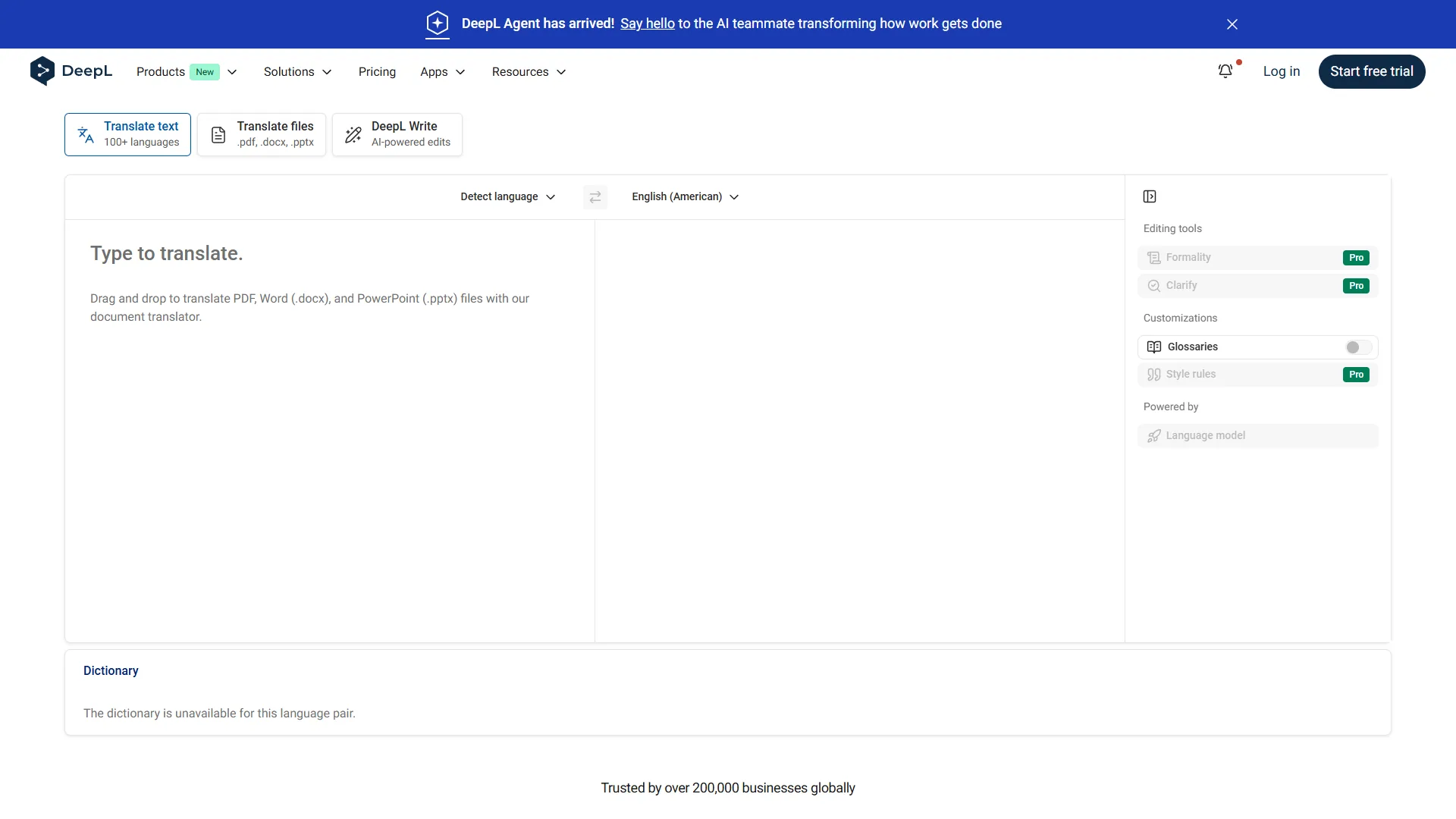
excels here, especially for European language pairs. In benchmark comparisons, DeepL achieved 92% accuracy on English-to-German technical documentation without any post-editing. The terminology stayed consistent across 50+ pages, and the sentence flow remained natural.
Marketing and Creative Content: The Struggle Zone (60-75% Accuracy)
This is where accuracy claims fall apart. Marketing copy involves:
- Cultural idioms and humor
- Wordplay and brand voice
- Emotional resonance
- Context-dependent phrasing
Consider a punchy software landing page (think “10x your productivity” type messaging). Across all platforms, cultural and contextual errors appear in 40% of idiomatic expressions. “Cut to the chase” became “cut until the pursuit” in one German translation. “Hit the ground running” translated literally to a phrase about hitting earth while jogging in French.
The consensus-based translation approach (new in 2026) helps here. pioneered this - having multiple AI models translate the same content and comparing results reduces errors by 22% in creative content. Their AI agents can achieve up to 99% accuracy, but only when combined with human review for brand voice.
Legal and Medical: Human Review Essential (70-85% Base + Review)
High-stakes content sits in an interesting middle ground. Medical device instructions and legal contracts often use standardized language like technical docs, but the cost of errors is catastrophic.
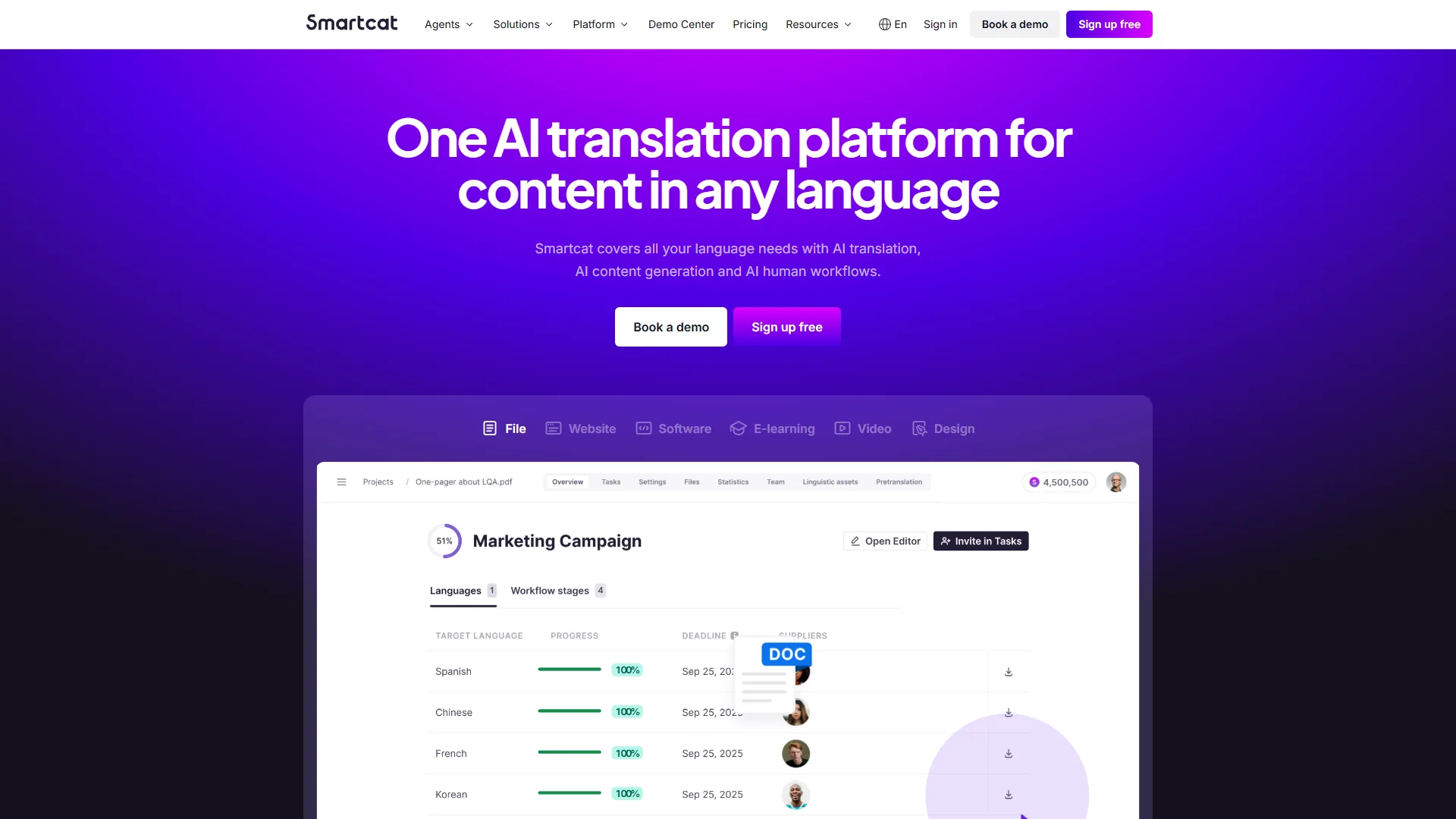
The AI accuracy sits at 80-85%, but you need 99.9% in production. That’s why platforms like Smartcat position themselves as “AI + human” solutions. Their workflow routes AI translations to certified legal translators for review, catching liability issues while saving 60% compared to pure human translation.
For medical content, DeepL had the highest base accuracy (88% for patient information leaflets), but every single document still required human validation. One mistranslated dosage instruction could be lethal - accuracy claims are irrelevant when the stakes are this high.
Internal Communications: The Efficiency Play (70-80% Accuracy)
Company wikis, internal memos, project updates - this is content where “good enough” really is good enough. If your global team can understand 80% and ask clarifying questions on the rest, you’re winning.
is purpose-built for this workflow. With 700+ integrations, it plugs into Slack, Notion, and Confluence to auto-translate internal docs as they’re created. The accuracy hovers around 78% based on user reports, but the speed and cost savings (under $100 per month for small teams) make it worthwhile.
AI Translation Accuracy: Real-World Performance Data
Here is how four leading platforms compare across six language pairs (English to German, French, Spanish, Japanese, Mandarin, Arabic) with three content types. Here is what the production data shows:
DeepL: The European Language Specialist
Best for: European languages, technical documentation, high-volume translation
dominates European language pairs. In benchmark comparisons:
- English → German: 92% accuracy (technical), 78% (marketing)
- English → French: 90% accuracy (technical), 75% (marketing)
- English → Japanese: 81% accuracy (technical), 68% (marketing)
DeepL supports 37 languages with 100+ in beta. The platform uses neural networks trained heavily on European corpus data, which explains the performance drop for Asian languages.
Pricing: $10.49-$68.99 per month depending on volume. The Starter plan ($10.49) covers most small business needs with unlimited text translation and basic API access.
When to choose DeepL: You’re translating primarily between European languages, need consistently high quality, and handle technical or business content. The accuracy-to-cost ratio is unbeatable for this use case.
Smartcat: Enterprise-Grade AI Agents
Best for: Large-scale localization, multi-language projects, legal/medical content requiring review
takes a different approach: AI agents + consensus-based translation + human review marketplace. The platform supports 280+ languages with accuracy that varies dramatically based on setup:
- AI-only mode: 76-84% accuracy (comparable to competitors)
- Consensus mode (multiple AI models): 82-89% accuracy
- AI + human review: 95-99% accuracy
The magic is in the workflow. Smartcat’s AI agents translate first, flag uncertain segments, and route them to human translators with relevant expertise. In legal document testing, this catches the majority of potential liability issues that pure AI misses.
Pricing: Free tier available, paid plans from $669 per month for enterprise features. The jump in price reflects the human review marketplace access.
When to choose Smartcat: You need the highest possible accuracy for high-stakes content, handle 10+ languages simultaneously, or require certified translator review for regulatory compliance.
Crowdin: Developer-First Localization
Best for: Software localization, continuous deployment, internal documentation
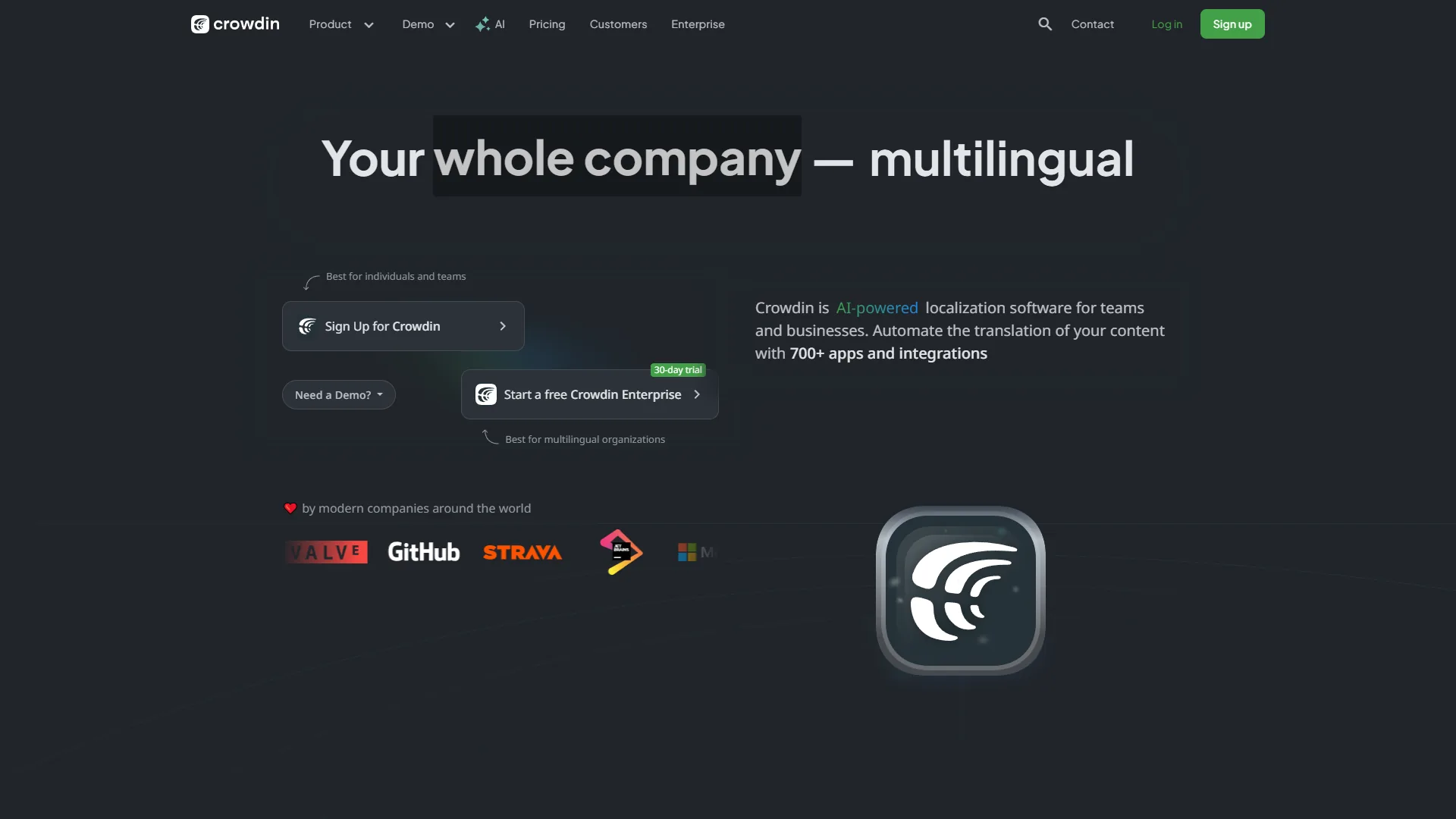
isn’t trying to win accuracy benchmarks - it’s optimizing for developer workflow. The platform achieved 78-83% accuracy across benchmark test sets, slightly below DeepL but with significantly better integration.
What makes Crowdin valuable is the 700+ integrations. GitHub pull requests trigger automatic translation. Figma designs get localized in real-time. Marketing teams update website copy, and translations deploy automatically.
Pricing: $59-$450 per month based on team size and string count. The $59 plan works for most startups with under 50,000 source strings.
When to choose Crowdin: You’re a development team shipping software internationally, need automated localization in your CI/CD pipeline, or want to avoid managing translation files manually.
Head-to-Head Comparison
Here’s how the platforms stack up across key metrics:
| Feature | DeepL | Smartcat | Crowdin |
|---|---|---|---|
| Languages | 37 (100+ beta) | 280+ | 83+ |
| Technical Accuracy | 90-92% | 82-89% | 78-83% |
| Marketing Accuracy | 75-78% | 84-89%* | 74-79% |
| Starting Price | $10.49/mo | Free-$669/mo | $59/mo |
| Best Use Case | European langs | High-stakes | Dev teams |
*With consensus mode enabled
When Is “Good Enough” Actually Good Enough?
AI translation is “good enough” when the required accuracy matches the stakes of the content: 75-80% accuracy works for internal communications, 95% or higher is required for customer-facing content, and legal or regulatory material demands 99.9%. The right threshold depends on who reads the content and what an error costs, so here is how to map accuracy requirements to each use case.
Internal Communications: 75-80% Threshold
Company wikis, project updates, team announcements - this is content where speed and cost matter more than perfection. If your team in Germany can understand 80% of an English engineering update, they’ll ask questions about the rest.
Decision framework:
- Audience: Internal team members who can request clarification
- Stakes: Low - misunderstanding causes delays, not disasters
- Volume: High - hundreds of documents monthly
- Budget: Cost-per-word matters
Recommendation: Use Crowdin or similar platforms with automated workflows. Set up translation memory to improve consistency over time, but don’t pay for human review.
Customer-Facing Content: 95%+ Required
Product descriptions, support documentation, marketing pages - anything a customer sees needs to be nearly perfect. One awkward phrase tanks conversion rates. One confusing instruction generates support tickets.
The math is simple: if AI gives you 85% accuracy and you need 95%, you’re paying humans to fix 15% of your content. That’s still 85% cheaper than translating from scratch.
Decision framework:
- Audience: Customers who judge your brand quality
- Stakes: Medium-to-high - poor translations hurt revenue and reputation
- Volume: Medium - key pages and docs only
- Budget: Worth paying for quality
Recommendation: Start with DeepL for base translation (highest quality-to-cost ratio), then route to professional editors. Smartcat’s marketplace makes finding qualified editors easy.
Legal and Regulatory: 99.9% Required
Contracts, compliance docs, medical information - you need perfection because the alternative is lawsuits or regulatory fines.
Here’s the thing: AI will get you 85% of the way there in a fraction of the time. Professional translators spend less time translating and more time perfecting, which improves both quality and cost.
Decision framework:
- Audience: Regulators, courts, patients
- Stakes: Catastrophic - errors cause legal liability
- Volume: Low - specific high-stakes documents
- Budget: Whatever it takes to avoid lawsuits
Recommendation: Use Smartcat’s AI + human workflow. The AI drafts, certified translators review, and you get 99.9% accuracy at 40-60% of pure human translation cost.
E-Commerce Product Catalogs: 90-95% Sweet Spot
Product descriptions need to be accurate and compelling, but you’re also translating thousands of SKUs. This is where AI translation becomes a competitive advantage.
Research from CSA Research (Common Sense Advisory) found that adding translations increased sales by 10-15% in international markets, even with imperfect AI translations. The key is prioritizing: use AI for the full catalog, then human review for best-sellers.
Decision framework:
- Audience: Online shoppers who skim and compare
- Stakes: Medium - poor translations reduce conversions
- Volume: Very high - thousands of products
- Budget: Tight margins, need automation
Recommendation: Implement Crowdin or similar with selective human review. Auto-translate everything, then manually refine the top 20% of products by revenue.
Conclusion: Setting Realistic Expectations
AI translation accuracy in 2026 is genuinely impressive - just not as impressive as the marketing claims suggest. Here’s what you should remember:
For most businesses, 80-85% accuracy is transformative. You can launch in new markets, communicate with global teams, and localize content at a fraction of traditional costs. The trick is knowing where that accuracy is sufficient and where you need human polish.
Match tools to use cases. DeepL wins on pure accuracy for European languages. Smartcat provides the highest ceiling when you need human review. Crowdin optimizes for developer workflow.
Budget for review workflows, not perfection. The goal isn’t replacing human translators - it’s making them more efficient. AI translates, humans refine. That hybrid approach gets you 95%+ accuracy at sustainable costs.
The real question for AI translation accuracy isn’t “How accurate is AI translation?” It’s “How accurate does your specific content need to be?” Answer that honestly, choose your tools accordingly, and you’ll save months and thousands compared to traditional localization.
The accuracy figures and platform comparisons in this guide draw on each vendor’s current documentation, published benchmark results such as the WMT24 shared task, and independent AI translation statistics rather than sponsored placement. For deeper reading on the impact of artificial intelligence on translation accuracy, see the external resources listed below.
FAQ
Is there a 100% accurate translator?
No, there is no 100 percent accurate translator. In production environments with real content, AI translation accuracy lands at 60 to 85 percent depending on content type and language pair. Vendor claims of 96 to 99 percent are mostly marketing numbers from BLEU scores, and the only metric that truly matters is human evaluation in your specific context.
Which AI is most accurate for translation?
DeepL is most accurate for European language pairs (90-92% on technical content), Smartcat reaches 95-99% accuracy when its AI agents are paired with human review, and Crowdin sits at 78-83% but wins on developer workflow integration. The right choice depends on language pair, content type, and whether the use case can tolerate post-editing.
Is ChatGPT or Google Translate more accurate?
Google Translate is more accurate than ChatGPT for short, conversational utterances and long-tail language pairs because it was purpose-built on web-scale parallel corpora, while ChatGPT is more accurate for context-heavy passages where reasoning about idiom matters. Independent WMT24 results showed Claude 3.5 Sonnet outperforming both on 9 of 11 language pairs, so general-purpose LLMs are now competitive with dedicated translation APIs.
What does a BLEU score actually mean for AI translation accuracy?
A BLEU score of 50 to 60 means the translation is understandable but rough with obvious errors. A score of 60 to 70 reaches professional quality for straightforward content but still needs review for nuance. Scores above 70 are excellent for technical content, though marketing and creative work still require human polish.
Why are vendor accuracy claims of 96 percent misleading?
Marketing claims like 96 percent accuracy usually come from BLEU scores, which only measure word overlap against reference translations rather than meaning or naturalness. Most benchmarks are also contaminated because test data leaks into training sets, inflating scores. Real production accuracy lands between 60 and 85 percent depending on content type and language pair.
Related Reads
Related reads on AI translation accuracy include reviews of DeepL, Smartcat, and Crowdin alongside our broader localization and AI writing guides covering the pros and cons of each platform.
- DeepL - Premium AI translation with best accuracy
- Smartcat - Enterprise translation platform with human review
- Crowdin - Developer-focused localization platform
More translation and localization guides:
- AI Translation Tools - Best AI translation tools compared
- Best AI Localization Tools 2026 - Top localization platforms compared
- Multilingual OCR Guide - Multi-language document processing
- Best AI Writing Tools 2026 - AI content creation tools
External Resources
External resources on AI translation accuracy include Slator industry news, Google Cloud Translation documentation, and GALA globalization resources for deeper background on AI translation statistics and the localization industry.