In 2026, content optimization has evolved from basic keyword stuffing to sophisticated AI-powered analysis that evaluates semantic relevance, topical authority, and user intent. With search engines prioritizing content quality over keyword density, modern SEO demands a data-driven approach that balances technical optimization with genuine value creation.
AI content optimization tools analyze top-ranking content across multiple dimensions: keyword usage patterns, semantic relationships, content structure, readability metrics, and topic coverage depth. They provide actionable recommendations that help content creators match search intent while maintaining authentic voice and expertise.
This guide explores how AI-powered content optimization works, compares leading platforms, and provides practical workflows for implementing optimization strategies that deliver measurable results.
What is AI Content Optimization?
AI content optimization uses natural language processing and machine learning to analyze how your content compares to top-ranking pages for target keywords. Unlike traditional SEO tools that focus solely on keyword density, AI platforms evaluate:
Semantic Relevance: How well your content covers related concepts and entities that search engines associate with your target topic. Tools analyze LSI (Latent Semantic Indexing) keywords and topic clusters to ensure comprehensive coverage.
Content Structure: Heading hierarchy, paragraph length, sentence complexity, and readability scores compared to successful competitors. AI identifies structural patterns that correlate with higher rankings.
Topic Coverage: Gaps in your content where competitors provide information you’re missing. This includes specific questions answered, subtopics addressed, and depth of coverage across the topic landscape.
User Intent Matching: Whether your content aligns with what searchers actually want when entering a query. AI distinguishes between informational, navigational, transactional, and commercial investigation intent.
The optimization process typically involves three phases: content audit (analyzing existing performance), competitive analysis (comparing to top-ranking pages), and implementation (applying recommendations while maintaining quality).
Leading AI Content Optimization Platforms
MarketMuse
MarketMuse uses proprietary AI to build content models based on millions of articles across the web. It analyzes your content against these models to identify topic gaps and prioritize improvements.
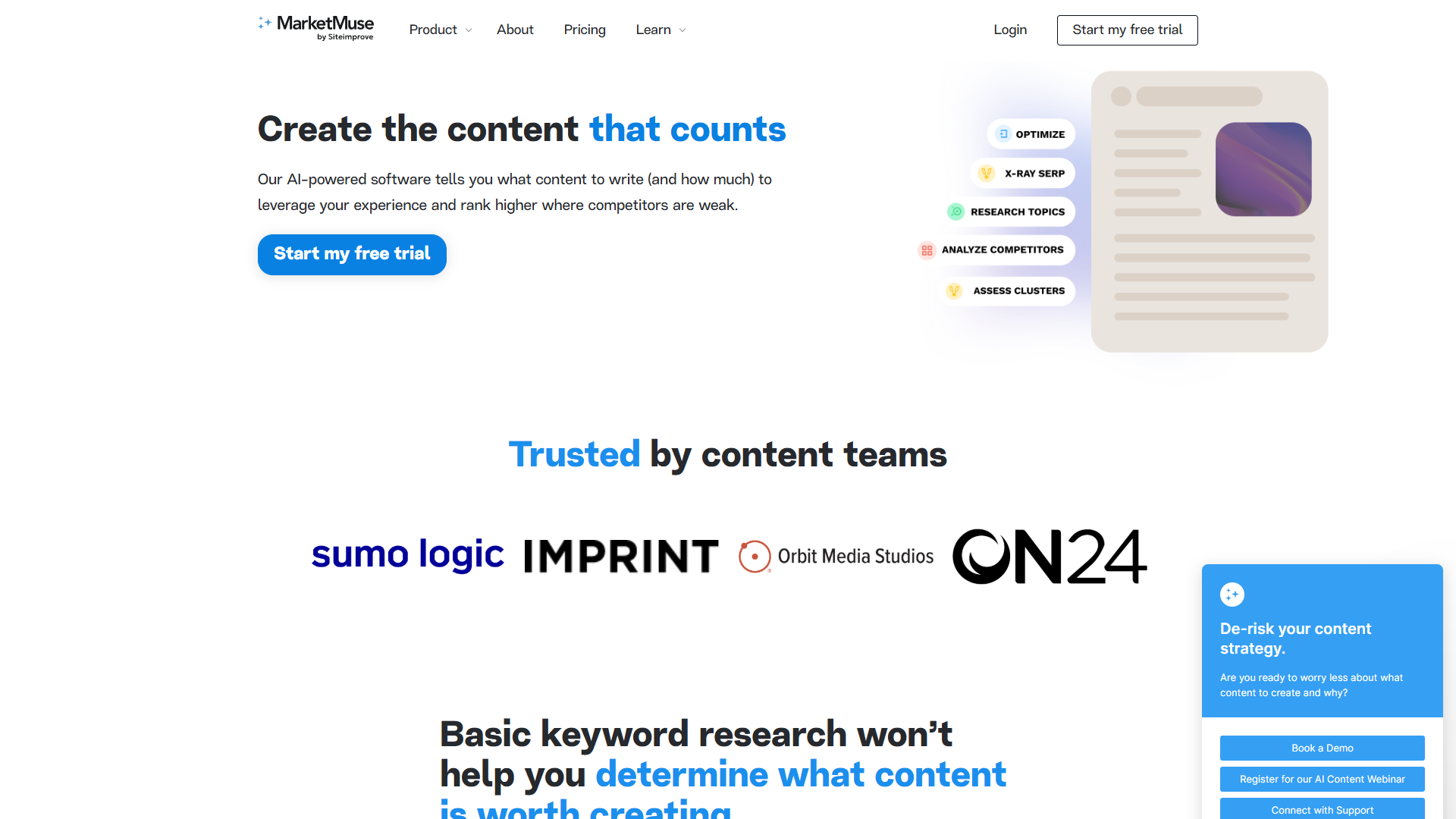
The platform excels at content planning and topic research. Its Content Brief generator creates detailed outlines that specify recommended word count, topics to cover, and questions to answer based on competitive analysis. The Compete module compares your page directly against top-ranking competitors, highlighting exactly what you need to add or improve.
MarketMuse’s strength lies in topical authority building. Rather than optimizing individual pages in isolation, it helps you identify content clusters that establish expertise across related topics. The Research application suggests related articles to create, building a comprehensive content strategy around semantic relationships.
Pricing starts at $149/month for the Standard plan with limited content briefs, scaling to Custom pricing for agencies and enterprises requiring unlimited optimization projects.
Surfer SEO
Surfer SEO provides real-time content scoring as you write, analyzing 500+ on-page factors compared to top-ranking competitors. The Content Editor integrates directly with Google Docs and WordPress, giving instant feedback on keyword usage, content length, and structural elements.

The platform’s SERP Analyzer examines the top 50 results for your target keyword, extracting common patterns in word count, keyword density, heading structure, and image usage. The Content Editor then guides you to match these patterns while maintaining readability.
Surfer’s unique Outline Builder generates article structures by analyzing headings from top-ranking content. It identifies questions people commonly ask and suggests an optimal heading hierarchy to address them. The tool also includes NLP term suggestions that go beyond basic keywords to cover semantically related concepts.
The Audit feature monitors published content performance and flags when optimization opportunities arise due to algorithm updates or shifting competitor strategies. Pricing starts at $69/month for the Essential plan with 10 content editor uses, up to $229/month for Advanced with 100 editor sessions.
Semrush
Semrush combines content optimization with comprehensive SEO research in a unified platform. The SEO Writing Assistant (SWA) analyzes content readability, SEO potential, originality, and tone of voice based on your target keywords and top 10 competitors.
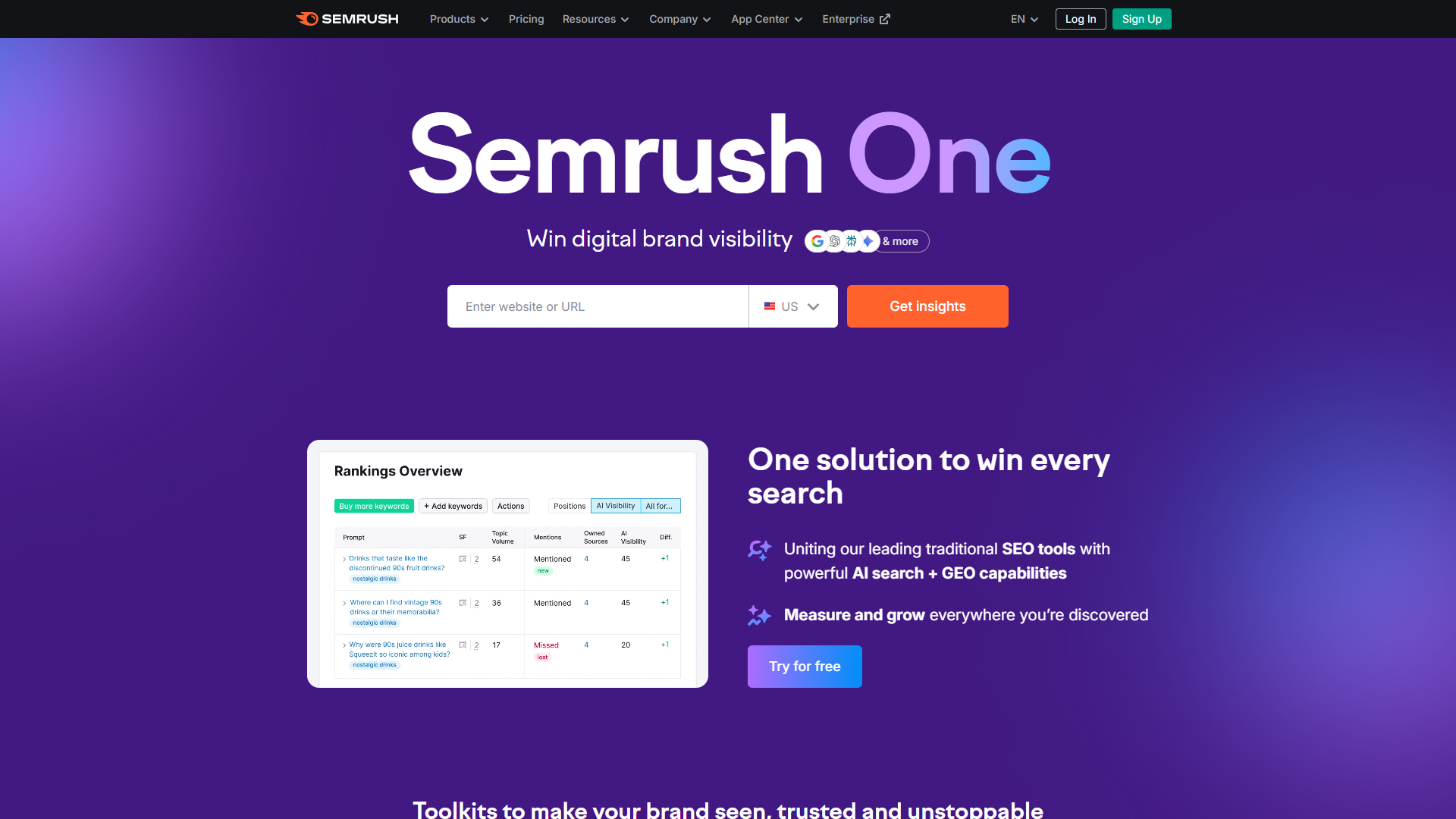
What distinguishes Semrush is its integration with broader SEO workflows. The Content Marketing Platform connects keyword research, content creation, optimization, and performance tracking in a single ecosystem. You can identify content opportunities through Keyword Gap analysis, create optimized briefs with the Topic Research tool, write with SWA guidance, and track results through Position Tracking.
The SEO Content Template generates recommendations based on semantic analysis of top 10 results, including target text length, recommended keywords to include, backlinks to acquire, and readability targets. These templates can be shared with writers who use the SWA plugin for Google Docs or WordPress to optimize as they write.
Semrush’s Post Tracking monitors published content performance and suggests optimization updates when rankings change. Pricing starts at $139.95/month for Pro (includes SEO Writing Assistant), scaling to $499.95/month for Business with advanced content marketing features.
Clearscope
Clearscope focuses on content quality over quantity, using AI to identify the most relevant terms and topics for comprehensive coverage. The platform analyzes top-ranking content to generate a grade based on how well your content covers essential concepts.
The editor provides a simplified interface that highlights terms to include, organized by importance. Unlike tools that suggest keyword density targets, Clearscope emphasizes natural inclusion of semantically relevant concepts. The platform rates content on a 0-100 scale, with most users targeting 70+ for competitive keywords.
Clearscope’s strength is simplicity and actionability. Rather than overwhelming users with hundreds of metrics, it focuses on the most impactful recommendations: essential topics to cover and questions to answer. The tool integrates with Google Docs and WordPress for in-editor optimization.
Pricing starts around $170/month for the Essentials plan with limited content reports, scaling to custom Enterprise pricing for agencies.
Tool Comparison: Choosing the Right Platform
| Feature | MarketMuse | Surfer SEO | Semrush | Clearscope |
|---|---|---|---|---|
| Overall Rating | - | |||
| Real-time Scoring | No | Yes | Yes | Yes |
| Content Briefs | Advanced | Good | Good | Basic |
| Topic Research | Excellent | Good | Excellent | Limited |
| Readability Analysis | Yes | Yes | Yes | Yes |
| Google Docs Integration | No | Yes | Yes | Yes |
| WordPress Integration | No | Yes | Yes | Yes |
| Best For | Content strategy | Individual optimization | All-in-one SEO | Simplicity |
| Starting Price | $149/mo | $69/mo | $139.95/mo | $170/mo |
Choose MarketMuse if: You need advanced topic modeling and content strategy planning. Best for content teams building topical authority across multiple related subjects.
Choose Surfer SEO if: You want real-time optimization feedback as you write. Ideal for individual writers and small teams focused on on-page optimization.
Choose Semrush if: You need content optimization integrated with comprehensive SEO tools. Best for agencies and enterprises requiring keyword research, competitive analysis, and rank tracking alongside optimization.
Choose Clearscope if: You prefer a simplified, focused approach to content optimization. Good for teams that want actionable recommendations without overwhelming data.
AI-Powered Content Optimization Workflow
Phase 1: Research and Planning
Start with keyword research to identify target queries with optimization potential. Use tools like Semrush or Ahrefs to find keywords where you rank positions 5-20 — close enough to climb with optimization.
Analyze search intent by manually reviewing top 10 results. Identify the dominant content type (blog post, comparison, tutorial, tool page) and format (listicle, guide, video). Your content must match this intent to rank, regardless of optimization score.
Generate a content brief using MarketMuse or Surfer SEO. The brief should specify:
- Target word count range
- Primary and secondary keywords
- Heading structure
- Questions to answer
- Topics to cover in depth
- Related concepts to mention
Phase 2: Content Creation with Optimization
Write naturally first, focusing on providing genuine value and demonstrating expertise. Attempting to optimize while drafting often produces awkward, keyword-stuffed content that fails quality checks.
After completing the first draft, run it through your optimization tool. Surfer SEO or Clearscope work well here, providing real-time scores and specific recommendations.
Address optimization suggestions by:
- Adding missing subtopics as new sections
- Including recommended terms naturally within existing content
- Improving content structure (headings, paragraph breaks, lists)
- Enhancing readability (shorter sentences, active voice, transitions)
Avoid blindly chasing a perfect score. If your content is comprehensive, well-structured, and genuinely helpful, a 70-80% optimization score is often sufficient. Forcing keywords unnaturally harms readability and user experience.
Phase 3: Quality Assurance
Run content through readability analyzers like Hemingway or the built-in tools in Grammarly. Target 8th-grade reading level for broad audiences, higher for technical topics requiring precision.
Check for expertise, experience, authoritativeness, and trustworthiness (E-E-A-T). AI optimization tools can’t evaluate whether you’ve demonstrated genuine expertise. Add:
- Specific examples from experience
- Data from original research or credible sources
- Expert quotes or citations
- Screenshots or original visuals
- Author credentials and bio
Verify all factual claims. AI optimization tools suggest topics to cover but can’t validate accuracy. Ensure statistics are current, examples are relevant, and recommendations are sound.
Phase 4: Publishing and Monitoring
Publish optimized content with proper on-page SEO: meta description, URL structure, internal linking, and image optimization. AI content tools rarely cover these technical elements but they significantly impact performance.
Monitor rankings weekly for the first month, then monthly thereafter. Use Semrush Position Tracking or similar tools to track target keywords and identify ranking changes.
Update content quarterly or when major ranking drops occur. Search intent shifts over time, competitors improve their content, and algorithms evolve. Regular optimization maintains rankings.
Measuring Content Optimization ROI
Organic Traffic Growth
Track organic sessions to optimized pages month-over-month. Effective optimization typically shows 20-40% traffic increases within 3-6 months for existing content, longer for new pages competing for established keywords.
Use Google Analytics 4 to segment traffic by landing page and compare periods. Filter for organic search to isolate SEO impact from other channels.
Ranking Improvements
Monitor keyword rankings for target terms. Successful optimization moves pages from positions 5-20 to positions 1-5, or from page 2-3 to page 1.
Track both primary target keywords and related long-tail variations. Often, comprehensive optimization improves rankings for dozens of related terms beyond your initial targets.
Engagement Metrics
Analyze time on page, pages per session, and bounce rate for optimized content. Improved content should increase engagement, not just rankings.
Low bounce rates (under 40% for blog content) and high time on page (over 3 minutes for long-form guides) indicate you’re matching user intent effectively.
Conversion Impact
For commercial content, track conversions from optimized pages. This might be:
- Affiliate clicks and revenue
- Demo requests or trial signups
- Newsletter subscriptions
- Product purchases
Calculate revenue per session to determine content ROI. Divide total revenue attributed to an article by organic sessions to identify high-value content worth further optimization investment.
Common Content Optimization Mistakes
Over-Optimization
Chasing 100% optimization scores often produces robotic content that repeats keywords unnaturally. Search engines prioritize user experience over perfect keyword coverage. Aim for 70-85% scores while maintaining natural language flow.
Ignoring Search Intent
A perfectly optimized article targeting the wrong intent fails. If searchers want a comparison but you’ve created a tutorial, optimization can’t save rankings. Always match content format to search intent.
Neglecting User Experience
Keyword-optimized content without clear structure, helpful examples, or actionable insights provides no value. Optimization should enhance existing quality, not replace it.
Static Optimization
Content that ranks well today may underperform in six months as competitors improve or search intent shifts. Implement quarterly content audits to maintain optimization.
Focusing Only on On-Page
AI optimization tools analyze only on-page factors. They can’t improve your backlink profile, domain authority, or technical SEO. Content optimization works best as part of a comprehensive SEO strategy.
Best Practices for Effective Content Optimization
Start with Strong Research: Use MarketMuse or Semrush topic research to identify content gaps before writing. It’s easier to structure content correctly initially than to retrofit optimization.
Write for Humans First: Create genuinely helpful content demonstrating expertise, then optimize. Never compromise content quality to hit target scores.
Use Tools as Guides, Not Rules: Optimization recommendations suggest improvements but don’t mandate specific changes. Apply suggestions that enhance value while maintaining your authentic voice.
Test and Iterate: Not every optimization recommendation improves rankings. Monitor performance, identify what works, and refine your approach based on actual results.
Combine Multiple Data Sources: Cross-reference recommendations from different tools. Surfer SEO might suggest different priorities than MarketMuse. Use judgment to determine which aligns best with your specific situation.
Maintain Content Quality Standards: Establish minimum standards for depth, accuracy, and originality before considering content “optimized.” Tools improve SEO but can’t ensure factual accuracy or genuine value.
Update Regularly: Schedule quarterly reviews of high-traffic content. Update statistics, add new information, and refresh optimization based on current SERP analysis.
Getting Started with AI Content Optimization
For individual writers and small teams, start with Surfer SEO Essentials ($69/month). The real-time Content Editor provides immediate value with minimal learning curve. Create content briefs for priority keywords, optimize as you write, and audit existing content systematically.
Content marketers building comprehensive topic clusters should consider MarketMuse Standard ($149/month). The platform excels at content strategy and planning, helping you identify gaps and prioritize creation. Use it for monthly content planning and quarterly audits of topical authority.
Agencies and enterprises needing all-in-one SEO should evaluate Semrush Pro ($139.95/month) or Business tiers. The platform combines content optimization with keyword research, competitive analysis, rank tracking, and backlink analysis. Best for teams requiring integrated workflows across multiple SEO disciplines.
Teams valuing simplicity over features should explore Clearscope ($170/month). The streamlined interface focuses on essential recommendations without overwhelming metrics. Good for organizations with dedicated writers who need optimization guidance without becoming SEO experts.
Conclusion
AI content optimization transforms SEO from guesswork to data-driven strategy. By analyzing hundreds of ranking factors across top-performing content, these tools identify specific improvements that increase visibility and drive organic traffic.
The key to success lies in balancing optimization recommendations with genuine expertise and value creation. Tools like MarketMuse, Surfer SEO, and Semrush provide the roadmap, but human judgment determines which recommendations enhance content quality versus which compromise it.
Start by optimizing existing content with proven traffic potential, then expand to new content creation guided by AI-powered briefs. Monitor results, iterate based on performance data, and continuously refine your approach as search algorithms and user expectations evolve.
Content optimization isn’t a one-time task but an ongoing process of improvement, testing, and adaptation. The organizations that combine AI-powered insights with authentic expertise and consistent execution will dominate organic search in increasingly competitive digital landscapes.
External Resources
For official documentation and updates from these tools:
- MarketMuse — Official website
- Surfer SEO — Official website
- Semrush — Official website