




The best ATS software in 2026 is Workable for most teams, Greenhouse for enterprises, and JazzHR for budget-conscious small businesses. These applicant tracking systems use AI to automate candidate screening, schedule interviews, and predict hiring success, ranging from budget options at $75/month to enterprise suites at $6,000/year.
What used to be glorified spreadsheets for tracking candidates have evolved into AI-powered recruiting platforms. If you are shopping the top ATS systems for recruitment this year, you are selecting an AI recruiting assistant that changes how your team sources, evaluates, and hires talent. The applicant tracking system examples below show how far these platforms have come.
Our analysis draws on current vendor documentation, published pricing pages, and independent research rather than sponsored placement or hands-on testing. AI Productivity may earn a commission from links on this page; our rankings are editorially independent. This list of ATS software shows which platform delivers on its promises, including which top 10 ATS systems are worth your shortlist.
Comparison Table: Top 5 ATS Platforms 2026
The best ATS software platforms are Greenhouse, Workable, Lever, BambooHR, and JazzHR, each taking a different approach. The right choice depends on your budget, team size, and the workflows you need to optimize.
| Platform | Best For | Rating | Starting Price | Key AI Feature |
|---|---|---|---|---|
| Greenhouse | Enterprise recruiting | $6,000/year | Real Talent AI scoring | |
| Workable | Mid-market teams | $169/month | AI Interview Copilot | |
| Lever | Candidate nurturing | - | $6-8/employee/mo | CRM pipeline automation |
| BambooHR | SMBs needing HR+ATS | - | $250/month minimum | Integrated onboarding |
| JazzHR | Budget-conscious SMBs | - | $75/month | Unlimited users |
The right choice depends on company size, hiring volume, and whether you need standalone recruiting software or an all-in-one HR solution.
Greenhouse: The Enterprise ATS Standard
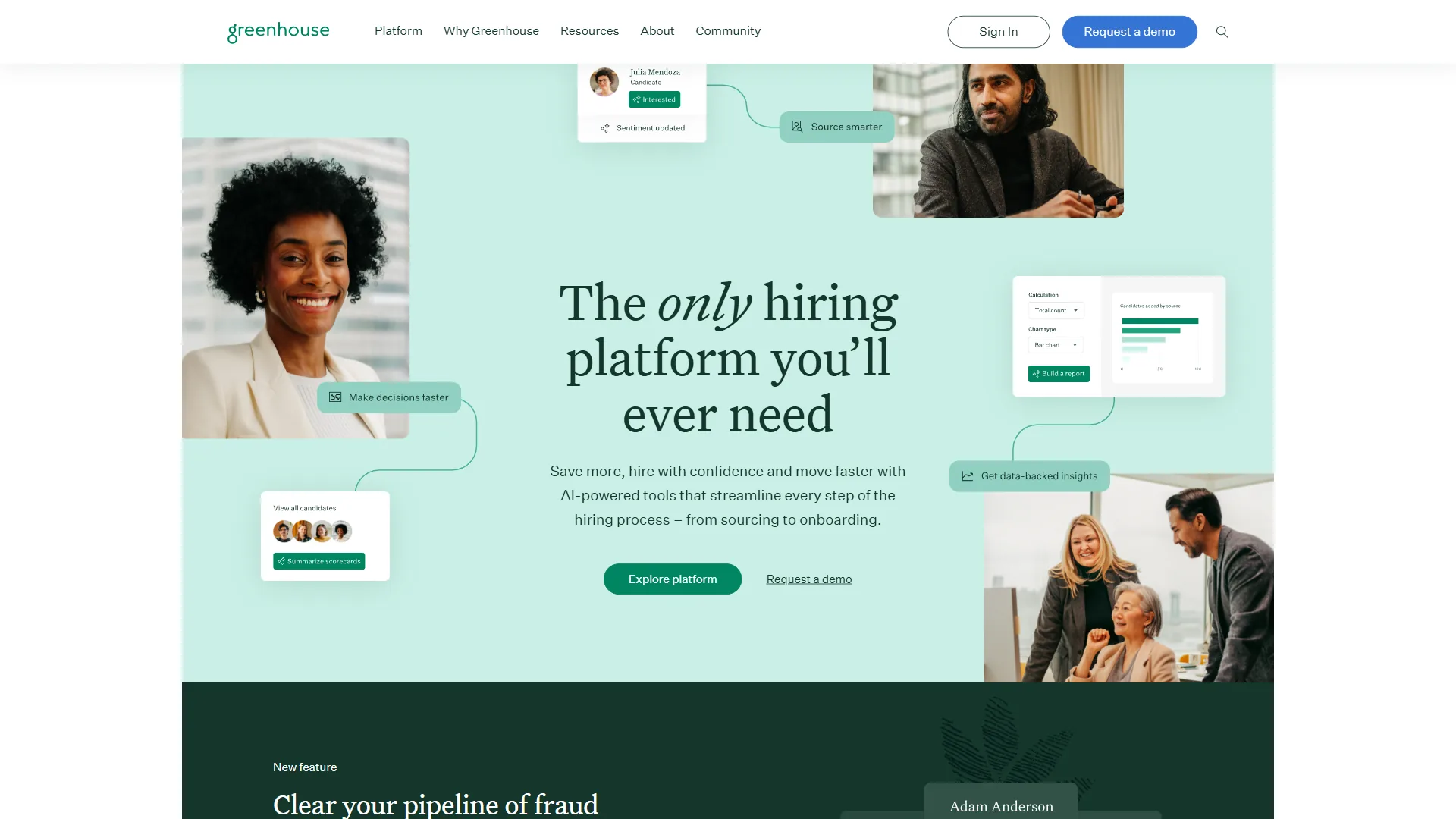
Greenhouse is the default choice for fast-growing tech companies that take structured hiring seriously, set apart by an opinionated approach that forces recruiting consistency. Real Talent AI, its standout 2026 feature, analyzes candidate responses, experience patterns, and interview feedback to generate predictive success scores, surfacing strong candidates that traditional keyword screening would filter out.
Greenhouse is the enterprise ATS standard because it enforces structured, sophisticated hiring workflows across an entire organization - multi-stage interview processes with per-round scorecards, automated scheduling across time zones, and custom approval chains all come standard. It demands commitment in implementation: expect 4-8 weeks of configuration and team training, which pays off when you are making 50+ hires per year and need every decision documented.
Pricing reality: Greenhouse does not publish pricing, but expect $6,000-$18,000 annually for small teams and $25,000-$50,000+ for enterprises.
Best for: Companies making 30+ hires per year, tech startups raising Series A+, enterprises requiring compliance documentation.
Limitations and who it’s not for: Skip Greenhouse if you make fewer than 20 hires per year - the 4-8 week implementation and steep pricing will not pay back. Cons include opaque “contact sales” pricing and a UI hiring managers rate as less polished than Workable. Per-employee pricing also scales aggressively - a 500-person company can pay 5x what a 100-person company pays for the same features.
Workable: AI-Powered Mid-Market Leader
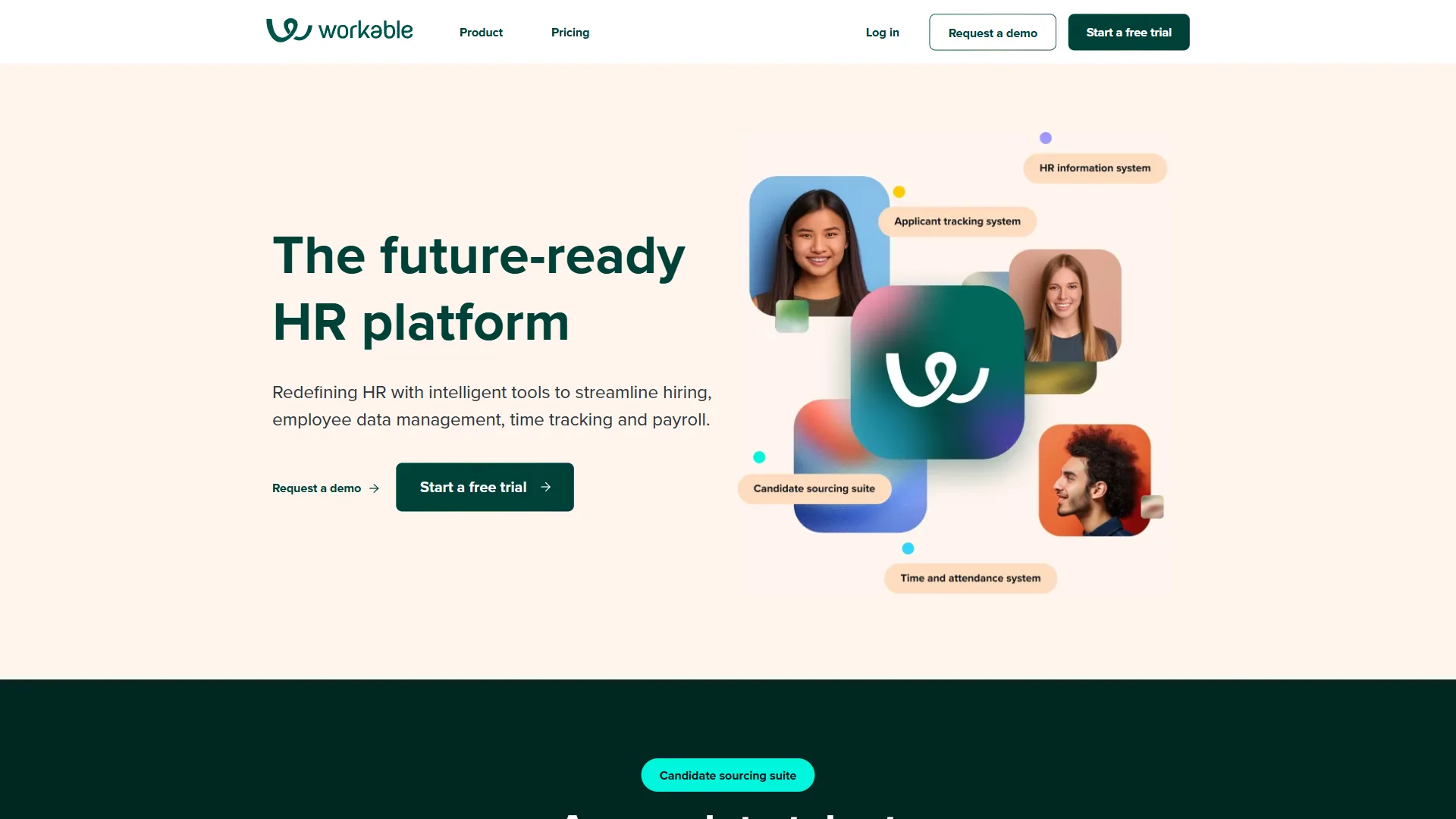
Workable is the AI-powered mid-market leader, sophisticated enough for 200-person companies yet usable without a dedicated implementation team. The AI Interview Copilot launched in late 2026 is genuinely useful - it listens to video interviews (with candidate permission), generates structured notes mapped to your evaluation criteria, and flags potential unconscious bias in interviewer questions.
Access to Workable’s 400 million candidate pool is an underrated advantage: posting a job proactively surfaces matching candidates from its database, which for hard-to-fill technical roles often beats LinkedIn InMail campaigns. The mobile app is the best in this comparison, letting hiring managers review candidates and leave feedback from their phones - faster feedback correlates with offer acceptance rates.
Pricing structure:
- Starter Plan: $169 per month (unlimited jobs, 3 users)
- Standard Plan: $279 per month (unlimited jobs, unlimited users, AI features)
- Premier Plan: $599 per month (advanced reporting, SSO, dedicated support)
All plans include unlimited active jobs, unlike competitors charging per posting.
Best for: Mid-market companies (50-500 employees), teams hiring across departments, organizations wanting AI features without enterprise pricing.
Limitations and who it’s not for: Workable is not the right fit for highly regulated industries (defense, federal contractors) where Greenhouse’s compliance pedigree carries weight. Cons include limited custom workflow logic, and an AI Interview Copilot that only works with Zoom and Google Meet - not Microsoft Teams.
Lever: CRM-First ATS for Talent Pipeline Building
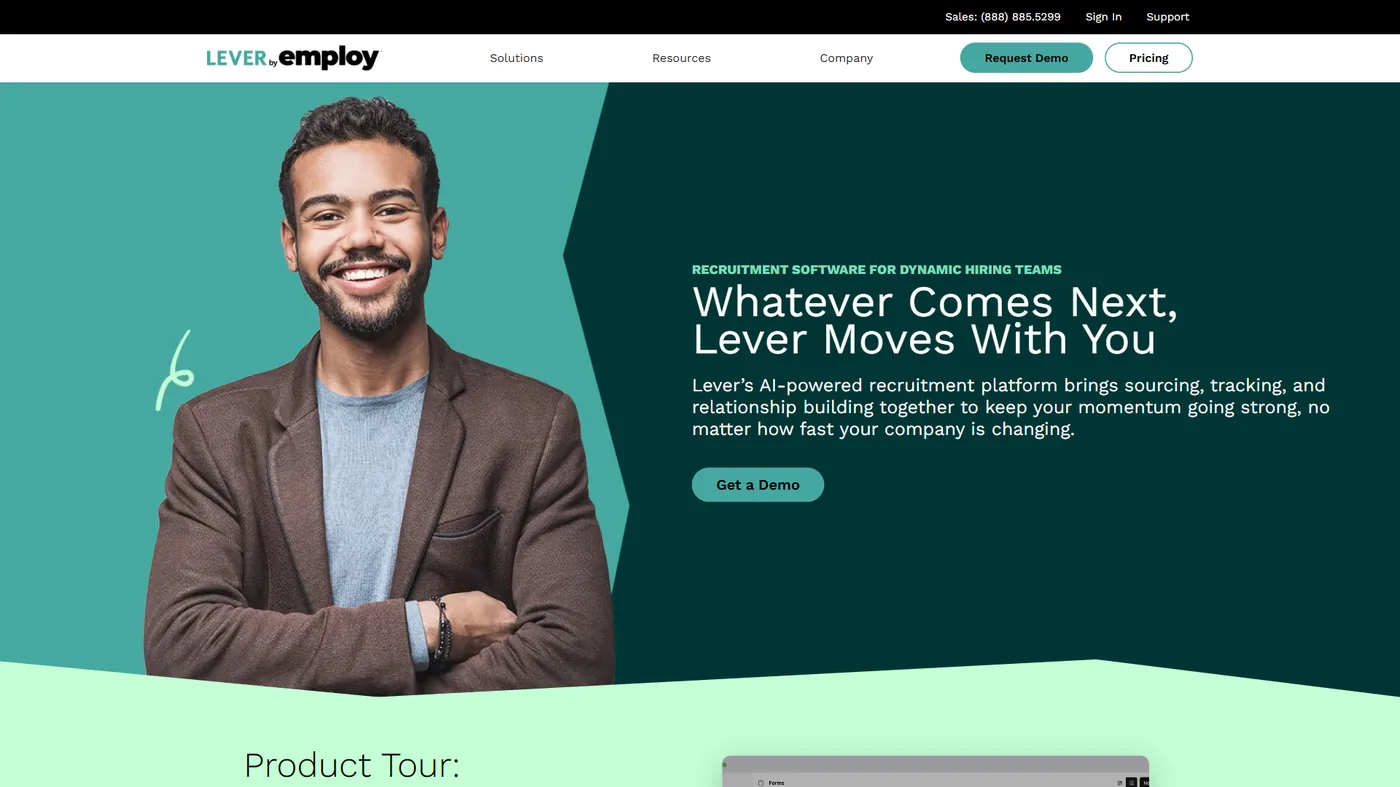
Lever is a CRM-first ATS built for talent pipeline building, treating recruiting like a sales pipeline rather than a candidate database. If your strategy involves building talent pools 6-12 months before open positions, Lever’s nurturing capabilities are unmatched - segment candidates into pools, set up automated email sequences, track engagement, then convert passive candidates to applicants when roles open.
Pipeline automation is where Lever excels: multi-stage nurturing campaigns move candidates through awareness, interest, and consideration stages, yielding far better results for technical roles than reactive job posting. The analytics dashboard mirrors a sales CRM - source quality, conversion rates, pipeline velocity - making executive buy-in easier. Where Lever falls short is AI capability; its screening features feel like 2023 technology compared to Greenhouse or Workable.
Pricing model: Approximately $6-8 per employee per month via custom quote - cheaper than Greenhouse for mid-sized companies, but pricier than Workable’s flat-rate plans.
Best for: Companies building talent pipelines before hiring, organizations with long hiring cycles, teams with dedicated recruiting ops roles.
Limitations and who it’s not for: Skip Lever if you need current AI screening. Cons include custom-quote-only pricing (no published rates) and a CRM-style learning curve that overwhelms hiring managers who just want to review candidates. Lever’s strengths only matter for organizations with dedicated sourcing teams - reactive hirers will not see the value.
BambooHR: All-in-One HR Platform with ATS
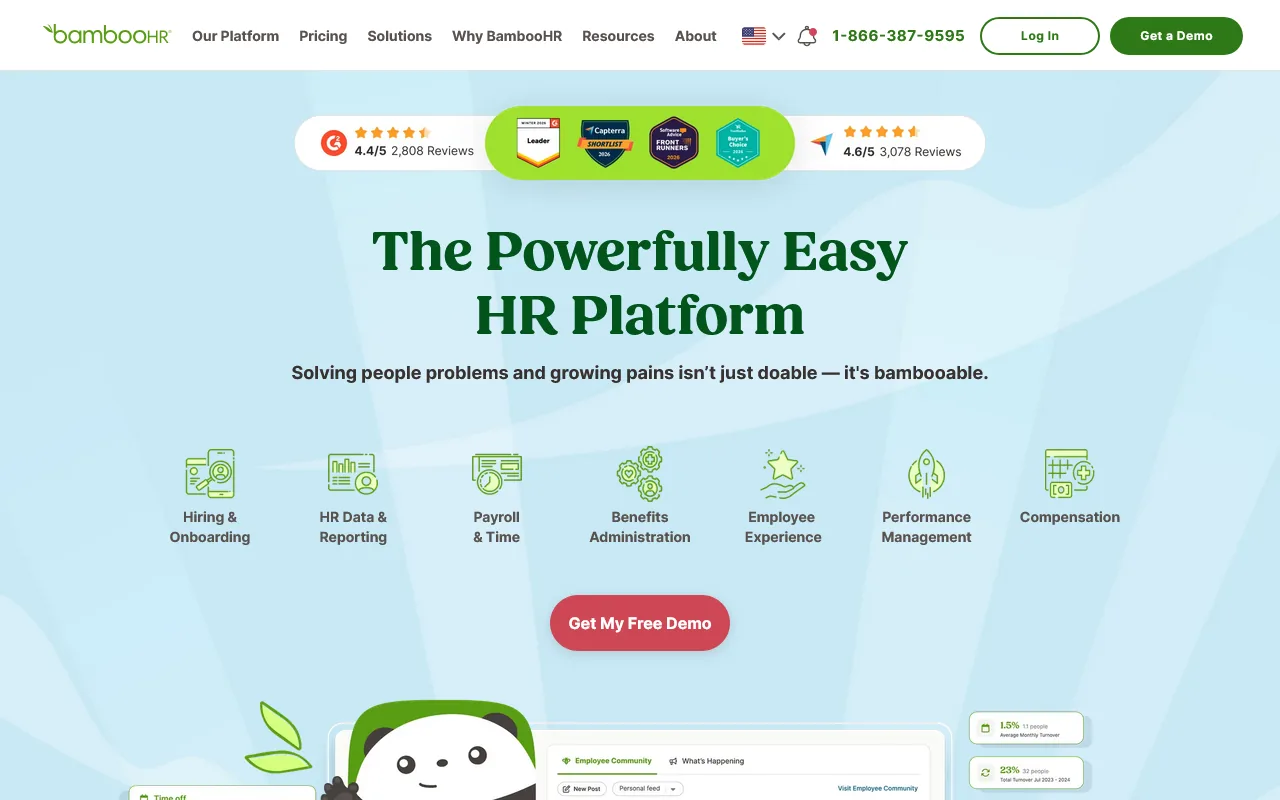
BambooHR is an all-in-one HR platform with a built-in ATS, putting HR first and recruiting as one integrated module. For a growing company that needs HR software anyway, getting an ATS included makes enormous sense.
The killer feature is seamless onboarding handoff: when a candidate accepts an offer, they automatically transition to employee status with all information preserved. New hire paperwork, equipment requests, and first-day schedules flow from the ATS into HR workflows without manual re-entry, saving an estimated 2-3 hours of admin work per new hire.
The ATS functionality itself is solid but not groundbreaking - job posting distribution, candidate tracking, interview scheduling, and basic collaboration, consistently praised as easy to use. Where BambooHR disappoints is enterprise-grade recruiting: no sophisticated AI screening, limited analytics, and constrained workflow customization. If you are making 50+ hires annually, you will outgrow it.
Pricing considerations: $250 per month minimum for small businesses, scaling with employee count and modules. You are paying for the full HR suite, not just recruiting.
Best for: SMBs hiring 5-30 people per year, companies needing both HR and ATS, organizations prioritizing ease of use over advanced features.
Limitations and who it’s not for: Skip BambooHR as a standalone ATS - if you do not need HRIS features the per-employee pricing is wasted. Cons include no advanced AI screening (basic keyword matching only) and limited workflow customization. BambooHR also slows noticeably with thousands of active candidates.
JazzHR: Budget-Friendly ATS for Small Businesses
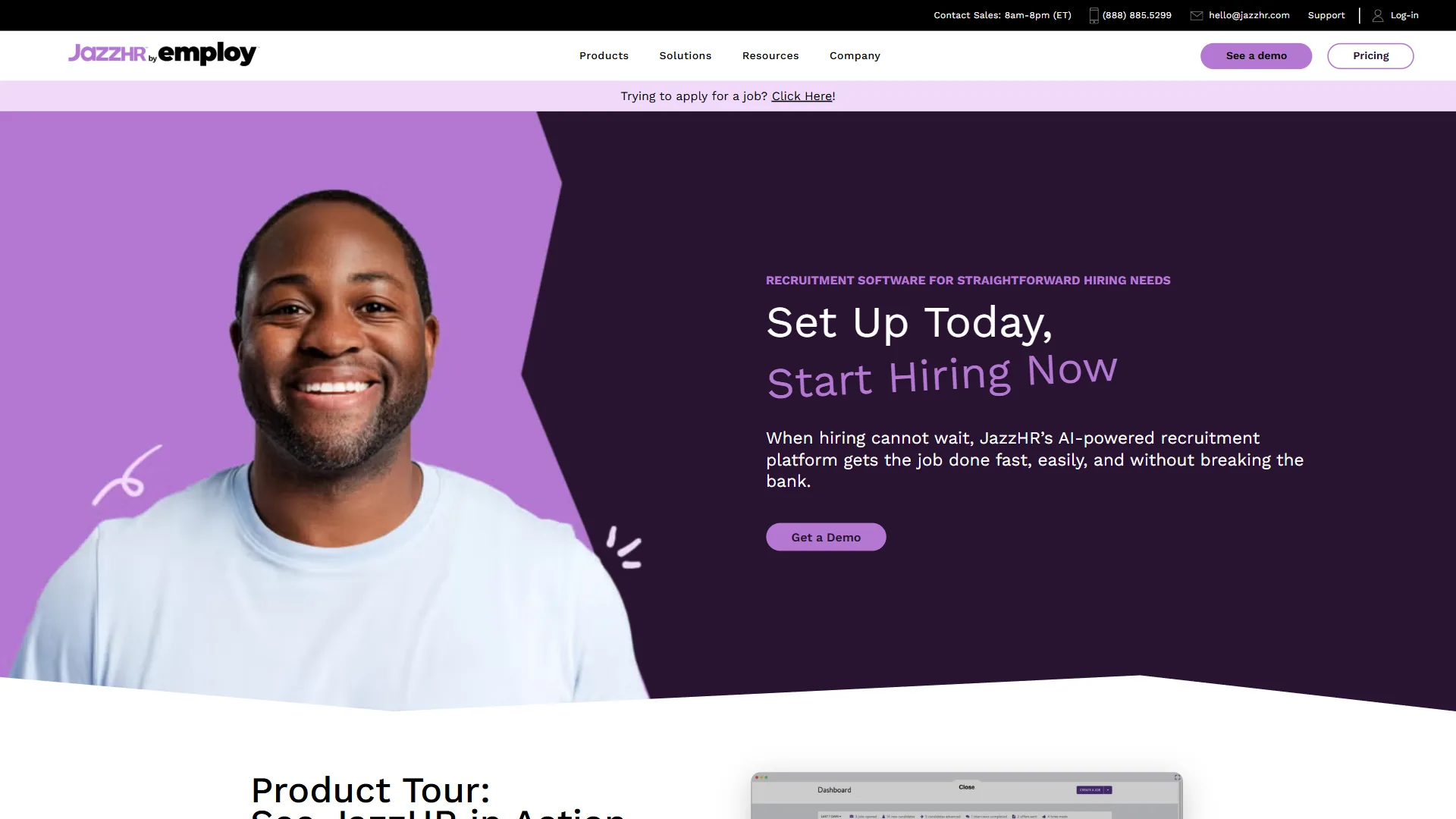
JazzHR is the budget-friendly ATS for small businesses, winning on transparent pricing and unlimited users at $75 per month. While competitors hide pricing behind “contact sales” walls, JazzHR publishes plans that make sense for companies hiring 10-20 people per year.
Unlimited users on all plans is a massive differentiator. Most ATS platforms charge per-user, discouraging hiring managers from getting access; JazzHR lets your entire team participate without watching a meter run. The platform covers all the ATS fundamentals - job posting to 20+ boards, applicant tracking, interview scheduling, offer letters, and hiring team collaboration. What you sacrifice is sophistication: AI features are basic keyword matching, not predictive scoring. For a 20-person company making 5-8 hires per year, these limitations do not matter.
Transparent pricing:
- Hero Plan: $75 per month (1 job, unlimited users, 90-day candidate history)
- Plus Plan: $250 per month (5 jobs, unlimited users, 2-year candidate history)
- Pro Plan: $420 per month (unlimited jobs, unlimited users, unlimited candidate history, advanced features)
All plans include unlimited users and mobile apps, with no hidden fees for users, postings, or hiring volume.
Best for: Small businesses (under 50 employees), companies hiring fewer than 20 people per year, teams needing predictable costs without per-user fees.
Limitations and who it’s not for: Skip JazzHR once you cross ~20 hires/year or need predictive AI scoring. Cons include a smaller integration ecosystem than Greenhouse or Workable, and reporting that does not satisfy executive-level talent analytics. The biggest drawback is that the cheapest tier ($75 per month) only allows ONE active job - most growing companies will need the $250 Plus plan within months.
Which Is the Best ATS Software by Company Size?
The best ATS software by company size is JazzHR or Workable Starter for startups, Workable Standard or Greenhouse for mid-market firms, and Greenhouse or Lever for enterprises. Your organization’s scale and hiring velocity should drive the choice.
Startups (1-50 employees, 5-15 hires/year)
Winner: JazzHR or Workable Starter
At this stage you need simplicity and predictable costs. JazzHR at $75-250/month gets you professional recruiting software without enterprise complexity; for AI features and rapid growth, Workable’s Starter plan ($169 per month) is worth the premium. Avoid Greenhouse unless you have raised significant funding - the implementation investment rarely pays off below 20 hires annually.
Mid-Market (50-500 employees, 15-100 hires/year)
Winner: Workable Standard or Greenhouse
This stage needs balance between sophistication and usability. Workable’s Standard plan ($279 per month) delivers enterprise features at SMB pricing; consider Greenhouse for regulated industries or costly senior hires, and BambooHR if you also need to upgrade your HR platform.
Enterprise (500+ employees, 100+ hires/year)
Winner: Greenhouse or Lever
At enterprise scale, Greenhouse’s implementation cost becomes proportionally smaller while its benefits compound, ensuring consistency across dozens of hiring managers. Lever is the alternative if your strategy emphasizes talent pipeline building over reactive hiring. Workable lacks the compliance features and configurability large organizations typically require.
How Should You Choose the Right ATS for Your Team?
Choose the right ATS by matching annual hiring volume, HR-integration needs, AI requirements, implementation timeline, and budget against each platform’s strengths. “The cost of a bad hire can reach 30% of the employee’s first-year earnings,” according to widely cited U.S. Department of Labor estimates, which is why structured evaluation matters. Work through these questions:
1. What’s your annual hiring volume?
- Under 20 hires → JazzHR or BambooHR
- 20-75 hires → Workable
- 75+ hires → Greenhouse or Lever
2. Do you need standalone ATS or integrated HR+ATS?
- Just recruiting → Workable, Greenhouse, Lever, or JazzHR
- HR platform needed → BambooHR
3. How important are AI/automation features?
- Critical for efficiency → Workable or Greenhouse
- Nice to have → Lever or BambooHR
- Basic features sufficient → JazzHR
4. What’s your implementation timeline?
- Need to start immediately → Workable or JazzHR (1-2 weeks)
- Can invest in setup → Greenhouse or Lever (4-8 weeks)
5. What’s your monthly budget?
- Under $200 per month → JazzHR
- $200-500/month → Workable or BambooHR
- $500-1,500/month → Greenhouse or Lever
6. Do you build talent pipelines or hire reactively?
- Pipeline building → Lever
- Reactive hiring → Workable or Greenhouse
How Do Greenhouse, Workable, Lever, BambooHR and JazzHR Compare on Pricing?
For a 100-person company making 30 hires annually, JazzHR and Workable cost roughly $3,300-$5,000 per year while Greenhouse and BambooHR run $15,000-$30,000:
| Platform | Annual Cost | Per-Hire Cost | Implementation |
|---|---|---|---|
| JazzHR Pro | $5,040 | $168 | 1 week |
| Workable Standard | $3,348 | $112 | 2 weeks |
| BambooHR | $18,000-30,000* | $600-1,000 | 3-4 weeks |
| Greenhouse | $15,000-25,000 | $500-833 | 6-8 weeks |
| Lever | $7,200-9,600 | $240-320 | 4-6 weeks |
*BambooHR pricing includes the full HR platform
The cost of bad hiring decisions dwarfs software costs - an executive mis-hire costs 3-5x their annual salary, so preventing even one bad senior hire pays for the software many times over.
Final Verdict
Workable is the best ATS software for most companies in 2026, while Greenhouse wins for enterprises and JazzHR for cost-conscious startups. Based on analysis of all five platforms, here is an honest recommendation:
For most companies: Choose Workable. The Standard plan at $279 per month delivers 90% of what you need at 20% of enterprise pricing - working AI features, unlimited users, and implementation in weeks not months.
For enterprise recruiting teams: Choose Greenhouse. It is expensive and complex, but at scale the structured interviewing framework and analytics become essential when bad hires cost millions.
For startups watching every dollar: Choose JazzHR. The Pro plan gives you professional ATS capabilities for $420 per month with unlimited users and no hidden fees.
For SMBs needing HR+ATS: Choose BambooHR. The integrated onboarding alone saves enough administrative time to justify the higher cost when you need HR software anyway.
For talent pipeline builders: Choose Lever. Its CRM capabilities are worth the premium over Workable if you nurture passive candidates over 6-12 months before hiring.
Frequently Asked Questions
How long does ATS implementation typically take?
ATS implementation typically takes 1-2 weeks for simple platforms like JazzHR or Workable and 6-8 weeks for enterprise rollouts like Greenhouse. Timelines vary by platform:
- JazzHR or Workable: 1-2 weeks to basic functionality
- BambooHR: 3-4 weeks including HR setup
- Lever: 4-6 weeks for full CRM configuration
- Greenhouse: 6-8 weeks for enterprise rollout
The key variable is scorecard and workflow configuration - simple setups take days, structured interviewing frameworks take weeks.
Can I integrate my ATS with our existing HR software?
All five platforms offer integrations, but quality varies: Greenhouse and Workable have 400+ integrations covering all major HRIS platforms, BambooHR is already an HRIS so integration is built-in, Lever connects via API, and JazzHR covers major platforms with a smaller catalog. Check your specific HRIS compatibility before committing - failed integrations are the most common implementation pain point.
Do these platforms comply with GDPR and CCPA?
Yes, all five platforms are GDPR and CCPA compliant, with candidate consent workflows, right-to-deletion, data retention policies, and encrypted storage. Greenhouse and Lever have the most mature compliance frameworks for enterprise requirements; JazzHR covers the basics for most SMBs.
What’s the real ROI of upgrading to AI-powered ATS software?
The measurable ROI comes from three sources: AI screening cuts initial resume review from 8 hours to 1 hour for 100 applicants (roughly $350 saved per position at a $50/hour burdened recruiter cost); structured interviewing with AI scoring reduces bad hires by 20-30%, where one prevented executive mis-hire ($300K+ cost) pays for 5-10 years of ATS software; and faster response times increase offer acceptance rates by 10-15%. Companies typically see 3-6 month payback periods when switching from spreadsheets to purpose-built ATS software.
Is there genuinely good free ATS software?
Searches for the best ATS software free of cost are common, but free options suit only the smallest hiring needs. None of Greenhouse, Workable, Lever, BambooHR, or JazzHR has a truly free version - paid plans start at $75-$169 per month. An applicant tracking system free of charge (open-source or freemium tools) typically caps active jobs and lacks AI screening, so most companies outgrow a free applicant tracking system quickly. JazzHR’s $75 Hero plan is the closest low-cost entry point here.
Should I choose an ATS with video interviewing built-in?
Not necessarily. Dedicated video interviewing tools (Zoom, Google Meet) are usually better than ATS-embedded video. Focus instead on whether the ATS integrates with your preferred video tool, can automatically schedule video interviews, and captures recordings and notes. Workable’s AI Interview Copilot works with external video platforms rather than forcing inferior built-in video.
How do I migrate candidate data from my current system?
Data migration quality determines success or disaster in ATS transitions. Key steps: export all candidate data (including resumes), clean it in spreadsheets before import, use ATS import tools or CSV upload, verify a sample of migrated records, and run parallel systems for 2-4 weeks to catch issues. Workable and Greenhouse offer migration assistance with enterprise implementations; budget 20-40 hours for DIY migration on smaller platforms and start planning 4-6 weeks before go-live.
Choosing the best ATS software in 2026 means choosing your recruiting partner for the next 3-5 years. Match the platform’s strengths to your specific hiring challenges rather than chasing feature lists, and invest in proper implementation and training - that is where the real ROI comes from.
Related Reads
The five ATS platforms covered in this article are linked below, alongside related HR and recruiting guides for deeper research:
- Greenhouse - Enterprise applicant tracking system
- Workable - All-in-one recruiting platform
- Lever - Relationship-driven ATS for talent nurturing
- BambooHR - HR platform with integrated applicant tracking
- JazzHR - Affordable ATS for small businesses
- GitHub Copilot - AI coding assistant for technical assessments
- Best AI Recruiting Tools - AI-powered recruiting platforms
- ATS ROI Calculator - Calculate recruiting tool ROI
- Best AI HR Tools 2026 - HR productivity tools
- AI Sourcing Passive Candidates: 6 Top Tools - Find passive talent with AI
External Resources
These independent industry sources offer additional context on ATS selection and recruiting best practices: